





More units, shifting student demand, and economic uncertainty are reshaping the rental market, with monthly prices still climbing.
Send this article to your social connections.
Boston renters may be catching a rare break: the number of available apartments has surged to the highest level in years, offering more options despite steady rent increases.
“There’s more inventory than we’ve seen in probably 10 years. It’s something that we’re not used to seeing,” said Jamie Thompson, a real estate broker at Thompson Realty and president of the Greater Boston Association of Realtors. “But it is still being absorbed.”
Renters are taking longer to make their decisions, and units are sitting a little bit longer, Thompson said. And renters are seeing more choices, paying attention to amenities, choosing the one that stands out as the best.
Advertisement:
Even though there are positive signs for renters, Thompson said, the Boston region still has one of the nation’s tightest rental markets.
“Boston is becoming a better market, but it’s still a landlord market,” he said.
As more buildings come online and inventory comes up, Thompson thinks the balance will start to shift.
“I think inventory is going to be the big fat lever there.”
More availability
“This is a very unique situation that I haven’t seen in a long time,” said Demetrios Salpoglou, CEO of Boston Pads.
Typically, Boston Pads data show a predictable pattern: Apartments hit the market in mid-April and quickly get leased for the following year, with most rentals turning over on Sept. 1. But this spring broke that trend.
Advertisement:
Real estate firms track the Real-Time Availability Rate (RTAR) or the share of units that are either vacant now or will be available soon. The vacancy rate only includes empty units. This year, RTAR continued to climb through the end of April.
“It’s going tick, tick, tick, tick, tick,” Salpoglou said. “It reminds me of going up Space Mountain or Jurassic Park. It’s still going up. But when does it start going down?”
The drop finally came in May, as college students graduated, but Boston’s availability rate is still 45% higher than it was this time last year.
“The good news is for the consumer,” Salpoglou said.
According to Boston Pads, the average Boston rent is $3,400, down 0.23% from a month ago, but up 2.53% from last year and 4.13% over two years.
Still, Salpoglou doubts rents will rise much more this year unless landlords renovate and invest heavily in their units.
Landlords are “feeling it this year. There’s no ifs and buts about it,” he said.
What’s driving the market?
A mix of economic pressures is driving the rise in available rentals, said Salpoglou. He pointed to several possible factors: fewer international students, broader economic uncertainty, inflation, and even the ripple effects of AI on the job market. He’s also noticed more sublet postings, which are often an early sign that people are losing work.
Advertisement:
Landlords are renewing leases at high rates, said Thompson, and many tenants are choosing to stay put. They’re worried about job security, rising expenses, and steep utility costs. And when they compare their current rent to what’s on the market, they often see higher prices.
“So many are staying where they are,” Thompson said. “Would that be a missed opportunity from an amenities perspective? Yes.”
Still, he added, renters with steady jobs and solid incomes may find this an unusually good year to explore their options.
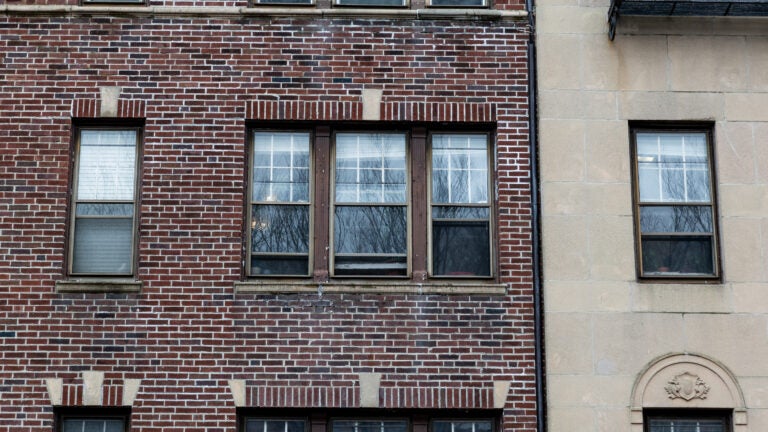
Massachusetts is also starting to feel the effects of more units coming onto the market, Thompson noted. Nearly 10,000 new units are under construction or permitted for the next two years. If those buildings come online as planned, he said, they’ll put downward pressure on older two- and three-family homes and aging brick buildings.
“I’ll talk inventory, inventory, inventory all day,” he said. “And with the new buildings going up, even though they are market rate units, there are people that are gravitating toward those properties for the amenities that they offer.”
At the same time, Boston-area universities are adding more student housing. Northeastern University is building a new dorm, and Tufts University has another underway, changes that could shift demand in the student rental market depending on enrollment trends.
Advertisement:
“I think this is all a good thing,” Thompson said.
How will this play into the housing market?
More and more people are gravitating towards rental because they give them flexibility to move and take away the maintenance burden, Thompson said.
Plus, for many, with interest rates remaining at around 6%, renting is cheaper than paying a mortgage.
“The condos are the new first-time homebuyer,” said Thompson. “They’re the new starter home.”

Beth Treffeisen is a general assignment reporter for Boston.com, focusing on local news, crime, and business in the New England region.
Sign up for the Today newsletter
Get everything you need to know to start your day, delivered right to your inbox every morning.


Want to leave a comment?
To comment, please create a screen name in your profile