The state's highest court ruled that the proposal was unconstitutional because it exempted religious facilities.
Share
Send this article to your social connections.
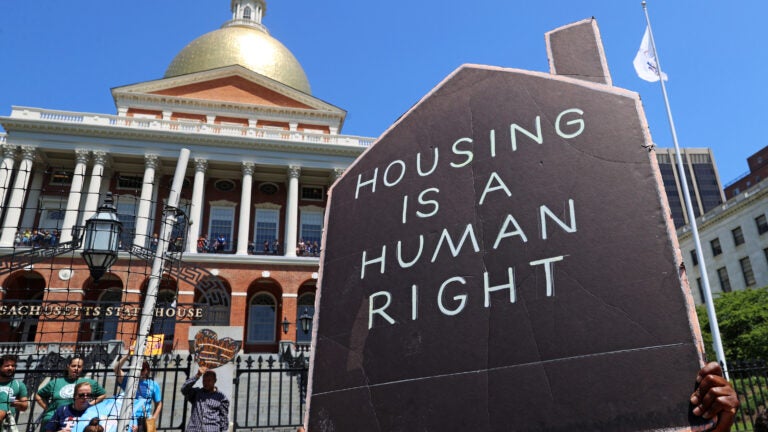
The highest court in Massachusetts threw out a ballot question Tuesday that would have allowed voters to enact rent control across the state.
The court’s ruling hinged on the fact that the proposed law would have exempted housing units that are in religious facilities. Religion is an “excluded matter” under the Massachusetts Constitution, meaning the ballot question would be unconstitutional, Justice Frank Gaziano wrote in a 27-page ruling.
The proposal, if approved by voters this fall, would have installed a blanket cap on rent increases. Annual rent increases would be limited to the annual increase in the cost of living, as measured by the Consumer Price Index, with a hard cap at 5%.
Massachusetts voters banned rent control statewide in 1994. But the prospect of limiting rent increases in some way gained steam in recent years as housing supply failed to meet demand and costs climbed.
Advocates marshaled significant support for the measure over the past year, collecting more than 124,000 signatures from voters last fall and another 33,000 this spring. Organizers behind the Keep Massachusetts Home campaign, which spearheaded this effort, lamented the SJC decision Tuesday.
Noemi Ramos, chair of the campaign, said in a statement that the ruling was a “massive disappointment” for proponents of the ballot question. She blamed real estate interests for the lawsuit that led to the decision, but said that the news does not mark the end of the campaign’s work.
“Rather than accept any restrictions on their ability to extract profits from our communities, a few private equity-backed real estate investment corporations financed this lawsuit in a desperate attempt to avoid a ballot campaign they were set to lose. While we disagree with the court’s interpretation, the issue raised by the court is easily fixable, and doesn’t affect the substance of our proposal,” Ramos said in a statement.
The proposal was opposed by many powerful players in the real estate industry. They are adamant that rent control has already been proven to be a policy failure, and that it would worsen the housing crisis by slowing construction.
Opponents also took issue with the “one-size-fits-all” approach, which would have implemented one of the strictest statewide rent caps in the country.
Conor Yunits, chair of the Housing for Massachusetts campaign that opposed the proposal, praised the SJC for ruling against the country’s “most extreme rent control proposal.”
“While we firmly believe that Massachusetts voters were prepared to vote ‘no’ in November, today’s decision puts the issue to rest and protects our housing pipeline and our communities from the proven damage that rent control inflicts. We are incredibly grateful to the countless small property owners, real estate professionals, elected officials, and community leaders who supported our coalition, and we look forward to working together to create more homes and tackle affordability through real policy solutions,” Yunits said in a statement.
The proposed law would have exempted residential properties in “facilities operated solely for educational, religious, or nonprofit purposes.” Although rent control is a “generally secular subject matter,” the proposal makes religion a factor in how the law would be applied.
“In order to enforce the proposed law, the exemption would require the government to determine if a facility is ‘operated solely for … religious … purposes,’ and then make an enforcement decision based on the facility’s religious purpose (or lack thereof),” Gaziano wrote.
“Further, the petition would confer preferential treatment on religious institutions by allowing them to increase rent prices, while limiting rent increases for secular facilities,” he continued.
Attorney General Andrea Campbell, whose office certified the ballot question’s constitutionality, said Tuesday that she was “surprised” by the ruling.
“When we certified it, we thought we were obviously on the right legal footing,” she said on GBH’s “Boston Public Radio” shortly after the news broke.
Was a compromise coming?
Compromise negotiations had been ongoing in recent weeks, as both sides evaluated whether to avoid a costly ballot fight. In early June, rent control proponents unveiled a compromise proposal that would have limited annual rent hikes to the cost of living plus 5 percent, with a cap at 10 percent. Some in the real estate industry were on board, but a deal was far from complete.
Then momentum grew as Gov. Maura Healey said she would support a legislative compromise. NAIOP, a powerful real estate lobby, also signaled that it would come to the table, The Boston Globe reported.
Even some rent control supporters were wary of the blanket cap that the ballot question would have implemented. Boston Mayor Michelle Wu, who unsuccessfully sought a rent control plan for the city in 2023, said last year that she would prefer a local option instead of a statewide cap. While Wu eventually said she would vote in favor of the proposed law if it made it to the ballot, she praised the proposed compromise as a way to “avoid a messy ballot initiative.”
Wu’s office did not immediately return a request for comment Tuesday.
The SJC’s rent control ruling comes on the heels of another major decision regarding a contentious ballot question. That proposal sought to lower the state’s income tax rate, but the court ruled last week that the measure’s official summary was misleading and blocked it from being put before voters.
Ross Cristantiello, a general assignment news reporter for Boston.com since 2022, covers local politics, crime, the environment, and more.
Sign up for the Today newsletter
Get everything you need to know to start your day, delivered right to your inbox every morning.