






Now researchers better understand why even a mildly annoying itch could put you on an itch-and-scratch cycle if you give in.
By LAURAN NEERGAARD, Associated Press
3 minutes to read
Share
Send this article to your social connections.
WASHINGTON (AP) — You’ve likely heard it since childhood: Don’t scratch that bug bite or rash, you’ll make it worse. But why would something that feels so good be bad?
A lot of things can cause itchiness, sometimes serious diseases. Whatever the cause, doctors have long warned that scratching too much can damage the skin. Now researchers better understand why even a mildly annoying itch could put you on an itch-and-scratch cycle if you give in.
How did they find out? In part by putting tiny “cones of shame” onto mice to uncover what happens on a cellular level when an itch gets scratched — or left alone.
They also gained insight into why a good scratch at least at first brings a sigh of relief. After all, not just people and other mammals scratch, even fish do. The commonality suggests there must be some evolutionary reason and the mouse experiment hints at a little germ protection — but still not a reason to scratch.
Expect a more swollen, itchier spot if you can’t ignore that bug bite
Dr. Daniel Kaplan, a University of Pittsburgh dermatologist whose lab studies immune reactions in skin, was exploring a run-of-the-mill type of itch called allergic contact dermatitis, caused by irritants such as poison ivy or nickel in jewelry.
Kaplan’s research team put a rash-inducing irritant on the ears of mice. Normal mice scratched and inflammatory immune cells rushed to the site, increasing swelling. The rash was much milder in mice bred with defective itch-sensing nerve cells. But was the difference really the scratching?
Normal mice put into collars like those veterinary “cones of shame” so they itched but couldn’t scratch gave the answer: They, too, had much less swelling and fewer inflammatory cells.
Kaplan said that evidence matches people’s everyday experiences that scratching really can make things worse.
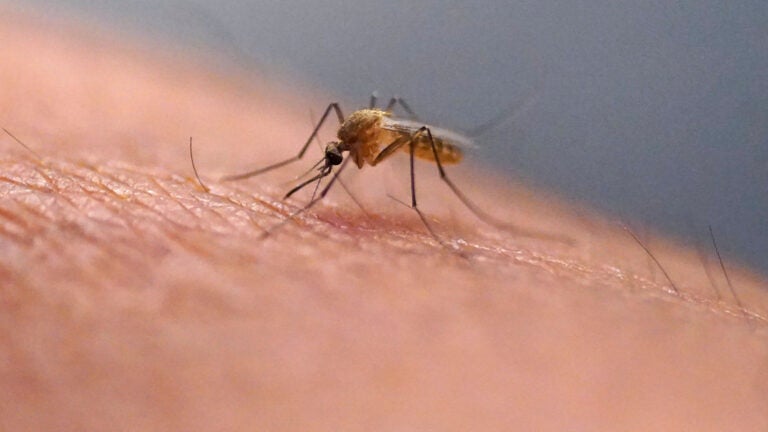
Ignore a mosquito bite and the itch is “gone in five or 10 minutes for most people,” he said. “But if you start scratching it, it’s your friend for a week,” getting itchier and more inflamed.
The immune system’s first responders can help — and hurt
To understand what was happening in the skin, Kaplan’s team took a deeper look at mast cells, among the immune system’s first responders. When called into action, they release compounds that can help fight germs or toxins — or, through a compound called histamine, trigger itchy allergic reactions.
Scientists have long known that allergens can activate mast cells. But other signals can summon mast cells, too, including pain. And when we scratch, “we tend to scratch until it starts to hurt,” Kaplan noted.
Pain-sensing nerve cells release a chemical messenger called substance P. In findings published last year, Kaplan’s team reported that substance P can activate mast cells through a different molecular pathway than allergens do — a double whammy that explains why scratching further inflames itchy rashes or bites.
Then why does a little scratching feel good?
If we experience pain like touching a hot stove, we’ll learn not to do that again. Yet relief from a good scratch, in evolutionary terms, is positive feedback. Why?
One long-held theory is that it may help creatures slough off parasites like fleas or mites. But Kaplan also was intrigued by other labs’ findings that mast cells could fend off a common type of skin bacteria called Staphylococcus aureus. So his team infected mice and then repeated the cone-of-shame itch experiment. Sure enough, those that scratched had lower levels of that germ on their ears, maybe because of the extra inflammation or some other mast cell-related compound.
But that’s not enough of an upside to change the health advice.
“Ultimately, scratching is deleterious,” Kaplan stressed. “You should avoid scratching,” he said, although acknowledging that it’s “easier said than done.”
Here’s how to handle a minor itch
What fights an itch depends on its cause and there’s a need for better treatments. For now, antihistamines and certain other drugs for hives can tamp down some itchiness triggered by mast cells. Drug companies are experimenting with other approaches called MRGPRX2 blockers that target the pathway Kaplan’s team linked to scratching. Kaplan hopes better understanding of that pathway eventually could help skin diseases such as chronic eczema.
For the summer itchiness of bug bites, poison ivy and other types of contact dermatitis, dermatologists recommend anti-itch balms such as hydrocortisone cream, calamine lotion or oatmeal baths.
Another trick from Kaplan: Menthol-containing creams can temporarily fool the skin into sensing cold instead of itch, just long enough that “if you don’t scratch, then you break that itch-scratch cycle,” he said. “It’s like a cheat code.”
___
The Associated Press Health and Science Department receives support from the Howard Hughes Medical Institute’s Department of Science Education and the Robert Wood Johnson Foundation. The AP is solely responsible for all content.