


"It's not in a specific state, but it has very much of a New England vibe," says cartoonist and author Norm Feuti.
Send this article to your social connections.
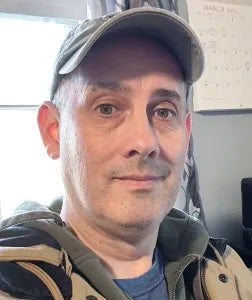
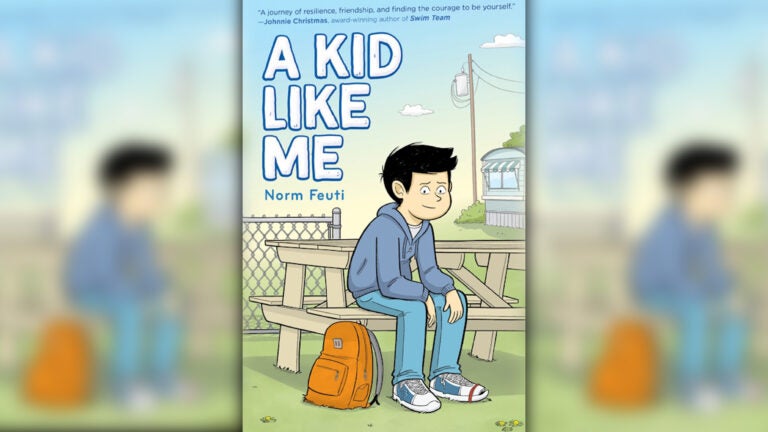
You may know Massachusetts resident Norm Feuti from his two syndicated comic strips, “Retail” and “Gil,” from his two series of early reader books, or from his much-buzzed-about new middle grade graphic novel, “A Kid Like Me.” They’re all very different, but they do have a through-line — a decidedly New England feel.
“If you’re from Rhode Island, you knew the strip [“Gil”] was based in Rhode Island,” says Feuti, an Ocean State native who now lives in Plainville, Massachusetts. “Gil used to like going to the beach, or stopping for Del’s Lemonade, or getting clam cakes, which I discovered were very Rhode Island.”
Advertisement:
But don’t worry, his current home state worked its way into that strip also. “I did a string of comics about Jolly Cholly’s, which was an amusement park in [North] Attleborough — in the strip, I just pretended that it still existed.”
And Feuti has continued to embrace that New England feel in his current work. “My new graphic novel, ‘A Kid Like Me,’ is New England-based,” he says. “It’s not in a specific state, but it has very much of a New England vibe.”
More importantly, though, it tells a personal story that Feuti thinks will be relatable for a lot of middle school kids.
Advertisement:
“You know, growing up in poverty with a single mom, my dad wasn’t around,” Feuti says. “I wanted to tell a story about fitting in from that perspective.”
“I grew up in the ’80s, and there are a lot of parallels” to today, Feuti says. “Cutting social programs, there’s a lot of poverty-shaming in the world … A lot of things haven’t changed, unfortunately. So I wanted to write a story with the character from that perspective.”
We caught up with Feuti about his comic strip start, his foray into books for early readers, and the stories behind “A Kid Like Me,” which Kirkus Reviews called “an honest and authentic portrayal of navigating an underprivileged childhood.”
Boston.com: First off, I grew up in a retail family, so I can relate to your first strip, “Retail.” Did you just spend a lot of time at work just saying, this has to be a comic strip?
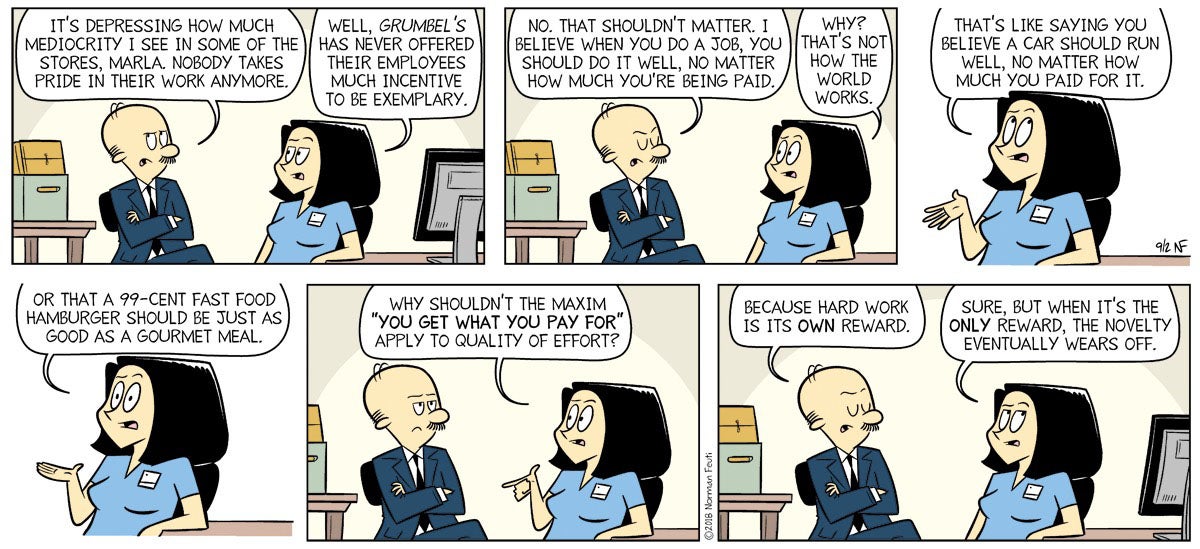
Norm Feuti: Yeah, I mean, I lived it for as long as I wrote the strip. I worked in retail, and retail management in a variety of stores for about 15 years. So, yeah, everything that is in the strip comes from my real-life experience in the retail trenches, as it were.
Obviously you were able to get a lot of material out of that.
Yeah, absolutely, and I mean, and that’s why I always try to write it from the standpoint of realistic experiences of retail employees, and try to keep it funny. I shied away from, oh, let’s make, you know, kooky shopper jokes or whatever. I think that’s what the appeal was for it — people appreciated it, that it was realistic.
So not only were you doing the “Retail” strip, which is a full-time gig, but then you jumped in with a second strip, “Gil.” So, can you talk about the thought process of doubling your work?
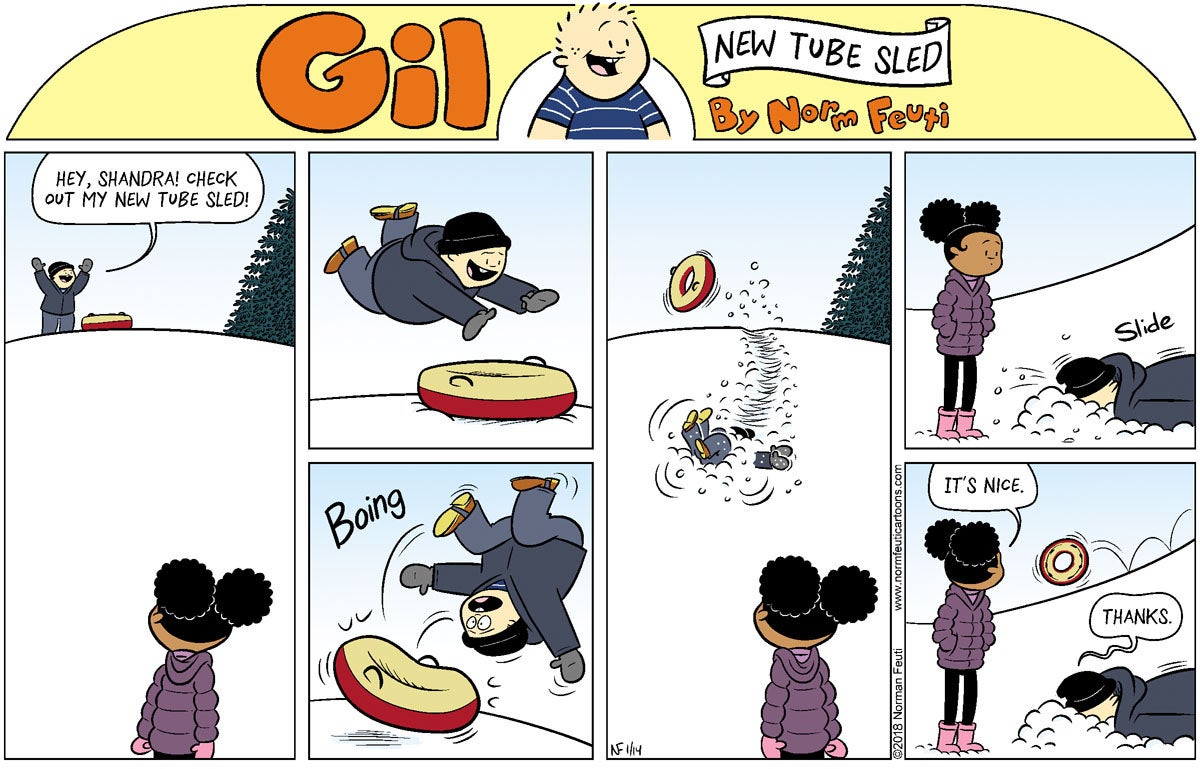
The insanity of trying to do two comic strips at the same time. [laughs] Yeah, so “Retail” launched in 2006, and “Gil” launched as my second comic strip in 2012, so I had been doing “Retail” for some time at that point. And I really wanted to do something more family-based, and something that kind of reflected my own upbringing with a single mom, living in less-than-ideal circumstances. So “Gil” was a thing I developed as a webcomic online, and the positive response gave me the encouragement to try to actually get it syndicated, and I was able to do that in 2012 with King Features.
And they both ran simultaneously for a while.
For two years, yeah. “Gil” didn’t last in syndication, sadly. And I think maybe it was in about six newspapers in its entirety. But one of those newspapers was the Providence Journal. And when the strip got canceled, the editor there reached out to me because he had received hundreds of letters and emails just wanting the strip back, and they actually offered to pay me to do it just as a Sunday comic for them, and I continued to do that until 2022.
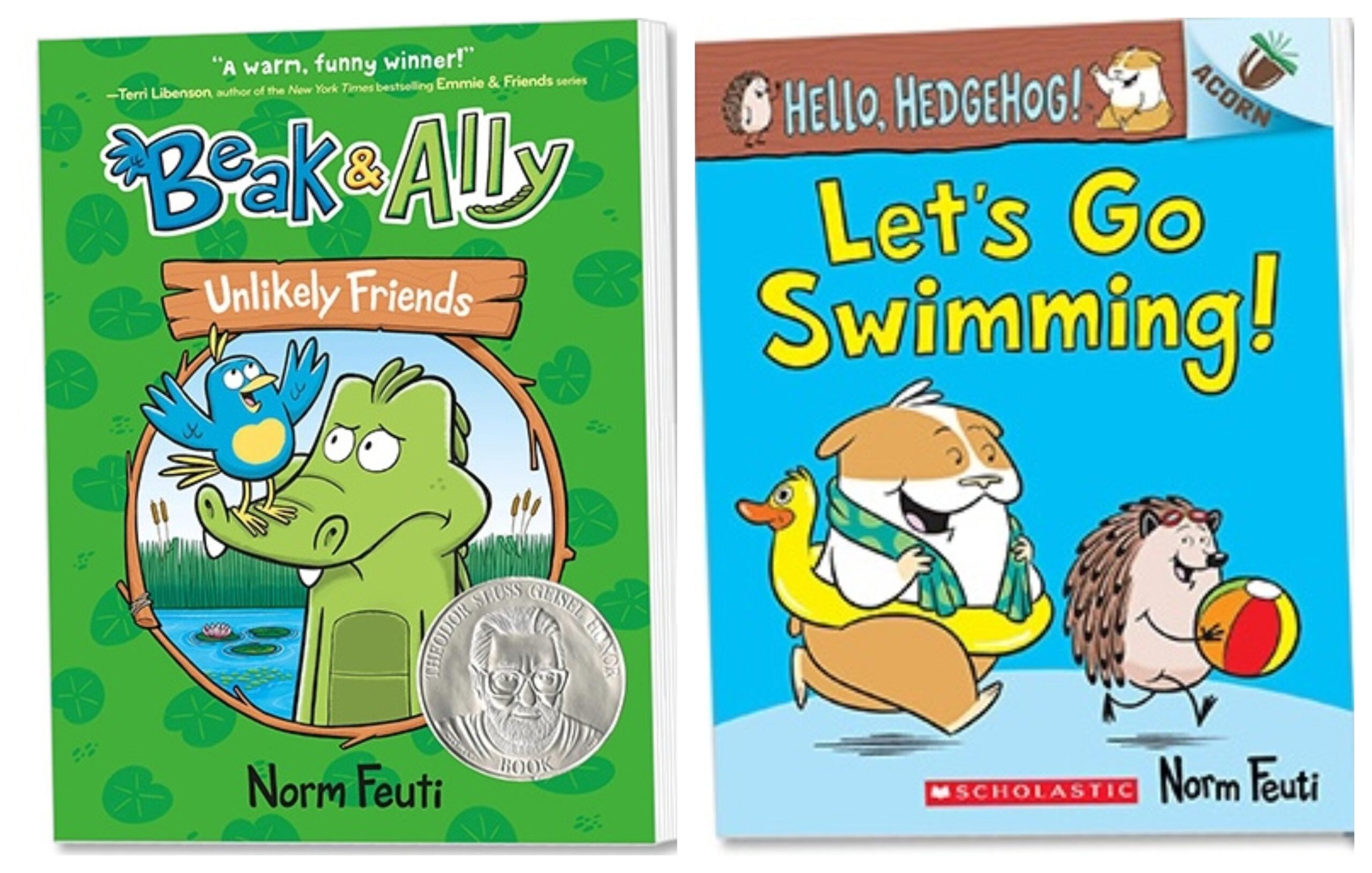
So from there you transitioned into “Hello, Hedgehog!” and “Beak & Ally,” which are graphic novels for young readers, sort of introducing kids to the concept of actually enjoying reading. What was behind that transition?
So, one of the great things about “Gil” is while I was doing it, it actually attracted the attention of an editor at Scholastic. And at the time, they were having huge success with graphic novels like “Smile” that were reaching out to kids with realistic stories, you know? So the content of “Gil” caught his eye, and he thought that that would make a great concept for a graphic novel, so that’s why he reached out to me.
Advertisement:
Unfortunately, I was under contract with King Features at the time. And the contract was such that trying to do a graphic novel based on Gil wouldn’t really have been, financially, a great thing for me to do … [but] I did have an idea for a kids graphic novel, it was a fantasy novel called “The King of Kazoo.” It was picked up by Scholastic Graphics with that editor in 2016.
After I did that, I had hopes on continuing that story as a series, which didn’t pan out. But while we were waiting to hear back on subsequent books for “The King of Kazoo,” I had an idea for “Hello, Hedgehog!” Just doing, like, a simple early-reader type book in a graphic novel format, which was also kind of a popular thing that was going on at the time … So I ended up signing a three-book deal for “Hello, Hedgehog!,” which turned into a six-book deal, eventually.
And after I had done those, I had the idea for “Beak & Ally,” which my agent shopped around. This time, Harper Alley, which is an imprint of HarperCollins, were interested in that, and that turned into a four-book deal.
That’s awesome.
Yeah, as much as I can’t say that I miss doing syndicated comics day after day — it can become quite a grind — it’s a thing that opened the door for me and my career entirely, so I’ll always have a soft spot for that part of my career.
You’ve now jumped into the middle grade books. You have a new graphic novel, “A Kid Like Me,” about trying to fit in in middle school — we all know the horrifying process that can be.
Yeah, so during the time that that editor had reached out to me long ago, I did kind of develop some concepts for how I would tell a Gil graphic novel. And I held on to those ideas, even though I hadn’t done anything with them. My agent was kind of steering me towards a middle grade book — ”Do you have any ideas for that?” I was like, well, as a matter of fact, I do. But rather than centering them around Gil and the characters in that universe, I made it more realistic. It’s less of a comedy, and it’s sort of reflective of the way I grew up, but I wanted to tell a modern-day story. So, it’s a fictional story, but it’s really informed by my own upbringing …
Advertisement:
It’s about a kid named Ethan, who is about to enter his first year of middle school, and he’s nervous about it. He lives in a trailer park, and his best friend Ricky has convinced him that this regional middle school that they’re going to, the other communities that it serves are much more affluent, so he’s convinced that these kids are all going to be horrible rich kids, and they’re going to look down on them. And some of that comes true, but some of it doesn’t … Ethan tries to make new friends, so does Ricky, and it just really becomes a story about juggling complicated friendships, and trying to fit in and be true to yourself at the same time.
Did you find it a challenge to put yourself in the mind space of a kid today?
A little bit, yeah. I mean, I do have two kids of my own, they’re both in their 20s now, but it wasn’t so long ago that they were in middle school. And one of the concepts I came up with in the book, you know, Ethan doesn’t have the nice clothes that other kids have, he doesn’t have designer sneakers.
And also, middle school is the age where you usually get your first cell phone. But, of course, Ethan’s mom can’t afford that … but she can get him this cheap flip phone that he can use. We actually did this to our daughter in middle school, not because we couldn’t afford it, but because we were maybe a little overprotective about, “Oh, middle school, that’s too early to have a phone, and I’m sure when she says all the kids have phones, that can’t possibly be true.” It’s absolutely true. [laughs]
Advertisement:
So we got her — it wasn’t a flip phone, but it was basically, like, a Blackberry, old-school phone, and she was so embarrassed that she never took it out. So it all sort of backfired on us. But I held on to that — it’s on us, but that’s an embarrassing thing to have to go through as a kid, right? Of course kids are gonna make fun of it, or whatever, so I used that.
And yeah, some of the other modern-day things that my kids have gone through to inform me as well. But then also, like I said, the core of it is sort of the same. I think kids [now] have it tougher in a lot of ways, because of the internet, social media, and all that. But a lot of the core issues are kind of the same. Trying to fit in hasn’t changed, there’s just, you know… a wider world to do it in.
For more information on “A Kid Like Me” and Norm Feuti’s other work, visit normfeuticartoons.com. For the full interview, listen to the latest episode of “Strip Search: The Comic Strip Podcast,” below.

Peter Chianca, Boston.com’s general assignment editor since 2019, is a longtime news editor, columnist, and music writer in the Greater Boston area.
Sign up for the Today newsletter
Get everything you need to know to start your day, delivered right to your inbox every morning.

Want to leave a comment?
To comment, please create a screen name in your profile