




With relaxed rules, lifted wagering limits, and new investment, charitable casinos and expansions are underway across the state.

On a rainy Thursday morning in May, cars streamed into a parking lot straddling the Massachusetts-New Hampshire border. Engines idled as drivers waited for 9 a.m., opening time at The Nash Casino.
When the doors finally unlocked, patrons poured in beneath roaring pop music and flashing lights, drawn toward rows of brightly colored slot machines and gaming tables. Even at breakfast hour, the atmosphere felt more like a party.
The Nash is now the largest “charitable gaming” facility in New Hampshire, with 130,000 square feet of gaming, dining, and entertainment space inside a former Sears building at the Pheasant Lane Mall. It opened to over 16,000 people in March of 2025.
The debut was so busy that restaurants ran out of food, said general manager Eric Althaus. “It was crazy,” he said.
Its rise reflects decades of gradual changes to New Hampshire’s gambling laws.
What was once a patchwork of mom-and-pop charity halls has slowly transformed into a booming industry of corporate-backed gaming venues. Today’s facilities offer not just bingo and card games but full casino-style floors with slot machines, live entertainment, restaurants, and retail — a shift that is positioning New Hampshire to be the next gambling destination.
“I think New Hampshire is on the right trajectory towards gaming,” said Ernie Dellaverson, general manager of the Gate City Casino and Sheraton Hotel in Nashua. “I do believe … that we’ll be able to become a destination market for a lot of businesses.”
The growth of casinos
The Nash is one of 13 licensed gaming facilities in New Hampshire, and more are coming.
Casino Salem will reopen under new ownership at the Rockingham Park Mall, while the owners of the historic Hampton Beach Casino — which, it’s worth noting, did not include any actual gambling until 2014 — have plans for a major overhaul that includes a 52,000-square-foot gaming facility. Beach Club Casino recently expanded by 1,400 square feet, and its owners have also purchased a building in Littleton for a new gaming venue.
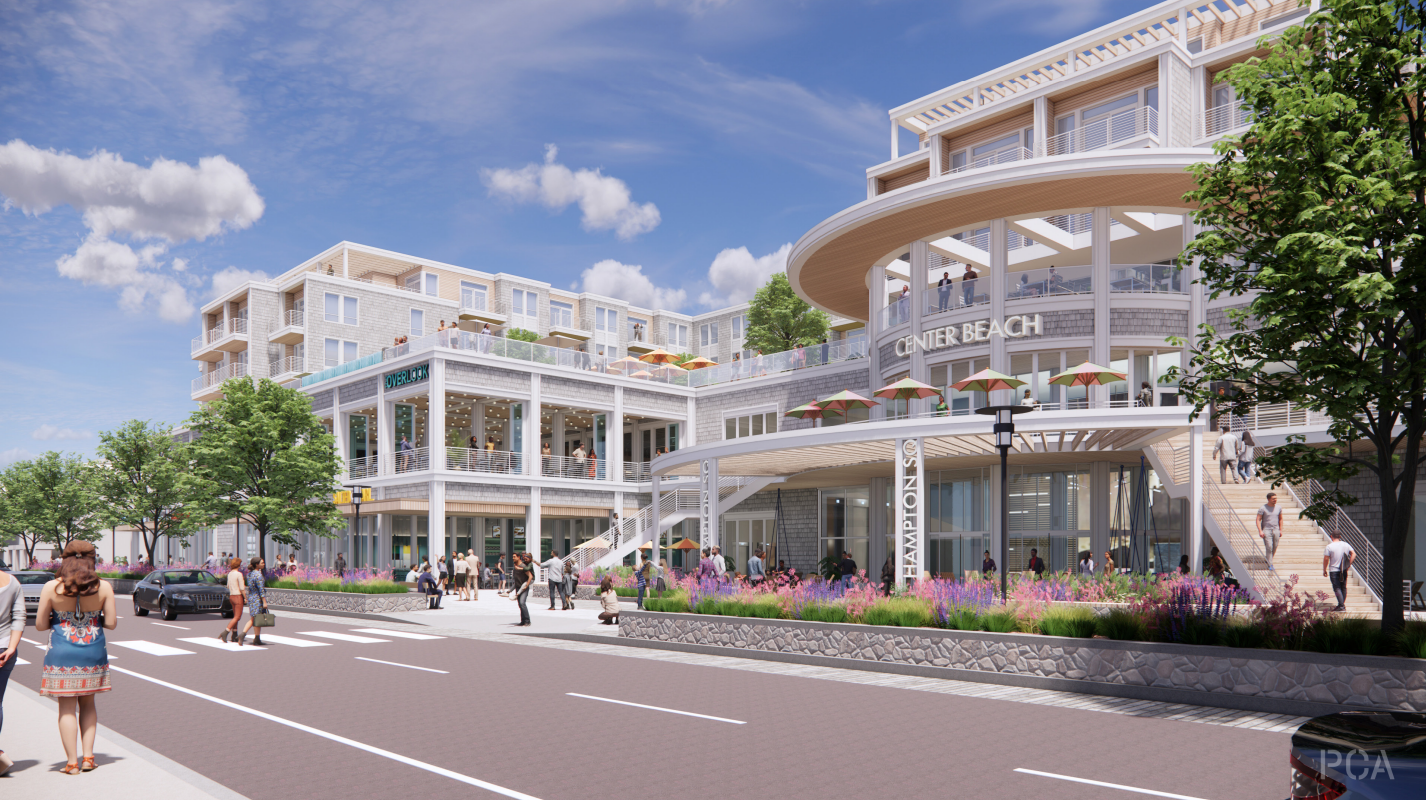
Gate City Casino, meanwhile, is relocating to the Sheraton Hotel, where a planned 93,000-square-foot gaming floor is in development. And Revo Casino and Social House rebranded multiple properties in 2024 and are planning further renovations across their portfolio.
The Brook in Seabrook remains a key competitor to The Nash. The second-largest in the state at 90,000 square feet, the Brook has transformed a former dog track and has also nearly completed a pending 24,000-square-foot expansion.
It’s a dramatic shift from the state’s early days of charitable gaming, which requires casinos to give 35% of their earnings to licensed New Hampshire nonprofits. An operator can partner with a particular nonprofit for up to 10 days a year before moving on to another one.
“Charitable gaming casinos: the hallmark of New Hampshire,” as former Democratic state Sen. Lou D’Allesandro described it.
D’Allesandro, who decades ago pushed for a single casino at the former Rockingham Park horse track, said early proposals faced fierce resistance from lawmakers who viewed gambling as immoral. But as regulations loosened, the industry accelerated.
“All of a sudden, this thing grew like topsy,” he said.
What began as small, family-run storefronts offering $2 wagers has evolved into full-scale, investor-owned entertainment centers.
Even longtime residents didn’t expect it. Christine Latino, now director of communications and charity at The Nash, said she rarely visited New Hampshire casinos, imagining them as “small, smoky poker rooms.” When she came in to interview at the Lucky Moose, she found a “little mini casino.” And when The Nash, which took over the Lucky Moose, opened, she said, the finished product looked just like the upscale renderings.
The turning point came with the legalization of historical horse racing machines in 2021. Historical horse racing machines operate for the user like any other slot machine, but generate results based on actual past outcomes of horse races.
Once they were approved, Republican State Rep. Joe Sweeney said, operators began building bigger rooms and investing heavily.
“Now there are a handful of exciting projects,” Sweeney said. They’re adding jobs, co-locating with hotels and entertainment spaces, and breathing life into aging malls such as Pheasant Lane and the old Rockingham Park property. “That is exciting for the state,” he said.
Despite more than a dozen casinos already operating, Sweeney said demand remains strong with the list of charities waiting to sign up ever growing.
Charitable payouts tell the story. When former casino owner James Rafferty — now on the board of the New Hampshire Council for Responsible Gaming — opened his first casino in 2006, wagers were capped at $2 and charities typically received $2,000 for their 10-day stint. As limits increased, such as to $20 in 2020, the checks jumped to around $50,000.
“That’s when the industry really started taking off,” Rafferty said.
Today at The Nash, charities often receive up to $200,000 during their run, amounts that Latino said can reshape an organization.
“It is life-changing,” she said. “The best way to look at this from a nonprofit is to consider it like you hit the lottery.”
New Hampshire is the only state that follows this method of giving gaming revenue to charity.
“What we have in place is unique,” D’Allesandro said. “I think we have the most open state in the United States for gambling.”
But he also noted that the line between charitable gaming and traditional casino gambling is thin.
“What’s the difference between what we’re presenting and a full-blown gambling casino? Nothing,” he said. “When you add ‘charitable’ to the name, it gives it a unique flavor. You can say, ‘I’m losing — but I’m losing for a charity.’”
New Hampshire’s gambling past
New Hampshire’s gambling history dates back to 1933, when wagering began at Rockingham Park’s horse track. The state launched the nation’s first legal state lottery in 1963.
A major shift came in 2006, when lawmakers allowed for-profit companies to run charitable gaming and casino-style operations on behalf of nonprofits. Under the system, charities receive 35% of gross table-game revenue, the state takes 10% for the general fund and education trust fund, and operators keep the remainder.
Since then, lawmakers have steadily expanded the industry. Betting limits on charitable games rose from $4 to $10, then to $50, before limits were eliminated altogether in 2026. The state later legalized historical horse racing machines in 2021 and video lottery terminals in 2025.
The expansion has boosted state revenue in a state without income or sales taxes. Lottery-related revenue doubled from $308.6 million in fiscal 2016 to $605.4 million in fiscal 2025, according to the New Hampshire Fiscal Policy Institute, driven by new games, higher wagers, and mobile and online betting options.
Gaming facilities have also become a growing revenue source. Between 2021 and 2025, state revenue from these charitable venues rose 11% to nearly $60 million. In 2025, nonprofits earned more than $64 million, while operators generated nearly $300 million in gross revenue.
State law requires every gaming facility to partner with nonprofits. No gambling can take place unless a charity is scheduled to participate. Each nonprofit can partner with a facility for up to 10 days per year and must be licensed through the New Hampshire Lottery. Facilities offering historical horse racing must contract with at least two nonprofits per operating day.
Revenue is distributed based on game type: Charities typically receive 8.75% of gross revenue from historical horse racing, while video lottery terminals are taxed at 31%, with a portion directed to local charities.
Potential pitfalls in the rise in gambling
Not everyone is for the new casinos. The state passed a law in 2025 allowing cities and towns to hold a vote to “opt-out” of casinos in their community. Eight communities have opted-out: Portsmouth, Barrington, Bedford, Croydon, Hancock, Henniker, Littleton, and New London.
However, the law only pertains to future casino proposals. Those already operating or in active development prior to the town’s opt-out vote are protected by a grandfather provision.
“These votes overwhelming demonstrate opposition to casino expansion,” wrote the Granite State for Responsible Gambling in a press release. “New Hampshire has very few controls and virtually no voice for municipalities … (to) mitigate their many impacts on host communities.”
According to National Council on Problem Gambling, about 2.5 million adults in the U.S., or 1%, are estimated to meet the criteria for severe gambling problems in a given year. Another 5 to 8 million people, or 2% to 3%, are considered to have mild or moderate gambling problems.
Also, research shows that young people may be more susceptible to becoming problem gamblers. Gamblers between the ages of 18-24 are at a “high risk of developing gambling problems,” according to the Responsible Gambling Council. The legal age for gambling in New Hampshire is 18, although some casinos — like The Nash — will only admit those 21 and older.
With the proliferation of gambling, including sports betting, iLottery and more in the state, Rafferty said his newly formed New Hampshire Council for Responsible Gaming will advocate for more help and education on the problem.
“We’re going to help those people,” Rafferty said.
The organization was able to secure some funding via a new law implemented last year that directly inputs 0.25% of total gaming revenue from VLTs into a dedicated addiction services fund.
Rafferty is concerned about larger facilities coming in, but says that with the right resources the state can mitigate the problems.
The New Hampshire Council on Problem Gambling, which offers a hotline for those struggling, says the need for their services continues to grow.
Angela Bergen, the executive director, said in a message to Boston.com that the helpline received 200 calls in 2021, but by 2025 that number had increased to 500.
As gambling expands, Bergen said they are working to increase safeguards, including creating a statewide voluntary self-exclusion program — right now people need to go to each casino to be added to that casino’s exclusion list individually — and increase access to treatment.
“I think the danger lies ahead,” said D’Allesandro. “What is going to happen? I don’t think anybody knows that at this point. But we have had a proliferation of gambling.”

Beth Treffeisen is a general assignment reporter for Boston.com, focusing on local news, crime, and business in the New England region.
Sign up for the Today newsletter
Get everything you need to know to start your day, delivered right to your inbox every morning.