





If the plans move forward, it will be the third time that the coffee brand has gone public in the last eight decades.
Send this article to your social connections.
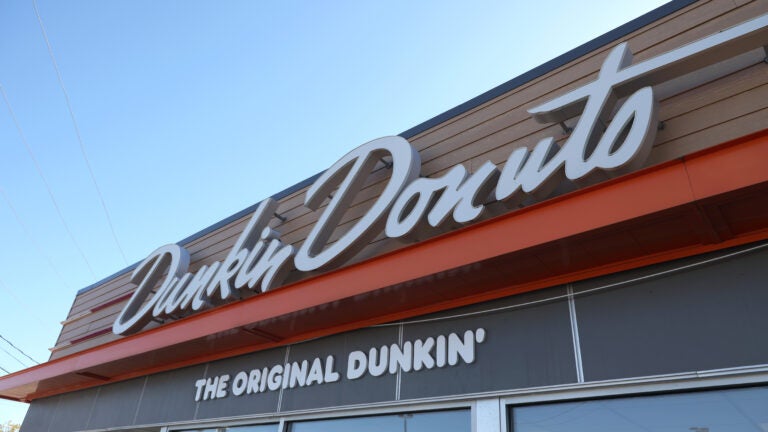
The parent company behind Dunkin’ may be heading for Wall Street. Inspire Brands, the Atlanta-based conglomerate that owns Dunkin’, announced Friday that it plans to go public, setting the stage for the beloved brand to hit the stock market for the third time in eight decades.
Inspire Brands, which also owns Arby’s, Baskin-Robbins, Buffalo Wild Wings, and Sonic, said in a release that it filed confidentially with the Securities and Exchange Commission for an initial public offering.
However, there is no date set for its stock market debut, price per share, or even its stock ticker symbol.
What is an IPO?
An initial public offering is when a private company converts to a public company by offering for sale a portion of its ownership through newly issued shares, Investopedia notes. It allows public investors to purchase equity and trade its stock on a public exchange.
Advertisement:
Besides raising significant capital for growth or paying down debt, it also gives founders, early backers, and employees a chance to see gains on their investments.
Since this is a confidential filing, the SEC will allow the company to make its initial IPO filings privately as it works with regulators.
Before it can go public, the company will have to file an updated public registration statement that includes more information, such as several years of financial statements, executive pay, and business plans. It’s unclear when it will be released.
It isn’t the first time Dunkin’ has gone public.
Advertisement:
The coffee and doughnut chain was founded in 1948 by Bill Rosenberg in Quincy, Mass., as Open Kettle.
According to The Boston Globe, the company first went public in 1968 under the founder before he sold it to the British conglomerate Allied-Lyons in 1990 for $325 million.
In 2005, The New York Times reported that three private equity firms — Bain Capital, Carlyle Group, and Thomas H. Lee Partners — bought Dunkin’ for $2.4 billion, then took it public again in 2011. (At the time, the company traded on the NASDAQ under DNKN.)
In 2020, the Globe reported that Inspire Brands, along with its investment firm partner, Roark Capital, bought Dunkin’ and combined it with its other restaurant chains in a $11.3 billion deal.
So why go public?
The Globe reported that Inspire and Roark paid $8.8 billion for Dunkin’ and assumed an additional $2.5 billion in debt. The funds raised by selling shares in an IPO will help pay that off.
In the press release, Inspire Brands said it “expects to use the net proceeds of the proposed offering to repay outstanding indebtedness under its existing term loan facility and pay offering fees and expenses.”
Investopedia also notes that going public can also help the company facilitate easier acquisitions, secure more favorable credit terms, and brand awareness.
Advertisement:
But going public does come with its downsides. It also means disclosing financial information, answering shareholders’ questions, and responding to stock price fluctuations.

Beth Treffeisen is a general assignment reporter for Boston.com, focusing on local news, crime, and business in the New England region.
Sign up for the Today newsletter
Get everything you need to know to start your day, delivered right to your inbox every morning.

Want to leave a comment?
To comment, please create a screen name in your profile