





Some councilors argued a rejection would send a powerful message to Mayor Wu, while others said it would be irresponsible.
Send this article to your social connections.
With frustration mounting over cuts included in Mayor Michelle Wu’s budget proposal for the next fiscal year, some members of the Boston City Council have been floating the idea of rejecting her proposal outright in an effort to pressure her to increase spending.
That debate exploded into the open at the body’s meeting this week, when a motion to vote on and reject Wu’s proposal failed to pass. But the councilors in attendance were evenly split, revealing significant divisions among the members over when and how to push back against Wu.
The motion ultimately failed with a 6-6 vote. Councilors Miniard Culpepper, John FitzGerald, Ed Flynn, Julia Mejia, Erin Murphy, and Brian Worrell all voted in favor of the motion. Councilors Liz Breadon, Sharon Durkan, Ruthzee Louijeune, Enrique Pepén, Henry Santana, and Ben Weber opposed it. Councilor Gabriela Coletta Zapata was absent, as she recently gave birth to her first child and is on maternity leave.
Advertisement:
Rejecting the budget would amount to an abdication of the council’s duties, Weber said.
“What I gain by standing against rejection of the budget is that I can tell my constituents that I’m standing up for fiscally responsible positions that I can stand by, I’m not calling on the mayor to do something I would not want her to do, and that I am taking this job and the duties we’ve been handed seriously and I’m not using the budget as a tool to increase my popularity,” he said.
Advertisement:
Councilors can alter individual line items in the proposed budget but cannot increase the overall amount that the city is planning to spend. Wu said in a letter to the council last week that she would not increase spending, even if the council were to reject the budget. Wu is rebuffing calls to increase revenue projections or draw from the city’s reserves for the fiscal year 2027 budget. If the council were to reject Wu’s budget, she would be able to submit it again with no changes, according to the city’s legal department.
Rejecting the budget would not “end collaboration,” Worrell said, but would give Wu the opportunity to come back with a budget that “better respects” all stakeholders. Rejecting it would have given the council “leverage” heading into the amendment process.
The council has until June 10 to take action on Wu’s budget, either accepting, rejecting, or amending it. If the council amends it, the mayor then decides whether to accept or veto the council’s changes. Her veto can be overridden by a two-thirds vote on the council.
The council is planning to begin working sessions for the amendment process on May 28, Worrell said. He argued that rejecting the budget this week would still have allowed for enough time for the council to respond to whatever budget proposal Wu would have resubmitted.
Advertisement:
“We don’t lose anything by rejecting this budget. We don’t know what we gain,” Worrell said.
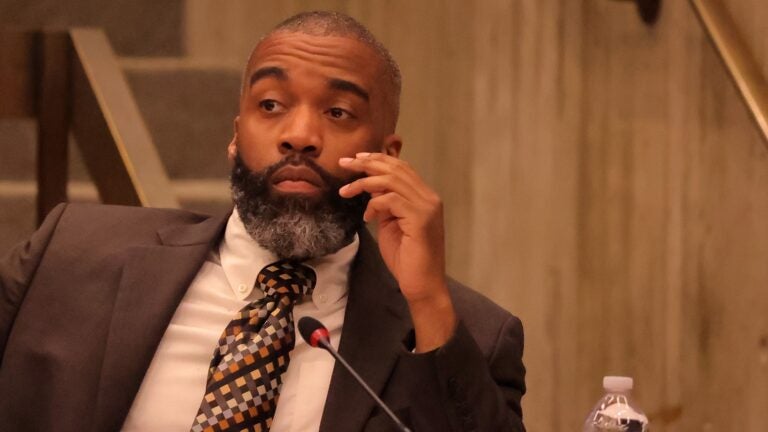
Pepén advocated against rejecting the budget, saying that any delays to beginning the amendment process would look “irresponsible.” He called on his colleagues to formulate an amendment package so that they could have a “tangible solution without kicking the can down the road.”
“We have already literally gotten a response from the mayor’s administration saying that she’s not going to change this budget,” he added.
FitzGerald pushed for a budget rejection as a way to send a message to the administration about being more fiscally responsible in the future.
“The rejection is not to say ‘raise revenue or pull from reserves,’” he said. “It’s really to say ‘fix the policies that got us into this place so we’re not continuing to fall further down.’”
Filling the current budget deficit
Looming over the debate was the fact that the city and Boston Public Schools are facing budget deficits that need to be plugged before the end of the current fiscal year. Wu sent letters to the council this week asking to use $70 million in reserve funds to fill the gaps.
Advertisement:
Wu attributed the approximately $47 million gap in the city’s operating budget to “historic snowfall levels” earlier this year.
“In five of the six fiscal years prior to FY25, the City of Boston underspent our budgeted snow removal line, resulting in surpluses that accumulated in the general fund and contributed to the City’s reserve balances. This year’s storm activity is precisely the kind of unforeseen, non-recurring cost that reserves exist to address,” the mayor wrote.
Her administration delayed hiring last December, then implemented “stricter expenditure controls” like continued delayed hiring and freezes on “non-personnel expenditures” in March, Wu wrote.
The approximately $22.8 million Wu wants to use to address the BPS deficit is needed because of rising health insurance and utility costs, according to her letters.
BPS officials paused hiring, stipend payments, and contracts in the district’s central office last November, then tightened spending controls in December. The district implemented a partial hiring freeze in February.
Ross Cristantiello, a general assignment news reporter for Boston.com since 2022, covers local politics, crime, the environment, and more.
Sign up for the Today newsletter
Get everything you need to know to start your day, delivered right to your inbox every morning.

Want to leave a comment?
To comment, please create a screen name in your profile