





Get a first look at the completed observatory.
By

Elisha Sauers
Elisha Sauers writes about space for Mashable, taking deep dives into NASA's moon and Mars missions, chatting up astronauts and history-making discoverers, and jetting above the clouds. Through 17 years of reporting, she's covered a variety of topics, including health, business, and government, with a penchant for public records requests. She previously worked for The Virginian-Pilot in Norfolk, Virginia, and The Capital in Annapolis, Maryland. Her work has earned numerous state awards, including the Virginia Press Association's top honor,
Best in Show, and
national recognitionfor narrative storytelling. For each year she has covered space, Sauers has won
National Headliner Awards, including first place for her Sex in Space series. Send space tips and story ideas to
[email protected]or text 443-684-2489. Follow her on X at
@elishasauers.
on
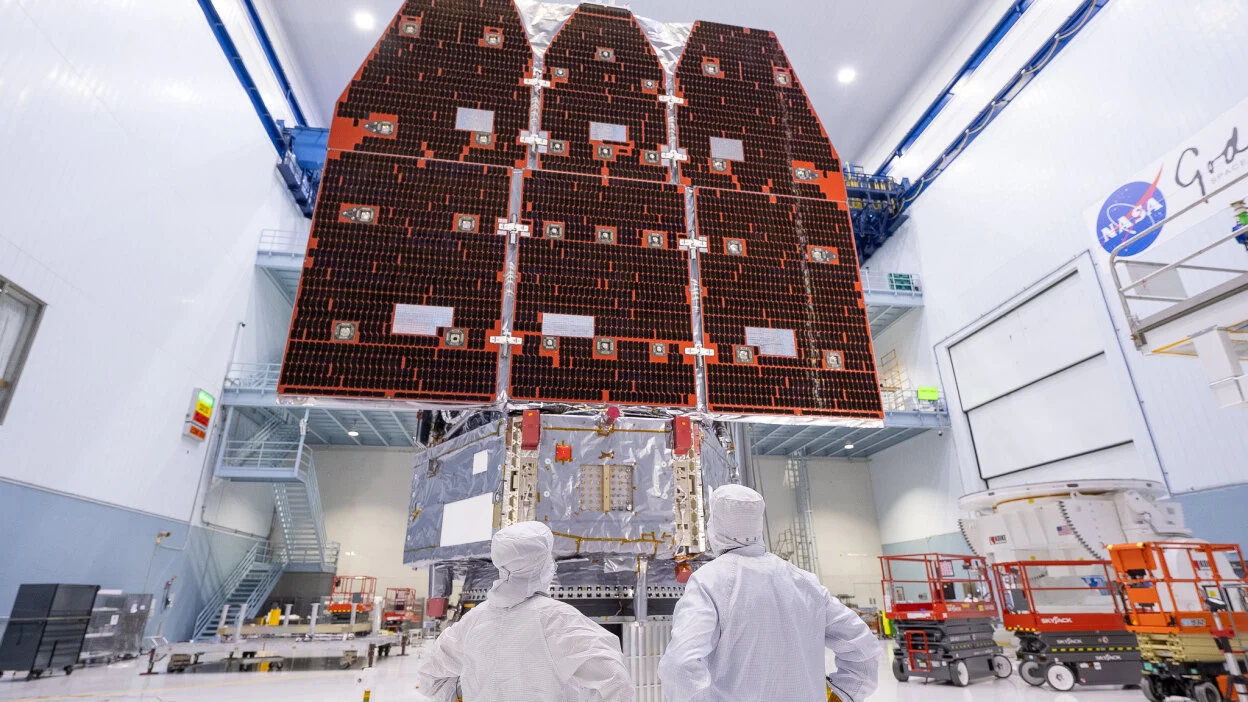
NASA's Nancy Grace Roman Space Telescope is about to ship to Kennedy Space Center in Florida to prepare for launch. Credit: NASA / Jolearra Tshiteya
NASA has completed its next space observatory, built to create sharp, panoramic maps of the universe while revealing how the most mysterious, invisible substances and distant worlds shape the cosmos.
About a quarter-century after the Hubble Telescope reshaped astronomy, and a few years into the era of the James Webb Space Telescope, NASA's Nancy Grace Roman Space Telescope will join them not as a replacement, but as a big-picture partner. Where Hubble and Webb zoom in for close‑ups, Roman will capture Hubble‑like detail across areas about 100 times larger, turning isolated snapshots into sweeping surveys that show the very scaffolding of the universe.
At NASA's Goddard Space Flight Center in Greenbelt, Maryland, engineers are wrapping up prelaunch testing on the cutting-edge telescope. Next, the observatory will travel 900 miles to Kennedy Space Center in Cape Canaveral, Florida, where teams will prepare it for launch.
You May Also Like
That could happen as early as this September, about eight months ahead of schedule, NASA managers said at a news conference on Tuesday, April 21. Once in space, Roman will head to a stable orbit about 1 million miles from Earth, near the same region where Webb orbits the sun, and begin a years‑long campaign of deep space imaging.
"We didn't want to wait to launch the Nancy Grace Roman. We're eight months ahead of schedule," said Nicky Fox, NASA's associate administrator of science. "Everybody felt the urgency. Everybody was sprinting towards this."
Named for Nancy Grace Roman, who became the agency's first chief of astronomy and one of its earliest female executives, the telescope reflects a legacy of opening new windows on the universe from above Earth's atmosphere. Nicknamed the "mother of Hubble," Roman helped lay the groundwork in the 1960s for a whole fleet of space telescopes.
A wide shot of the dark universe
At the heart of the mission is Roman's eight-foot-wide mirror, the same size as Hubble's, paired with a powerful camera that sees in infrared light, like Webb. That camera's field of view is Roman's superpower. In a single shot, it can image vast swaths of sky that Hubble simply can't match.
Because a space telescope can only see one patch of sky at a time, it has to take many separate "pointings" — individual shots aimed at slightly different spots — and stitch them together into a mosaic.
In 2023, Ami Choi, an astrophysicist and scientist for Roman's wide field camera, contrasted the difference between Hubble and the new telescope. To photograph the Andromeda Galaxy, Hubble has to take 400 smaller images and stitch them together. For Roman's camera, that should only take two pointings, she said.
This wide, sharp vision is what scientists need to study the so-called "dark universe." Ordinary matter — the stuff that makes up stars, planets, and even people — accounts for only about 5 percent of the cosmos. The bulk of it is dark matter and dark energy, which do not emit light but leave clues where they've influenced space's expansion and the arrangement of galaxies.
Mashable Light Speed
"Current observations hint that our standard model of the universe is incorrect," said Julie McHenry, senior project scientist, referring to cosmologists' best recipe for the universe. "Roman will be able to confirm these and set us on the path to understanding what's right."
Roman will trace those clues in several ways at once. By mapping the positions and shapes of hundreds of millions of galaxies, it will show how structures have grown from the early universe to today. Subtle distortions in galaxy shapes will reveal how clumps of invisible space stuff bend their light on the way to us, exposing the hidden dark matter. At the same time, Roman will discover and track large numbers of a special kind of exploding star, known as Type Ia supernovas; their predictable brightness lets astronomers measure how quickly space has expanded over time.
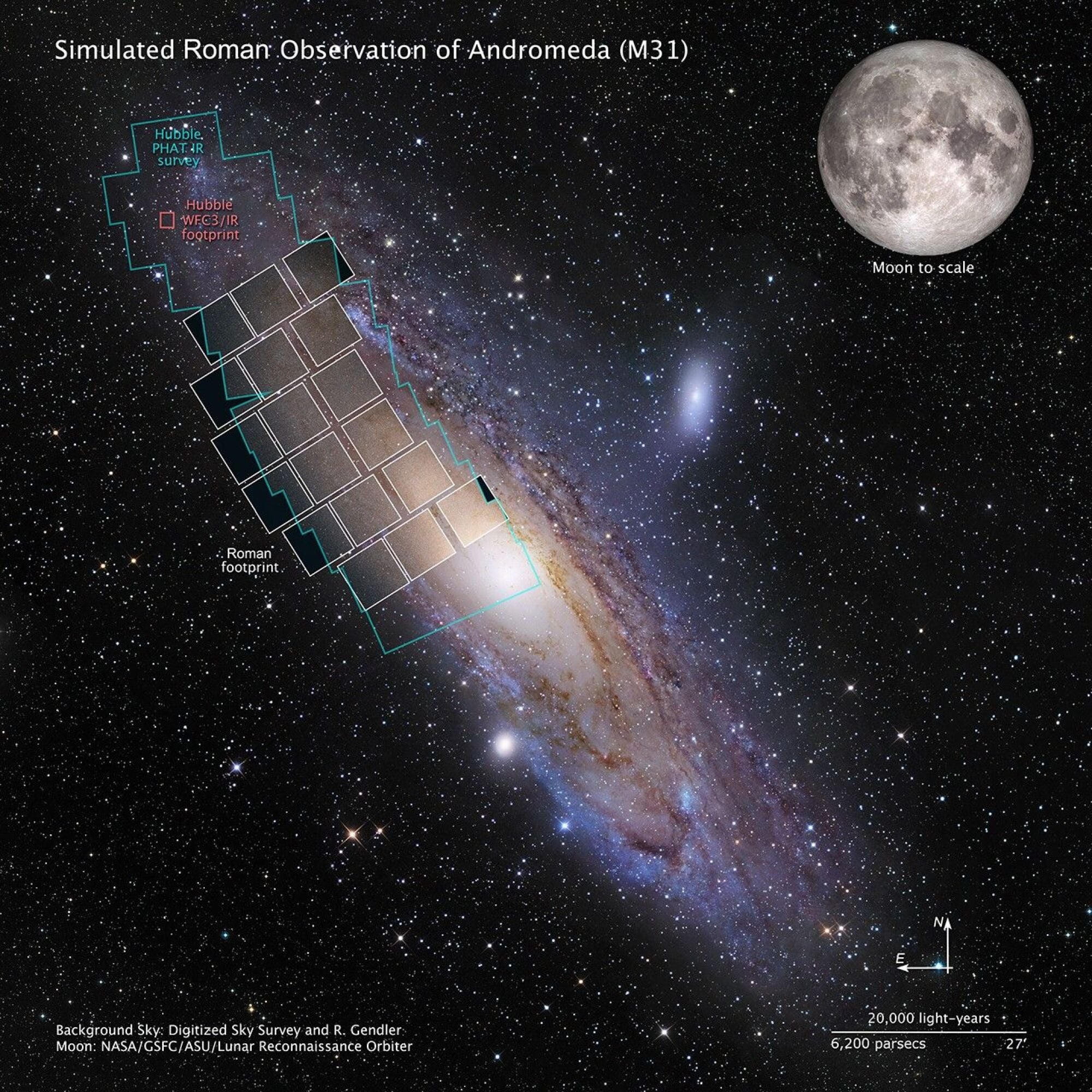
Imaging large space targets, such as the Andromeda Galaxy, will require far fewer smaller images to stitch together than other flagship observatories. Credit: NASA composite image
Taken together, these measurements will allow scientists to test competing ideas about dark matter, dark energy, and even the laws of gravity themselves with far greater precision than ever before. Other observatories can make similar kinds of measurements, but none combines Roman's sharpness and sky coverage in the infrared, NASA mission leaders say, which lets it see more distant and dust-covered galaxies.
A new census of distant exoplanets
Roman's wide‑field power also makes it skilled at exoplanet hunting. Previous missions like Kepler and TESS mostly found planets close to their stars, where their repeated crossings dim starlight in a regular rhythm. Roman will focus on a different region of planetary systems: the cooler, outer zones, where worlds similar to Jupiter and Saturn reside. It may even find wandering planets that aren't tethered to stars.
To do this, Roman will repeatedly monitor dense star fields toward the center of our Milky Way. As a foreground star passes in front of a more distant one, its gravity will briefly magnify the background star's light. If the foreground star carries planets, they can produce smaller, telltale blips in that brightening. This technique, called microlensing, works best in precisely the kind of crowded, faint, and distant regions that Roman is expected to capture.
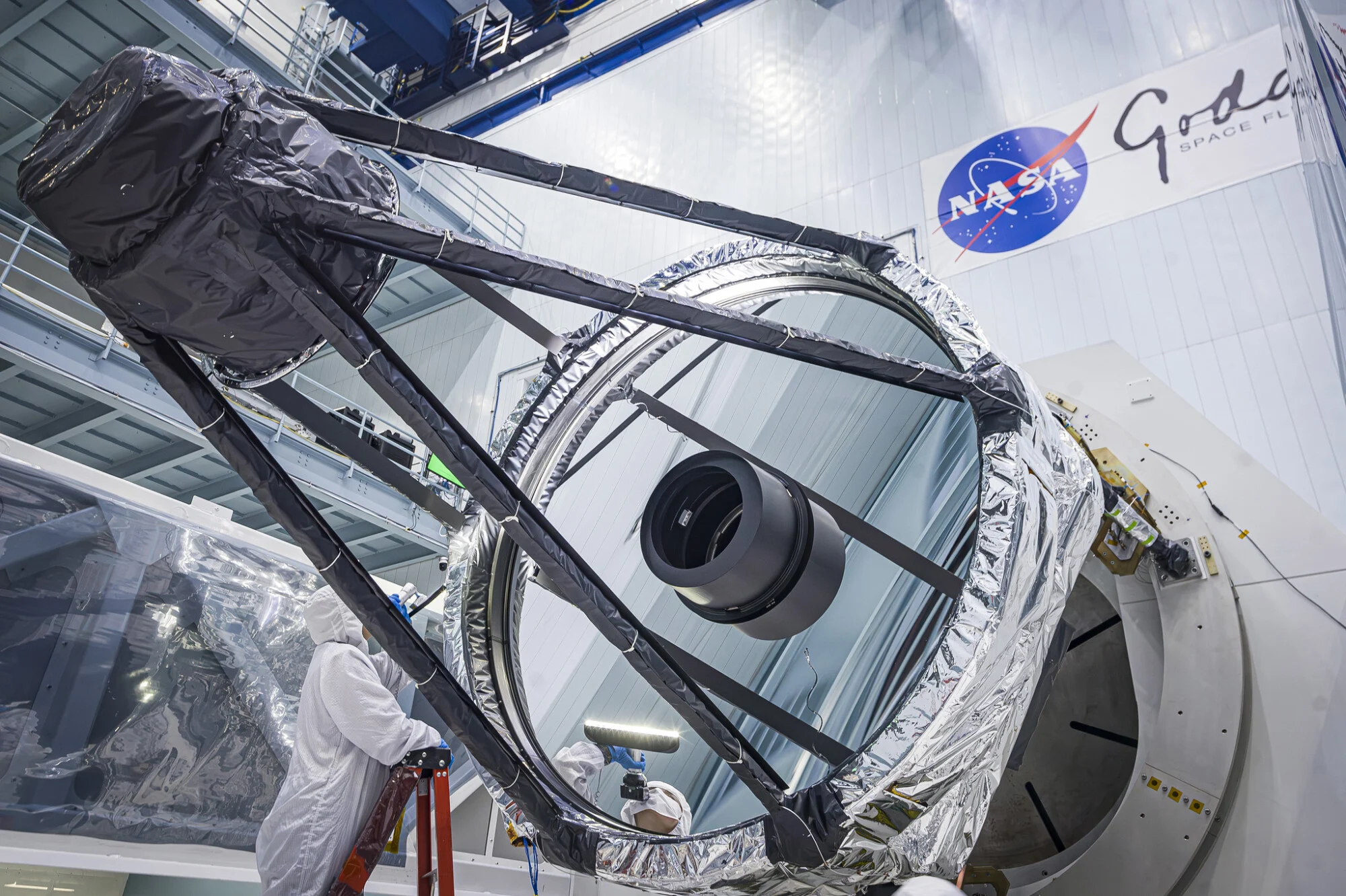
Optical Engineer Bente Eegholm inspects the primary mirror for the Nancy Grace Roman Space Telescope. Credit: NASA / Chris Gunn
Over its mission, Roman will attempt to record thousands of these microlensing events, revealing planets at distances and masses other surveys mostly miss. From that haul, astronomers will compare our solar system's architecture with many others and judge whether having inner rocky worlds and outer giant planets is the status quo or something more rare.
Roman will also test an advanced coronagraph — a system of masks and mirrors that blocks a star's glare so the telescope can try to see the faint glow of planets around it. On Roman, this is more of a technology trial than an everyday science instrument, but if it works, it will set the stage for a future observatory whose main goal is to directly image Earth‑like worlds around other sun‑like stars.
"What astronomers can do today with coronagraph instruments is see planets that are maybe a million times fainter than their stars," Vanessa Bailey, NASA's Roman coronagraph scientist, told Mashable. "What we're doing with the Roman coronagraph is hopefully getting to 10 million to 100 million times fainter, maybe even a little bit more, in the best case scenario."
Catching the universe in motion
Roman is also built for studying how the sky changes, creating a veritable library of "before" and "after" shots.
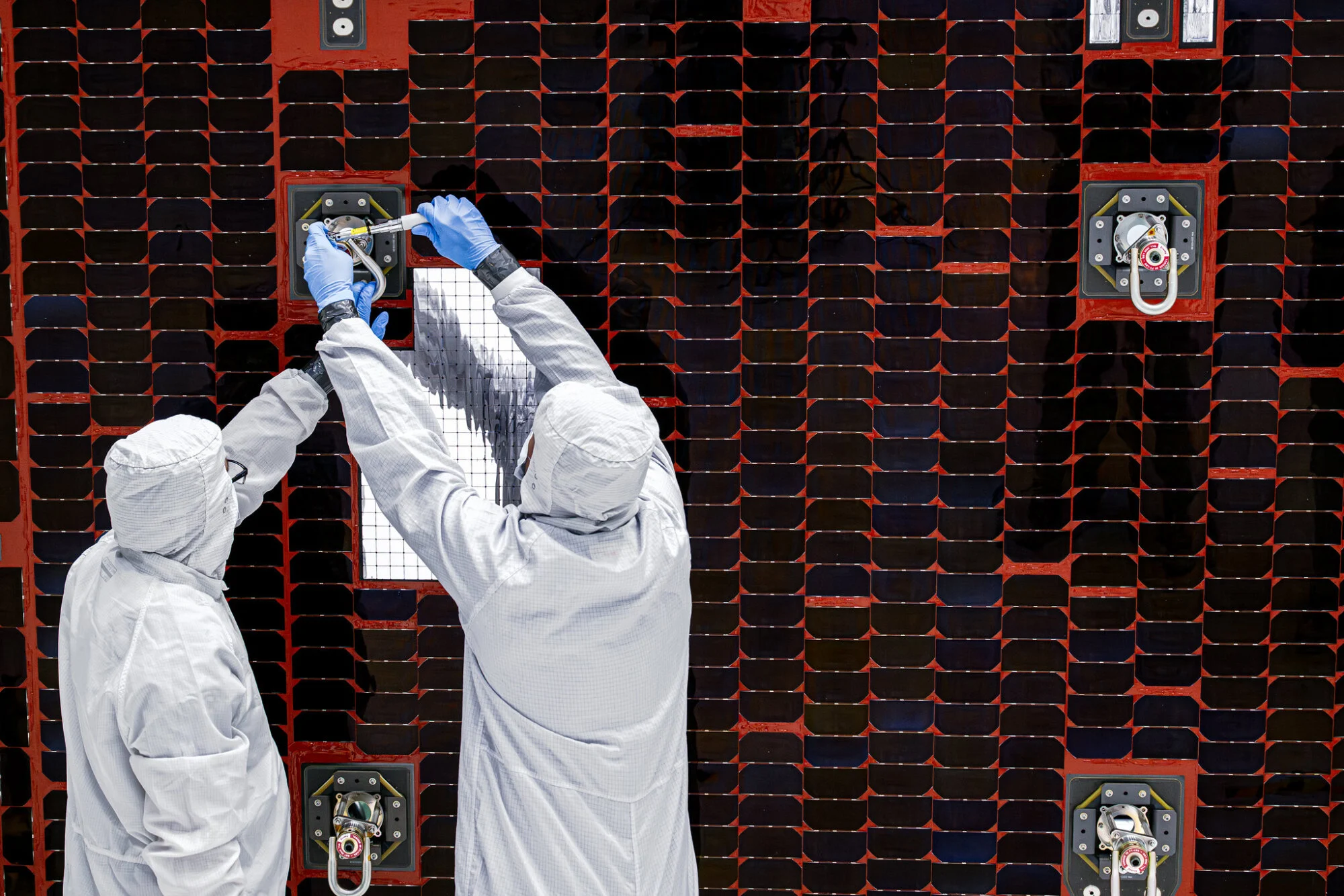
Technicians assemble the solar panels on the Nancy Grace Roman Space Telescope. Credit: NASA / Sydney Rohde
One of its major surveys will repeatedly scan high‑latitude regions of the sky, away from the plane of the Milky Way. By returning to the same fields every few days, Roman will catch supernovas as they ignite and fade, watch black holes light up as they feed on nearby material, and uncover other short-lived, dramatic events across the distant universe. Its infrared vision will reveal explosions and flares that dust clouds hide from visible‑light telescopes.
Another core program will stare toward the Milky Way's central bulge. There, Roman will track how the brightness of millions of stars rises and falls on timescales of minutes to months. Those records will not only power the microlensing planet search but also expose other phenomena, such as neutron stars and black holes.
Because Roman will cover such large areas with fine detail, its images will also become a long‑lasting reference tool. When other telescopes later spot something odd — a burst of high‑energy radiation, for instance, or an unusual variable star — astronomers will be able to pull Roman's earlier images and see what was there before the excitement.
"The images it captures will be so large there is not a screen in existence large enough to show them," said NASA administrator Jared Isaacman. "Roman will give the Earth a new Atlas of the universe. I think it's worth pausing for a moment just to think about how really incredible that is."

Elisha Sauers writes about space for Mashable, taking deep dives into NASA's moon and Mars missions, chatting up astronauts and history-making discoverers, and jetting above the clouds. Through 17 years of reporting, she's covered a variety of topics, including health, business, and government, with a penchant for public records requests. She previously worked for The Virginian-Pilot in Norfolk, Virginia, and The Capital in Annapolis, Maryland. Her work has earned numerous state awards, including the Virginia Press Association's top honor, Best in Show, and national recognition for narrative storytelling. For each year she has covered space, Sauers has won National Headliner Awards, including first place for her Sex in Space series. Send space tips and story ideas to [email protected] or text 443-684-2489. Follow her on X at @elishasauers.
