


Singer-songwriter Leith Ross is taking frictionmaxxing to the extreme in 2026.
By

Anna Iovine
Associate Editor, Features
Anna Iovine is the associate editor of features at Mashable. Previously, as the sex and relationships reporter, she covered topics ranging from dating apps to pelvic pain. Before Mashable, Anna was a social editor at VICE and freelanced for publications such as Slate and the Columbia Journalism Review. Follow her on Bluesky.
on
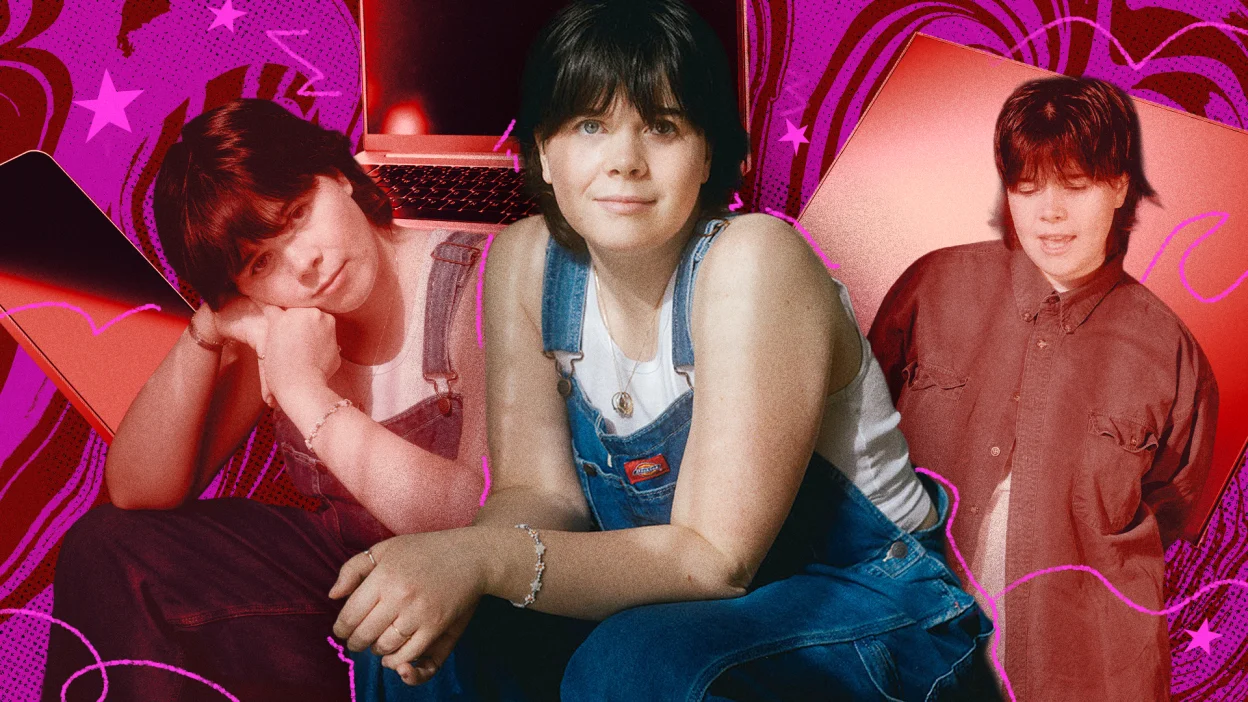
Credit: Adam Kelly/Zain bin Awais/Mashable/Getty Images
Between "friction-maxxing" and the discussions regarding "social media addiction," it's safe to say that we're ambivalent about our lives online. We'd love to "touch grass," yet the bright colors of Instagram Reels lure us into remaining on our phones.
Some people, though, are making concerted efforts to decrease their screentime. But musician Leith Ross is taking it a step further: They're not looking at screens for a full year.
Not literally — they will go see a movie in the theater or borrow their partner's laptop for a Zoom interview, which is how Mashable spoke to Ross. But they no longer use a smartphone or a laptop themselves. They use an alarm clock, write by hand, and only play physical games.
You May Also Like
The Canadian singer-songwriter still films videos for YouTube — but they record on a camcorder, and someone else uploads them to their channel with over 46,000 subscribers.
Mashable interviewed Ross about their "year without screens," why they're doing it, and how it's changing their life.
Why go screen-free?
"It was a long time coming," Ross said. They explained that they believe they're addicted to screens and that their compulsive behavior around screens of all kinds was impacting them negatively.
Whether one can truly be addicted to screens or social media is, as of now, contested, much like sex addiction. But the World Health Organization has noted an increase in problematic social media use, such as a lack of control and experiencing negative consequences. "But it felt like everyone was dealing with the same thing," Ross said. They didn't have the motivation to try to do anything about it.
One day, though, their phone was dead. Their TV wasn't working, either, or something like that kept them off screens.
Then, they wrote a song they really liked, and they had an epiphany: There are probably hundreds of songs they could've written that never came to be because they were never bored.
There are probably hundreds of songs they could've written that never came to be because they were never bored.
"I felt a lot of grief in that moment, because writing music is what I love to do, and…and it feels like something I was supposed to do with my life," they said. "And I had just not been doing it as much as I could have."
That thought spiraled into thinking about how many books they wanted to read, too, which led them to wanting to do this project. Cutting things one bit at a time wasn't going to work, as it hadn't worked for them before. So they made a plan. It took several months to implement, but since Jan. 6, 2026, Ross has been living (by and large) screen-free.
"My year of no screens"
In a seven-page document, Ross outlines the rules for their year with no screens as well as a mission statement. No smartphones, no TV, no laptop or desktop computer, and no gaming systems, with limited exceptions. For instance, they can use a library computer for essentials, such as booking flights. Their family also requests FaceTimes, which are done on a friend's or their partner's phone and supervised.
Ross has uploaded two YouTube updates since starting their year with no screens, one at the end of Jan. (that has over 100,000 views) and another in Feb. Since then, they (or rather, their team) have also posted a song demo and vlogs from the European leg of their I Can See The Future Tour, a string of shows to support the release of their second album of the same name.
Compulsive screen use and information overload
What problematic screen use looked like in Ross's life was a constant need to be online or looking at a screen, an extreme anxiety or bad feeling in their body when they didn't have access, and a muscle memory of always reaching for a device.
Many people believe they're addicted to social media these days, and their screentime is in the double-digit daily hours. But Ross admitted that they may be a more extreme case, saying they couldn't physically stop themself from being online or scrolling or even watching TV.
Mashable Trend Report
"If I was having an anxious night, I would just be on TikTok until four in the morning or later, because as soon as I put it down, I felt that like horrible, overwhelming anxiety," they said. "It was just like my constant, constant, constant coping mechanism for everything."
But they hesitate to support social media bans for children, such as the mandate enacted in Australia last Dec.
"Our aim should be less on making policy that affects the population and more on making policy that affects the tech companies that are f*cking us over," they said, "for lack of a better term." They brought up social media algorithms that amplify hate speech and disturbing content, and that there should be a moral standard for what is shared and pushed by algorithms.
Social media gives us the illusion of being connected, they said, but we're bombarded with information in an unhelpful way that shuts us down. We don't see uplifting content like liberation work — at least, that's not what Ross was seeing during their last couple of months online.
When they used social media, they also hyperfixated on how others perceived them — a common complaint. For example, last time they toured, they'd immediately go online after a show to see what they and their bandmates looked like, what they sounded like, and what people thought. But during their most recent tour, which ended weeks ago, they "couldn't lean on anybody else's experience at all."
"I just had to take it at face value for what happened to me," they said, "and it sounds so funny, because isn't that just the human experience?"
Not seeing the concert through other people's eyes was strange, but it made Ross happier. They weren't overanalyzing themself, how they looked on stage, or their behavior. "There was nothing that I could cling to and be hard on myself about in that way," they said.
"I was really forced into the moment, the present, which is a great feeling," Ross said.
How relationships change post-social media
Besides their relationship with themself, their relationships with other people have changed since they began their year of no screens — for good and bad.
For the friends they see often, their relationship has improved. Since they can't keep up with friends on social media, when they see or talk with them, they're excited to hear about what's been going on.
"It's not like I wasn't excited to hear about my friends before, but I felt like I already knew," they said.
On the flip side, they said, "I now am not really allowed any illusion of being close to a person that I'm not actually close to." There are people Ross considered close friends before the project started, and while they still do, they don't really connect as much. Before, they felt an intimacy with people just replying to their Instagram stories.
"And I'm not saying that that's unimportant," they said. "But I am realizing that…I don't actually see them very much or at all, and…that we didn't have an ability to connect often and well outside of being online."
"It feels a bit lonely at times," they said, "but it's also inspiring me to strengthen those relationships in real, tangible ways that I can control."
They've also set up a P.O. Box and receive letters from fans and viewers. "Getting a handwritten letter is like a joy that I haven't experienced since I was very young, and it's so fun," they said. They used to be affirmed by kind DMs, now — similar to catching up with friends — receiving these positive messages now "feels like that much more rare and special and unique," especially because of the effort required to write and send a physical letter.
Should I do a year with no screens?
Ross recommends that anyone do this to the amount that they feel capable of — and not for the reasons you might think.
Beyond getting your attention span back, wanting to read more books, and be more creative, Ross believes there's a larger existential threat that makes them want to encourage others to lessen their screentime.
They believe that an emotional distance has been created between people and their community due to capitalism, individualism, and social media. We're not tangible to each other, and we have less desire to sacrifice for others and do the hard things that make the world better, they said. Living a less digital life and being a part of a physical community may help with that.
"I feel like we need to find a very concrete way back to each other, so that when push comes to shove, we will have real, physical communities in our lives that can take care of us and who we can take care of," they said.
They won't stop at a year, but when the year is up, they'll likely be less strict, they said. One of the main things they don't anticipate, though, is ever getting a smartphone again. The number one thing that has brought them back to their body and self is not having a computer on them at all times, they said.
For now, they seem to be frictionmaxxing to the extreme — not that they've seen the meme online before Mashable told them about it.
"It's nice to hear from the other side of the veil [that] I'm relating to an online trend," they joked.

Associate Editor, Features
Anna Iovine is the associate editor of features at Mashable. Previously, as the sex and relationships reporter, she covered topics ranging from dating apps to pelvic pain. Before Mashable, Anna was a social editor at VICE and freelanced for publications such as Slate and the Columbia Journalism Review. Follow her on Bluesky.
