From its humble academic origins, P4 has grown into a vibrant open-source project, with a dedicated community of researchers and practitioners united by a shared mission: to create a deeply programmable platform that puts network owners, not equipment vendors and standards bodies, in control of their networks.
The Open Networking Foundation (ONF) recently announced that its portfolio of projects will merge into the Linux Foundation (LF). As part of this merger, P4 will become an independent project hosted by LF. It will adopt LF's industry-standard governance model and be supported by a directed fund, seeded with an initial investment from ONF.
We believe this change presents an exciting opportunity for the P4 community to take the next step toward making deeply programmable networks a reality across a range of targets and use cases. We look forward to seeing the language evolve to support emerging targets like programmable NICs, appliances, and software pipelines (e.g., p4-DPDK and p4tc). We are excited to see increased use of P4 in industry for specifying and verifying network functionality, even on fixed-function targets (c.f., Switch-V, p4testgen, and ongoing work on using P4 to model SoNIC/SAI/DASH pipelines). We also believe that P4 will remain a powerful tool for the research community, making it possible to quickly prototype innovative ideas and transforming the way that networking is taught to students in universities.
In the immediate aftermath of this merger, very little will change on a day to day basis. The P4 community will remain open to all. We will continue to welcome participation in P4 Working Groups and contributions to P4 code repositories regardless of affiliation or LF membership status. The P4 Technical Steering Team (TST) will continue to be elected through an open process and will retain technical oversight for the project. Likewise, the P4 Chief Architect and P4 Working Group co-chairs will continue to be appointed by the TST and will continue to oversee day-to-day work on the project. Finally, the P4 Workshop will continue to run as an annual event, providing a forum for sharing ideas and building community, just as it has for the past decade.
The most significant change is that the P4 Advisory Board, previously appointed by the ONF board, will be replaced by the P4 Governing Board. Each organization that pledges to support the project at the Premier membership level will be invited to appoint a representative to the Governing Board. The TST will also be invited to appoint a representative to the Governing Board. The Governing Board will have financial oversight for the P4 project, making investments to help further the project while ensuring it is sustainable over the long term. Adopting LF's standard governance model is both more transparent and will also help keep our work aligned with the organizations who are most committed to helping the community achieve its goals. More details on the Governing Board will be announced in the coming weeks.
The field of computing is constantly changing, but one thing remains constant: the need to communicate information in an efficient, reliable manner. Networks were a key technology that powered the Internet revolution of years past, and they are poised to play a similar role in the current AI revolution. We simply cannot afford to go back to a closed world where progress is dictated by equipment vendors and standards bodies. Instead, we need technologies like P4 that make it possible for anyone with a good idea to be able to deploy a new network protocol, function, or service, simply by writing a program. We look forward to working with the entire P4 community as we work to make this dream a reality.
Those interested in signing up for the new P4 project under the Linux Foundation can do so here.
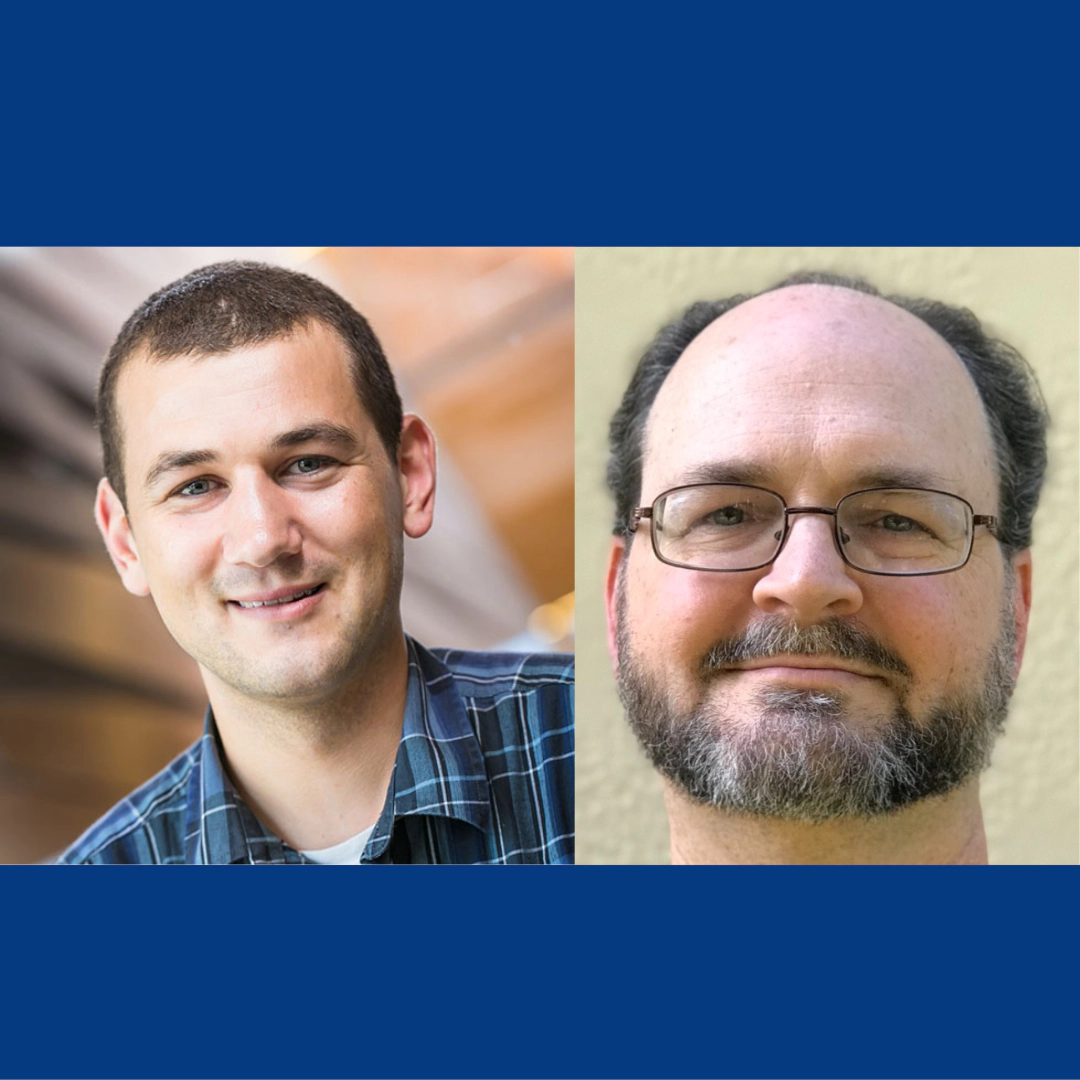
About the authors: Andy Fingerhut (Intel) is the current P4 TST Chair. Nate Foster (Cornell) is the current P4 Chief Architect.