


惯性聚合 高效追踪和阅读你感兴趣的博客、新闻、科技资讯
阅读原文 在惯性聚合中打开

推荐订阅源

S
Security Affairs
S
Secure Thoughts
P
Proofpoint News Feed
K
KPMG report finds enterprise disconnect between AI and its ROI | CIO
S
Schneier on Security
V
Vulnerabilities – Threatpost
Security Archives - TechRepublic
T
The Exploit Database - CXSecurity.com
A
Arctic Wolf
Latest news
Latest news
Hacker News - Newest:
Hacker News - Newest: "LLM"
AI
AI
T
Troy Hunt's Blog
H
Heimdal Security Blog
美团技术团队
Webroot Blog
Webroot Blog
P
Proofpoint News Feed
Hacker News: Ask HN
Hacker News: Ask HN
Google DeepMind News
P
Privacy & Cybersecurity Law Blog
U
Unit 42
Google DeepMind News
V2EX - 技术
V2EX - 技术
G
Google Developers Blog
N
News and Events Feed by Topic
Project Zero
Project Zero
The Register - Security
N
Netflix TechBlog - Medium
IT之家
IT之家
月光博客
月光博客
Cyber Security Advisories - MS-ISAC
N
News and Events Feed by Topic
Simon Willison's Weblog
L
Lohrmann on Cybersecurity
Schneier on Security
博客园_首页
Help Net Security
Help Net Security
AWS News Blog
AWS News Blog
Application and Cybersecurity Blog
S
Security @ Cisco Blogs
PCI Perspectives
PCI Perspectives
Cisco Talos Blog
Cisco Talos Blog
C
Cybersecurity and Infrastructure Security Agency CISA
H
Hackread – Cybersecurity News, Data Breaches, AI and More
D
Docker
cs.CV updates on arXiv.org
阮一峰的网络日志
阮一峰的网络日志
Spread Privacy
Spread Privacy
钛媒体:引领未来商业与生活新知
钛媒体:引领未来商业与生活新知
The Hacker News
The Hacker News

British Science Association

Countdown is on to British Science Festival in Southampton Insight into action – exploring the Public Attitudes to Science Survey Celebrating British Science Week 6-15 March 2026 British Science Association selected as the future host of EDIS APPG on Diversity & Inclusion in STEM launches new project on AI equity Smashing Stereotypes is back for British Science Week 2026 Guest blog: Community Led Research Pilot, funder’s reflections Public Attitudes to Science Survey shows the public values science, but highlights concerns over AI, quality of information, and representation Sir Roland Jackson Putting communities in the driving seat: report explores impact of participatory research Dr Alex Lathbridge and Karen Blake MBE named British Science Association Honorary Fellows 2025: Our past year, wrapped A-Level student builds highly-accurate budget Sign-Language-to-speech wrist technology A cautious welcome for key recommendations in Curriculum and Assessment Review Confidence and support to teach science has fallen, primary education report suggests 'It’s through change that science progresses’: Disabled staff in science and medicine lead action for equity Reflections on the British Science Festival in Liverpool Julia King, Baroness Brown of Cambridge's presidential address Report highlights disconnect between data collection and action on EDI in UK science and tech sector CREST website upgraded to transform STEM learning and empower educators across the UK Robo-chemists, eye-trackers and a VR fishing boat: the last day of the British Science Festival 2025 Phages, geophonics and prosthetics: the fourth day of British Science Festival 2025 Whale song, urban farming and science comedy: the third day of the British Science Festival 2025 Climate solutions, pioneering women and particle detectors: the second day of the British Science Festival 2025 Chatbots, ghost particles and neurodiversity: the first day of the British Science Festival 2025 Supporting inclusive entrepreneurship and innovation among and through micro, small and medium sized enterprises (M-SMEs) CREST Awards now free for all young people in Scotland The power of plants: eight events to dig into at this year’s British Science Festival Five health and humanity highlights from this year’s British Science Festival Exploring the wonders of space: five unmissable British Science Festival events ‘Early and meaningful’ public involvement in shaping engineering biology research and policy vital What's it like to work at the British Science Festival as an Evaluations Assistant? Blackpool school pupil launches pop-up science museum and fundraiser in campaign against ‘science deserts’ British Science Festival in Liverpool programme launches Education | Keeping STEM learning going at home From Awareness to Action: Creating Authentic Neurodiversity Support in STEM Workplaces Baroness Brown appointed 2025-26 President of the British Science Association Education | Our Engage Teacher Conference 2025 round-up British Science Association Trustee awarded MBE Introducing our new Head of Marketing and Communications Navigating eco-anxiety in the face of the climate change crisis Education| Ten top tips for adapting resources for SEND learners Education| Adapting resources for SEND learners Announcing our British Science Festival 2025 Section Presidents British Science Festival 2025 Award Lecturers announced Education | British Science Week, CREST and going cross-curricular! British Science Association signs open letter on improving climate change education Education | Tips from ten-year-old Poppy and her mum on doing CREST Education | Ten-year-old Poppy explores STEM accessibility - a CREST case study Briefing on Equality, Diversity and Inclusion strategies in STEM makes business case for growth From WhatsApp Group to Nationwide Network: The Birth of the Afro-Caribbean Commercial Science Network ‘Creating knowledge together’ essay series explores power of community-engaged research ‘Action over optics’ - APPG event explores EDI strategies in STEM A celebration that highlights the crucial role of science in our lives British Science Association Council welcomes two new trustees Bringing back Smashing Stereotypes for its sixth year for British Science Week 2025 Science education vital for UK growth and fighting misinformation, British Science Week survey shows Where next for attitudes to science? UKRI, Ipsos, and the BSA announce launch of 2025 public attitudes to science survey British Science Association’s lead strategic partner UKRI welcomes new CEO The Ideas Fund awards £1.73m to community wellbeing projects For Thought | Science, innovation, and society: working together for long-term change Change and adapt for the better with the British Science Week 2025 activity packs! Education | Using Engage Grants to run CREST Discovery Days Diversity and inclusion in engineering are vital for innovation and growth – exploring the evidence Alom Shaha, Gisela Abbam and Tom Crick named British Science Association Honorary Fellows 2024: Our past year, wrapped Education | A Gold CREST Awards case study: bringing AI into dementia healthcare Education | How showcasing STEM careers in the classroom can broaden aspirations New report reveals the impact of communities in the Highlands and Islands leading climate change research AI is ‘the conversation everyone is having’ – but how do we bring in missing voices? University of Southampton to host the British Science Festival in 2026 The BSA's response to the Autumn 2024 Budget Public views on ultra-processed foods Using nature-based learning to inspire young people Black History Month 2024: Celebrating MSD scientists and employees in STEM In conversation with Rob Deeks, CEO of Together As One (TAO) BSA Presidential Address: Professor Kevin Fenton CBE (part three) A tribute to Professor William Gosling DSc FIET BSA Presidential Address: Professor Kevin Fenton CBE (part two) British Science Festival 2024: Highlights BSA Presidential Address: Professor Kevin Fenton CBE (part one) Guest blog: Life’s Big Questions - inspiring connection, curiosity & understanding in young minds Education | How to use a British Science Week Kick Start Grant to help students connect with nature Five must-see events at #BSF24 you don’t want to miss out on! The British Science Festival will be heading to Liverpool in 2025 Professor Kevin Fenton CBE announced as President-Elect of British Science Association Education | CREST and the changes to the UCAS personal statement Make the Most of Plastic-Free July! Education | Early years maths engagement can help combat the attainment gap Education | Our Engage Teacher Conference 2024 round-up Education | Make your medical school application stand out with a CREST Award! Celebrate International Women in Engineering Day with Smashing Stereotypes! Education | Widening access to STEM resources for SEND learners Community Led-Research Pilot: successful grant recipients announced Education | Help students make the most of the summer by earning a CREST Award! Education | Leeds celebrated 2023 with CREST Awards! BSA’s election manifesto calls for a fairer and more prosperous future through science What’s it like to work at the British Science Festival? Education | Exploring reproductive health with CREST!
What is Community Science?
2018-10-12 · via British Science Association

By Saoirse Higgins, Artist, Designer and PhD candidate and Heather Mendick, Freelance Research Consultant

Every year, the British Science Association provide grants for local groups, schools, libraries and charities to organise community science activities. These include science fairs, talks, art and craft events, boat trips and more. They often look very different from what people typically perceive to be scientists’ activities. But what is it that marks out community from mainstream science? In this blog Saoirse Higgins, who’s had three community grants to run art-science projects in Papay (Orkney) where she lives, and Heather Mendick, who has researched the community grants programme, share their thoughts on this question.

An example of an activity run by a British Science Week Community Grant recipient

The underlying principles and challenges of community science

Community science activities seek to dispel stereotypes about science. Whether people monitor plastic pollution, learn about their local industrial heritage, create art inspired by the work of early botanists, build bridges out of lollypop sticks or research the chances of flooding locally, they are active participants in a science which is not a distinct discipline but inseparable from art, music, history and sociology. Their doing of science is embedded in their relationships with others and their ways of being in the world.

Of course, this is true of all science. Thomas Kuhn, among others, has shown that whichever science is developed is a product of power relations. There are many clear examples of how politics shape science including the atom bomb development during World War 2, space travel research during the Cold War and the defunding of climate science in the US today. Yet, much of mainstream science works to deny this, presenting itself as an objective search for truth. Science is neither good nor bad in itself: it’s down to how it’s used. Community science, which stresses the intertwining of the social and the scientific, represents a significant challenge to this view.

To illustrate an example of community science in action, we will use the example of CLEAR.

The Civic Lab of Environmental Action Research (CLEAR) offers a model of community engagement that considers the community they are working with. They have designed a ‘lab book’ manifesto to encapsulate their approach.

CLEAR, which is based in the Memorial University of Newfoundland describes itself as a ‘feminist, anti-colonial lab specialising in monitoring plastic pollution’. They are funded by grants to support their research and pay the researchers involved in projects.

They emphasise the importance of understanding that scientists are not coming into a project clean and neutral and always have a position and an agenda, which affects the process, including what the end results will look like. The lab has designed a ‘living lab book’ that illustrates their values, guidelines and protocols. They encourage others to set up similar labs and importantly, they offer support and guidance to help people do this. Open dialogue is encouraged, to iron out any misinterpretations and hierarchy within the research. CLEAR describe themselves as activists emphasising that they are about making change happen through appropriate practical methods and processes rather than focusing on the scientific outcomes and findings. By being responsive to what is happening within the community, they can adjust and ‘re calibrate’ methods and ways of doing things depending on what is happening in the real world at the time.
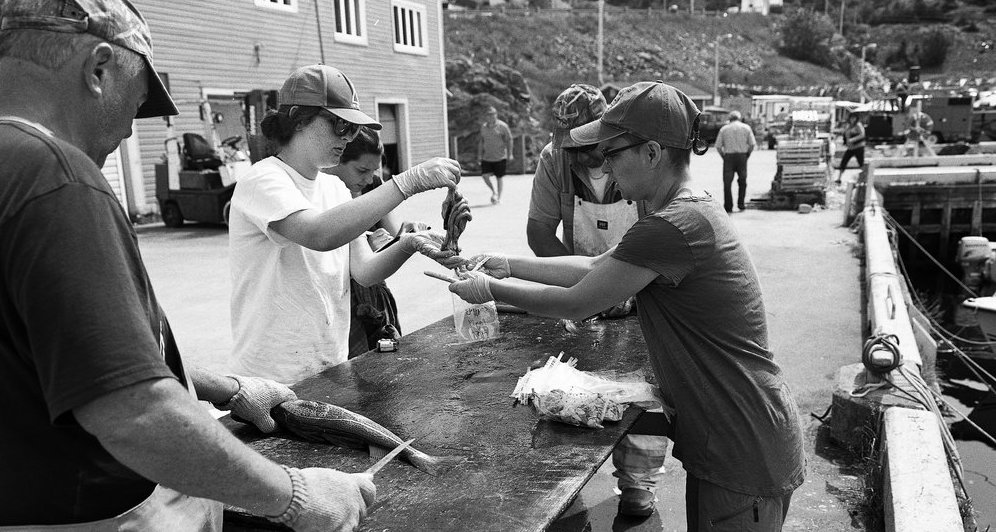
1608-Plastics-PCSF013 10.17.56 AMImage credit: Laboratory for Environmental Action Research (https://civiclaboratory.nl)

Finally, the lab has developed tools for citizen science research that cost under £50, can be built and repaired by others and use local materials. Their definition of ‘participatory citizen science’ is based on people having a say in how the data they collect are gathered, managed and communicated is used. Communities can use their expertise, question the data and direct where the data go if it looks like they will represent them in a harmful way. This means the data’s core value is centered on the interests of the community in co-collaboration with the researchers.

We do not know how successfully CLEAR enacts its model of community science, but their work helps suggest what distinguishes community from mainstream science.

Community science also challenges the idea of scientific expertise. Repeatedly, people who do community science say that the science is secondary to the needs of the community. Science becomes a way of making friends, sharing experiences, finding a voice and so on. But too often, when professional scientists are involved, they become the ‘experts’ and the science again shifts to centre stage. Authorised expertise matters, but science is not something that just scientists do and their contributions should not be the only ones valued. People coming at science from alternative perspectives have their own forms of expertise.

Community science uses a democratic model, allowing everyone to participate in the conversation

Community science has the potential to make science communication more dialogic and less hierarchical, giving people ownership so that they drive it rather than the experts asking them to take on their agenda. But for this potential to be realised, scientists have to let go of some of the power they derive from the status of science.

By Saoirse Higgins, Artist, Designer and PhD candidate (Innovation School,  Glasgow School of Art, funded by the Highlands and Islands Enterprise) and Heather Mendick, Freelance Research Consultant