

惯性聚合 高效追踪和阅读你感兴趣的博客、新闻、科技资讯
阅读原文 在惯性聚合中打开

推荐订阅源

N
News and Events Feed by Topic
让小产品的独立变现更简单 - ezindie.com
月光博客
月光博客
freeCodeCamp Programming Tutorials: Python, JavaScript, Git & More
大猫的无限游戏
大猫的无限游戏
T
Tailwind CSS Blog
S
SegmentFault 最新的问题
V
V2EX
阮一峰的网络日志
阮一峰的网络日志
C
Cisco Blogs
博客园 - 叶小钗
P
Privacy International News Feed
Jina AI
Jina AI
Apple Machine Learning Research
T
Threatpost
IT之家
IT之家
博客园 - 聂微东
Know Your Adversary
Know Your Adversary
Help Net Security
Help Net Security
罗磊的独立博客
I
Intezer
S
Schneier on Security
博客园_首页
C
CERT Recently Published Vulnerability Notes
雷峰网
雷峰网
Cisco Talos Blog
Cisco Talos Blog
宝玉的分享
宝玉的分享
cs.CV updates on arXiv.org
Webroot Blog
Webroot Blog
TaoSecurity Blog
TaoSecurity Blog
MyScale Blog
MyScale Blog
P
Privacy & Cybersecurity Law Blog
T
The Exploit Database - CXSecurity.com
PCI Perspectives
PCI Perspectives
Security Latest
Security Latest
H
Heimdal Security Blog
S
Secure Thoughts
Hacker News: Ask HN
Hacker News: Ask HN
Y
Y Combinator Blog
cs.CL updates on arXiv.org
Microsoft Security Blog
cs.AI updates on arXiv.org
SecWiki News
SecWiki News
The GitHub Blog
The GitHub Blog
A
Arctic Wolf
A
About on SuperTechFans
aimingoo的专栏
aimingoo的专栏
T
Threat Research - Cisco Blogs
Engineering at Meta
Engineering at Meta
Cyber Security Advisories - MS-ISAC

Latest blog posts

Finding Solutions for Data Bias | Demyst Using Snowflake for External Data Deployment | Demyst 5 Hurdles Facing New Financial Products | Demyst The What, Why, and How of External Data | Demyst Fast Company Recognizes How External Data Can Change the World | Demyst 5 Checks for Flagging Fraud Risk | Demyst External Data’s Tipping Point | Demyst OpenCorporates Spotlight: Data Transparency Deep Dive | Demyst Vendor Due Diligence for Data Privacy | Demyst Looking Ahead: High Expectations, Low Margins for Error | Demyst How Lenders and Insurers Can Use Geolocation Data | Demyst Assessing Driver Risk Without Using Credit Scores | Demyst Digital Footprints for ID Verification | Demyst Layered Solutions to Fight SMB Lending Fraud | Demyst Global IDV Workflows Demand Multi-Source Solutions | Demyst Fintechs: Drifting into Compliance Failure? | Demyst Penalties Mount for Marketers Using Toxic Data | Demyst Assess Insurance Risk with Property Data | Demyst Application Prefill: A Digital Reality | Demyst Demand for ESG Data is Accelerating | Demyst Demyst’s Entity Resolution: Multi-Source Recipes | Demyst Verifying Phone Numbers Is Key for the BNPL Vertical | Demyst Game Changer: Demyst’s Entity Resolution Tech | Demyst Social Inflation Raises Courtroom Risks | Demyst Expecting the Unexpected | Demyst Meet Demyst at AWS re:Invent 2021 | Demyst External Data Addresses Crypto Regulations | Demyst Supply Chain Risk Management | Demyst Collaboration with AWS Data Exchange | Demyst Improving Trust on Managed Platforms | Demyst Risk Management: Diving Deeper | Demyst Assess Risk with Crime Data | Demyst The Risk Equation for Online Transactions Has Changed | Demyst Data Decay: An Ongoing Issue | Demyst The Increasing Responsibilities of Non-Bank Lenders | Demyst Mitigating Fraud with Social Media Data | Demyst Pandora Papers Pierce the Veil | Demyst What Constitutes ESG Data? | Demyst Demand for BNPL services is growing exponentially...data is the enabler. |… Residential Property Data For Marketing Decisions | Demyst Liens: Key Risk Assessment Indicators | Demyst Looking Beyond Registry Details for U.S. Businesses | Demyst Synthetic Identities, Genuine Fraud | Demyst Business Judgment Monitoring Made Frictionless | Demyst External Data Insights for the Insurance Industry | Demyst Going Deeper than Tax Assessor Data for Marketing | Demyst Addressing Data Decay in Phone Numbers | Demyst Leveraging External Data to Address Rising Compliance Costs | Demyst How to Verify a U.S. Person’s Address | Demyst Automating Due Diligence Processes with Business Website Lookup | Demyst Inspecting the Dots: Common Checks to Spot Fraudulent Businesses | Demyst Mind the Gap in Local Property Records | Demyst State Regulators Set External Data and Model Monitoring Requirements | Dem… Mitigating Marketplace Onboarding Risk With External Data | Demyst Warning Signs in Small Business Insurance | Demyst Climate is Changing and So Must Insurance | Demyst How are Commercial Insurers Adapting to Climate Change? | Demyst Untangling Merchant Chains of Ownership with UBO Data | Demyst Demyst raises A$33m and announces plans to IPO | Demyst Digital Fraud Attempts Have Risen By 150% | Demyst A new report suggests 79% of businesses will forsake some growth for incre… It's flood season! In response, FEMA is incorporating new external data in… Millions of PPP dollars went to fake farms in the Carolinas...could it hav… Litigation analytics is taking off...what data is available and what are t… Enterprise Litigation Analytics Data Landscape | Demyst B2B intent data is powerful...but third-party cookies are going away soon.… Assessing business intentions....with intent data | Demyst Privacy policies for geolocation data are changing....what will be the imp… Data Landscape - Global Mobility Data | Demyst DemystData Announces Collaboration with AWS Data Exchange to support exter… Emerging Small Business Use-Cases with Geolocation Data | Demyst HazardHub Data Spotlight: 900+ attributes to describe and assess a propert… Demyst Recipe: Getting Business Registration Details from Multiple Data So… Launching the Demyst Webinar Series | Demyst Why establish FinCrime data middleware? | Demyst Know more. Do more. | Demyst Predicting Customer Trajectory with External Data | Demyst Demyst and Harbor Point Analytics partner to bring external data to the In… Leveraging External Data to Identify "Breakout SMBs" | Demyst Swimming Pools, Trampolines, and Now What | Demyst Automating CARES Act Payroll Verification | Demyst Who knows their County FIPS code anyway? Say hello to Zip code based Covid… Examining consumer behavior during COVID-19 using near real-time consumer … Assessing Covid Supply Chain Risks with External Data | Demyst A message from the Demyst team | Demyst
Dynamic Fraud Mitigation | Demyst
The Demyst Team · 2020-05-15 · via Latest blog posts

As stimulus monies flow across the globe to keep businesses afloat and staff employed, governments and financial institutions have been escalating concerns about synthetic fraud. In a series of recent listening sessions with the US Office of the Comptroller of Currency (OCC), a number of banks raised the issue of synthetic fraud in the US Paycheck Protection Program directly and the challenges faced in detecting and preventing it (1).

We know that most banks and lenders are trying to solve this, and most now use a growing number of 3rd party software platforms. However, the successful organisations are those who are dynamically testing and deploying combinations of external data with these existing platforms. We recently worked with a global bank who had a synthetic fraud problem in their credit card product which was able to be cut by 17% in 6 weeks, without having to rely on internal IT teams or scale up their resourcing. Understanding how to leverage additional data combined with automated feature creation and dynamic machine learning we believe, is the key to regaining the advantage in the battle against fraud.

What is Synthetic Fraud?

Synthetic fraud has typically been associated with the generation of a legitimate-looking identity through the use of a combination of real and fictitious information (such as a valid SSN combined with a fake name). However, the impact of and response to CoVID19 has seen organised crime groups extend this type of fraud further by creating synthetic businesses with the intent of exploiting business support programs as well.

Figure 1: Synthetic fraud relies on organisations not looking too far under the legitimate veneer

How does Synthetic Fraud Work?

Synthetic identities, whether individual or corporate, are predominantly used for two (2) purposes:

  1. Concealing the beneficiaries of proceeds of crime by adding complexity through layering of payments (we’ve all heard of ‘Shell’ and ‘Ghost’ companies being used for tax avoidance purposes); or
  2. Building up the credit worthiness of the synthetic customer until a point is reached where high-value purchases are made on credit, the customer disappears into the ether, and the loss is attributed to a credit loss (often referred to as ‘Bust Out’ fraud)

However, the rollout of emergency small business loans across the globe is now highlighting the emergence and impact of synthetic business fraud (2). As organisations double down on their KYC processes for individuals, Know Your Business (KYB) processes are proving more difficult. Participants in the OCC listening sessions (1) identified one of the main difficulties with synthetic business fraud at present was simply being able to identify and assess whether a business was actually open. Digging deeper into a business’s registration status, ownership structure and parties, and determining the no. of employees increasingly takes time and added to the complexity of business fraud detection.

What does it take to address Synthetic Fraud?

Internal data alone provides limited capability to prevent, detect and respond to synthetic fraud. Banks and lenders need to do more than collect and verify PII. They need broad and reliable information upon which they can rapidly assess a customer’s ‘Pattern of Life’ and ‘Activity within the Community’. We’ve verified who this customer claims to be using the limited information they’ve provided but how do we establish real-world behaviour, attributes and activity to support this?

How can I rapidly and reliably confirm the bona fide existence and operation of a business, albeit as a customer or an individual’s nominated employer?

  1. Varied and dynamic external data is key!

Measuring a customer’s “real life” data footprint and comparing it across a variety of external data sources for correspondence establishes to a reasonable degree of certainty that the individual or business lives and breathes in the real world. Even during lockdown, we all continue to have real-world engagement, although a lot more is now performed digitally (think home delivery for groceries & other essentials, fast food, entertainment, clothing, flowers, gifts and other purchases, etc).

With 600+ data sources and in excess of 100,000 attributes, Demyst provides unrivalled and rapid access to external data.

undefined
Figure 2: External data attributes enable rapid synthetic fraud risk decisioning

2. Automated feature creation:

By accessing an abundance of reliable external data, solving complex organisational problems can be simplified through first principles, avoiding assumptions and testing hypotheses. However, meeting customer expectations and solving complex fraud problems at scale have a common denominator — time. Building risk models is often a painstaking and tedious process that typically involves many steps, in particular feature creation/engineering. Combining internal data with dynamic and varied external data with automated feature creation has the effect of exponentially improving the performance and reliability of fraud predictive models. Benefits of automated feature creation include:

  1. Unstructured data → Structured data: e.g. processing longitudinal transactional information to derive insights over time, and turning unstructured text descriptions in to signals. Also processing unstructured news and image information to standardised and structured format.
  2. Canonicalization: Consumer identifiers come in all forms, from government IDs to (often misspelled) names and address data. In order to unlock joining, these need to be canonicalized to standards such as phonetic representations of names.
  3. Joining: Whether external or internal, fraud anomalies can appear anywhere and thus any joinable data needs to be joined for testing. Joining is cumbersome, costly and time-consuming, and with external data often involves extensive diligence and contracting prior to testing. Once joined, however, columns of data and the search space expand.
  4. Derived features: Once raw features are available, derived features can be expansively generated across every possible algorithm.

3. AutoML

Dynamic problems need dynamic solutions. We all know that customer experience is directly tied to the time it takes to reach a decision — take too long and customers ‘vote with their feet’. As organisations adopt new technology to meet customer demands, organised criminals rapidly adapt to meet or exploit those changes. Changes to behaviour and corrections on controls lead to changes in the multivariate predictors of what represents anomalous behaviour. AutoML fuelled with external data is perfectly suited to this problem.
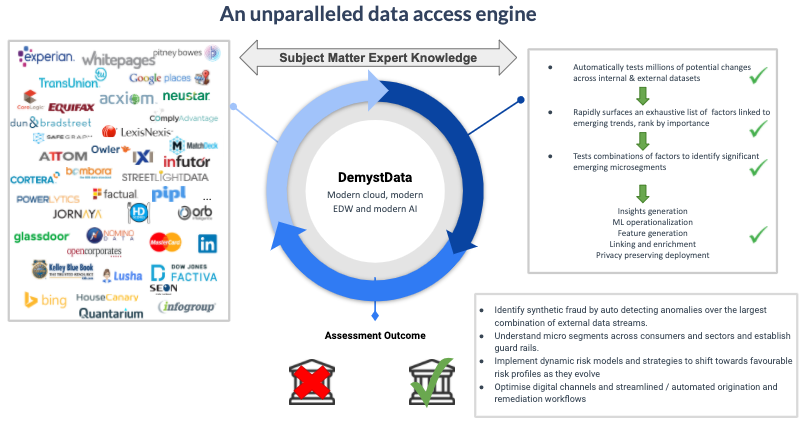
Figure 3: DemystData — an unparalleled external data access engine

DemystData is an unparalleled data access engine that can test millions of potential changes across internal and external datasets; rapidly surface an exhaustive list of factors linked to emerging trends, rank by importance; and test combinations of factors to identify significant emerging micro-segments and anomalies.

Identifying synthetic fraud (individuals or businesses) does not need to be an arduous and time-consuming task. It does, however, require an appetite to increase external data usage to uplift detection models. Like the bank that reduced fraud within 6 weeks, organisations that similarly adopt a dynamic and varied external data strategy will reduce their exposure to synthetic and other types of fraud.

  1. https://www.occ.treas.gov/topics/supervision-and-examination/responsible-innovation/ppp-listening-sessions.html
  2. https://www.justice.gov/opa/pr/two-charged-rhode-island-stimulus-fraud

Don't settle for half the story

Demyst gives you access to all of the data you need. Evaluate thousands of data attributes from hundreds of possible data connectors all pulled into your own custom-built APIs for instant data deployment.

