


惯性聚合 高效追踪和阅读你感兴趣的博客、新闻、科技资讯
阅读原文 在惯性聚合中打开

推荐订阅源

Google DeepMind News
Help Net Security
Help Net Security
T
Tenable Blog
C
CXSECURITY Database RSS Feed - CXSecurity.com
P
Privacy & Cybersecurity Law Blog
C
Cisco Blogs
A
Arctic Wolf
T
Threatpost
Simon Willison's Weblog
Spread Privacy
Spread Privacy
D
Darknet – Hacking Tools, Hacker News & Cyber Security
N
News and Events Feed by Topic
SecWiki News
SecWiki News
让小产品的独立变现更简单 - ezindie.com
博客园 - 聂微东
Scott Helme
Scott Helme
S
Securelist
AWS News Blog
AWS News Blog
Hacker News: Ask HN
Hacker News: Ask HN
美团技术团队
博客园 - 叶小钗
有赞技术团队
有赞技术团队
T
Tailwind CSS Blog
博客园_首页
H
Hacker News: Front Page
博客园 - 【当耐特】
J
Java Code Geeks
宝玉的分享
宝玉的分享
Jina AI
Jina AI
Webroot Blog
Webroot Blog
Threat Intelligence Blog | Flashpoint
Cloudbric
Cloudbric
N
News and Events Feed by Topic
爱范儿
爱范儿
月光博客
月光博客
TaoSecurity Blog
TaoSecurity Blog
V
Visual Studio Blog
T
Troy Hunt's Blog
博客园 - 司徒正美
阮一峰的网络日志
阮一峰的网络日志
Last Week in AI
Last Week in AI
Hugging Face - Blog
Hugging Face - Blog
C
CERT Recently Published Vulnerability Notes
T
Tor Project blog
S
Secure Thoughts
L
LINUX DO - 热门话题
cs.CV updates on arXiv.org
博客园 - Franky
G
Google Developers Blog
Schneier on Security

New Scientist - Home

Smart underwear detects lactose intolerance by tracking your farts 2026 will be the hottest year on record, leading scientist predicts NHS England rushes to hide software over AI hacking fears The 4 biggest myths about hydration, according to an expert Oak trees use delaying tactics to thwart hungry caterpillars Will Colombia summit kick-start the end of the fossil fuel era? Why I explore our inevitable love for robots in my novel Luminous Read an extract from Luminous by Silvia Park The rings of Uranus are even stranger than we thought An unorthodox version of quantum theory could reveal what reality is 'Green' cryptocurrency uses 18 times more energy than makers claim Your oral microbiome could affect your weight, liver and diabetes risk Human heads have changed shape a lot in the past 100 years Doubts cast over 'wild' claim that magnetic control can turn on genes The best new science fiction books of May 2026 The rich but complicated legacy of genome pioneer Craig Venter We have figured out a new way to send messages into the past Our verdict on Red Mars: Mostly great, with a few quibbles New Scientist recommends New York's Bone Museum and Gecko Gallery Thought-provoking photographs capture what it feels like to have ADHD Is an AI version of Mark Zuckerberg – or any boss – a good plan? Ann Leckie continues to shine with new sci-fi novel Radiant Star Simple treatment tweak drastically reduces blood loss from severe cuts Weird 'transdimensional' state of matter is neither 2D nor 3D Why dinosaurs lived much more complex lives than we thought The chips in your phone are probably broken – and that's a good thing Scorpions reinforce their claws and stingers with metals Extreme weather in 2025 drove record wildfire emissions in Europe Cancer is increasing in young people and we still don't know why People are betting on measles outbreaks – and that might be useful Gamblers are betting millions of dollars on measles outbreaks Is consciousness more fundamental to reality than quantum physics? Humanoid robots may be about to break the 100-metre sprint record How I pay almost nothing to power my house and electric car We may finally have a cure for many different autoimmune conditions Coral reefs on a remote archipelago shrugged off a massive heatwave Why the keto diet could be a revolutionary way to treat mental illness Giant Arctic continent launched dinosaurs to world domination 10,000 new planets found hidden in NASA telescope data How your heart rate variability can offer an insight into your mind 100-year-old assumption about the universe may soon be overturned Gravity's strength measured more reliably than ever before Symptoms of early dementia reversed by bespoke treatment plans QBox theory may offer glimpse of reality deeper than quantum realm Is stem cell therapy about to transform medicine and reverse ageing? Largest-ever octopus was great white shark of invertebrate predators Do you need to worry about Mythos, Anthropic's computer-hacking AI? Catching a cold can delay cancer from spreading to the lungs Huge study reveals how Epstein-Barr virus may cause multiple sclerosis Striking photo essay examines deadly spread of dengue fever in Nepal 98 per cent of meat and dairy sustainability pledges are greenwashing New Scientist recommends Jeff Beal’s New York Études, Vol. II How many dachshunds would it take to get to the moon? Can you slow ageing with your diet? A new book gives it a go Why your opinion of used electric vehicles is probably wrong This mesmerising Cornish time-travel film is not to be missed We need more radioactive drugs. Can we make them from nuclear waste? Table tennis-playing robot on track to becoming world champion Exercise advice for long covid may be doing more harm than good Fermat's Last Theorem: still a must-read about a 350-year maths secret If a bird flu pandemic starts, we may have an mRNA vaccine ready Titan’s strange plains may be explained by unusual weather How we discovered the speed limit of arithmetic – and broke it The monstrous number sequences that break the rules of mathematics Game theory explains why the US's goals in Iran keep changing Diamonds are surprisingly elastic when you make them tiny Parrot uses his broken beak to become a dominant male Can we ‘vaccinate’ ourselves against stress? Why the right kind of stress is crucial for your health and happiness Can you determine your personalised stress score? We might finally know how to use quantum computers to boost AI Hospital-acquired pneumonia reduced by daily toothbrushing Brushing your teeth in hospital could prevent catching a bad infection Electric vehicle owners could earn thousands by supporting power grid Requests for blood from unvaccinated donors is harming patients Werner Herzog searches for ghost elephants in stunning new documentary The biggest threat to Chernobyl is no longer radiation Modern living may be causing big changes to our oestrogen levels Temperature gets a new definition using a quantum device Meta and YouTube fined $3 million for harming mental health How big is a 'shedload'? Let's ask the nuclear physicists What to read this week: the persuasive How Flowers Made Our World The brain's cleaning system can be boosted to rid Alzheimer's proteins Oldest known dog extends the genetic history of our canine companions Landmark experiment reveals a big unexpected problem with cloning Ancient bones reveal vivid details of a Neanderthal elephant hunt Want to live forever? There are major questions to confront, first Cancer-causing chemical found to be leaking from gas cookers Earth may have formed from two separate rings around the sun Cystitis or tooth decay could trigger dementia just a few years later Antimatter has been transported by road for the first time How AI shook the world's largest meeting of physicists Adrian Tchaikovsky: 'I try and do interesting aliens' Are humans degenerating genetically and getting dumber as a result? Genetic clues tell the story of Neanderthals' decline Warmer ocean is driving the Antarctic sea ice 'regime shift' Mysterious comet disintegration caught by telescope after lucky break 'Zombie' cells created by transplanting genomes into dead bacteria Security credentials inadvertently leaked on thousands of websites Inside the world’s first antimatter delivery service
A whole new way to prevent death from sepsis shows promise
2026-04-21 · via New Scientist - Home

Extracting a patient’s blood plasma, removing a particular protein and then reintroducing the liquid could improve sepsis outcomes

Vital Hil/Shutterstock

People with severe sepsis could one day be treated by having their blood filtered to remove a crucial protein that seems to drive the life-threatening reaction. The approach has shown promise in animal models, with aims for a trial in people next year.

Sepsis occurs when the body’s immune system overreacts to an infection, damaging tissues and organs. It can also escalate into septic shock, in which blood pressure falls dramatically, leading to even more damage. In 2017, there were an estimated 49 million cases of sepsis worldwide. A later meta-analysis of patients in Europe, North America and Australia found that 32 per cent of people with sepsis die within 90 days, rising to 39 per cent for those with septic shock, despite treatments being available to treat the initial infection and compensate for organ damage.

But a novel approach that filters out a driver of this process could stop sepsis in its tracks. Isaac Eliaz at the Amitabha Medical Clinic and Healing Center in Santa Rosa, California, has spent decades studying a protein called galectin-3. It has many functions in healthy people, notably in regulating how cells grow, divide and die, and in activating some immune cells. Due to its multiple functions, galectin-3 has been implicated in many conditions. “It covers a whole array of diseases, from autoimmunity to cancer,” says Eliaz.

This led Eliaz to wonder if galectin-3 might contribute to sepsis. Several studies have shown that higher levels of galectin-3 are associated with a higher risk of mortality in people with sepsis.

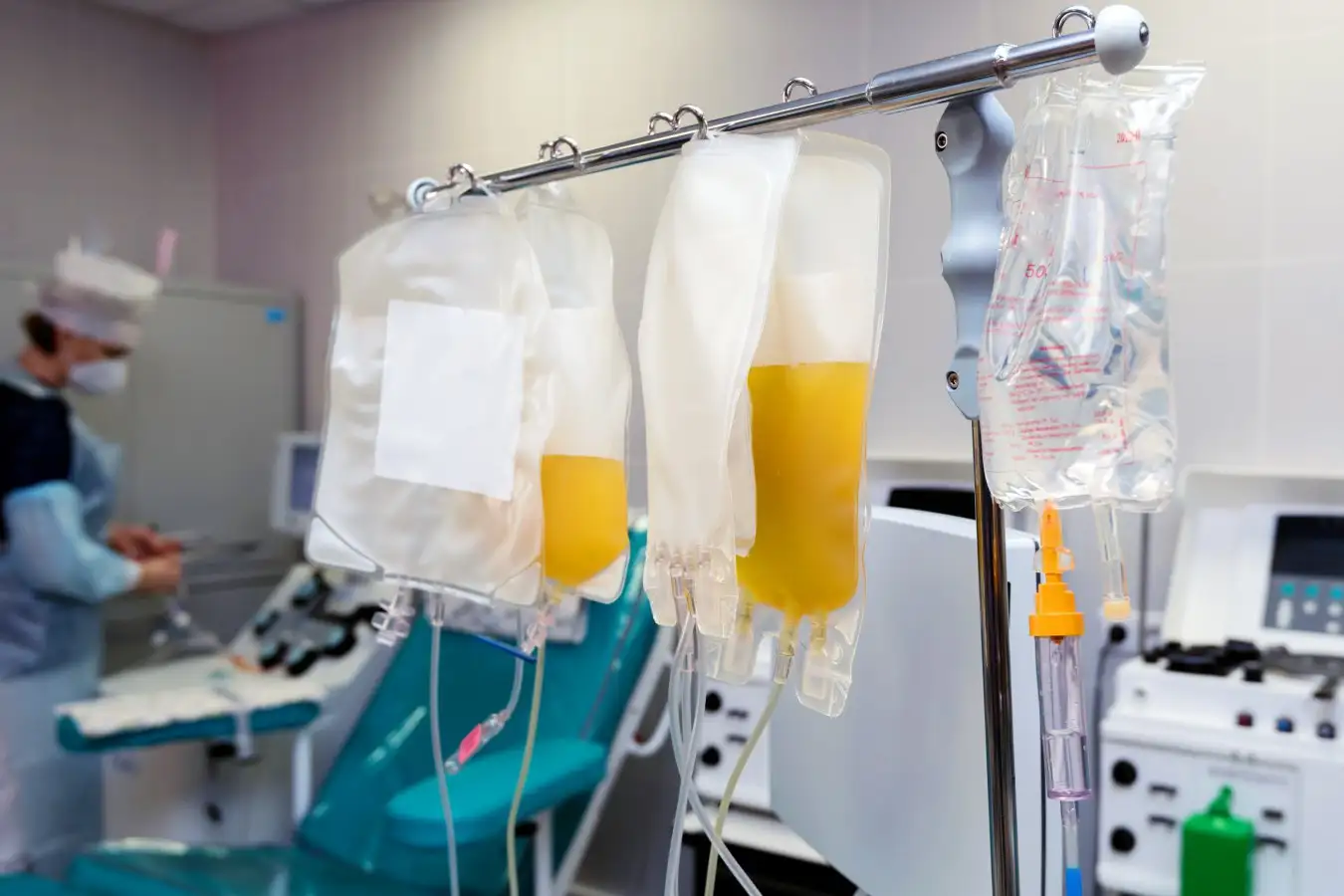
So Eliaz and his colleagues developed a device to filter galectin-3 out of the blood. This involves inserting a line into a patient to drain a volume of blood, which is then placed in a centrifuge to separate the cells from the liquid plasma. The plasma is then passed through a filter that contains antibodies against galectin-3, selectively removing the protein. The liquid and cells are then recombined and returned to the patient.

This apheresis device has now been tested by a team led by Zhiyong Peng at the Zhongnan Hospital of Wuhan University in China, using a three-pronged approach.

First, they tracked 87 people with sepsis and 27 healthy volunteers, and found that those with sepsis had higher levels of galectin-3. Those levels then declined among those who survived.

The team also tested the blood-filtration device in two animal models of sepsis. The first involved 48 rats that developed sepsis after having part of their large intestine punctured. Twenty-eight then had their blood filtered for galectin-3, while the remainder were given sham apheresis. Of the treatment group, 57 per cent survived, compared to just 25 per cent of the controls.

The researchers also tried galectin-3 apheresis in miniature pigs that were given lipopolysaccharide, a chemical in bacteria that triggers a powerful immune response, and thus sepsis. The pigs were treated using all the methods of an intensive care unit, but 16 were also given galectin-3 apheresis and 15 had sham apheresis. Again, the survival rate was higher in the treated group: 69 per cent compared to 27 per cent.

“This is innovative, for sure,” says Djillali Annane at the Raymond Poincaré Hospital in Garches, France. “The results are consistent in the two animal models.” However, he says there is a long way to go until galectin-3 apheresis could become standard practice, for instance, understanding how galectin-3 contributes to sepsis on a mechanistic level. Annane also wants the results to be replicated by independent groups, and in other animals, such as primates.

Eliaz’s company, Eliaz Therapeutics, is now trying to secure funding for a randomised clinical trial of galectin-3 apheresis in people, which it aims to carry out in 2027.