


惯性聚合 高效追踪和阅读你感兴趣的博客、新闻、科技资讯
阅读原文 在惯性聚合中打开

推荐订阅源

Google DeepMind News
Security Latest
Security Latest
T
The Exploit Database - CXSecurity.com
Jina AI
Jina AI
IT之家
IT之家
cs.AI updates on arXiv.org
月光博客
月光博客
钛媒体:引领未来商业与生活新知
钛媒体:引领未来商业与生活新知
罗磊的独立博客
C
Cyber Attacks, Cyber Crime and Cyber Security
让小产品的独立变现更简单 - ezindie.com
爱范儿
爱范儿
Cisco Talos Blog
Cisco Talos Blog
V
V2EX
C
CERT Recently Published Vulnerability Notes
Microsoft Azure Blog
Hugging Face - Blog
Hugging Face - Blog
S
Schneier on Security
The Register - Security
L
Lohrmann on Cybersecurity
博客园 - 聂微东
有赞技术团队
有赞技术团队
Know Your Adversary
Know Your Adversary
V2EX - 技术
V2EX - 技术
大猫的无限游戏
大猫的无限游戏
Project Zero
Project Zero
Simon Willison's Weblog
Last Week in AI
Last Week in AI
博客园 - Franky
D
Docker
OSCHINA 社区最新新闻
OSCHINA 社区最新新闻
H
Hacker News: Front Page
MongoDB | Blog
MongoDB | Blog
W
WeLiveSecurity
Vercel News
Vercel News
C
Check Point Blog
N
News | PayPal Newsroom
A
Arctic Wolf
T
Threat Research - Cisco Blogs
F
Full Disclosure
博客园 - 司徒正美
GbyAI
GbyAI
A
About on SuperTechFans
Webroot Blog
Webroot Blog
K
KPMG report finds enterprise disconnect between AI and its ROI | CIO
I
InfoQ
Martin Fowler
Martin Fowler
Y
Y Combinator Blog
Latest news
Latest news
Help Net Security
Help Net Security

New Scientist - Home

Smart underwear detects lactose intolerance by tracking your farts 2026 will be the hottest year on record, leading scientist predicts NHS England rushes to hide software over AI hacking fears The 4 biggest myths about hydration, according to an expert Oak trees use delaying tactics to thwart hungry caterpillars Will Colombia summit kick-start the end of the fossil fuel era? Why I explore our inevitable love for robots in my novel Luminous Read an extract from Luminous by Silvia Park The rings of Uranus are even stranger than we thought An unorthodox version of quantum theory could reveal what reality is 'Green' cryptocurrency uses 18 times more energy than makers claim Your oral microbiome could affect your weight, liver and diabetes risk Human heads have changed shape a lot in the past 100 years Doubts cast over 'wild' claim that magnetic control can turn on genes The best new science fiction books of May 2026 The rich but complicated legacy of genome pioneer Craig Venter We have figured out a new way to send messages into the past Our verdict on Red Mars: Mostly great, with a few quibbles New Scientist recommends New York's Bone Museum and Gecko Gallery Thought-provoking photographs capture what it feels like to have ADHD Is an AI version of Mark Zuckerberg – or any boss – a good plan? Ann Leckie continues to shine with new sci-fi novel Radiant Star Simple treatment tweak drastically reduces blood loss from severe cuts Weird 'transdimensional' state of matter is neither 2D nor 3D Why dinosaurs lived much more complex lives than we thought The chips in your phone are probably broken – and that's a good thing Scorpions reinforce their claws and stingers with metals Extreme weather in 2025 drove record wildfire emissions in Europe Cancer is increasing in young people and we still don't know why People are betting on measles outbreaks – and that might be useful Gamblers are betting millions of dollars on measles outbreaks Is consciousness more fundamental to reality than quantum physics? Humanoid robots may be about to break the 100-metre sprint record How I pay almost nothing to power my house and electric car We may finally have a cure for many different autoimmune conditions Coral reefs on a remote archipelago shrugged off a massive heatwave Why the keto diet could be a revolutionary way to treat mental illness Giant Arctic continent launched dinosaurs to world domination 10,000 new planets found hidden in NASA telescope data How your heart rate variability can offer an insight into your mind 100-year-old assumption about the universe may soon be overturned Gravity's strength measured more reliably than ever before Symptoms of early dementia reversed by bespoke treatment plans QBox theory may offer glimpse of reality deeper than quantum realm Is stem cell therapy about to transform medicine and reverse ageing? Largest-ever octopus was great white shark of invertebrate predators Do you need to worry about Mythos, Anthropic's computer-hacking AI? Catching a cold can delay cancer from spreading to the lungs Huge study reveals how Epstein-Barr virus may cause multiple sclerosis Striking photo essay examines deadly spread of dengue fever in Nepal 98 per cent of meat and dairy sustainability pledges are greenwashing New Scientist recommends Jeff Beal’s New York Études, Vol. II How many dachshunds would it take to get to the moon? Can you slow ageing with your diet? A new book gives it a go Why your opinion of used electric vehicles is probably wrong This mesmerising Cornish time-travel film is not to be missed We need more radioactive drugs. Can we make them from nuclear waste? Table tennis-playing robot on track to becoming world champion Exercise advice for long covid may be doing more harm than good Fermat's Last Theorem: still a must-read about a 350-year maths secret If a bird flu pandemic starts, we may have an mRNA vaccine ready Titan’s strange plains may be explained by unusual weather How we discovered the speed limit of arithmetic – and broke it The monstrous number sequences that break the rules of mathematics Game theory explains why the US's goals in Iran keep changing Diamonds are surprisingly elastic when you make them tiny A whole new way to prevent death from sepsis shows promise Parrot uses his broken beak to become a dominant male Can we ‘vaccinate’ ourselves against stress? Why the right kind of stress is crucial for your health and happiness Can you determine your personalised stress score? We might finally know how to use quantum computers to boost AI Hospital-acquired pneumonia reduced by daily toothbrushing Brushing your teeth in hospital could prevent catching a bad infection Electric vehicle owners could earn thousands by supporting power grid Requests for blood from unvaccinated donors is harming patients Werner Herzog searches for ghost elephants in stunning new documentary The biggest threat to Chernobyl is no longer radiation Modern living may be causing big changes to our oestrogen levels Temperature gets a new definition using a quantum device Meta and YouTube fined $3 million for harming mental health How big is a 'shedload'? Let's ask the nuclear physicists What to read this week: the persuasive How Flowers Made Our World The brain's cleaning system can be boosted to rid Alzheimer's proteins Oldest known dog extends the genetic history of our canine companions Ancient bones reveal vivid details of a Neanderthal elephant hunt Want to live forever? There are major questions to confront, first Cancer-causing chemical found to be leaking from gas cookers Earth may have formed from two separate rings around the sun Cystitis or tooth decay could trigger dementia just a few years later Antimatter has been transported by road for the first time How AI shook the world's largest meeting of physicists Adrian Tchaikovsky: 'I try and do interesting aliens' Are humans degenerating genetically and getting dumber as a result? Genetic clues tell the story of Neanderthals' decline Warmer ocean is driving the Antarctic sea ice 'regime shift' Mysterious comet disintegration caught by telescope after lucky break 'Zombie' cells created by transplanting genomes into dead bacteria Security credentials inadvertently leaked on thousands of websites Inside the world’s first antimatter delivery service
Landmark experiment reveals a big unexpected problem with cloning
2026-03-25 · via New Scientist - Home

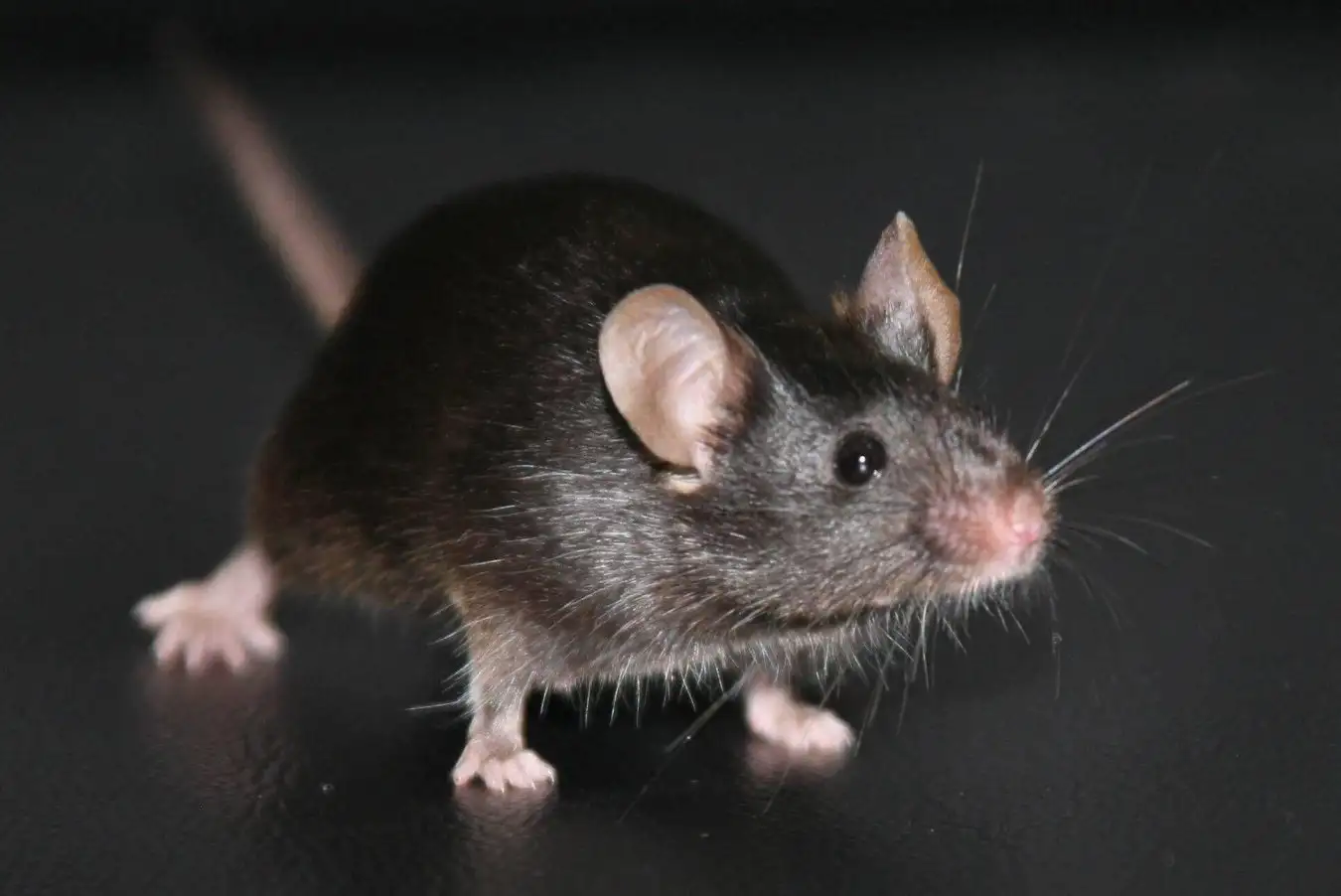
Mice can only be repeatedly cloned for so long

Xinhua/Zhou Qi/Imago/Alamy

A clone is meant to be a genetically identical copy, but an extraordinary 20-year study has shown that this isn’t, in fact, the case. It reveals that clones have lots of extra mutations and, if you keep cloning clones, these build up to fatal levels. The findings have implications for the use of cloning in farming and for saving endangered animals, including efforts to recreate extinct species, as well as for the potential use of cloning technology in people.

The big question is why there are so many more mutations in clones. It could just be that the adult body cells that are being cloned accumulate more mutations than egg or sperm cells do. But Teruhiko Wakayama at Yamanashi University in Japan thinks the cloning process itself could be causing at least some of them. “Unfortunately, however, while clones were once thought to be identical to the original, it has become clear that this is not the case, suggesting that there may be issues with their use,” he says. “Going forward, we need to demonstrate that mutations arising from cloning do not pose problems.”

Cloning mammals was once thought impossible because, as cells in the body develop and specialise, various chemical tags that control gene activity are added to, or removed from, parts of the genome. Skin cell DNA, say, is “programmed” to make skin cells. But the birth of Dolly the sheep in July 1996 showed that transferring the nucleus of an adult cell into an empty egg could reprogram its genome and allow the egg to develop. Soon afterwards, Wakayama created Cumulina, the first cloned mouse, born in October 1997.

To test how well his team’s mouse-cloning method was working, in 2005 Wakayama started cloning clones. “Just as copying a painting results in lower image quality, I wanted to verify how clones compare to the original,” he says.

In 2013, he and his colleagues announced that they had repeatedly cloned clones for 25 successive generations, generating more than 500 mice from the original donor. “The cloned mice produced in our experiments showed no physical abnormalities in any generation, lived just as long as normal mice and were healthy,” says Wakayama.

This success hasn’t been achieved with other species, though – there is still a high rate of health problems in cloned dogs and no one has yet cloned any primate from an adult cell. But in mice, Wakayama thought repeated cloning could continue indefinitely. Yet as his team continued doing the experiments, the success rate fell until finally, by the 58th generation, none of the clones survived.

To find out why, the team has now sequenced the genomes of 10 mice from various generations. This revealed that there were more than 70 mutations, on average, per clone generation – three times as many as seen in a control group of mice that reproduced naturally. In particular, large-scale mutations started to build up in the cloned mice after the 27th generation, with an entire X chromosome eventually being lost.

The explanation could simply be that animals have evolved ways to protect sperm and egg cells from mutations and to weed out harmful mutations during sexual reproduction, meaning that the adult body cells end up with far more mutations. For instance, a recent study found that mutations accumulated eight-times faster in blood cells compared with sperm. So if the adult cells that are cloned have more mutations to start with, the clones will too.

But Wakayama thinks the nuclear transfer process itself is causing some of the extra mutations. “It is not surprising that the nucleus – that is, the DNA – might be damaged by the physical shock,” he says. “I believe that if we could develop a gentler method of nuclear transfer, we might be able to reduce the mutation rate in cloned embryos. However, I don’t have any ideas on how to achieve this yet.”

Shoukhrat Mitalipov at Oregon Health & Science University is sceptical. “Any observed increase in mutation rates in clones is more likely to reflect the genomic state of the donor cells, rather than a uniform effect of the nuclear transfer process itself,” he says.

While human cloning is banned in many countries, researchers such as Mitalipov are exploring the use of nuclear transfer to generate matching tissues or organs for medical treatments, and for generating sperm and egg cells to treat infertility. Wakayama’s results show the importance of careful donor cell selection and screening if this is done, says Mitalipov. “Ideally, donor cell populations should be evaluated for deleterious variants. Where necessary, gene-editing approaches could be used to correct known harmful mutations.”

But if the cloning process itself is inducing mutations, this wouldn’t be enough. To be clear, these findings don’t mean that cloning techniques are too risky to use – the per-generation mutation rate is still relatively low and cells can be screened after cloning to check for dangerous mutations – but they do show there are even more potential issues than we thought. An already problematic technology just got even more so.