惯性聚合 高效追踪和阅读你感兴趣的博客、新闻、科技资讯
阅读原文 在惯性聚合中打开

推荐订阅源

钛媒体:引领未来商业与生活新知
钛媒体:引领未来商业与生活新知
Hugging Face - Blog
Hugging Face - Blog
奇客Solidot–传递最新科技情报
奇客Solidot–传递最新科技情报
人人都是产品经理
人人都是产品经理
Microsoft Azure Blog
Engineering at Meta
Engineering at Meta
B
Blog RSS Feed
大猫的无限游戏
大猫的无限游戏
博客园_首页
雷峰网
雷峰网
V
Visual Studio Blog
爱范儿
爱范儿
A
About on SuperTechFans
量子位
N
Netflix TechBlog - Medium
Microsoft Security Blog
让小产品的独立变现更简单 - ezindie.com
MongoDB | Blog
MongoDB | Blog
U
Unit 42
Cyber Security Advisories - MS-ISAC
月光博客
月光博客
S
SegmentFault 最新的问题
J
Java Code Geeks
H
Hackread – Cybersecurity News, Data Breaches, AI and More

New Scientist - Home

Smart underwear detects lactose intolerance by tracking your farts 2026 will be the hottest year on record, leading scientist predicts NHS England rushes to hide software over AI hacking fears The 4 biggest myths about hydration, according to an expert Oak trees use delaying tactics to thwart hungry caterpillars Will Colombia summit kick-start the end of the fossil fuel era? Why I explore our inevitable love for robots in my novel Luminous Read an extract from Luminous by Silvia Park The rings of Uranus are even stranger than we thought An unorthodox version of quantum theory could reveal what reality is 'Green' cryptocurrency uses 18 times more energy than makers claim Your oral microbiome could affect your weight, liver and diabetes risk Human heads have changed shape a lot in the past 100 years Doubts cast over 'wild' claim that magnetic control can turn on genes The best new science fiction books of May 2026 The rich but complicated legacy of genome pioneer Craig Venter We have figured out a new way to send messages into the past Our verdict on Red Mars: Mostly great, with a few quibbles New Scientist recommends New York's Bone Museum and Gecko Gallery Thought-provoking photographs capture what it feels like to have ADHD Is an AI version of Mark Zuckerberg – or any boss – a good plan? Ann Leckie continues to shine with new sci-fi novel Radiant Star Simple treatment tweak drastically reduces blood loss from severe cuts Weird 'transdimensional' state of matter is neither 2D nor 3D Why dinosaurs lived much more complex lives than we thought The chips in your phone are probably broken – and that's a good thing Scorpions reinforce their claws and stingers with metals Extreme weather in 2025 drove record wildfire emissions in Europe Cancer is increasing in young people and we still don't know why People are betting on measles outbreaks – and that might be useful
Can you determine your personalised stress score?
2026-04-20 · via New Scientist - Home

Health

“I’m stressed” is a phrase that many of us use, but now there are ways to shed light on how stressed you actually are

By Helen Thomson

20 April 2026

Facebook / Meta Twitter / X icon Linkedin Reddit Email

New Scientist. Science news and long reads from expert journalists, covering developments in science, technology, health and the environment on the website and the magazine.

Mojo Wang

Working out what makes you stressed and how much is too much can feel quite subjective. Increasingly, however, technology can help.

Most smartwatches can give you a basic reading of stress using your heart rate. A healthy resting heart rate for an adult is between 60 and 100 beats per minute. Cortisol and adrenaline, released when your stress response kicks in, can raise this; a poor ability to recover from stress can keep it raised.

Many smartwatches also track heart rate variability (HRV), a measure of the natural variations in time between consecutive heartbeats. When your body is stressed, cortisol and adrenaline trigger a fast and consistent heart rate, reducing this natural variability between beats. When the parasympathetic system kicks in to restore balance, your natural variation increases. Average HRV varies between people, so it is best to use deviations as a way of monitoring your stress levels.

Over time, heart rate and HRV can be used to give you a stress “score”, helping you identify certain activities, people or times of the year that cause you too little, or too much, stress (see “Why the right kind of stress is crucial for your health and happiness”). However, this is a blunt tool, with a study last year showing that such stress scores can’t distinguish positive stress (or excitement) from the negative kind.

Cortisol is another biomarker of interest to stress researchers. But it isn’t ideal because it spikes around 20 minutes after a stressor occurs, says Julie Vašků at Masaryk University in the Czech Republic, and involves taking a saliva, urine or blood sample that is analysed in a lab. Biosensors that sit in the arm and continuously monitor cortisol in blood plasma are in development, but aren’t commercially available.

In the future, we might be looking to our bones instead, says Vašků. When you are stressed, bone cells hoover up a substance in the blood called glutamate, which normally switches off production of a hormone called osteocalcin.

This causes osteocalcin to flood the body, dialling down the parasympathetic nervous system and allowing the fight-or-flight response to proceed.
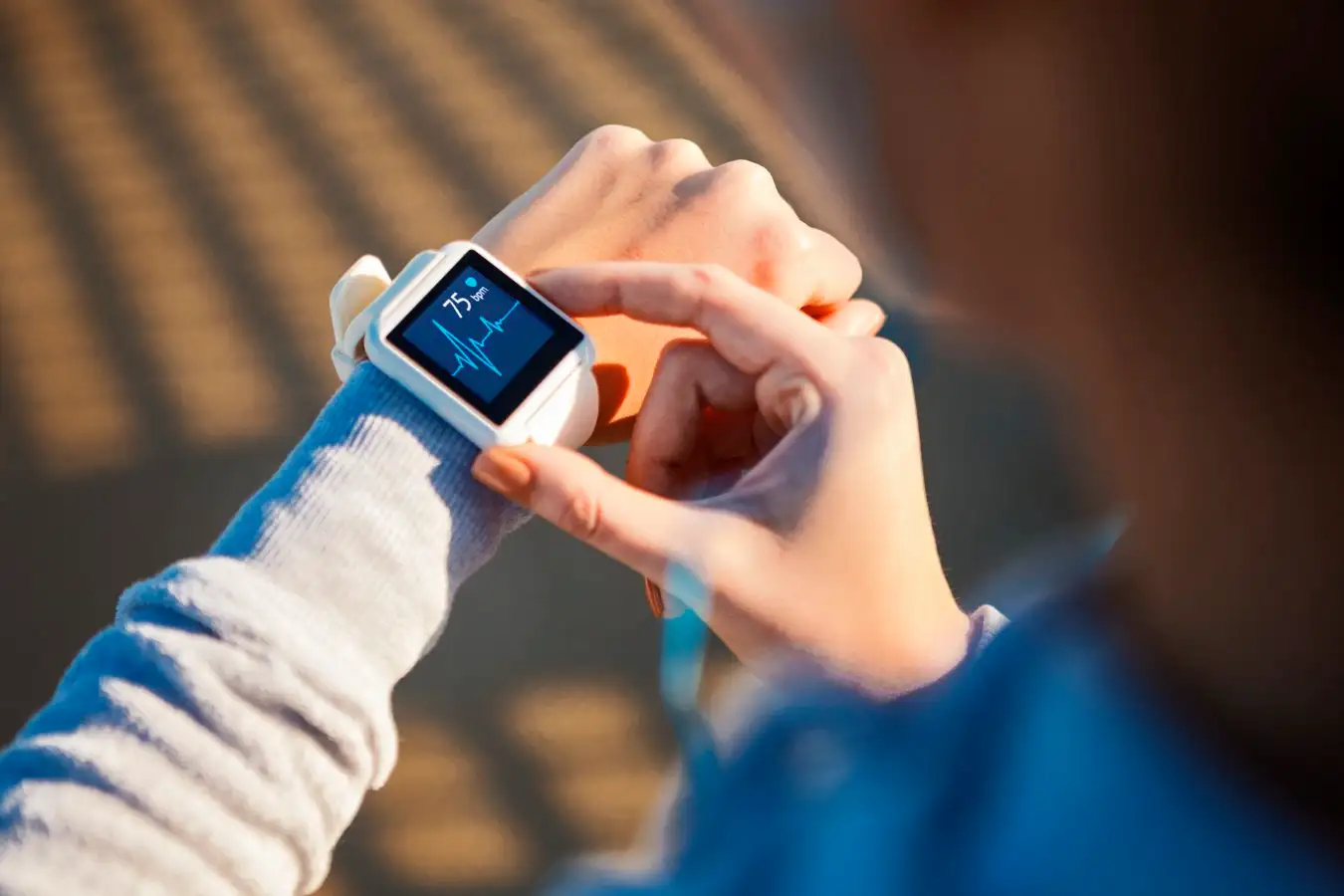
Someone reading their heart rate monitor.

Measurements of your heart rate variability can give vital clues about your stress levels

Nastasic/Getty Images

“We think, under stress, the skeleton produces a lot of molecules, very quickly, that are actually better biomarkers of what is happening at the time,” says Vašků.

“These bone-derived molecules are helping direct energy where it needs to be,” she says. “In the future, we think one of these molecules could be a really good biomarker for stress.”

This article is part of an in-depth look at stress. Read more here:
Why the right kind of stress is crucial for your health and happiness
Can we ‘vaccinate’ ourselves against stress?

Topics: