惯性聚合 高效追踪和阅读你感兴趣的博客、新闻、科技资讯
阅读原文 在惯性聚合中打开

推荐订阅源

F
Full Disclosure
博客园 - 三生石上(FineUI控件)
MyScale Blog
MyScale Blog
Apple Machine Learning Research
L
LINUX DO - 最新话题
T
The Blog of Author Tim Ferriss
P
Proofpoint News Feed
宝玉的分享
宝玉的分享
小众软件
小众软件
Hugging Face - Blog
Hugging Face - Blog
GbyAI
GbyAI
Cyber Security Advisories - MS-ISAC
V
Visual Studio Blog
爱范儿
爱范儿
freeCodeCamp Programming Tutorials: Python, JavaScript, Git & More
博客园_首页
CTFtime.org: upcoming CTF events
月光博客
月光博客
博客园 - 叶小钗
D
Docker
H
Hackread – Cybersecurity News, Data Breaches, AI and More
T
Tailwind CSS Blog
D
DataBreaches.Net
酷 壳 – CoolShell
酷 壳 – CoolShell
B
Blog RSS Feed
量子位
美团技术团队
Vercel News
Vercel News
Y
Y Combinator Blog
IT之家
IT之家
Martin Fowler
Martin Fowler
OSCHINA 社区最新新闻
OSCHINA 社区最新新闻
S
SegmentFault 最新的问题
腾讯CDC
Recent Announcements
Google DeepMind News
罗磊的独立博客
让小产品的独立变现更简单 - ezindie.com
G
Google Developers Blog
Microsoft Azure Blog
The Register - Security
博客园 - 司徒正美
N
Netflix TechBlog - Medium
S
Schneier on Security
博客园 - 聂微东
U
Unit 42
D
Darknet – Hacking Tools, Hacker News & Cyber Security
Threat Intelligence Blog | Flashpoint
雷峰网
雷峰网
Latest news
Latest news

Apptio

How IBM Apptio Delivers Data Center Value in the Age of AI - Apptio Managing K8s Agent Updates at Scale with Helm and Terraform - Apptio GitOps with IBM Kubecost: Preventing Argo CD Rollbacks - Apptio GitOps with IBM Kubecost: API-Driven Rightsizing - Apptio It’s Here: Meet the New IBM Apptio Report Studio – A Faster, More Intuitive Approach to Reporting - Apptio New Tech, Same Rules: Cloud Lessons for an AI Advantage - Apptio The Next Era of IT Financial Management Reporting with the New IBM Apptio Report Studio - Apptio From Guesswork to Confidence: Introducing Intelligent Forecasting for Tech Spend Planning - Apptio Smarter Technology Spend with AI-Driven Financial Intelligence - Apptio Budgets Are Up, Confidence Isn't: 2026 Global Tech Investment Insights - Apptio IBM Kubecost 3.1: Kubernetes Resource Quota Rightsizing - Apptio Driving FinOps Forward in 2025 and Beyond - Apptio ITFM Maturity: The Next CIO Imperative in the Age of Innovation - Apptio How Banks Can Optimize IT Spend Without Sacrificing Impact - Apptio Introducing IBM Apptio Product TCO: Turn Product Spend into Strategic Investments with Clear, End-to-End Total Cost of Ownership and Unit Costs: Creating a Strategic Lens for IT Investment Decisions - Apptio Workforce Management: The Engine of Strategic Portfolio Management - Apptio FinOps for AI: Enabling the Next Wave of Cloud Innovation - Apptio IBM Kubecost 3.0: Faster, Smarter, and Built for Scale - Apptio Introducing IBM Apptio Mainframe TCO: Complete Visibility into Mainframe Costs and Usage - Apptio Essential K8s Cost Metrics for Reducing Spend - Apptio The New Standard for Strategic Portfolio Management: Financial Visibility at Every Level - Apptio K8s Cost Ownership: Who’s Responsible and How to Make It Work - Apptio Kubecost 2.8: Centralized Custom Pricing and a Big Performance Leap with ClickHouse - Apptio Unlock the Power of IT Financial Management with IBM Apptio Essentials - Apptio Full Transparency for Smart AI Investments with IBM Apptio’s AI Total Cost of Ownership & Usage - Apptio What’s New in IBM Apptio Planning - Apptio Labeling in Kubernetes: From Metadata to Money-Saving Insights - Apptio Innovative Approaches to Drive Tech Spend Management with AI, Analytics, and Automation - Apptio Discover Kubecost on Apptio’s Website: Enhancing FinOps with Kubernetes Insights - Apptio How Kubecost Collections Works: From the Engineers Who Built It - Apptio Kubecost 2.7 Release Highlights - Apptio Introducing Hybrid IT TCO Impact: IBM Apptio’s Newest Solution to Manage Your Evolving Hybrid Environment - Apptio FinOps Essentials: Best Practices for Finance Teams - Apptio Upgrading Your Kubecost Experience - Apptio Kubecost 2.6 Release Highlights - Apptio Kubernetes Efficiency: Cut Waste, Not Performance - Apptio FinOps Essentials: Best Practices for Product Teams - Apptio Optimizing GPU Monitoring for AI Efficiency - Apptio Kubecost 2.5 Release Highlights - Apptio FinOps Essentials: Strategies for Smarter Cloud Spending - Apptio Achieving Cost-Effective Scaling in Kubernetes - Apptio Celebrating OpenCost’s Journey to CNCF Incubation - Apptio Unlocking Technology Value: The Essential Role of TBM in Modern IT Management - Apptio The Complex Costs of AI: Investments, Funding, and ROI Tracking - Apptio Addressing Carbon Emissions in IT: The New Business Imperative - Apptio Kubecost Brings NVIDIA GPU cost monitoring for AI workloads in 2.4 - Apptio Kubecost Launches Support for Oracle Cloud - Apptio Kubecost 2.4 Release Highlights - Apptio Evolving Container Cost Visibility with IBM Cloudability - Apptio Transforming the Way You Manage Your Digital Portfolios: IBM Apptio and ServiceNow - Apptio Maximizing Kubernetes Cost Efficiency with Kubecost and Amazon EKS - Apptio FinOps Foundations: Strategies for Cross-Team Alignment - Apptio Managing Kubernetes Costs in a Multi-Cloud Environment - Apptio Unlock Kubernetes Savings with Kubecost’s Automated Actions - Apptio Celebrating a Milestone: Kubecost Surpasses 10 Million Installs - Apptio Kubernetes Pricing: On-Premises Versus Cloud Environments - Apptio Maximizing Multi-Cloud Efficiency with Kubecost APIs - Apptio Aligning Tech Financials and Labor Resources - Apptio Kubecost 2.3 Release Highlights - Apptio IBM Cloudability Introduces New Innovations for FinOps Practitioners - Apptio Kubecost Launches the First Kubecost Certification - Apptio Enhancing Cloud Reporting: Attributing Costs to Kubernetes Applications - Apptio Building a FinOps Solution for All - Apptio Navigating the Growing Complexities of Technology Spend Management - Apptio Apptio Introduces New Products to Elevate Technology Value - Apptio Developing a Strategy for Kubernetes Cost Monitoring - Apptio Visualize your Kubernetes Network Costs - Apptio Getting Highly Accurate and Granular Cost Metrics with Kubecost - Apptio 8 Steps to Achieve Enterprise Agile Planning Success - Apptio FinOps and TBM at Public Sector Summit - Apptio Introducing Kubecost Collections - Apptio Apptio & ServiceNow launch new Application Portfolio Management capabilities - Apptio Beyond the Hype: A Balanced View of AI Adoption - Apptio 2.1 Release Highlights - Apptio Starting your Technology Business Management Journey: A Guide for Smart Technology Investments with Apptio Cost Management - Apptio IBM Cloudability: 2023 Innovation in Review - Apptio Kubecost 2.0 Packaging - Apptio Kubernetes Readiness Probe: Tutorial & Examples - Apptio Kubernetes Health Check - How-To and Best Practices - Apptio Introducing Kubecost 2.0 - Apptio Kubernetes Liveness Probe: Tutorial & Examples - Apptio Kubernetes Cluster Size: Your Guide to Optimization - Apptio EKS Cost Monitoring: The Kubecost and AWS Solution - Apptio Kubernetes Deployment Strategies: Tutorial & Examples - Apptio Guide to Kubernetes Management Tools - Apptio Automate Your Rightsizing Workflows with IBM Cloudability and ServiceNow - Apptio Kyverno and Kubecost: Real-time Kubernetes Cost Management - Apptio Making Smarter IT Decisions With Apptio Plus ServiceNow Breaking Down Silos Between Finance and Agile Teams With Lean Budgeting - Apptio Maximize Cloud Savings Without Running Afoul of AWS RI Marketplace Enforcements - Apptio Cost-Effective Deployment Policies With Kyverno - Apptio Tracking Waste on Kubernetes Clusters - Apptio Blending FinOps With Observability - Apptio 3 Key Opportunities for Finance Teams in SAFe 6.0 - Apptio Kubecost Predict Part 2: Introducing the Admission Controller - Apptio The CEO as the Chief Transformation Officer - Apptio Client Challenge Client Challenge Client Challenge
IBM Cloudability Advanced Containers for Kubernetes FinOps - Apptio
Mohammad Azharuddin · 2026-03-26 · via Apptio

Cloud promised infinite scale. It delivered, along with cloud bills that grew just as quickly.

In response, organizations turned to FinOps. What started as a way to manage cloud spend has evolved into a cross-functional discipline focused on maximizing the business value of the cloud. Leading platforms like IBM Cloudability empower FinOps teams to understand, allocate, and optimize spend across increasingly complex environments.

But cloud architecture has not stood still. As enterprises modernized applications and adopted Kubernetes, the drivers of cost moved deeper into the stack. Containerized workloads, resource requests, GPU allocation, and cross-cluster networking now shape the economics of cloud operations.

That shift also changed who drives cloud efficiency. Engineering teams now influence a growing share of cloud costs and need a granular understanding of how Kubernetes workloads consume resources and translate into spend. IBM Kubecost emerged as a leader in helping teams improve container cost efficiency.

For modern enterprises, the new challenge is bringing those perspectives together: FinOps and engineering teams must operate from the same source of truth.

To that end, we’re excited to introduce IBM Cloudability Advanced Containers. Powered by IBM Kubecost, it delivers unified visibility and cost optimization across cloud and Kubernetes environments, helping bridge the gap between FinOps and engineering teams.

This launch reflects our continued investment to deepen container cost management across the IBM FinOps Suite following IBM’s acquisition of Kubecost.

IBM Cloudability Advanced Containers

IBM Cloudability Advanced Containers brings engineering-grade Kubernetes cost management into the FinOps platform enterprises already trust. It extends the Container Insights capabilities our customers already rely on with broader Kubernetes coverage, deeper cost intelligence, and autonomous optimizations.

With Advanced Containers, FinOps practitioners gain clearer visibility into containerized infrastructure, while DevOps and platform engineering teams get the real-time insights they need to understand and optimize the workloads they run every day.

Kubernetes cost management poses increasingly complex challenges that emerge as organizations scale their container environments across clusters, clouds, and teams.

Advanced Containers helps teams address those challenges by combining financial visibility with engineering-level insight. Here are a few examples of what that looks like in practice.

Bring FinOps to Kubernetes Anywhere

Modern enterprises no longer run Kubernetes in a single place. That broader footprint is inherently more distributed, which adds operational and cost complexity. As that footprint grows, understanding the cost of running Kubernetes becomes significantly harder.

Advanced Containers makes it possible to track and compare costs consistently across the full footprint. This includes public cloud, multi-cloud, hybrid, on-premises, and air-gapped deployments.

Untangle What’s Driving K8s Network Costs

Kubernetes network costs can be significant and are notoriously opaque. As workloads communicate across namespaces, zones, regions, and external services, data transfer charges can quietly accumulate with little visibility into what’s driving them. When networking costs spike, teams are left combing through cloud billing exports to trace the services or traffic patterns that triggered them.

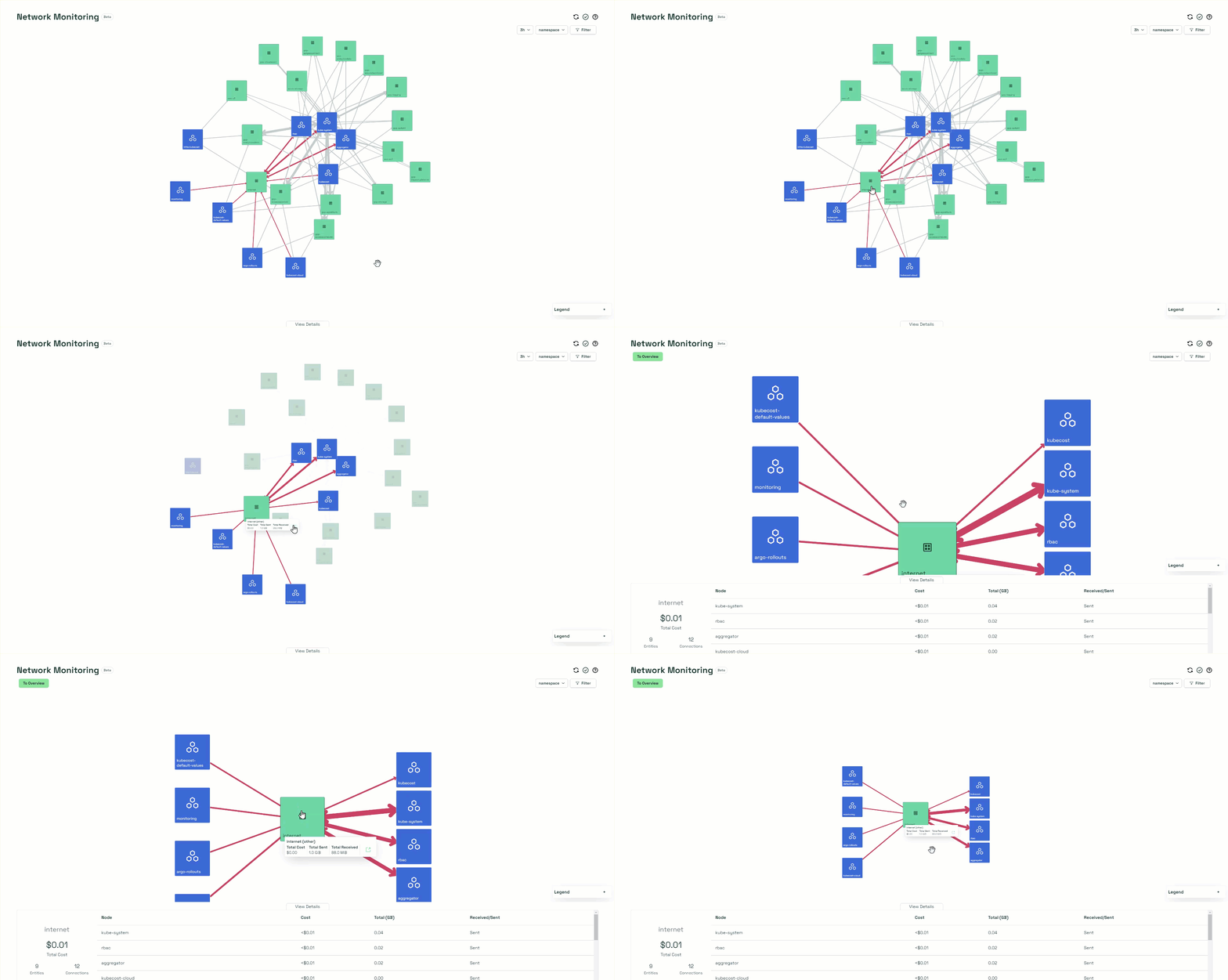
Advanced Containers changes that dynamic with an interactive topology view of Kubernetes and cloud network costs. Instead of staring at line items, teams can visually map traffic between clusters, workloads, and external services, instantly seeing where ingress, egress, and cross-zone costs are being incurred. The graph is fully interactive—select nodes, drill into relationships, filter and aggregate by workload or namespace—making it far easier to pinpoint inefficient traffic patterns like excessive cross-AZ communication.

Network Monitoring

Figure: Interactive look at Network Monitoring view

Understand the True Cost of AI Infrastructure

As GPU-backed workloads become central to AI and machine learning initiatives, understanding GPU efficiency in Kubernetes is no longer optional. GPUs are high-value, high-cost resources, and in containerized environments they are often over-requested, underutilized, or left completely idle.

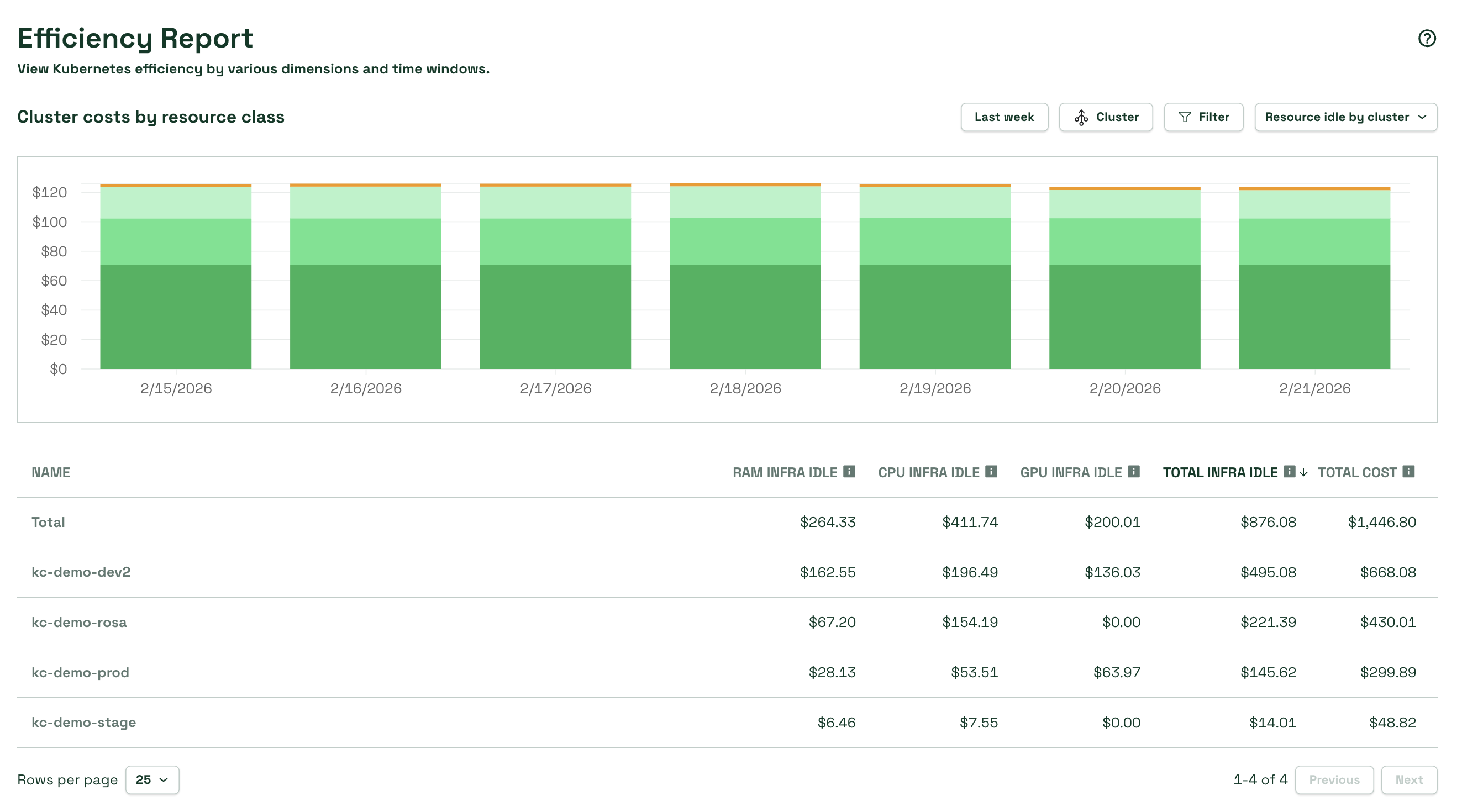
Advanced Containers has GPU awareness throughout its visualizations that reflect granular usage monitoring. The Efficiency Report makes it straightforward for FinOps practitioners to identify the total cost of GPUs, what portion is allocated, and what portion is idle. DevOps teams appreciate the deep dive into infrastructure idle, and how they can quantify the associated waste. The “Resource idle by cluster” view is critical for identifying large areas of waste associated with GPUs provisioned on nodes that are completely unused.

Cloudability Advanced Containers Efficiency Report - IBM Cloudability Advanced Containers for Kubernetes FinOps - Apptio

Figure: “Resource idle by cluster” view, showing idle GPU alongside other resources

Turn Cost Insights into Operational Actions

Cost optimization in Kubernetes often stalls after initial cost visibility is established. Visibility alone doesn’t reduce spend. Requests are overprovisioned, abandoned workloads linger, and spot opportunities go unused. The waste is real, but it’s hard to operationalize in a way that engineering teams can safely implement.

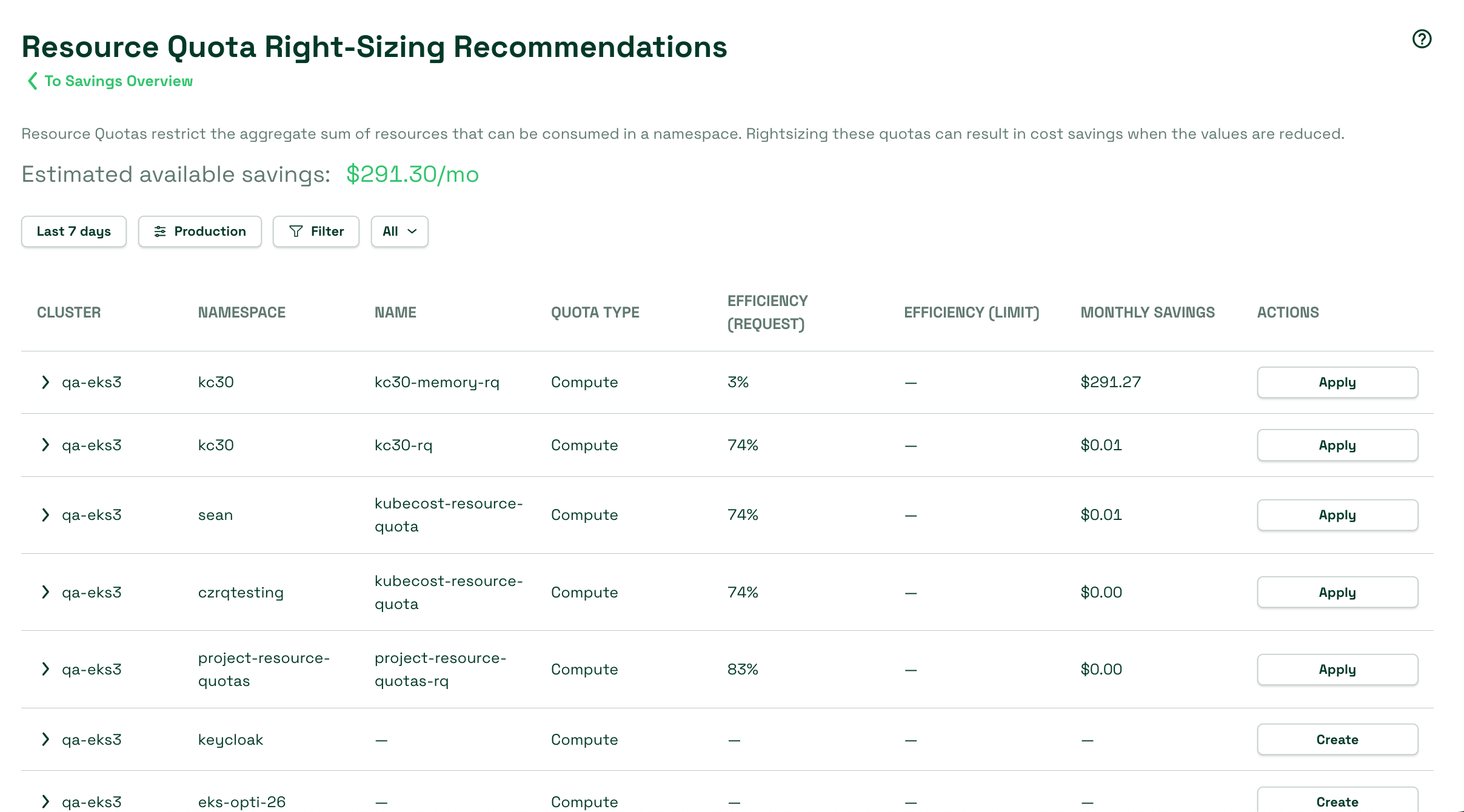
Advanced Containers turns optimization insights into automated actions. Savings Insights, such as right-size resource quotas, container requests, and PVs, are generated from your actual Kubernetes usage patterns. Each insight quantifies potential impact, which helps teams prioritize the highest value changes first. Automated Actions help teams then turn these insights into repeatable, predictable changes that improve cost efficiency. Actions can be viewed in context, then applied through guided steps or automation workflows. Teams can schedule cluster or namespace turndown to avoid paying for idle capacity, update or create new resource quotas, or use automated request sizing to keep CPU and memory requests aligned with real usage. This reduces manual effort and helps teams apply safe optimizations at scale.

Cloudability Advanced Containers Resource Quota Rightsizing - IBM Cloudability Advanced Containers for Kubernetes FinOps - Apptio

Figure: Review and apply recommendations for resource quotas

Built Into IBM Cloudability

Advanced Containers is an add-on within IBM Cloudability. It is available across Cloudability Essentials, Standard, and Premium. Teams can seamlessly access Advanced Containers directly within Cloudability without switching platforms or credentials.

Cloudability continues to provide FinOps teams the centralized reporting, allocation, and governance they need to manage cloud spend at scale. While Advanced Containers adds the Kubernetes granularity DevOps teams need to drive faster optimizations and savings.

This gives FinOps and DevOps teams the shared cost foundation needed to balance performance and cloud spend with confidence.

What’s Next

This is just the start, and we remain committed to continued investment in Advanced Containers within the broader Cloudability experience. The focus now is expanding on what teams can do with this foundation, making it even more actionable for day-to-day operations.

Investment themes ahead include intelligent automation, stronger support for AI infrastructure and efficiency, and more ways to shift cost awareness earlier in engineering workflows. Enterprise readiness remains a priority as well, with investments in multi-tenancy and deeper integrations with native Cloudability features.

Feedback will help shape what comes next. Join quarterly Customer Advisory Board meetings, bring your questions to upcoming webinars and User Group meetups, and share your feedback to help shape future capabilities.

Learn More

If you want to see Advanced Containers in action, schedule a walkthrough with us. Existing IBM Cloudability customers can contact their account team to get started.