






Reading Time: 8 minutes
This is a guest post from Minnie Mururi, a freelance content marketing consultant and founder of Witty Content Writers.
Podcasting has become popular over recent years, and with millions of podcast episodes available online, listeners have plenty of options. So, how do you ensure your podcast gets noticed and cuts through the noise?
The answer lies in your podcast keyword strategy. You should optimize both text and audio for maximum impact. This will help you reach a wider audience as you are open to more than listeners.
“Amplify your podcast performance with a strategic keyword strategy approach. Incorporate your desired searchable genre in the podcast name while ratings, reviews, and downloads propel you to chart-topping success.” Sam Dunning Founder of Business Growth Show
Whether you are a seasoned podcaster or just starting out, this guide will teach you how to adopt an effective keyword strategy and make your podcast visible to a broader audience.
Podcast keywords play a major role in optimizing podcasts for improved visibility. These keywords are phrases used in a podcast episode to help search engines discover it.
Podcast content creators can effectively communicate with their target audience through their shows by including relevant keywords. These phrases can be broad, like “health” or “weight loss”, or specific phrases, like “weight loss for women.”
Every podcast owner wants their podcast to land on the first page of Google. Using the right keywords will land you there. Using the right keywords tells Google that your episode is relevant to the users’ search making it more likely to be featured in the SERPs.
I like to think of a podcast keyword strategy as a roadmap to making your podcast more visible in a sea of countless shows. It’s a systematic approach to finding the most relevant and high-impact keywords and incorporating them strategically into your podcast. This helps Google understand what your podcast is about and help potential listeners discover it.
Finding the best keywords for your podcast is essential for boosting visibility and attracting the right audience to download and listen to your episodes. An effective podcast keyword strategy involves researching, analyzing, and selecting the most relevant keyword that aligns with your podcast’s content and target audience.
Your target audience uses phrases (keywords) related to your podcast content to search for your podcast. The keywords are specific and relevant with a reasonable search volume.
To find these gems, use a software that helps identify your ideal podcast keyword (keyword research tool) like Ahrefs, Moz Keyword Explorer, and pay attention to popular topics and phrases within your niche.
By entering your seed keyword, they generate a list of suggestions, search volume, and keyword difficulty. From the list provided, analyze and prioritize the keywords based on their potential and relevance.
Here are the steps to find high-impact keywords for your podcast.
Understanding your target audience and podcast niche is important when developing an effective podcast keyword strategy. You gain insights into their demographics, interests, and pain points by having a defined target audience. This helps you create content that resonates with them.
For example, if you have a podcast about health and fitness, understand that your audience consists of health-conscious individuals seeking a healthy lifestyle.
Optimizing your content with relevant keywords like ‘fitness,” healthy eating,’ ” or ‘healthy recipes‘ will help you get found easily by the relevant audience.
Also, it’s important to research other podcast niches to enable you to find similar podcasts and analyze their keywords, topics and audience engagement.
For example, if you are running a crime podcast, researching for successful podcasts can help you uncover more keywords like ‘unsolved cases,’ ‘ criminal investigations, or ‘unsolved stories’ and incorporate them in your podcast metadata.
It’s essential to put all your ideas in one place. Make a comprehensive list of all the topics you want to cover. There are no wrong or right ideas, so take your time to jot down. They can be as broad as you like.
Tip:
This is a clear indication that listeners would be interested in listening to the upvoted topics.

For example, the image above shows a topic about the best dog food for pit bulls. It has an upvote of 502, therefore a great topic to cover in your podcast episode.
Use a keyword research tool successfully, like Ahrefs or SEMrush, to conduct thorough research on the search volume and keyword difficulty for your brainstormed keywords.

Reading Time: 8 minutes Getting backlinks for your podcast will help with the discoverability of your show – learn what they are and easy ways to get them for your show!
Take note of these two metrics
The best keywords to target are those with a high search volume and low keyword difficulty. You will have a shot at ranking for these keywords.
Once you’ve selected your most suitable keyword, google it to see what ranks on page 1. This is the best way to ensure you are on track with the content you want to produce for the keyword.
If the results on the SERPs differ from what you want to focus on, choosing a different keyword that matches your idea better would be best.
Google will mostly return blog posts when you search a given keyword. This shouldn’t stop you from using the keyword. Therefore, you should create a significant amount of written content to accompany your podcast.
Only upload your podcast with detailed show notes or a blog associated with your audio. Doing this will give you the chance to rank.
To rank on the first page of Google, you’ve got to produce better content than what’s ranking already. Therefore, your content should have the same or better quality and depth.
Prioritizing long-tail keywords is one of the best ways to boost your podcast visibility and attract loyal listeners. They are longer, less competitive, and have a lower search, giving you a higher chance of ranking.
Because they are more targeted, they can help you attract a highly engaged audience.
Sometimes, your podcast keyword research is random and all over the place. Don’t worry, this is quite normal. The process of finding the best keyword for your podcast can involve some trial and error. As long as you are keen on the keyword volume and difficulty, you are on the right track.
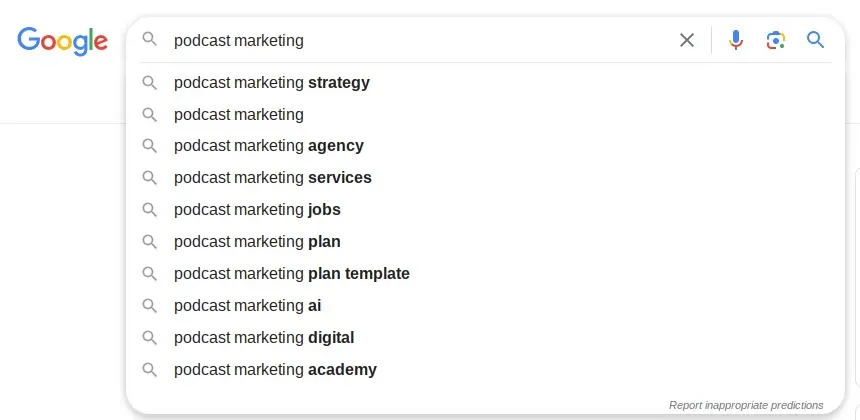
If you are running out of ideas, do some Google searches. You can get some brilliant keyword ideas from Google Autocomplete and the related searches at the bottom of the results page.
AlsoAsked is also great for finding relevant related questions to feature on your podcast. Just entering a keyword generates a list of commonly asked questions based on Google’s data. It can help you understand the interests and curiosities of your target audience, helping you develop engaging episodes addressing their concerns.
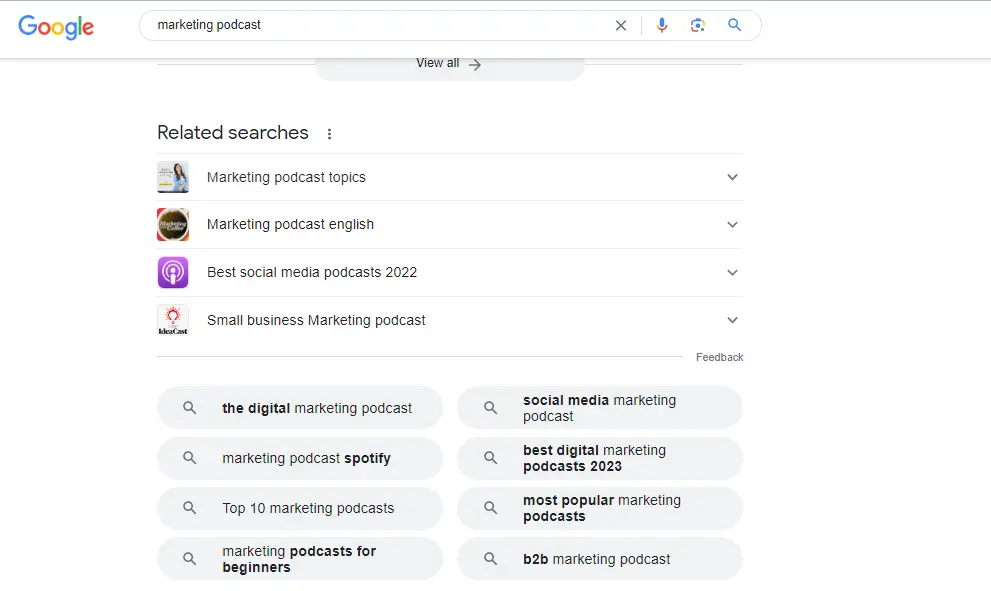
The images above show Google autocomplete searches and related searches you can use for your keyword ideas.
After selecting your ideal keyword, you are all set up to create your content. Use one primary keyword and a few secondary keywords per podcast episode.
If you choose to target several unrelated keywords in a single podcast, you will be unlikely rank for any of them.
It’s essential to keep your focus narrow so that Google can understand what your content is about. Choosing the right keyword is about understanding and meeting the searcher’s intent.
It would be best if you aimed at giving people exactly what they want. Try to understand why a person is searching for the keyword in the first place. What information might they be looking for? It’s your job to give them what they want.
The more you satisfy the intent, the better your chance to rank. Spread your keywords throughout your content. Make sure you put your keyword in these places:
All the above steps will only be successful if you execute the keyword research part well.
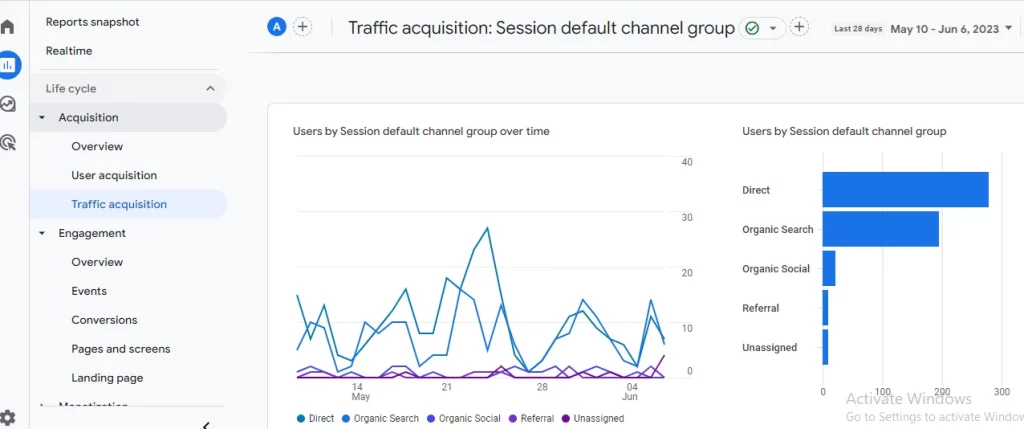
Once you have implemented your podcast keyword strategy, it’s essential to monitor the performance and make adjustments when need be. Review your analytics regularly to determine which keywords drive more traffic and engagement to your podcast and adjust accordingly to optimize your reach continually.
Also, analyze the quality and amount of traffic your podcast receives. Check if the traffic increases or decreases, and identify the keywords that drive the most traffic to your podcast.
Remember to evaluate listener engagement. Check your episodes’ engagement metrics(downloads, listens, shares and comments). See whether the episode optimized with specific keywords has better engagement.
It would help if you also stay updated with the current trends. Always Keep an eye on the keyword trends and shift in your niche. Doing this will help you identify new opportunities or adjust your SEO keyword research strategy based on the audience’s search behavior.
You must be aware of and avoid common mistakes when selecting your podcast keywords to ensure an effective strategy. Here are some common mistakes you should avoid.

Reading Time: 5 minutes Ana Xavier shares her expert tips for easy podcast marketing.
One of the mistakes many people make in their podcast keyword strategy is using too broad and competitive keywords.
For example, using a keyword like ‘marketing’ won’t make your podcast stand out amongst thousands of podcasts using the same keyword. Therefore, it is important to use specific and long-tail keywords relevant to your podcast.
Another mistake many people make is not paying attention to keyword research. Without a proper podcast keyword strategy, you may miss out on potential keywords that can help you drive more traffic. Use tools like Ahrefs, SEMrush and Google Keyword Planner to find keywords with high volume and low competition.
Keyword stuffing is overusing your keyword in your podcast description, title and tags. It can impact your podcast’s ranking by making it appear spammy to listeners.
Instead, use your keyword naturally and strategically throughout your podcast content.
Before settling for a keyword, it’s important to consider the target audience’s search intent.
What are they searching for? What questions do they want to be answered? By understanding the searcher’s intent, you can choose keywords that align with their interests and needs. Doing this will help you attract more podcast listeners.
Check the keyword intent by googling your keyword and analyzing the type of content that appears on the SERPs. Doing this will provide insights into the intent behind your keywords. Analyze the content on page 1 and study the language and format to understand the intent.
With the rising use of mobile devices, optimizing your podcast for mobile search is important. First, use easy keywords to type on a mobile device and ensure your podcast is mobile-friendly. Neglecting mobile optimization can lead to missed opportunities to reach potential listeners.
Finally, it is important to track the performance of your keywords over time. This will help you have a clear picture of the keywords driving the most traffic and the ones that need to be adjusted. Use analytics tools to monitor your keyword performance and make adjustments when needed.
An effective podcast keyword strategy is vital for increasing qualified traffic to your podcast. By uncovering the most relevant keywords, optimizing your podcast content and staying up to date with keyword trends, you can attract qualified traffic and become successful in the podcasting landscape.
Embracing the power of an effective podcast keyword strategy can lead to increased visibility, engagement and long-term growth for your podcast.
If you enjoyed this article, check out Minnie’s article about creating SEO content strategies for maximum impact, visit her Witty Content Writers website or you can connect with Twitter.
此内容由惯性聚合(RSS阅读器)自动聚合整理,仅供阅读参考。 原文来自 — 版权归原作者所有。