惯性聚合 高效追踪和阅读你感兴趣的博客、新闻、科技资讯
阅读原文 在惯性聚合中打开

推荐订阅源

S
Schneier on Security
Security Archives - TechRepublic
T
Threat Research - Cisco Blogs
G
GRAHAM CLULEY
P
Privacy & Cybersecurity Law Blog
C
CXSECURITY Database RSS Feed - CXSecurity.com
Cisco Talos Blog
Cisco Talos Blog
The Hacker News
The Hacker News
L
Lohrmann on Cybersecurity
cs.CL updates on arXiv.org
C
Cyber Attacks, Cyber Crime and Cyber Security
Security Latest
Security Latest
Know Your Adversary
Know Your Adversary
P
Palo Alto Networks Blog
C
Cisco Blogs
AWS News Blog
AWS News Blog
T
Threatpost
L
LINUX DO - 热门话题
Simon Willison's Weblog
Scott Helme
Scott Helme
C
Cybersecurity and Infrastructure Security Agency CISA
T
Tor Project blog
Cyberwarzone
Cyberwarzone
P
Proofpoint News Feed
Threat Intelligence Blog | Flashpoint
T
The Exploit Database - CXSecurity.com
The Register - Security
D
Darknet – Hacking Tools, Hacker News & Cyber Security
cs.CV updates on arXiv.org
罗磊的独立博客
云风的 BLOG
云风的 BLOG
V
Vulnerabilities – Threatpost
N
News | PayPal Newsroom
Project Zero
Project Zero
NISL@THU
NISL@THU
博客园_首页
MyScale Blog
MyScale Blog
V2EX - 技术
V2EX - 技术
Cyber Security Advisories - MS-ISAC
F
Full Disclosure
T
Troy Hunt's Blog
Recorded Future
Recorded Future
N
Netflix TechBlog - Medium
P
Privacy International News Feed
H
Hackread – Cybersecurity News, Data Breaches, AI and More
A
Arctic Wolf
C
Check Point Blog
W
WeLiveSecurity
Apple Machine Learning Research
C
CERT Recently Published Vulnerability Notes

RUSI: What's New

Episode 21: Chinese Money Laundering and the ‘Flying Money’ Threat Armenia’s Election: A Win for Pashinyan, Yet the Kremlin Long Game Persists The Loyalty Trap: Trump and the Undermining of US Intelligence Power The End of Orbánism? Bosnia, Magyar and Europe’s Strategic Credibility The Curious Case of the Delayed Investment Plan The Energy Supply Cliff is Alarmingly Near Europe Means Business on Cloud and AI Sovereignty No-Rules Based Order: The World As It Really Is The Nathan Gill Case: Isolated Foreign Malign Interference Case or a Broader Hybrid Threat? Armenia’s Election and the Future of Security in the South Caucasus The DPRK’s Chemical Facilities: Sunchon Area: Site Profile 7 Reforming Defence: Lessons from the UK Defence Restructuring History The DPRK’s Chemical Facilities: 8th February Vinalon Complex: Site Profile 8 Power Under Dependency: Vulnerabilities in France’s Strategic Posture Re-Establishing Japan’s Intelligence Capability – ‘Spy Paradise’ lost? Episode 121: No Easy Off-Ramp: Iran, the US and the Search for a Deal Illegal High Street Enterprise. Closed for Business, Open for Crime Hollowing Out Lebanon: How Pressure on Hezbollah Could Save It Duke of Wellington Medal for Military History 2025 Episode 19: Adversarial Strategy: Russia’s Preparations for a Long War Who Rules Cyberspace? The Microsoft Approach to Cyber Diplomacy The Inextricable Link Between Geopolitics, Security and Humanitarian Impact Offshore Wind and Security in the North Sea: Key Findings from a Workshop Episode 20: Is Populism a Business Model? As US Scales Back Forces Earmarked for NATO, Opportunity Opens for Europe Recording: Subsea Cables: Risks, Security and Resilience ‘Always On’ and Defence Industry in the UK: Its Nature, Importance, Challenges and Ways Forward Turkey’s Iraq Gambit Amid the Strait of Hormuz Crisis Recording: The New Geography of Climate Change Order Missiles and Bombs to Increase European Combat Air Mass, Not Drones Canada Calling: Lessons for Europe on Confronting the Financing of Political Interference The Iranian Armed Forces and the Third Gulf War Water and Cognitive Warfare Episode 120: President Trump in Beijing: The Future of US-China Relations Missing Intelligence: The Trump Administration, Iran and the US Intelligence Community The Peace and Security System has Three Functions. African States Need a Fourth Recording: Kermit Roosevelt Lecture given by General Christopher Donahue Recording: David Miliband on Geopolitics, Security and the Humanitarian Impact The West’s Ukraine Sanctions Strategy has Lost its Way The UK’s Chagos Islands ‘Deal’: Where are We Now? Integrating Hunt Forward Operations for Enhanced UK Cyber Campaigning Europe’s AML Package: A Strong Framework at the Wrong Time? How North Korea is Modernising its Defence NATO’s Rutte is Doing a Tough Job. Europeans Should Help The US Army’s Next Generation Squad Weapon and the Future of NATO Standardisation Episode 15: Integrating Today’s Forces for Air and Missile Defence RUSI Reflects: The Reality of an Extended Closure of the Strait of Hormuz Corporations Must Re-learn How to be Geopolitical Actors Operational Continuity in a Contested Energy Transition Why the US’s Financial Efforts to Keep the Hormuz Strait Open Failed The Real Test for Iran Comes After the War Nationalism and Defence Willingness: Mobilising for the Future Licence to Operate: Transparency and Responsibility in UK Offensive Cyber Power Episode 16: Latvia’s Transformation: From Laundromat to Leader Four Alternative End States in Iran – the Only Good One Becomes Unlikely Crypto Moratorium is the Right Starting Point for Political Finance Reform UN Norms: Tackling the Rise of Cyber Capabilities Speaking Without Escalating: Why the UK Needs Public Responsibility Signalling in Cyber Policy Events Events Events Events Events Bridging Digital Borders: Cybersecurity Capacity Building in Latin America Events Artificial Intelligence: Friend or Foe in Fighting Financial Crime? CTF Online Symposium: Islamic State – Khorasan Province Events UK National Security and the Net Zero Transition Launch of the Global Partnership for Responsible Cyber Behaviour Events Professor Sir David Omand on How to Survive a Crisis Instability in Russia: An Update by RUSI Experts The Casey Review: Implications for the Metropolitan Police Service Events Policing the Far Right Events UK PONI Annual Conference 2023 Events Events Events RUSI Space Power Conference 2023 Events Events Events Events Events RUSI Combat Air Conference 2023 Events RUSI Latin American Security Conference 2023 Events Events International Day of UN Peacekeepers Conference 2022 UK Project on Nuclear Issues Annual Conference 2022 RUSI Sea Power Conference 2022 Events Events Events
The Gulf Does Not Want This War to Continue
2026-03-29 · via RUSI: What's New

Why Qatar and much of the GCC see prolonged conflict not as a strategy, but as a threat to the stability that built their prosperity.

There is a stubborn assumption in parts of Washington and Europe that the Gulf Arab states quietly want this war to continue until Iran is badly weakened. That reading is too neat, too lazy, and in Qatars case, plainly wrong.

Qatar does not want this war to continue. That much is clear from its public posture, its diplomacy and the logic of its national interests. Beyond Qatar, the picture across the GCC is not perfectly homogeneous, and it would be unserious to pretend otherwise. These are different states, with different threat perceptions and different strategic habits. Oman is not Bahrain. Qatar is not the UAE. Saudi Arabia carries its own long memory of direct attacks and proxy escalation. Even so, if one steps back and looks at the public statements, the economic realities and the conduct of most GCC governments, the broad direction is unmistakable: this is not a region pushing for a prolonged war with Iran. It is a region trying to limit the damage.

Countering a Narrative

That matters because the Gulf is often discussed as though it were emotionally invested in confrontation for its own sake. It is not. The Gulf, especially the smaller and more globally integrated states, built its modern success around continuity: trade, functioning ports, safe skies, energy exports, foreign investment and a regional environment stable enough to permit growth. That is how states such as Qatar prospered. Not in a perfect world, but in a difficult neighbourhood where the rules were still broadly understandable.

And one of those rules, whether people liked it or not, was that Iran was there and would remain there.

This is the part many outside observers miss. Qatar and the rest of the GCC did not spend the last four and a half decades waiting for Iran to disappear. They acclimated to it. They built policy around it. They built security assumptions around it. They built commercial and diplomatic behaviour around it. That did not mean trust, affection or blindness to the risks posed by Iran and its proxies. It meant something more sober: the Gulf learned to live next to a difficult, ideological, often disruptive neighbour while still building wealthy, globally connected states.

quote

Qatar built an economic model that depends on reliability: reliable gas exports, reliable logistics, reliable diplomacy and the reputation of being a place that works

And for the most part, that model worked.

Yes, there were moments of real danger. Saudi Arabia and the UAE were targeted, directly or through proxies, in ways that were serious and unacceptable. No one serious should minimize that history. But over nearly half a century of the Islamic Republics existence, those episodes, however alarming, were intermittent rather than defining. They did not destroy the Gulfs basic formula for prosperity. The region still grew. It still built. It still attracted capital, expanded ports and airlines, and projected stability far beyond what many expected.

That is why the idea that the GCC is now pushing for a wider or longer war makes so little sense.

War with Iran is not an abstract geopolitical exercise for the Gulf. It hits infrastructure, shipping, aviation, insurance, tourism, banking, investor confidence, energy markets and every quiet calculation made by businesses deciding whether the region is safe enough for long-term exposure. The longer this war goes, the more those calculations change.

That is especially true for Qatar. Qatar built an economic model that depends on reliability: reliable gas exports, reliable logistics, reliable diplomacy and the reputation of being a place that works. The same is true, in varying degrees, across the wider GCC. These are states that became globally relevant not by exporting chaos but by offering the opposite of it. They became hubs because they were dependable.

A prolonged war tears at all of that.

None of this means the Gulf will emerge from this war soft toward Iran. It will not. Trust will be lower. Suspicion will be higher. Security spending will rise. Infrastructure protection, resilience and deterrence will move higher up the agenda. In some capitals, the lesson will be that Iran must be contained more sharply and watched more closely.

But containment is not the same as wanting endless war. That is the distinction many outsiders keep missing.

Enjoy our analysis and research? Ensure it shows up first on Google

Help your search results show more from RUSI. Adding RUSI as a preferred source on Google means our analysis appears more prominently.

Subscribe to the RUSI Newsletter

Get a weekly round-up of the latest commentary and research straight into your inbox.

The more likely post-war Gulf posture is harder in security terms and colder in diplomatic tone but still grounded in the old reality that Iran is a permanent neighbour. There will be less illusion and probably less patience. Yet there will also remain a powerful incentive to prevent the region from slipping into a condition where shipping lanes are perpetually threatened and every crisis risks becoming a war.

Across the Gulf

So let us be clear about the central point. Is every GCC state identical in its view? No. But does the available evidence, especially in Qatars case and broadly across most GCC behaviour, suggest a desire for this war to drag on? No, it does not.

The Gulf built itself while living next to Iran. It learned to function, prosper, and project influence in spite of Iran, around Iran, and at times in careful accommodation with the fact of Iran. That does not make Tehran harmless. It does mean the Gulf has far more to lose from an open-ended war than many foreign commentators seem to understand.

And Qatar, above all, knows that.

© Sheikh Nawaf bin Mubarak Al-Thani, 2026, published by RUSI with permission of the author.

The views expressed in this Commentary are the author's, and do not represent those of RUSI or any other institution.

For terms of use, see Website Terms and Conditions of Use.

Have an idea for a Commentary you'd like to write for us? Send a short pitch to commentaries@rusi.org and we'll get back to you if it fits into our research interests. View full guidelines for contributors.


WRITTEN BY

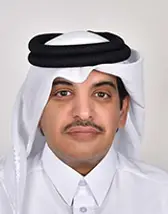
Sheikh Nawaf bin Mubarak Al-Thani

Guest Contributor

View profile