




惯性聚合 高效追踪和阅读你感兴趣的博客、新闻、科技资讯
阅读原文 在惯性聚合中打开

推荐订阅源

Google DeepMind News
F
Fortinet All Blogs
阮一峰的网络日志
阮一峰的网络日志
Apple Machine Learning Research
爱范儿
爱范儿
WordPress大学
WordPress大学
让小产品的独立变现更简单 - ezindie.com
J
Java Code Geeks
罗磊的独立博客
S
SegmentFault 最新的问题
V
V2EX
V
Visual Studio Blog
钛媒体:引领未来商业与生活新知
钛媒体:引领未来商业与生活新知
美团技术团队
博客园 - 三生石上(FineUI控件)
Stack Overflow Blog
Stack Overflow Blog
Y
Y Combinator Blog
MyScale Blog
MyScale Blog
D
Docker
Google DeepMind News
Blog — PlanetScale
Blog — PlanetScale
M
Microsoft Research Blog - Microsoft Research
Martin Fowler
Martin Fowler
S
Secure Thoughts
B
Blog
cs.CL updates on arXiv.org
www.infosecurity-magazine.com
Recent Announcements
MongoDB | Blog
MongoDB | Blog
C
Cisco Blogs
C
CERT Recently Published Vulnerability Notes
T
True Tiger Recordings
GbyAI
GbyAI
P
Proofpoint News Feed
P
Privacy International News Feed
Jina AI
Jina AI
The Cloudflare Blog
I
Intezer
AWS News Blog
AWS News Blog
Hacker News - Newest:
Hacker News - Newest: "LLM"
S
Security Archives - TechRepublic
NISL@THU
NISL@THU
The Register - Security
Recent Commits to openclaw:main
P
Palo Alto Networks Blog
S
Schneier on Security
L
LINUX DO - 热门话题
C
CXSECURITY Database RSS Feed - CXSecurity.com
Security Latest
Security Latest
C
Cybersecurity and Infrastructure Security Agency CISA

NASA Science

TOI-4311 c - NASA Science TOI-4311 b - NASA Science XO-2 S d - NASA Science TOI-237 c - NASA Science TOI-4311 - NASA Science Hubble Captures Galaxy Cluster - NASA Science Tornado Draws a Jagged Line in Mississippi - NASA Science Space Interferometry Webinar, 5 June 2026 - NASA Science Space Interferometry Webinar, 5 June 2026 - NASA Science Mars Viking 50th Anniversary at NASA Ames - NASA NASA to Showcase Mission to Boost Swift Spacecraft’s Orbit - NASA Cosmic Origins Seminar, May 26 , 2026 - NASA Science NASA Joins Artemis Accords Workshop as Global Signings Rise - NASA NASA Seeks Interest for Artemis Mission CubeSats - NASA NASA’s AWE Completes Mission to Study Earth’s Effect on Space Weather - NASA Science D.3 AGIGO: New joint observing program with XMM-Newton added to IXPE GO Cycle 4 - NASA Science NASA Wins Four Telly Awards for Artemis Moon Coverage, More - NASA NASA Wins Four Telly Awards for Artemis Moon Coverage, More - NASA Crew Conducting Advanced Health Research and More Spacewalk Preps - NASA Hubble Sights Galaxy in Transition - NASA InRoDES ASTRA Space Interferometry Webinar, 5 June 2026 - NASA Science ASTRA Space Interferometry Webinar, 5 June 2026 - NASA Science NASA Welcomes 16th Deputy Administrator Matt Anderson - NASA NASA Highlights 2025 International Space Station Science Results - NASA Matt Anderson - NASA Brochures and Fact Sheets - NASA Science Posters and Infographics - NASA Science New Eruption in the Bismarck Sea - NASA Science JSC Gamers Club - NASA NASA Announces Winners in University Aeronautics Competition - NASA Amendment 58: F.17 Research Initiation Awards Final Text and Due Date - NASA Science Cancer, Blood Research Tops Science Schedule as Spacewalk Preps Continue - NASA La NASA informará sobre su estrategia y misiones para la Base Lunar - NASA NASA TechLeap Prize: Robotically Manipulated Payload Challenge - NASA Psyche Spacecraft Completes Mars Flyby - NASA Dale Smith - NASA NASA-developed AI Could Help Track Harmful Algae - NASA Cosmic Origins Seminar, 26 May 2026 - NASA Science Monica M. Watts - NASA Anna Irvine - NASA NASA to Provide Update on Moon Base Strategy, Missions - NASA Space Industry Galaxies SIG Seminar, 3 June 2026 - NASA Science I Am Artemis: Tim Goddard - NASA - NASA Science NASA’s Fermi Glimpses Power Source of Supercharged Supernovae - NASA Science Fire Chars Santa Rosa Island - NASA Science NASA’s Psyche Mission Images Mars’ Huygens Crater - NASA Science NASA’s Psyche Mission Spies Mars’ Wind-Blown Craters During Close Approach - NASA Science Psyche’s High-Resolution View of Mars’ South Pole - NASA Science NASA’s Psyche Mission Sees Mars’ South Pole After Flyby - NASA Science NASA’s Psyche Mission Images the Crescent of Mars - NASA Science Cosmic Structures SIG Meeting, 22 May 2026 - NASA Science NASA’s Psyche Mission Aces Mars Flyby, Targets Metal-Rich Asteroid - NASA Langley Science Highlights Archive - NASA Astronauts Work Cancer, Cartilage Treatments, Cosmonauts Prep for Spacewalk - NASA Rosa Avalos-Warren - NASA Science Lunar South Pole Visualizations - NASA Moon-Venus Conjunction - NASA Dr. Kelly Korreck Johnson’s Cindy Evans Prepares Artemis Teams for Lunar Science - NASA VIPER - NASA MoonFall Drones - NASA NASA’s New Shock Detectives Project Invites Volunteers to Help Study Solar Wind - NASA Science Shock Detectives - NASA Science Farming in Ancient Lake Agassiz - NASA Science Curiosity Blog, Sols 4893-4899: Drilling at Campo Marte and a Visit From the Psyche Spacecraft - NASA Science Johnson Photographers Honored for Award-Winning Portraits - NASA BYTWD - NASA NASA Transfers Management of Lunar Science Instruments - NASA Science Crew Unloads Dragon and Begins New Space Experiments - NASA HLS Vegetation Indices - NASA Science ASTRA Initiative Questions and Answers - NASA Science 4th COSI Data Challenge Announced - NASA Science ROSES-25: D.3 AGIGO: IXPE and NICER - NASA Science NASA’s MAVEN Makes 1st Discovery of Atmospheric Effect at Mars - NASA Science NASA Selects Next Class of Space Health Postdoctoral Fellows - NASA ASTRA Initiative Questions and Answers Landsat 10 Mission Details - NASA Science Landsat 10 - NASA Science Dr. Trinity Bharath - NASA TDAMM SIG Meeting, 22 May 2026 - NASA Science Beacon of Light - NASA TDAMM SIG Meeting, 22 May 2026 - NASA Science What’s Next for Artemis II AVATARs - NASA Science Great Balls of Fire - NASA Science Moon Base Renderings - NASA SpaceX Dragon Docks to Station Filled with New Science Experiments - NASA SpaceX Dragon Approaching Station Packed with Science and Supplies - NASA AbSciCon - NASA Science NASA Calibration Instrument Launches to International Space Station - NASA Science Astrobiology Publications - NASA Science Astrobiology Publications - NASA Science ROSES-25 Amendment 56: D.6 APRA and D.7 SAT - NASA Science AAAC Meeting, June 1, 2026 - NASA Science AGN SIG Seminar, May 26, 2026 - NASA Science Ad ASTRA Seminar, May 22, 2026 - NASA Science NASA Science, Cargo Launch on 34th SpaceX Resupply Mission to Station - NASA SpaceX Dragon Lifts Off to Resupply Expedition 74 Crew - NASA
Scientific Visualizations - NASA Science
jmbrill · 2026-05-21 · via NASA Science
Simulated Galaxy Redshift Cube Sequence

Simulated Galaxy Redshift Cube Sequence

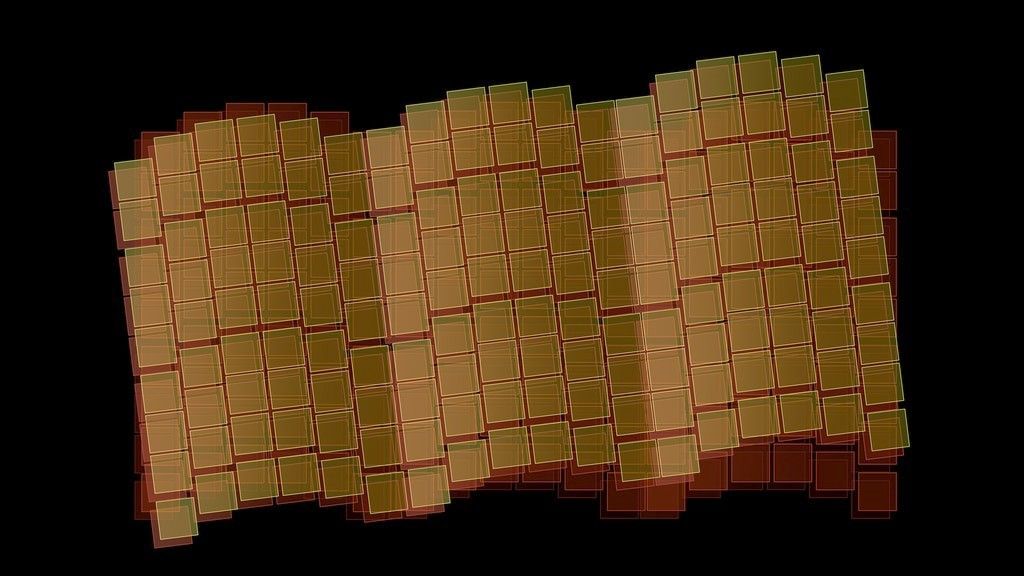
The WFI will use a special tiling pattern to perform its high latitude spectroscopic survey. A single image 'footprint' is produced by its 18-detector array and then takes an image slightly offset to cover the small gaps between the individual detectors. It repeats this process eight more times to create a mosaic covering 2.5 square degrees of sky.
View Image

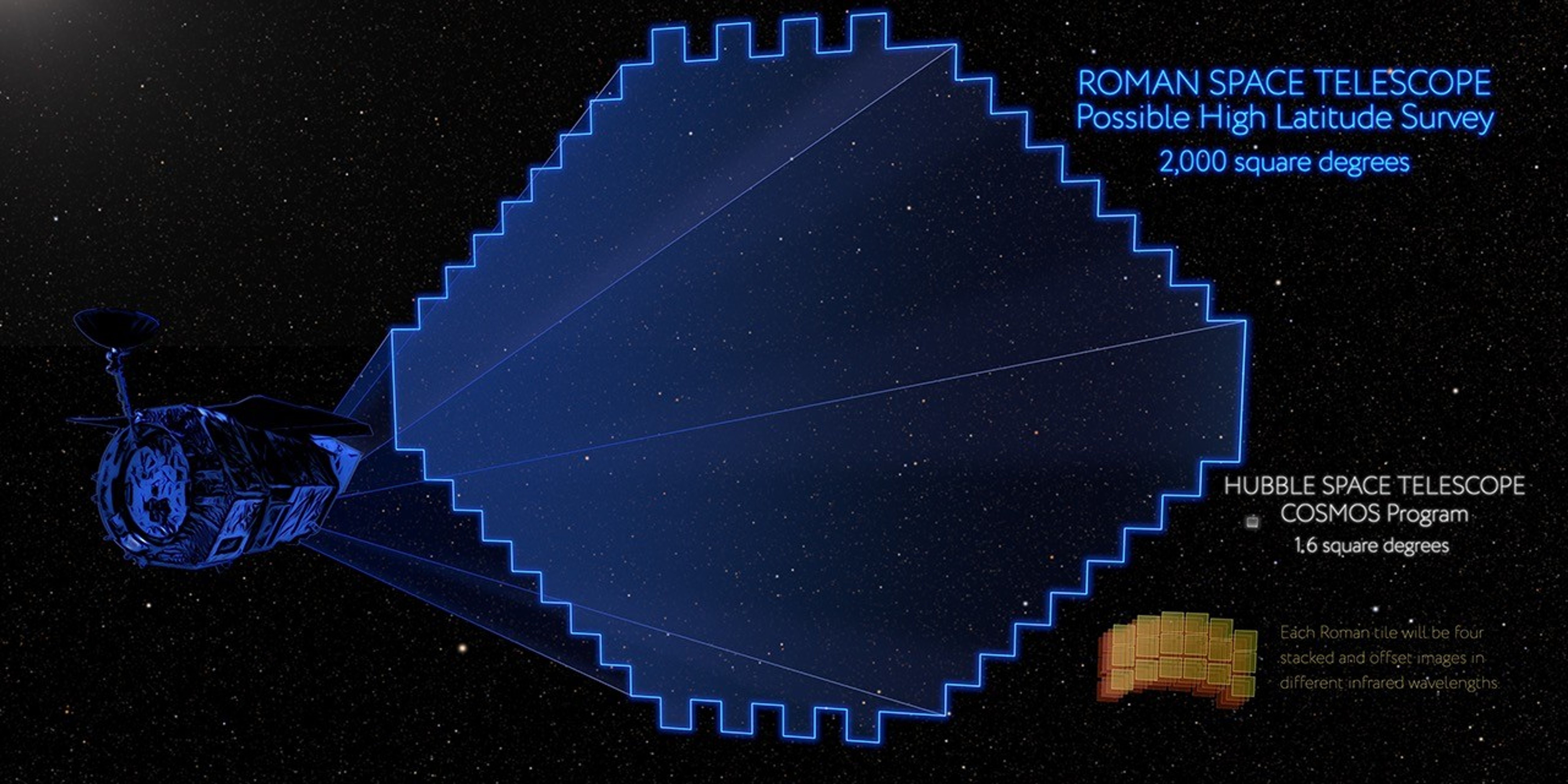
Possible High Latitude Survey

Possible High Latitude Survey

This illustration compares the relative sizes of the areas of sky covered by two surveys: Roman’s High Latitude Wide Area Survey, outlined in blue, and the largest mosaic led by Hubble, the Cosmological Evolution Survey (COSMOS), shown in red. In current plans, the Roman survey will be more than 1,000 times broader than Hubble’s.
View Image

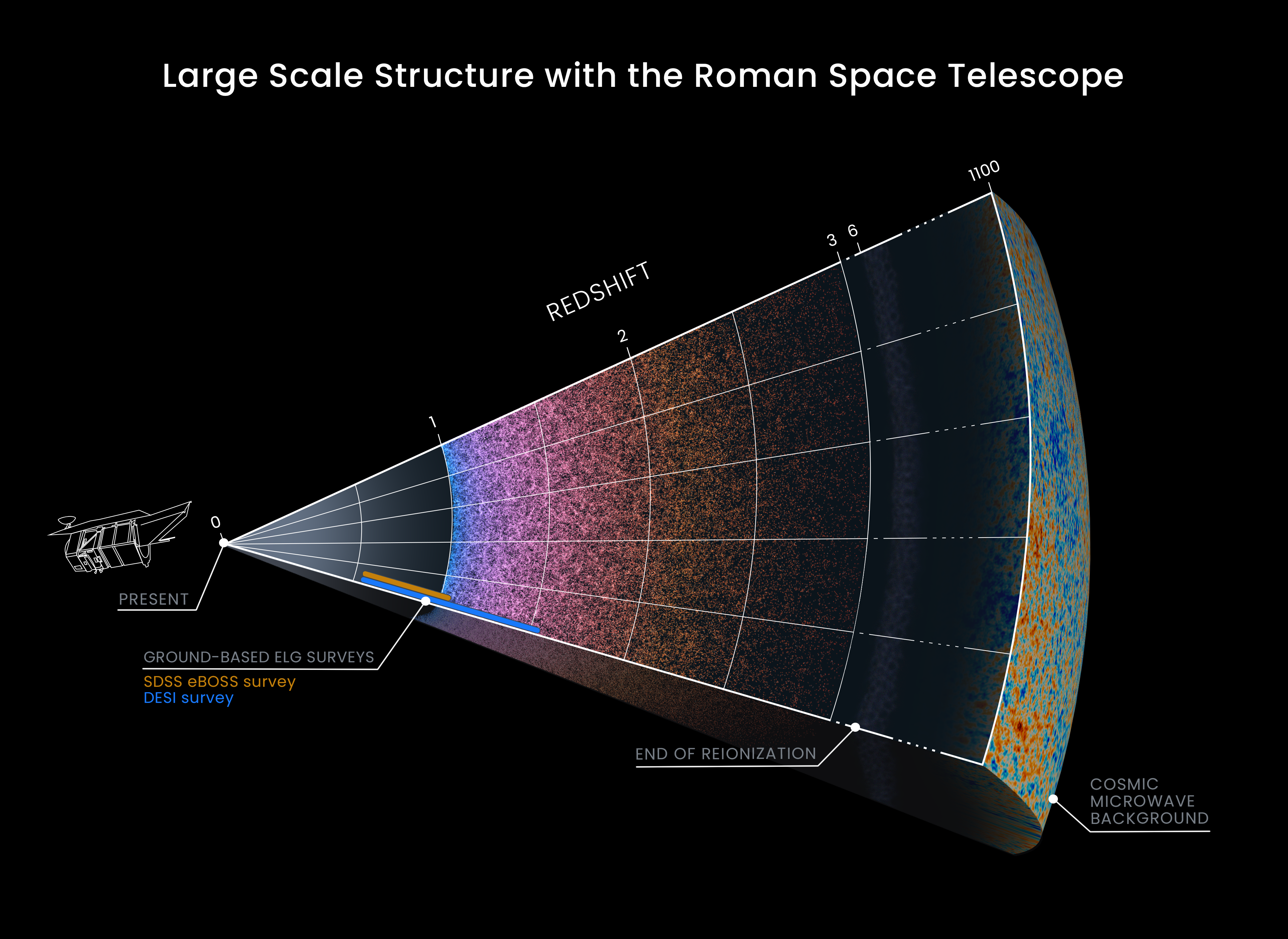
Measuring redshifts of tens of millions of galaxies

Measuring redshifts of tens of millions of galaxies

The spectroscopic component of the High Latitude Wide Area Survey measures redshifts of tens of millions of galaxies via grism spectroscopy using the WFI over at least a 1700 deg2 region that overlaps the region.
View Image

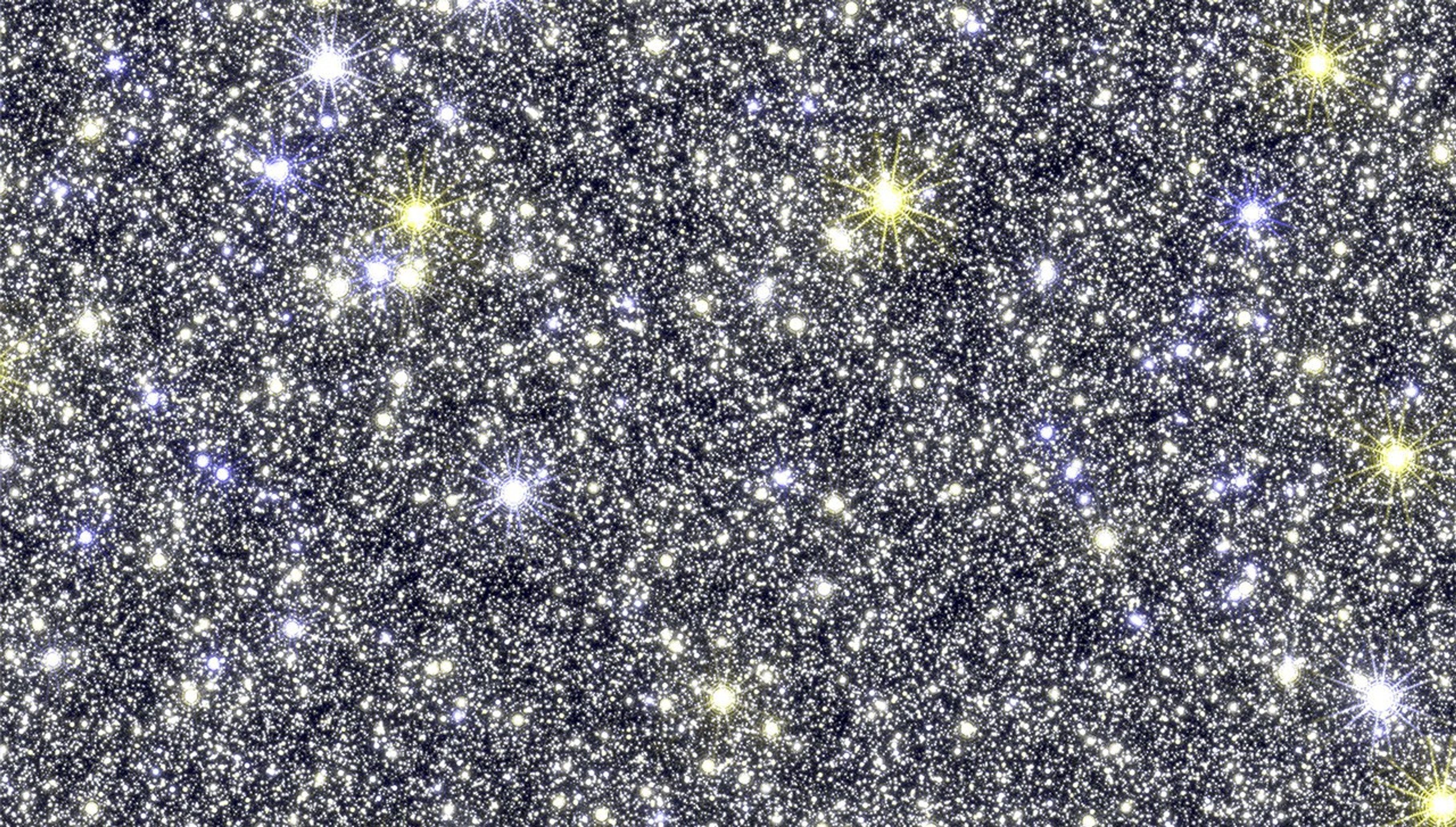
Roman Simulated Image of the center of our Galaxy

Roman Simulated Image

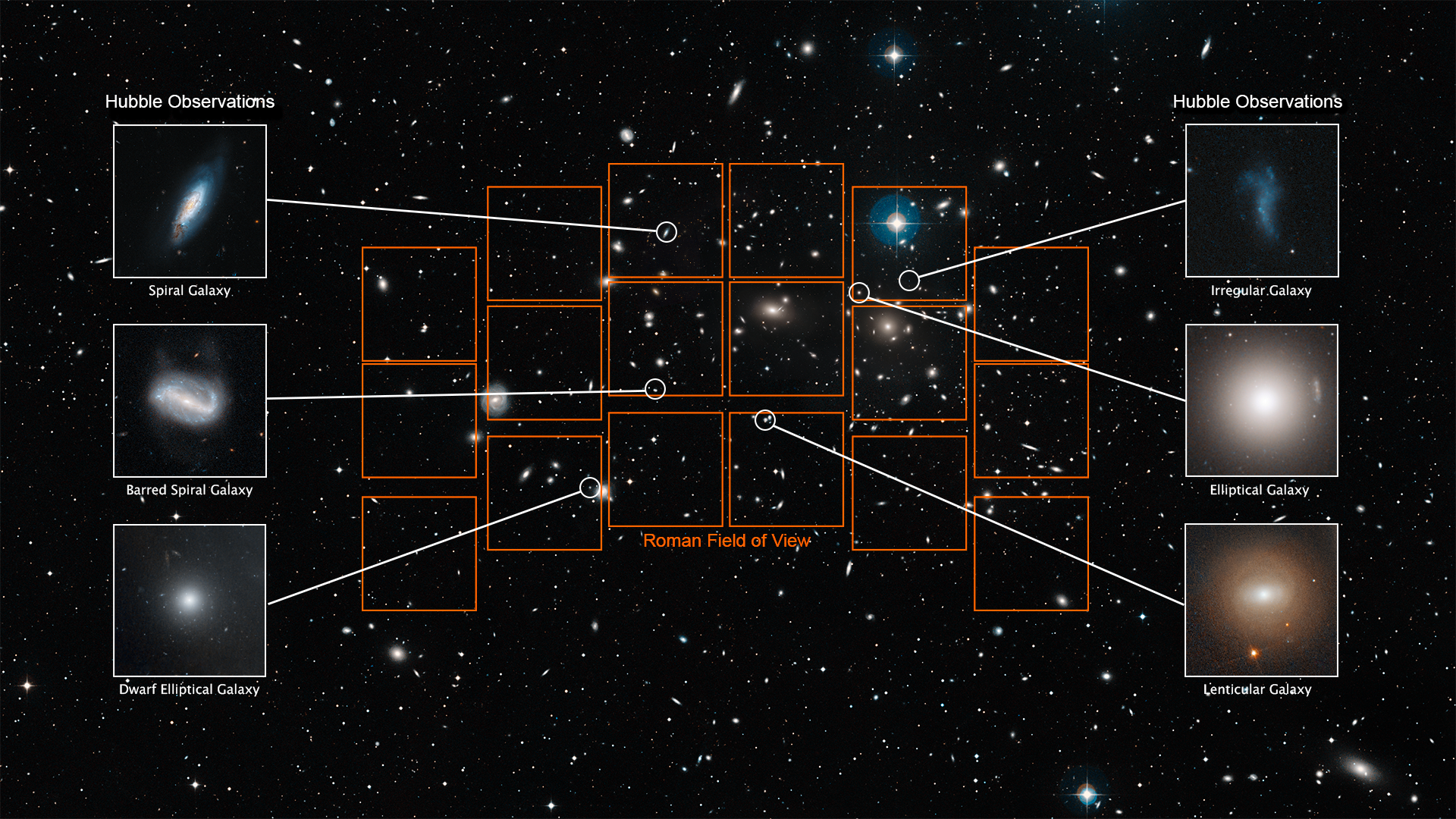
This Roman Simulated Image (1/140th Roman field of view) of center of our Galaxy
View Image

Roman’s wide field for studying galaxy clusters

Roman’s wide field for studying galaxy clusters

This figure illustrates the power of Roman’s wide field for studying galaxy clusters. In 2000 square degrees, the High Latitude Wide Area Survey will observe some 200 Abell clusters and a much larger number of more distant galaxy clusters.
View Image

Roman Microlensing Search Space

Roman Microlensing Search Space

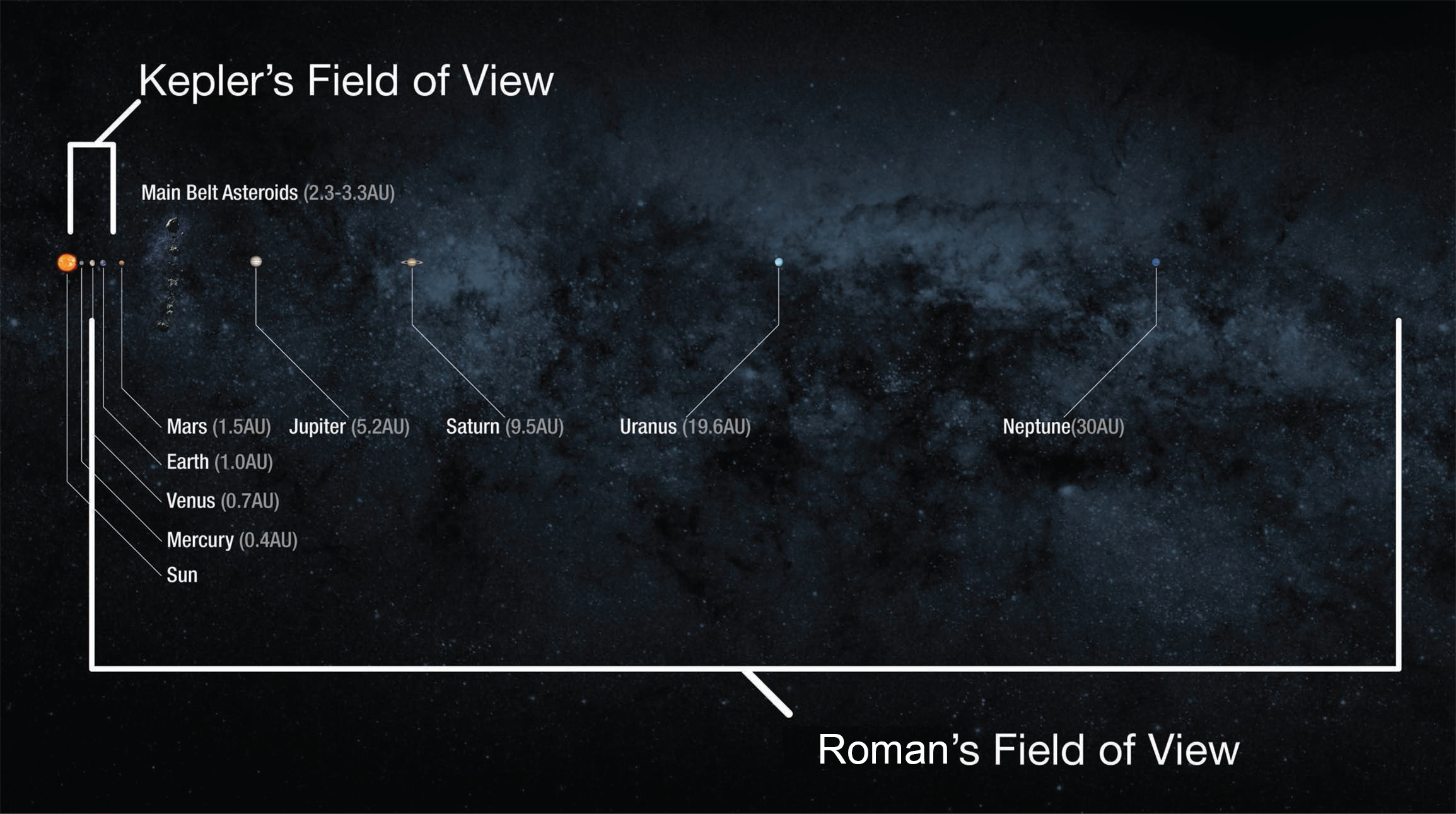
Roman's Field of View is compared to that of the Kepler space telescope. Kepler’s original survey monitored stars at an average distance of around 2,000 light-years where Roman's will find planets up to 26,000 light-years away.
View Image

Our neighboring galaxy Andromeda (M31)

Our neighboring galaxy Andromeda

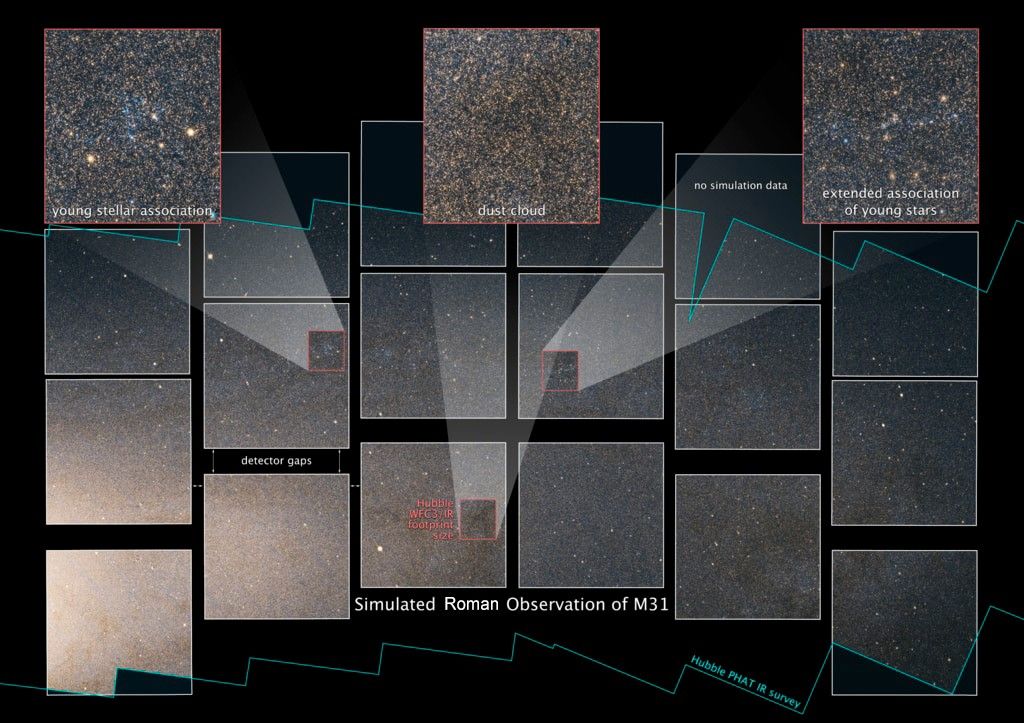
This simulated image showcases the red and infrared light of more than 50 million stars in Andromeda, as they would appear with the Roman Space Telescope. [Video version available]
View Image

Roman simulation of Andromeda

Roman simulation of Andromeda

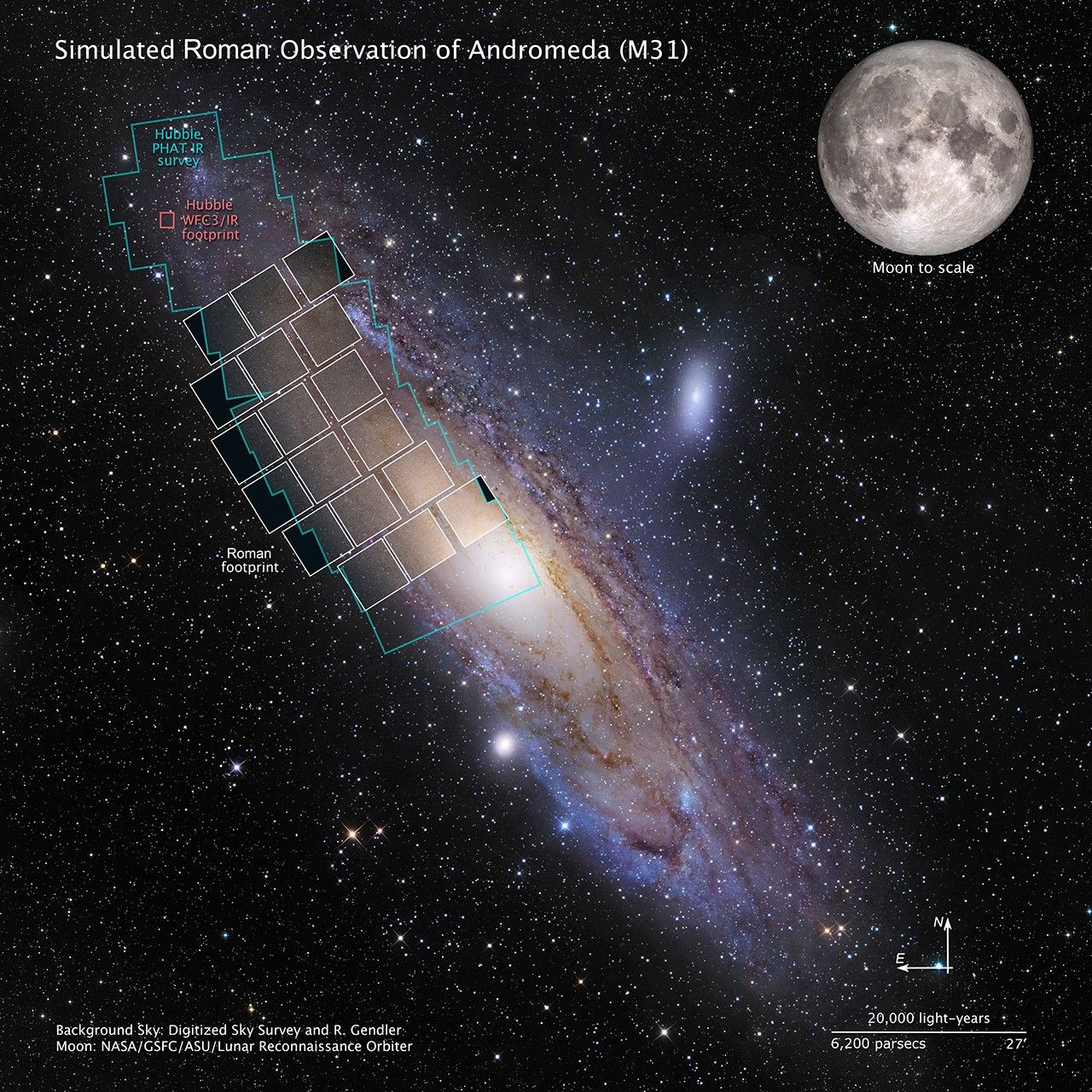
A composite figure shows the region of Andromeda covered by the Roman Space Telescope simulation. It would be able to image the main body of Andromeda in just a few pointings, surveying the galaxy nearly 1500 times faster than Hubble. [Video version available]
View Image

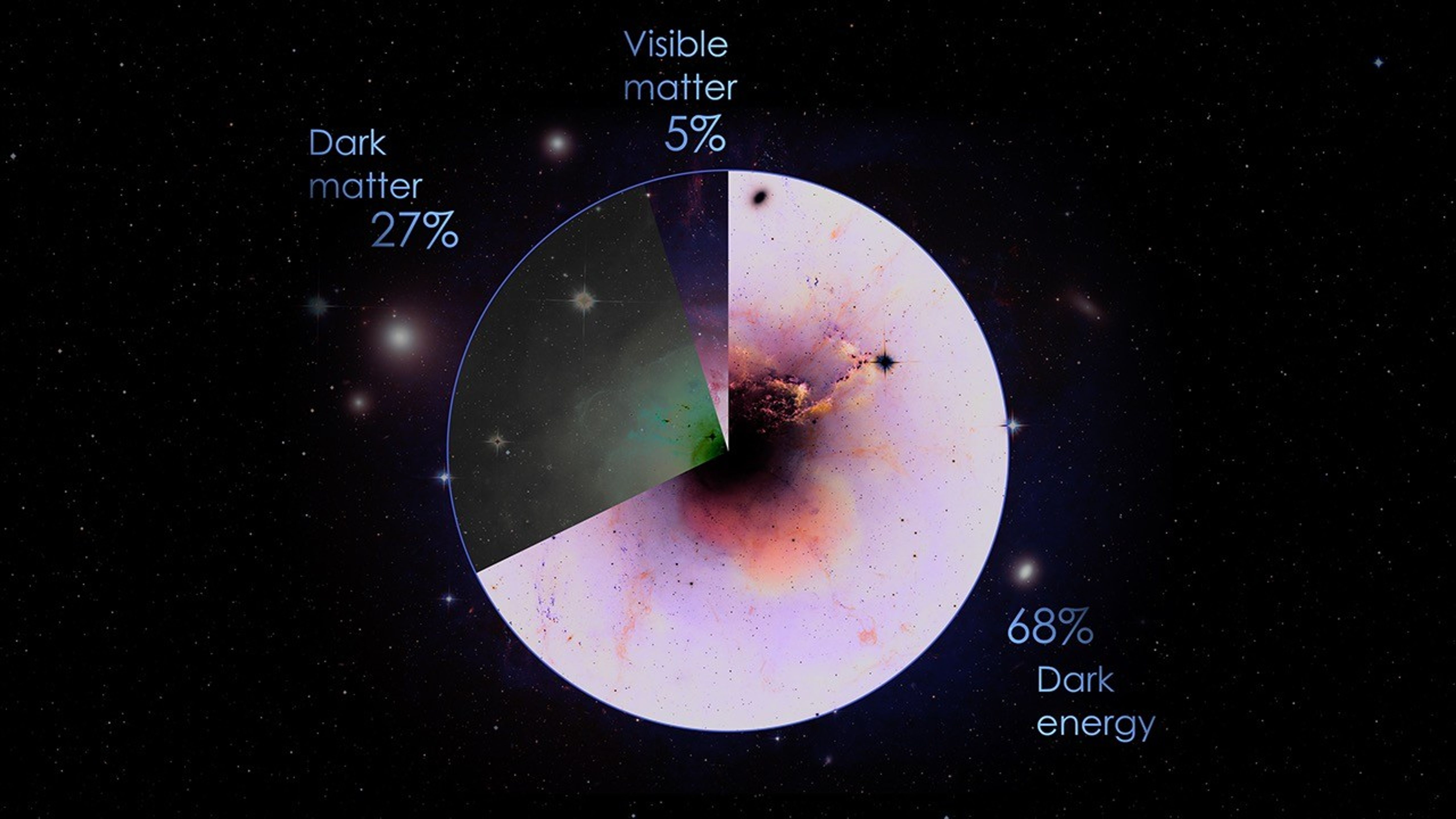
Content of the Universe Pie Chart

Content of the Universe

This pie chart shows rounded values for the three known components of the universe: normal matter, dark matter, and dark energy.
View Image

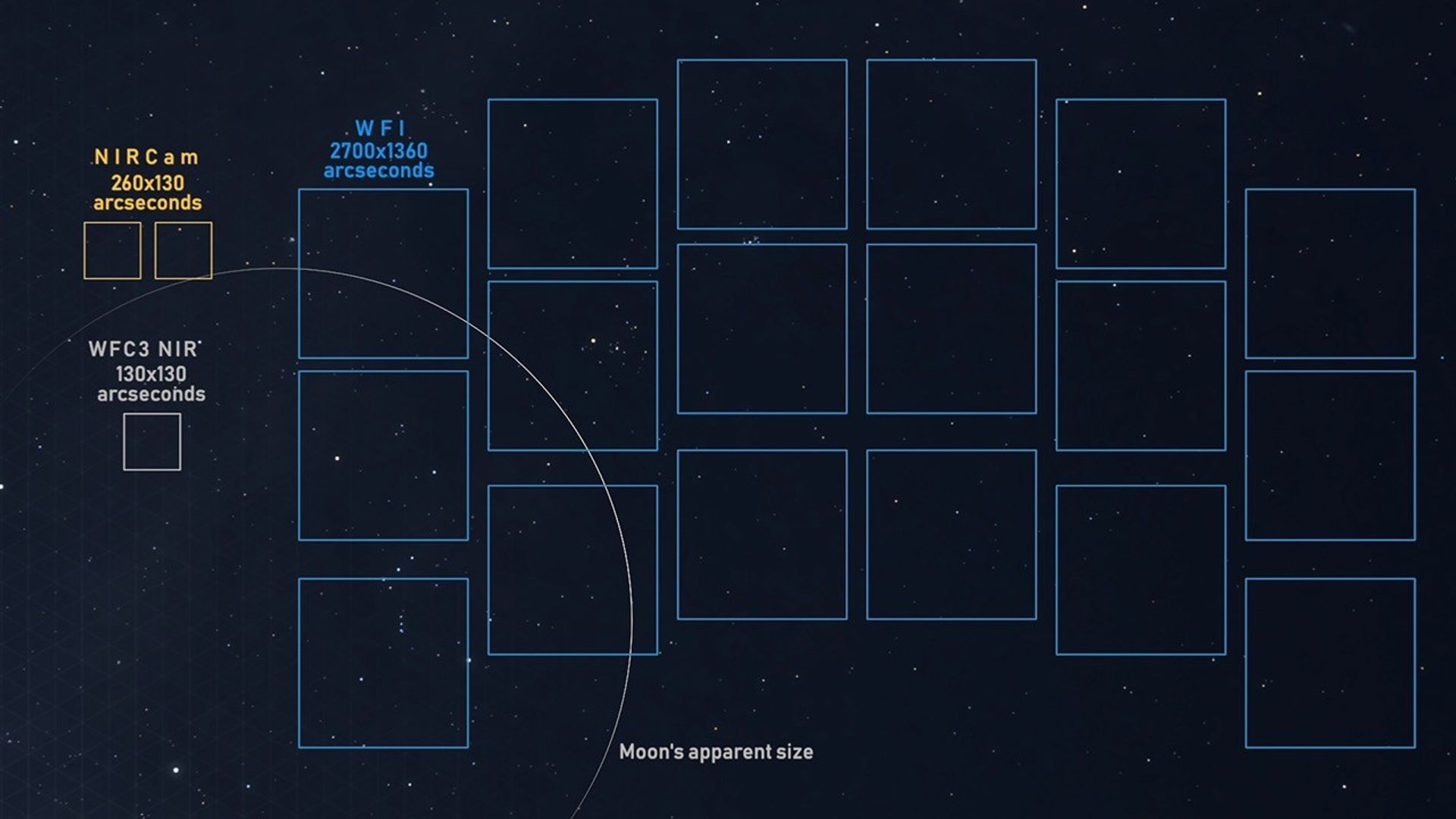
Far and Wide : Roman/Webb/Hubble - Detector FOV

Roman Detector Field of View

Roman is a survey telescope, designed to capture vast swaths of sky. But it will do so with revolutionary precision, sensitivity, and depth. The Wide Field Instrument's detectors capture a 4000x4000-pixel image, and together they will take pictures covering 100 times more sky than either Hubble or Webb.
View Image

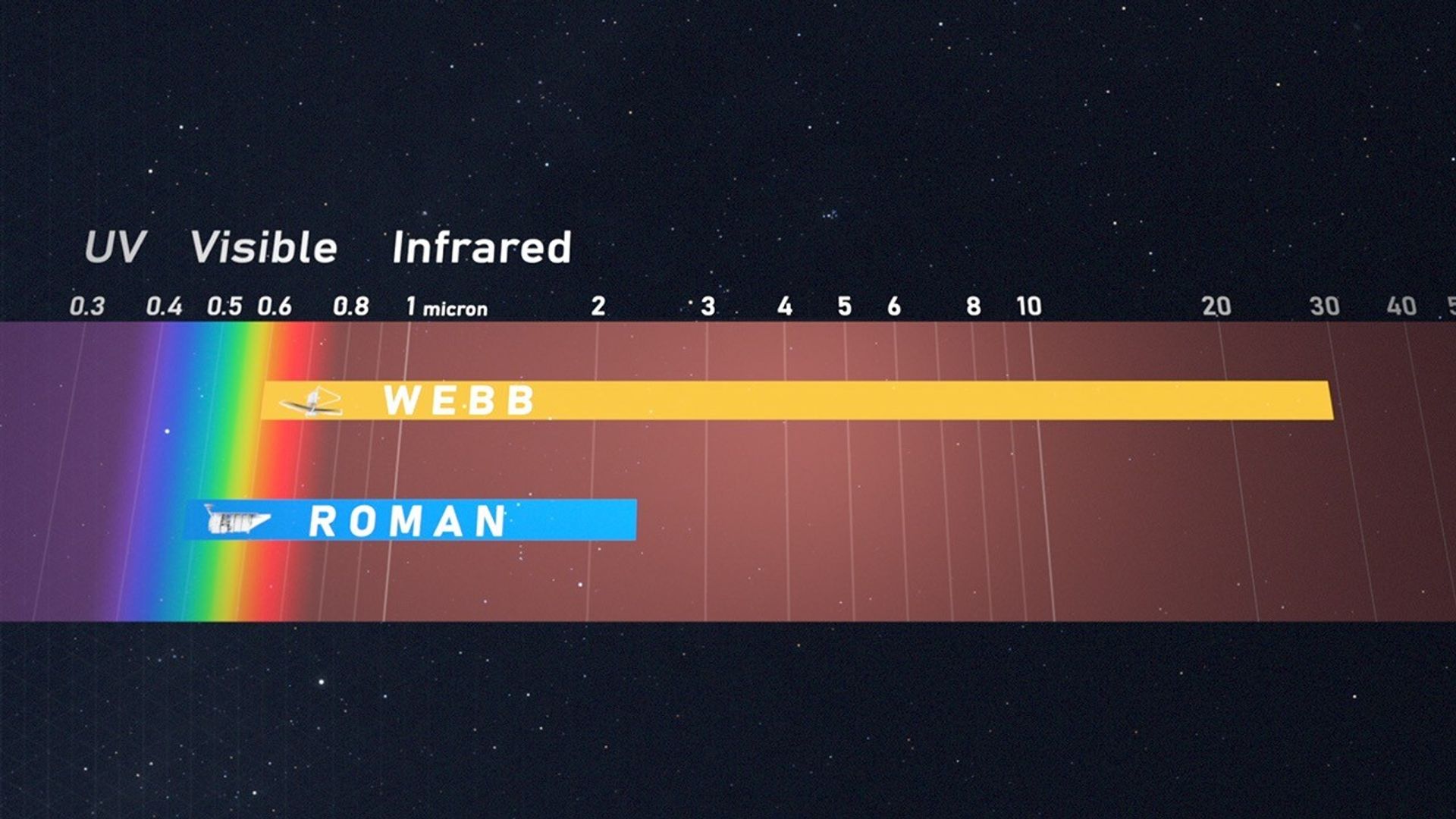
Far and Wide : Roman vs Webb - Spectrum Range and Mirrors

Roman vs Webb - Spectrum Range and Mirrors

Webb is designed to see very redshifted light so that it can study the first, most distant galaxies. The Roman Space Telescope, on the other hand, isn’t trying to see quite as deep into the universe’s history. Roman does have filters to see infrared light, but not as far into the range as Webb because its targets aren’t as redshifted. And Roman’s mirror can be smaller because it isn’t trying to detect such faint objects.
View Image

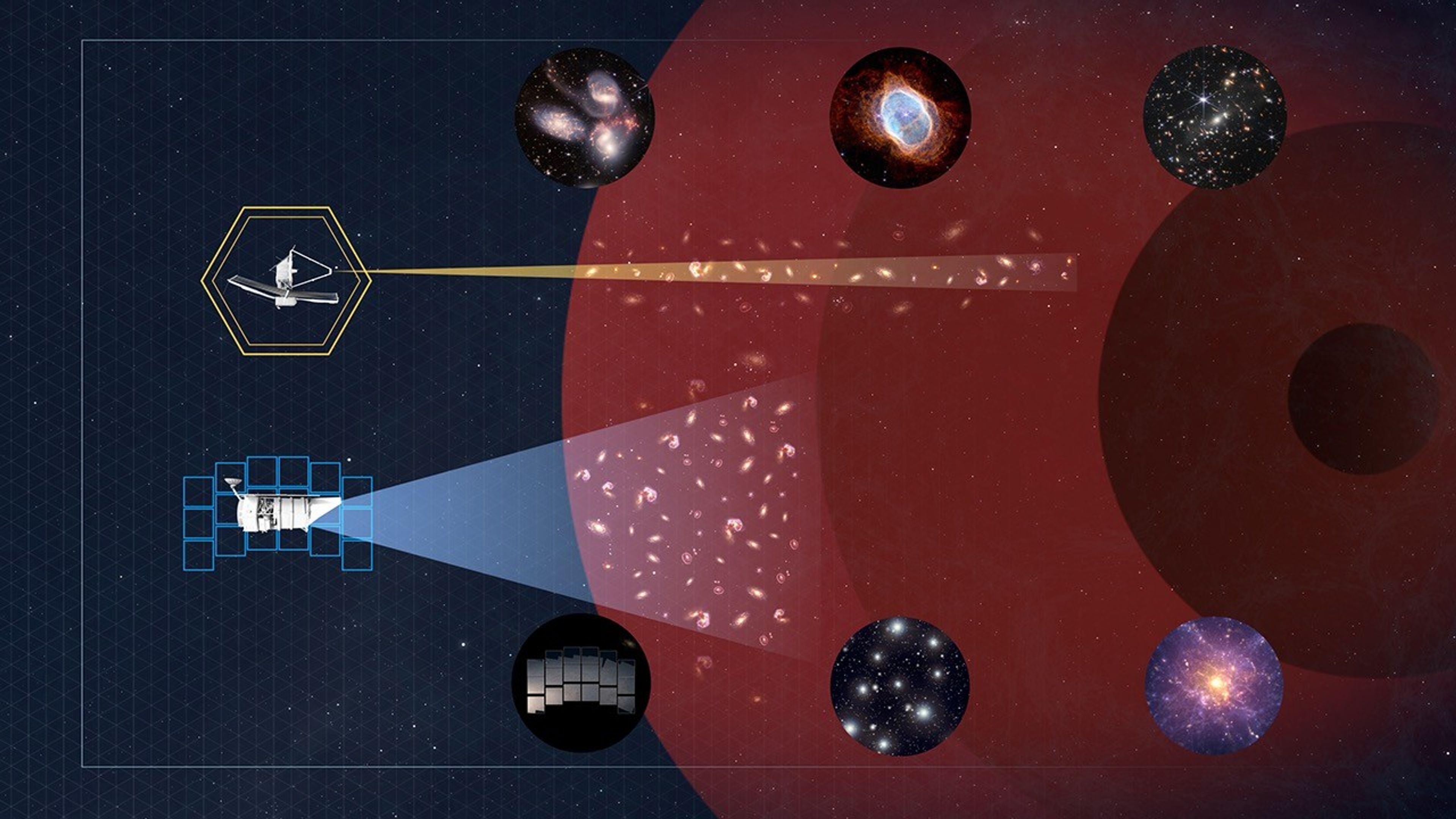
Roman and Webb Comparison Graphic from Far and Wide

Roman and Webb Comparison

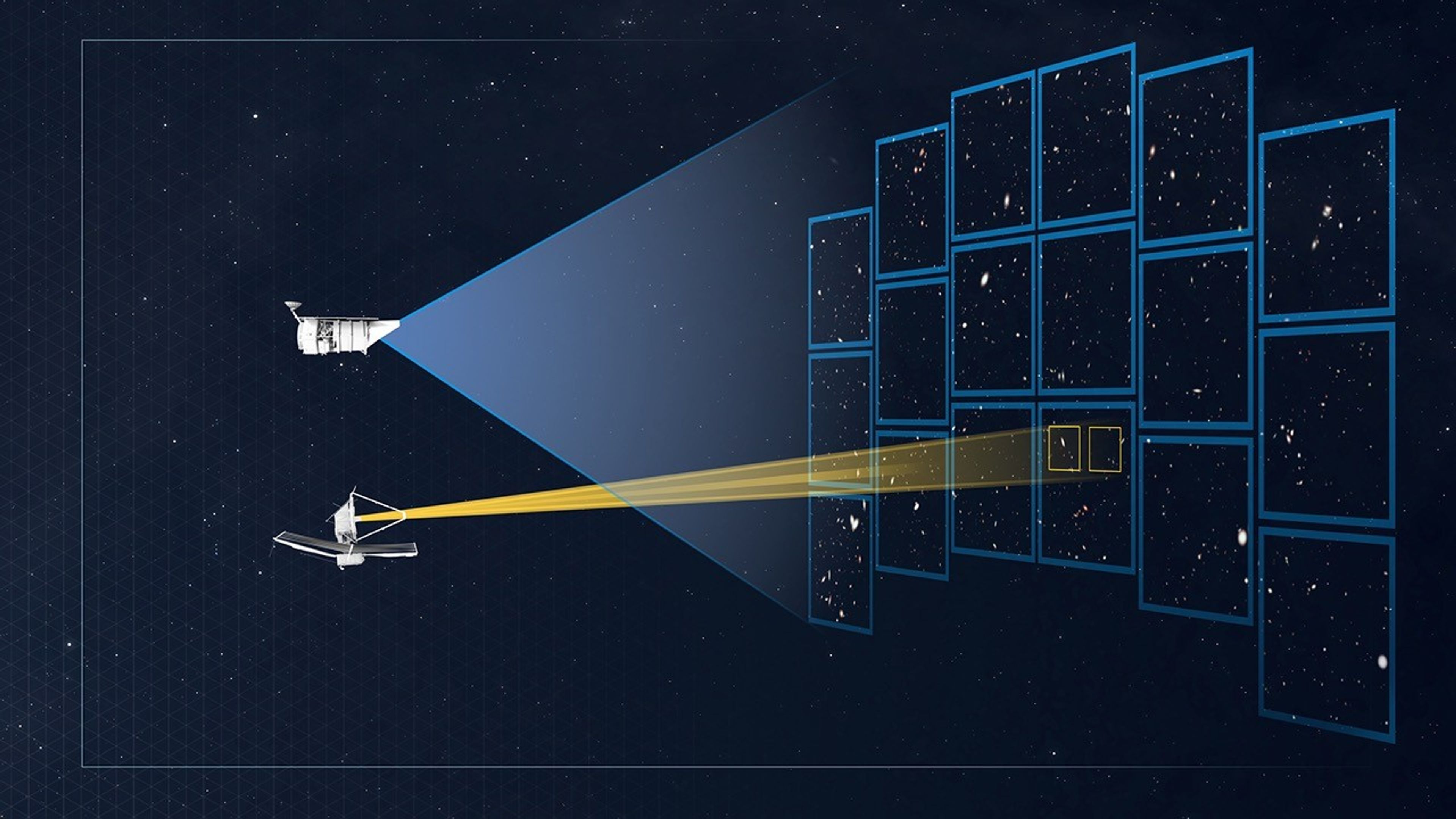
Webb has the exquisite sensitivity and wavelength range to capture detailed images deeper into the universe than ever before. Roman has an incredibly wide field of view to rapidly survey huge areas of sky while still rivaling Hubble and Webb’s resolving power. Webb will tell us about the early universe and Roman will help us understand how it evolved from there.
View Image

Roman and Webb Teamwork Graphic from Far and Wide

Roman and Webb

Because both telescopes will operate at the same time, they can work together to discover far more about the cosmos than either could learn alone. When Roman makes an intriguing exoplanet discovery, Webb may be able to follow up soon after, helping scientists learn more. When Roman detects a transient event, like a supernova, somewhere in its broad coverage, Webb can focus in to take deeper measurements. Should Webb find an interesting quirk in a nearby galaxy it is studying, Roman can provide context with thousands of galaxies around it.

View Image

Scientific Visualization Studio

The NASA Scientific Visualization Studio works closely with scientists in the creation of visualizations, animations, and images to promote a greater understanding of Earth and Space Science research activities across NASA and the broader academic community.

Go to Roman at SVS