
惯性聚合 高效追踪和阅读你感兴趣的博客、新闻、科技资讯
阅读原文 在惯性聚合中打开

推荐订阅源

Simon Willison's Weblog
Google DeepMind News
CTFtime.org: upcoming CTF events
P
Proofpoint News Feed
Recent Announcements
MongoDB | Blog
MongoDB | Blog
U
Unit 42
云风的 BLOG
云风的 BLOG
Recorded Future
Recorded Future
G
Google Developers Blog
I
InfoQ
Blog — PlanetScale
Blog — PlanetScale
A
About on SuperTechFans
Jina AI
Jina AI
量子位
宝玉的分享
宝玉的分享
The Cloudflare Blog
让小产品的独立变现更简单 - ezindie.com
博客园 - 聂微东
Last Week in AI
Last Week in AI
WordPress大学
WordPress大学
美团技术团队
The Hacker News
The Hacker News
Threat Intelligence Blog | Flashpoint
D
Darknet – Hacking Tools, Hacker News & Cyber Security
T
Tailwind CSS Blog
博客园 - 司徒正美
博客园 - 叶小钗
Hugging Face - Blog
Hugging Face - Blog
P
Palo Alto Networks Blog
博客园_首页
阮一峰的网络日志
阮一峰的网络日志
博客园 - 【当耐特】
Spread Privacy
Spread Privacy
The GitHub Blog
The GitHub Blog
Y
Y Combinator Blog
Vercel News
Vercel News
Martin Fowler
Martin Fowler
cs.CL updates on arXiv.org
Forbes - Security
Forbes - Security
Attack and Defense Labs
Google DeepMind News
Cyber Security Advisories - MS-ISAC
Microsoft Azure Blog
P
Privacy International News Feed
G
GRAHAM CLULEY
The Last Watchdog
The Last Watchdog
C
Cyber Attacks, Cyber Crime and Cyber Security
AI
AI
V2EX - 技术
V2EX - 技术

NASA Science

Cosmic Origins at AAS 248, June 2026 - NASA Science Cosmic Structure SIG Seminar, 30 April 2026 - NASA Science CMB SAG Meeting, 24 April 2026 - NASA Science BBX SAG Meeting, 30 April 2026 - NASA Science Early Career Investigator Program – Earth Science (ROSES A.11) - NASA Science XR SIG Seminar, 1 May 2026 - NASA Science Night and (Earth) Day - NASA SWERV: High-Impact Historical Case Study - NASA Science AAS Meeting 248, June 2026 - NASA Science Earth Day 2026: Posters and Virtual Backgrounds - NASA Science Advancing Earth Observation at NASA since Release of Earthrise Photo - NASA Science X-59 Adds Freedom 250 Logo - NASA Belts of Green in the Washington Suburbs - NASA Science Artemis II Mission Milestones: An Image and Video Recap Curiosity Blog, Sols 4867-4872: Sand Fill In Antofagasta Crater and Finding Our Next Drill Target NASA Invites Media to Jordan Artemis Accords Signing Ceremony New NASA Views of Earth, From (S)PACE - NASA Science Crew Studies Biotech on Tuesday to Advance Health and Space Economy NASA Invests in Small Businesses Innovating for Space and Earth NASA at SXSW: Johnson Director Vanessa Wyche on Why Artemis Changes Everything Researchers: How Would You Extract Meaningful Insights from Just Four Astronauts? BBX SAG Meeting, 23 April 2026 - NASA Science Thailand’s Krabi Coast - NASA Science AI/ML STIG Lecture Series, 20 April 2026 - NASA Science SWERV: Training Overview and Agenda - NASA Science SWERV: REAL-TIME CAPABILITIES AND IONOSPHERIC DISRUPTIONS OF COMMUNICATIONS - NASA Science SWERV: Operationally Significant Phenomena and Impacts for Ground Operations - NASA Science SWERV: Space Weather Impacts on Satellites - NASA Science SWERV: Space Weather Chain of Events - NASA Science CSDA Quality Assessment Report Evaluates Satellogic NewSat Data - NASA Science NASA Shuts Off Instrument on Voyager 1 to Keep Spacecraft Operating - NASA Science Webinar 4/29: NASA CSDA Program Vendor Focus- MDA Space - NASA Science Testing Begins for Katalyst-NASA Swift Boost Mission - NASA Science Robert Maiberger - NASA William Vantine - NASA Holly Stevens - NASA Dennis McSweeney - NASA Mark T. Vande Hei - NASA Nicole Stott - NASA William Shepherd - NASA Josef Schmid - NASA NASA, OPM Announce New NASA Force Website, Open Job Applications  - NASA Frank Groen - NASA Ginger Kerrick - NASA Daniel Heimerdinger - NASA Michael Greenfield - NASA Kevin Ford - NASA Charles Daniel - NASA Capt. Frank L. Culbertson, Jr., USN (Ret.) - NASA Spring Rains Saturate Michigan - NASA Science NASA CubeSat Begins Mission to Study Radio Waves in Space - NASA Correction to F.5 FINESST, SMD’s Graduate Student Research Opportunity - NASA Science Restoring NASA's Core Competencies - NASA Small Steps, Giant Leaps: Episode 171: How NASA's Pandora Mission Unboxes Distant Worlds - NASA Physics of the Cosmos PAG Meetings - NASA Science NASA Science Veg-06: How plants and beneficial bacteria work together in microgravity Virtual Engineering & Spacecraft Flight Applications (VESFA) - NASA NASA Heliophysics Spacecraft Witness Comet’s Demise - NASA Science BBX SAG Meeting, 16 April 2026 - NASA Science NASA Invites Media to Latvia Artemis Accords Signing Ceremony - NASA Weak Lensing  - NASA Science At the Edge of Light - NASA NASA’s Mobile Launcher Rolls Ahead of Artemis III Preparation - NASA XR SIG Meeting, 27 April 2026 - NASA Science CRN SIG Meeting, 27 April 2026 - NASA Science GW SIG Seminar, 28 April 2026 - NASA Science Eyeing the Richat Structure - NASA Science I Am Artemis: Rebekah Tolatovicz - NASA NASA Selects Voyager for Seventh Private Mission to Space Station - NASA NASA Launches Six CubeSats to International Space Station Odyssey Celebrates 25 Years - NASA Science Crew Begins New Space Research and Installs New Science Gear - NASA NASA’s X-59 Completes First Wheels-Up Flight 2026 NSTA Hyperwall Schedule - NASA Science Update: Artemis II Crew Comes Home - NASA GW SIG Seminar, 14 April 2026 - NASA Science GR SIG Seminar, 17 April 2026 - NASA Science NASA's Webb Redefines Dividing Line Between Planets, Stars - NASA Science Vianni Ricano Cadenas Super Typhoon Sinlaku - NASA Science DGCE SIG Seminar, 23 April 2026 - NASA Science AI/ML STIG Lecture Series, 13 April 2026 - NASA Science NASA Night-light Imagery Tracks US Energy Transition, Global Volatility - NASA Science Hubble Completion Study 2012 - NASA Science Hubble Spies an Active Spiral - NASA Science Science with the Hubble and James Webb Space Telescopes VIII: Enriching the Universe: From Primordial Megaberg Ends Its Long Odyssey at Sea - NASA Science Artemis II Astronauts Back in Houston, Reunite with Families  - NASA Cygnus XL Cargo Craft Solar Arrays Deploy Powering Flight to Station - NASA Cygnus XL Cargo Craft Launches to Resupply Expedition 74 Crew - NASA La NASA da la bienvenida a la Tierra a los exploradores lunares de Artemis II, quienes batieron récords - NASA NASA Science, Cargo Launch Aboard Northrop Grumman CRS-24 - NASA Artemis II Splashes Down - NASA Artemis II Flight Day 10: Crew Completes Final Burn Before Splashdown  - NASA NASA Welcomes Record-Setting Artemis II Moonfarers Back to Earth  - NASA Human Perception and Performance Laboratory - NASA Artemis II Splashdown and Recovery - NASA Crew Preps for Cygnus XL Cargo Mission Targeted for Saturday Launch - NASA New Perspective of Home - NASA Artemis II Flight Day 10: Crew Sets for Final Burn, Splashdown - NASA
NASA Langley Engineer Attends FAA Training - NASA
2026-05-13 · via NASA Science

6 min read

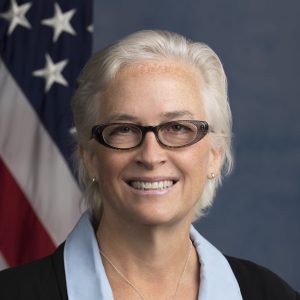
The headshot image of Sondra Woodward

Sondra Woodward

May 12, 2026

Article

At a busy airport, every aircraft in the area shares just a handful of radio frequencies. Spectrum and time are constrained and if multiple people speak at once, both messages can get lost. Communications like “clearance delivery,” which require long transmissions and readbacks, are challenging in high-traffic areas, particularly when weather or other factors require many aircraft to communicate with controllers at once. Going digital clears that channel for urgent, time-critical calls, among other things. And it’s the current practice at some airports, where pilots can confirm clearances with the touch of a button, that the response goes directly to the controller’s screen, and the updated information loads into their flight management system.

Will Cummings-Grande, aerospace engineer with the Systems Analysis and Concepts Directorate based at NASA’s Langley Research Center, is leading technical work that centers around Communications Architecture and Performance for Digital Clearance in NASA’s Air Traffic Management and Safety (ATMS) project. He’s researching the next layer of digital clearance, extending that same logic down to taxi instructions on the ground, so that pushback timing, routing, and runway assignments could also arrive digitally rather than over the radio.

He sought out the most current, ground-level knowledge about how digital clearance delivery works in practice — not in a research paper, but in a real tower, on real systems, with the people who run them every day. The Federal Aviation Administration (FAA) offers the training he wanted to air traffic controllers, so he reached out to the FAA Academy “on a hope and a prayer” that they might accept him as a student.

And in early April, Cummings-Grande traveled to the Mike Monroney Aeronautical Center (MMAC) in Oklahoma City to complete the Tower Data Link Services (TDLS) Application Specialist training — the same two-day, hands-on course required of working controllers at the 72 U.S. airports currently equipped with digital clearance delivery capability.

In the Classroom

Cumming-Grande shadowed a working controller during exercises, trading off at the terminal during breaks so both got time on the system. His classmates were application specialists from Seattle, Sacramento, San Jose, and Fort Lauderdale, all controllers with day jobs managing high-traffic airspace who were there to become the designated system maintainers at their home airports. During breaks, Cummings-Grande had a luxury: time to test. “I got to bounce some of my ideas and concepts off of controllers who are out there interacting with the TDLS and all of the tools it touches in the current system,” he said. “It was great to have both — here’s what the controller-in-training gets, and here’s what I get as a researcher — kind of lumped into the same experience.”

The FAA Academy also connected him with the systems engineers responsible for developing, testing, and implementing new TDLS hardware and software versions, and arranged a visit to the OKC tower to observe the system in live operation.

What He Found

The TDLS runs on fully air-gapped software, completely isolated from standard operating systems — a deliberate cybersecurity design that made the hands-on experience revelatory in ways a research paper couldn’t replicate. “Interacting with the system was just very eye-opening as to how different these systems are from other computers that we commonly interact with,” he said.

The more significant discovery came from the curriculum itself. Reviewing the FAA’s system architecture during training, Cummings-Grande noticed something he didn’t know to look for: a link between the TDLS and the Terminal Flight Data Manager (TFDM), which does not yet exist operationally. That gap is now the center of his research questions. “I didn’t realize I was missing this piece until I took this course,” he said.

Building on Two Decades of Homework

The research Cummings-Grande is pursuing connects to a long thread of NASA work on surface safety and digital communications, including the Terminal Area Productivity program, the Surface Operation Automation Research (SOAR) project, the Low Visibility Landing and Surface Operations (LVLASO) project, and Surface Trajectory Based Operations (STBO) studies. These efforts kicked off in the mid-90s to inform FAA NextGen and demonstrated digital taxi clearances in a series of simulations at multiple facilities and ultimately flight tests at the Atlanta Airport. Those findings showed meaningful workload reductions, but the cost-benefit case wasn’t there yet, and the technology wasn’t ready in the fleet or in the facilities.

What’s changed, in Cummings-Grande’s view, is the convergence of new infrastructure investments, including the rollout of systems derived from Airspace Technology Demonstration (ATD-2) technologies like the Spot and Runway Departure Advisor and the Precision Departure Release Capability through the TFDM, with renewed industry interest from a partner on the aircraft side. “We have all this homework that people have been doing for the last 20-30 years,” he said. “Can we take advantage of the renewed interest from FAA and industry to enable this safety-enhancement?”

His timeline estimate for a fully implemented system leans somewhere in the range of five to ten years. And the payoff, he says, will be tangible to anyone who flies. “This means that your flight will be safer than ever, and that your pilots will be focused on the right things during taxi. Instead of relying on pilots to write down their taxi clearance correctly or be familiar with the airport, the airplane will know and can double-check what the pilot is doing.”

A Case for Partnership

Cummings-Grande isn’t aware of another NASA researcher having taken this FAA course, and he thinks the model is worth repeating. He pointed to terminal procedures design (TERPS) as another area where FAA Academy training could benefit researchers working on urban air mobility and small UAS integration. “Anytime someone needs to do a deep dive into one of the systems — understanding the current state of practice, here are the buttons you push to make this happen — I think it’d be great to have an ongoing partnership with the FAA Academy and make that possible.”

The FAA Academy team was, by all accounts, a willing partner.

Cummings-Grande extends his special thanks to the FAA’s Eric Gandrud and Carol Raiford.