

惯性聚合 高效追踪和阅读你感兴趣的博客、新闻、科技资讯
阅读原文 在惯性聚合中打开

推荐订阅源

B
Blog RSS Feed
博客园 - 叶小钗
F
Fortinet All Blogs
GbyAI
GbyAI
Martin Fowler
Martin Fowler
博客园 - 聂微东
I
InfoQ
B
Blog
IT之家
IT之家
美团技术团队
L
LangChain Blog
小众软件
小众软件
C
Check Point Blog
MongoDB | Blog
MongoDB | Blog
Cyber Security Advisories - MS-ISAC
V
V2EX
Last Week in AI
Last Week in AI
A
About on SuperTechFans
博客园 - Franky
P
Proofpoint News Feed
罗磊的独立博客
月光博客
月光博客
V
Visual Studio Blog
MyScale Blog
MyScale Blog

NASA Science

Cosmic Origins at AAS 248, June 2026 - NASA Science Cosmic Structure SIG Seminar, 30 April 2026 - NASA Science CMB SAG Meeting, 24 April 2026 - NASA Science BBX SAG Meeting, 30 April 2026 - NASA Science Early Career Investigator Program – Earth Science (ROSES A.11) - NASA Science XR SIG Seminar, 1 May 2026 - NASA Science Night and (Earth) Day - NASA SWERV: High-Impact Historical Case Study - NASA Science AAS Meeting 248, June 2026 - NASA Science Earth Day 2026: Posters and Virtual Backgrounds - NASA Science Advancing Earth Observation at NASA since Release of Earthrise Photo - NASA Science X-59 Adds Freedom 250 Logo - NASA Belts of Green in the Washington Suburbs - NASA Science Artemis II Mission Milestones: An Image and Video Recap Curiosity Blog, Sols 4867-4872: Sand Fill In Antofagasta Crater and Finding Our Next Drill Target NASA Invites Media to Jordan Artemis Accords Signing Ceremony New NASA Views of Earth, From (S)PACE - NASA Science Crew Studies Biotech on Tuesday to Advance Health and Space Economy NASA Invests in Small Businesses Innovating for Space and Earth NASA at SXSW: Johnson Director Vanessa Wyche on Why Artemis Changes Everything Researchers: How Would You Extract Meaningful Insights from Just Four Astronauts? BBX SAG Meeting, 23 April 2026 - NASA Science Thailand’s Krabi Coast - NASA Science AI/ML STIG Lecture Series, 20 April 2026 - NASA Science SWERV: Training Overview and Agenda - NASA Science SWERV: REAL-TIME CAPABILITIES AND IONOSPHERIC DISRUPTIONS OF COMMUNICATIONS - NASA Science SWERV: Operationally Significant Phenomena and Impacts for Ground Operations - NASA Science SWERV: Space Weather Impacts on Satellites - NASA Science SWERV: Space Weather Chain of Events - NASA Science CSDA Quality Assessment Report Evaluates Satellogic NewSat Data - NASA Science
Nicholas Houghton: Engineering Crew Safety for NASA's Art...
2026-05-12 · via NASA Science

2 Min Read

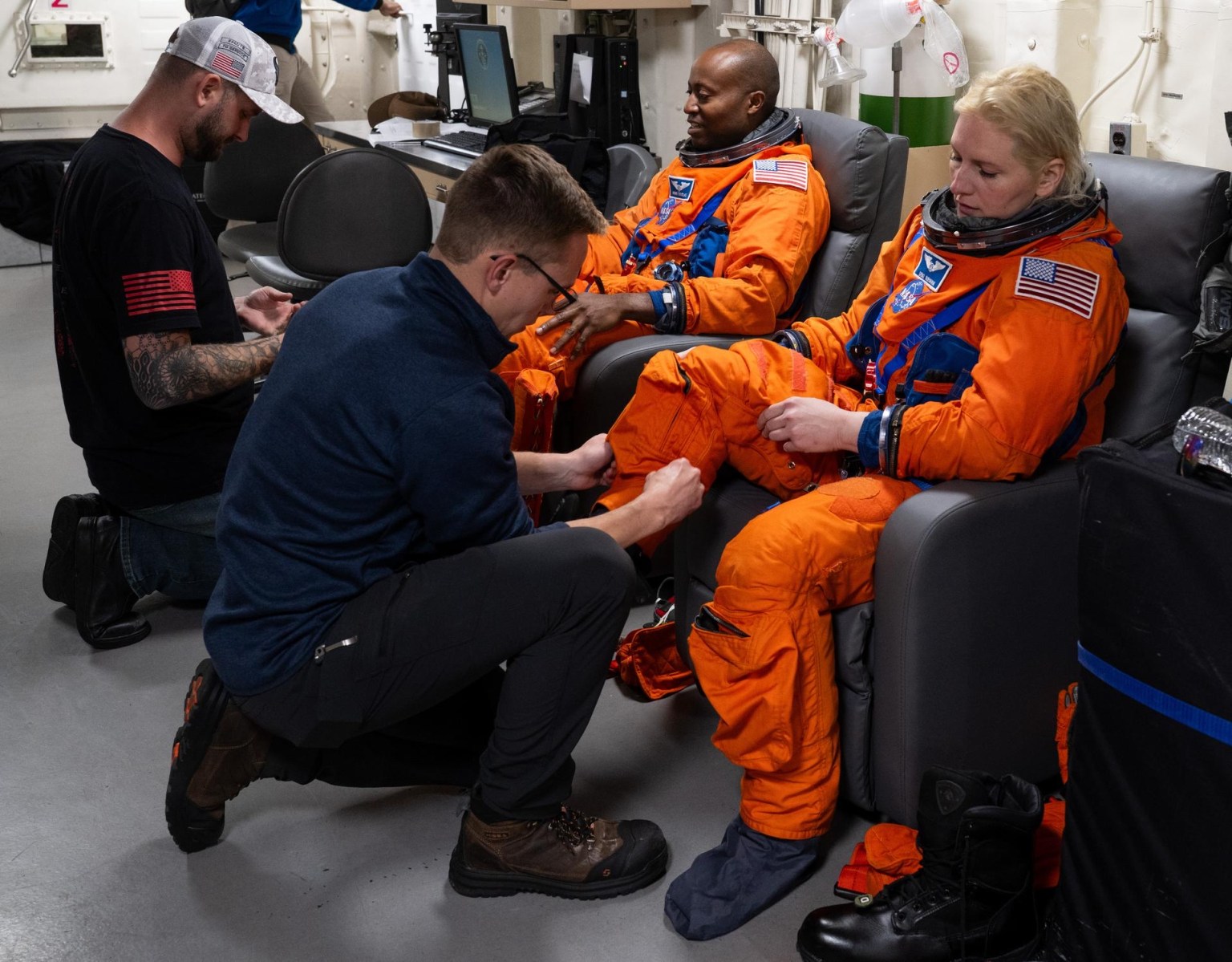
Nicholas Houghton, right, supports crew suit-up operations during Underway Recovery Training 12, an end-to-end practice recovery run conducted at sea to prepare for Artemis II.

The headshot image of Sumer Loggins

Sumer Loggins

Johnson Space Center Office of Communications

May 11, 2026

Article

Nicholas Houghton always dreamed of working at NASA and one day becoming an astronaut. Today, he helps design systems that keep crews safe during missions aboard NASA’s Orion spacecraft, including the successful Artemis II mission around the Moon.

Nicholas Houghton

Orion Crew Survival Systems Engineer

After joining NASA as a Pathways intern, Houghton later became a full-time engineer on the Orion Crew Survival Systems (OCSS) team at NASA’s Johnson Space Center in Houston. The OCSS team designs and certifies the orange pressure suits that were worn by astronauts inside Orion during Artemis II, along with the survival hardware integrated into each suit system.  

Houghton manages key pieces of flight hardware that keep crew members safe during contingency scenarios before launch, in flight, and after landing, including the Orion Crew Survival Kits, Suit-Worn Survival Suite, and Life Preserver Units. He guides each system from design through testing and final certification to ensure it performs as required in flight. 

Like many complex engineering efforts at NASA, the work relies on close collaboration across disciplines. Houghton works alongside experts in electromagnetic interference, radiation, stress and loads, and materials to evaluate and refine each system. He also helps lead development of water survival and post-landing hardware, writing manufacturing and assembly procedures and troubleshooting issues during integration and testing. 

Beyond hardware development, Houghton prepares astronauts and recovery teams for real-world operations. He supports suit-up activities, helps train Department of Defense recovery forces, and participates in Underway Recovery Training alongside the U.S. Navy to rehearse post-splashdown operations.  

Ground testing plays a critical role in that preparation. During these tests, systems are pushed to their limits to uncover potential issues before flight. 

Nicholas Houghton

Orion Crew Survival Systems Engineer

Outside of his NASA career, Houghton gives back by volunteering as a firefighter and emergency medical technician. “Serving my community is something that I have always been passionate about,” he said. “I am thankful to have the opportunity to support those around me.” 

About the Author

Sumer Loggins

Sumer Loggins

Share

Details

Last Updated

May 11, 2026

Explore More

Keep Exploring

Discover More Topics From NASA