


惯性聚合 高效追踪和阅读你感兴趣的博客、新闻、科技资讯
阅读原文 在惯性聚合中打开

推荐订阅源

Know Your Adversary
Know Your Adversary
D
Docker
奇客Solidot–传递最新科技情报
奇客Solidot–传递最新科技情报
人人都是产品经理
人人都是产品经理
V
V2EX
V
Visual Studio Blog
J
Java Code Geeks
博客园 - 【当耐特】
罗磊的独立博客
量子位
W
WeLiveSecurity
博客园 - 聂微东
Hugging Face - Blog
Hugging Face - Blog
The Cloudflare Blog
O
OpenAI News
PCI Perspectives
PCI Perspectives
The Last Watchdog
The Last Watchdog
S
Schneier on Security
博客园 - Franky
WordPress大学
WordPress大学
T
Tor Project blog
freeCodeCamp Programming Tutorials: Python, JavaScript, Git & More
cs.AI updates on arXiv.org
D
Darknet – Hacking Tools, Hacker News & Cyber Security
Recent Commits to openclaw:main
Security Latest
Security Latest
Cisco Talos Blog
Cisco Talos Blog
腾讯CDC
美团技术团队
博客园 - 叶小钗
www.infosecurity-magazine.com
月光博客
月光博客
S
Secure Thoughts
Engineering at Meta
Engineering at Meta
T
Tailwind CSS Blog
TaoSecurity Blog
TaoSecurity Blog
Google DeepMind News
CTFtime.org: upcoming CTF events
Last Week in AI
Last Week in AI
aimingoo的专栏
aimingoo的专栏
G
Google Developers Blog
D
DataBreaches.Net
Project Zero
Project Zero
S
SegmentFault 最新的问题
C
Cisco Blogs
H
Help Net Security
Google Online Security Blog
A
About on SuperTechFans
F
Fortinet All Blogs
博客园 - 司徒正美

NASA Science

Cosmic Origins at AAS 248, June 2026 - NASA Science Cosmic Structure SIG Seminar, 30 April 2026 - NASA Science CMB SAG Meeting, 24 April 2026 - NASA Science Integrated Modeling Virtual Institute (IMVI) - NASA Science BBX SAG Meeting, 30 April 2026 - NASA Science Early Career Investigator Program – Earth Science (ROSES A.11) - NASA Science XR SIG Seminar, 1 May 2026 - NASA Science Night and (Earth) Day - NASA SWERV: High-Impact Historical Case Study - NASA Science AAS Meeting 248, June 2026 - NASA Science Earth Day 2026: Posters and Virtual Backgrounds - NASA Science Advancing Earth Observation at NASA since Release of Earthrise Photo - NASA Science X-59 Adds Freedom 250 Logo - NASA Belts of Green in the Washington Suburbs - NASA Science Artemis II Mission Milestones: An Image and Video Recap Curiosity Blog, Sols 4867-4872: Sand Fill In Antofagasta Crater and Finding Our Next Drill Target NASA Invites Media to Jordan Artemis Accords Signing Ceremony New NASA Views of Earth, From (S)PACE - NASA Science Crew Studies Biotech on Tuesday to Advance Health and Space Economy NASA Invests in Small Businesses Innovating for Space and Earth NASA at SXSW: Johnson Director Vanessa Wyche on Why Artemis Changes Everything Researchers: How Would You Extract Meaningful Insights from Just Four Astronauts? BBX SAG Meeting, 23 April 2026 - NASA Science Thailand’s Krabi Coast - NASA Science AI/ML STIG Lecture Series, 20 April 2026 - NASA Science SWERV: Training Overview and Agenda - NASA Science SWERV: REAL-TIME CAPABILITIES AND IONOSPHERIC DISRUPTIONS OF COMMUNICATIONS - NASA Science SWERV: Operationally Significant Phenomena and Impacts for Ground Operations - NASA Science SWERV: Space Weather Impacts on Satellites - NASA Science SWERV: Space Weather Chain of Events - NASA Science CSDA Quality Assessment Report Evaluates Satellogic NewSat Data - NASA Science NASA Shuts Off Instrument on Voyager 1 to Keep Spacecraft Operating - NASA Science Webinar 4/29: NASA CSDA Program Vendor Focus- MDA Space - NASA Science Testing Begins for Katalyst-NASA Swift Boost Mission - NASA Science Robert Maiberger - NASA William Vantine - NASA Holly Stevens - NASA Dennis McSweeney - NASA Mark T. Vande Hei - NASA Nicole Stott - NASA William Shepherd - NASA Josef Schmid - NASA NASA, OPM Announce New NASA Force Website, Open Job Applications  - NASA Frank Groen - NASA Ginger Kerrick - NASA Daniel Heimerdinger - NASA Michael Greenfield - NASA Kevin Ford - NASA Charles Daniel - NASA Capt. Frank L. Culbertson, Jr., USN (Ret.) - NASA Spring Rains Saturate Michigan - NASA Science NASA CubeSat Begins Mission to Study Radio Waves in Space - NASA Correction to F.5 FINESST, SMD’s Graduate Student Research Opportunity - NASA Science Restoring NASA's Core Competencies - NASA Small Steps, Giant Leaps: Episode 171: How NASA's Pandora Mission Unboxes Distant Worlds - NASA Physics of the Cosmos PAG Meetings - NASA Science NASA Science Veg-06: How plants and beneficial bacteria work together in microgravity Virtual Engineering & Spacecraft Flight Applications (VESFA) - NASA NASA Heliophysics Spacecraft Witness Comet’s Demise - NASA Science BBX SAG Meeting, 16 April 2026 - NASA Science NASA Invites Media to Latvia Artemis Accords Signing Ceremony - NASA Weak Lensing  - NASA Science At the Edge of Light - NASA NASA’s Mobile Launcher Rolls Ahead of Artemis III Preparation - NASA XR SIG Meeting, 27 April 2026 - NASA Science CRN SIG Meeting, 27 April 2026 - NASA Science GW SIG Seminar, 28 April 2026 - NASA Science Eyeing the Richat Structure - NASA Science I Am Artemis: Rebekah Tolatovicz - NASA NASA Selects Voyager for Seventh Private Mission to Space Station - NASA NASA Launches Six CubeSats to International Space Station Odyssey Celebrates 25 Years - NASA Science Crew Begins New Space Research and Installs New Science Gear - NASA NASA’s X-59 Completes First Wheels-Up Flight 2026 NSTA Hyperwall Schedule - NASA Science GW SIG Seminar, 14 April 2026 - NASA Science GR SIG Seminar, 17 April 2026 - NASA Science NASA's Webb Redefines Dividing Line Between Planets, Stars - NASA Science Vianni Ricano Cadenas Super Typhoon Sinlaku - NASA Science DGCE SIG Seminar, 23 April 2026 - NASA Science AI/ML STIG Lecture Series, 13 April 2026 - NASA Science NASA Night-light Imagery Tracks US Energy Transition, Global Volatility - NASA Science Hubble Completion Study 2012 - NASA Science Hubble Spies an Active Spiral - NASA Science Science with the Hubble and James Webb Space Telescopes VIII: Enriching the Universe: From Primordial Megaberg Ends Its Long Odyssey at Sea - NASA Science Artemis II Astronauts Back in Houston, Reunite with Families  - NASA Cygnus XL Cargo Craft Solar Arrays Deploy Powering Flight to Station - NASA Cygnus XL Cargo Craft Launches to Resupply Expedition 74 Crew - NASA La NASA da la bienvenida a la Tierra a los exploradores lunares de Artemis II, quienes batieron récords - NASA NASA Science, Cargo Launch Aboard Northrop Grumman CRS-24 - NASA Artemis II Splashes Down - NASA Artemis II Flight Day 10: Crew Completes Final Burn Before Splashdown  - NASA NASA Welcomes Record-Setting Artemis II Moonfarers Back to Earth  - NASA Human Perception and Performance Laboratory - NASA Artemis II Splashdown and Recovery - NASA Crew Preps for Cygnus XL Cargo Mission Targeted for Saturday Launch - NASA New Perspective of Home - NASA Artemis II Flight Day 10: Crew Sets for Final Burn, Splashdown - NASA
Update: Artemis II Crew Comes Home - NASA
2026-04-15 · via NASA Science

Episode description: 

NASA’s Artemis II astronauts are back home. Hear reactions from the Artemis II crew—Reid Wiseman, Victor Glover, Christina Koch, and Jeremy Hansen—as they returned to Earth. 

For more information about Artemis II, visit nasa.gov/artemis-ii.
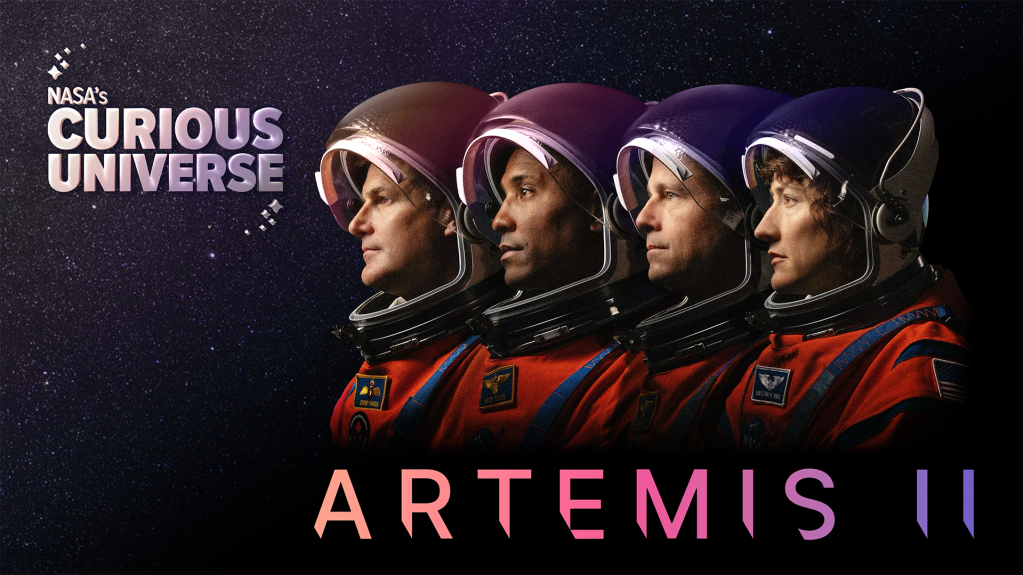
A dark podcast logo features the four crew members of NASA's Artemis II mission looking to the left of the frame. Above them, the podcast title "NASA's Curious Universe" is in white. A white NASA insignia is in the upper right corner. At the bottom of the image, the text reads "Artemis II"

[Music: Supercluster by Sergey Azbel]

HOST JACOB PINTER: You’re listening to NASA’s Curious Universe. I’m Jacob Pinter. The astronauts of NASA’s Artemis II mission—Reid Wiseman, Victor Glover, Christina Koch, and Jeremy Hansen—are back home.  

REID WISEMAN: Victor, Christina and Jeremy. We are we are bonded forever, and no one down here is ever going to know what the four of us just went through. And it was the most special thing that will ever happen in my life. 

JACOB: In this special update episode: how Artemis II ended. We’ll listen in to the moments the astronauts returned to Earth and splashed down safely in the Pacific Ocean, and we’ll hear the astronauts recap their journey in their own words.  
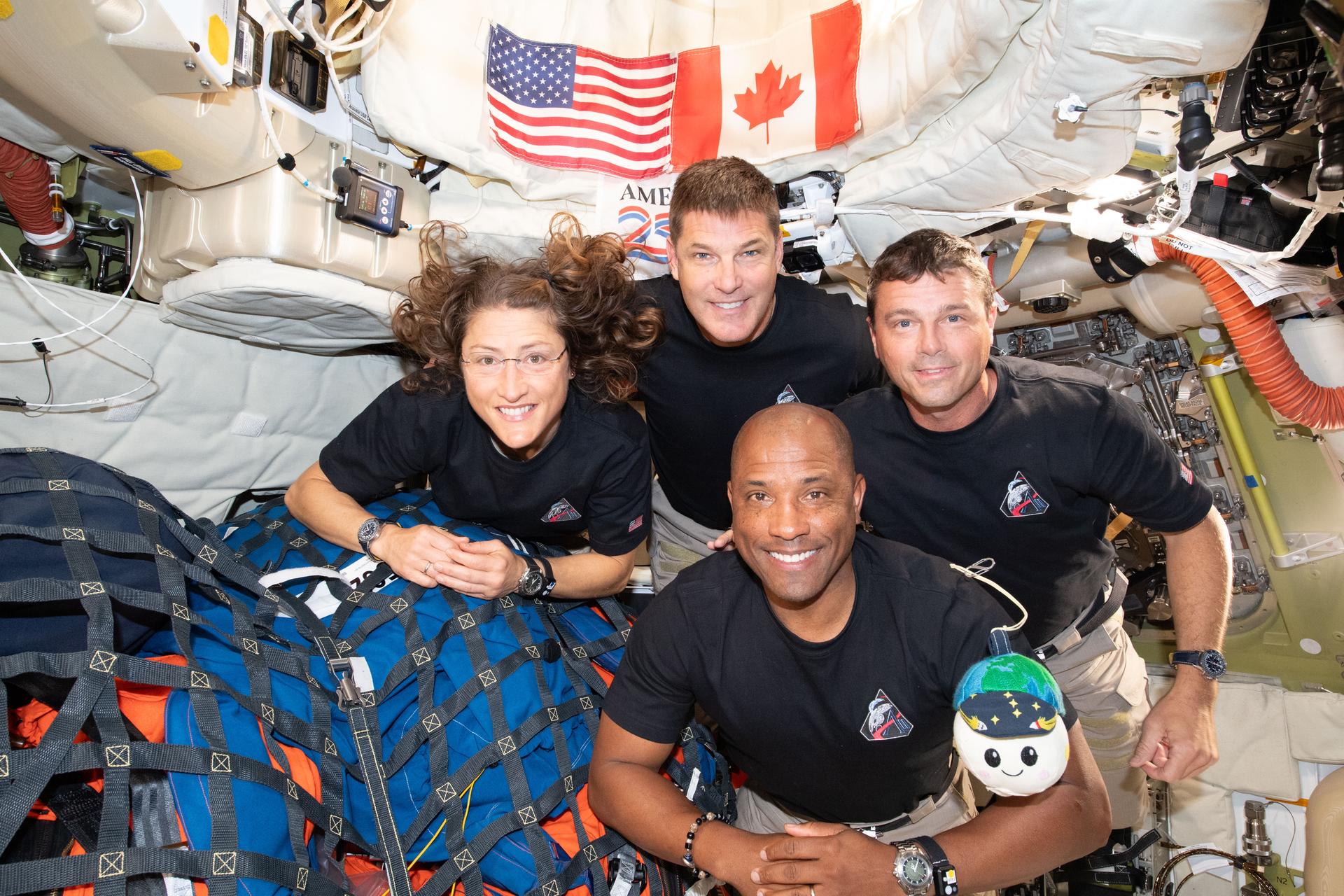
The crew of Artemis II—four astronauts—floats inside their Orion spacecraft. American and Canadian flags are visible in the background, in the top center of the frame. A zero gravity indicator—a smiling, plush depiction of the Moon and Earth—floats with the astronauts.
The Artemis II crew pauses for a group photo with their zero gravity indicator “Rise,” inside the Orion spacecraft on their way home. 

The Artemis II astronauts flew their Orion spacecraft, which is named Integrity, farther from Earth than any other human has ever traveled. This was a test flight and a crucial step to eventually return humans to the Moon’s surface through the Artemis program. 

On day six of the mission the astronauts flew around the Moon, seeing parts of it that no other unaided human eyes have ever seen. They relayed details to NASA scientists in the moment, and they brought back pictures, videos, and voice notes that will keep scientists busy for a long time. Then the astronauts spent several days traveling back home, and on day 10 they returned.  

The final total on Integrity’s odometer: 694,481 miles or just a shade over 1.1 million kilometers. In the final hours of NASA’s livestream of Artemis II, on April 10, 2026, we watched as a partially lit Earth grew larger and larger. Integrity was almost home. Commander Reid Wiseman kept in touch with mission control. 

REID: And we have a great view of the Moon out window two. Looks a little smaller than yesterday.  

MISSION CONTROL: Guess we’ll have to go back. 

[Music: Natural Motion by Paul Richard O’Brien]

JACOB: In another episode of Curious Universe, we go into detail about NASA’s preparations to recover the astronauts once they landed and the intense conditions Integrity faced in the final minutes of the mission. 
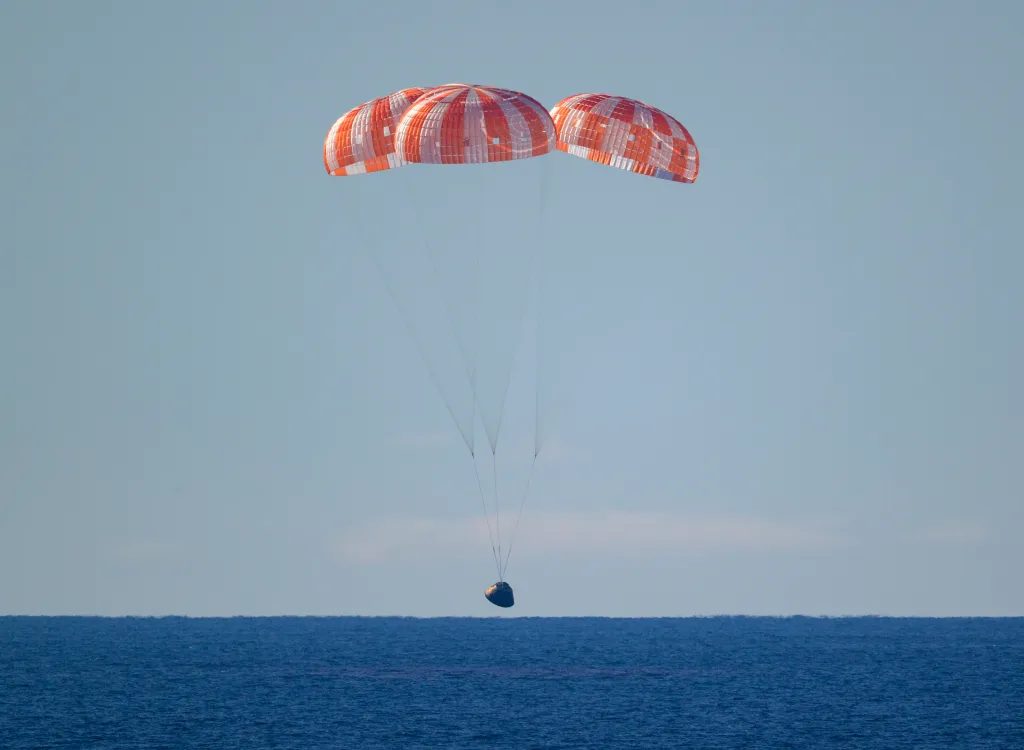
NASA’s Orion spacecraft with Artemis II crewmembers NASA astronauts Reid Wiseman, commander; Victor Glover, pilot; Christina Koch, mission specialist; and CSA (Canadian Space Agency) astronaut Jeremy Hansen, mission specialist aboard is seen under parachutes as it lands in the Pacific Ocean off the coast of California, Friday, April 10, 2026. NASA’s Artemis II mission took Wiseman, Glover, Koch, and Hansen on a 10-day journey around the Moon and back to Earth. Following a splashdown at 8:07 p.m. EDT, NASA, U.S. Navy, and U.S. Air Force teams are working to bring the crewmembers and Orion spacecraft aboard USS John P. Murtha.
Splashdown. 

Here’s a quick recap. As Integrity entered the atmosphere, it traveled about 35 times the speed of sound. As the spacecraft fell, it compressed the atmosphere, creating temperatures of several thousand degrees Fahrenheit, and superheated plasma built up around the spacecraft. NASA engineers knew that because of those extreme conditions, it would be impossible to communicate with Integrity for about six minutes.  

ROB NAVIAS, NASA Communications: And we have crossed the threshold now entering the Earth’s atmosphere. We’re at 400,000 feet, traveling 34,800 feet per second. And as predicted, we’ve entered our communications blackout. 

JACOB: During the six-minute blackout, NASA engineers could only wait. There were no data about the condition of the spacecraft. There was no word from the crew. Mission control stayed ready until the moment when they expected to reestablish contact.  

MISSION CONTROL: Integrity, Houston. Comm check post blackout. 

REID: Houston, Integrity. We have you loud and clear.  

JACOB: On the livestream, cameras captured Integrity’s parachutes deploying as the capsule descended. Finally, just minutes after reentering the atmosphere, Integrity landed in the ocean with three orange-and-white parachutes billowing above it.  

REID: Houston, Integrity. Splashdown. Sending post landing command now. 
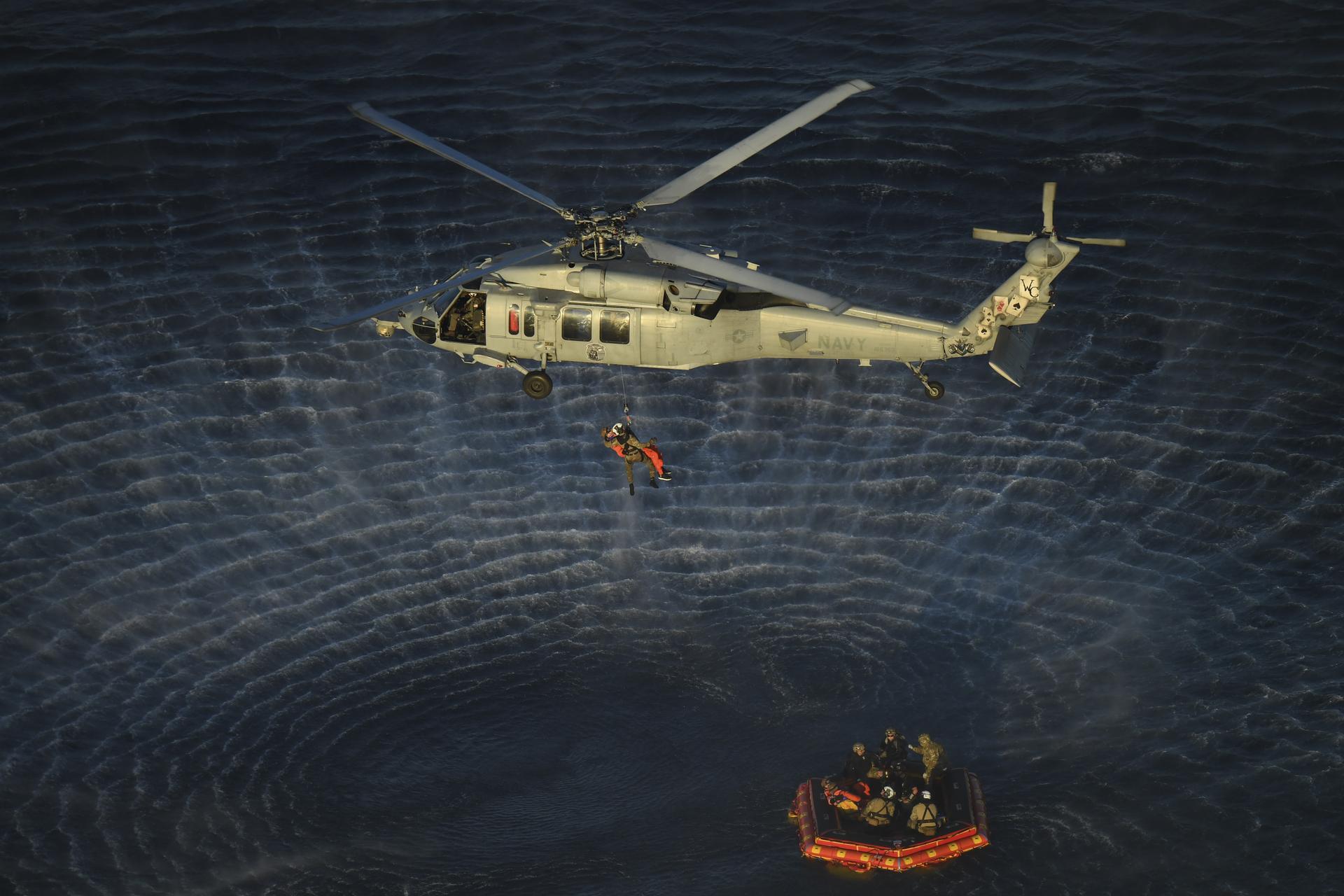
U.S. Navy divers and Artemis II astronauts aboard an inflatable raft are approached by helicopters and lifted away to the recovery ship after egressing NASA’s Orion spacecraft carrying Artemis II Commander Reid Wiseman, Pilot Victor Glover, and Mission Specialist Christina Koch from NASA, along with Mission Specialist Jeremy Hansen from the CSA (Canadian Space Agency), following splashdown in the Pacific Ocean near San Diego, California, at 5:07 p.m. PDT, (8:07 p.m. EDT) on Friday, April 10, 2026. The Artemis II test flight launched on Wednesday, April 1, from NASA’s Kennedy Space Center in Florida to begin its 10-day journey around the Moon for scientific discovery, economic benefits, and to build on our foundation for the first crewed missions to Mars. NASA’s Landing and Recovery team and the U.S. military are helping the Artemis II crew out of their Orion spacecraft.
U.S. Navy divers and Artemis II astronauts aboard an inflatable raft are approached by helicopters and lifted away to the recovery ship after egressing NASA’s Orion spacecraft.

JACOB: The recovery team kicked into gear. And, again, we have much more detail about the recovery of Artemis II in another episode in this podcast feed. As the astronauts waited to be let out of their spacecraft, they radioed mission control that they were feeling green. Not “green” like their complexion—green as in go. They were feeling good. 

REID: Houston, we have you loud and clear on VLDR. How us?  

MISSION CONTROL: We have you the same. We’ll meet you over in post landing. 

ROB NAVIAS, NASA Communications: Perfect communications established.   

REID: What a journey. We are stable one. Four green crew members.  

MISSION CONTROL: Houston copies all. 

JACOB: Integrity bobbed in the water with the astronauts still sealed inside. Until …  

[Sound of hatch opening] 

DIVER: Yes. 

[Sound of cheering] 

DIVER: Let’s go! 

JACOB: A team of Navy divers opened the hatch, found four smiling astronauts, and gave them their first fist bumps back on Earth.  
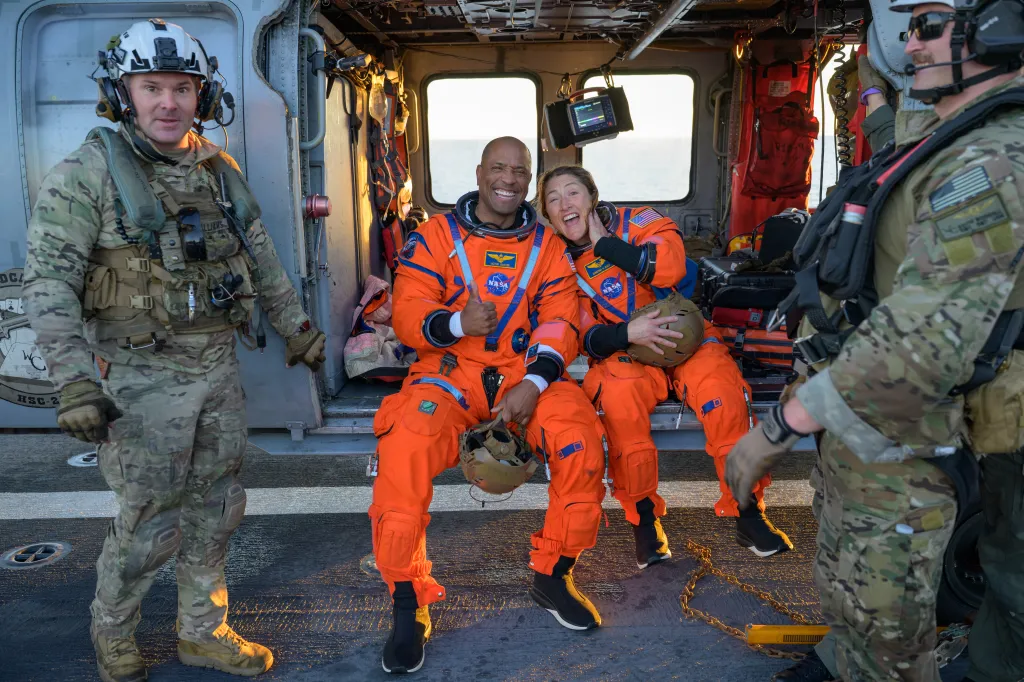
NASA astronaut Victor Glover, Artemis II pilot, left, and NASA astronaut Christina Koch, Artemis II mission specialist are seen sitting on a Navy MH-60 Seahawk from Helicopter Sea Combat Squadron (HSC) 23 on the flight deck of USS John P. Murtha after they and fellow crewmates CSA (Canadian Space Agency) astronaut Jeremy Hansen, Artemis II mission specialist, and NASA astronaut Reid Wiseman, Artemis II commander, were extracted from their Orion spacecraft after splashdown, Friday, April 10, 2026, in the Pacific Ocean off the coast of California. NASA’s Artemis II mission took the quartet on a nearly 10-day journey around the Moon and back to Earth. Following a splashdown at 5:07 p.m. PDT (8:07 p.m. EDT), NASA, U.S. Navy, and U.S. Air Force teams are working to bring the Orion spacecraft aboard the recovery ship.
NASA astronaut Victor Glover, Artemis II pilot, left, and NASA astronaut Christina Koch, Artemis II mission specialist, are seen sitting on a Navy MH-60 Seahawk USS John P. Murtha after they were extracted from Integrity.

DIVER: Four green! Ike, welcome home. Christina, welcome home. Yes. Jeremy. Absolutely. Welcome home brother. There it is. Reid! What’s up? Welcome home brother …  
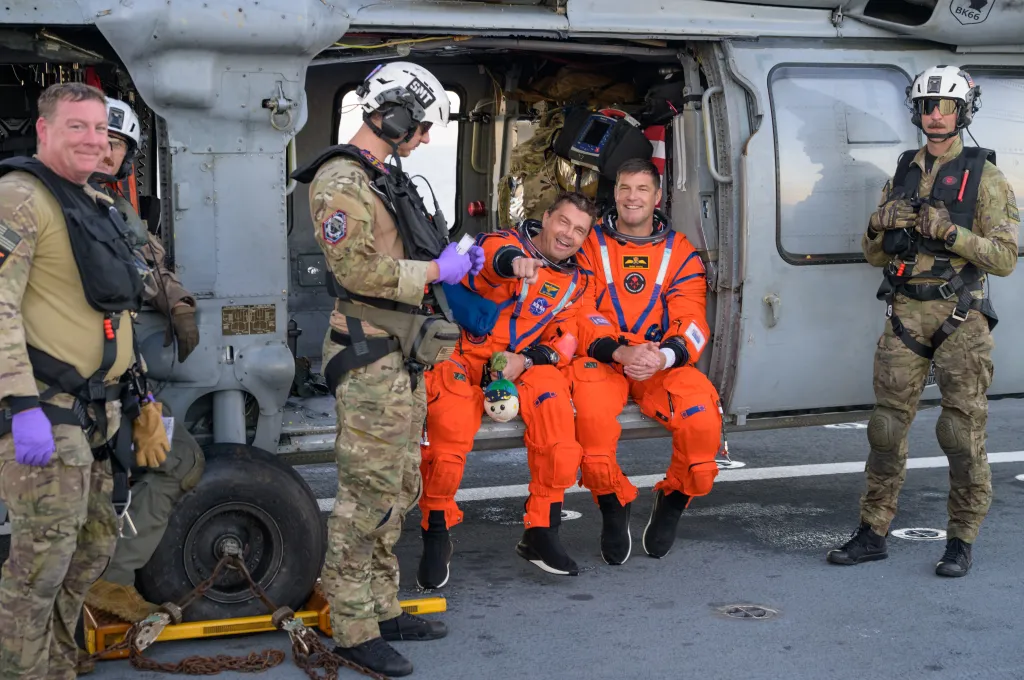
NASA astronaut Reid Wiseman, Artemis II commander, left, and CSA (Canadian Space Agency) astronaut Jeremy Hansen, Artemis II mission specialist, are seen sitting on a Navy MH-60 Seahawk from Helicopter Sea Combat Squadron (HSC) 23 on the flight deck of USS John P. Murtha after they and fellow crewmates NASA astronaut Christina Koch, Artemis II mission specialist, and NASA astronaut Victor Glover, Artemis II pilot, were extracted from their Orion spacecraft after splashdown, Friday, April 10, 2026, in the Pacific Ocean off the coast of California. NASA’s Artemis II mission took the quartet on a nearly 10-day journey around the Moon and back to Earth. Following a splashdown at 5:07 p.m. PDT (8:07 p.m. EDT), NASA, U.S. Navy, and U.S. Air Force teams are working to bring the Orion spacecraft aboard the recovery ship.
NASA astronaut Reid Wiseman, Artemis II commander, left, and CSA (Canadian Space Agency) astronaut Jeremy Hansen, after extraction from Integrity. 

JACOB: After the recovery team retrieved the astronauts, they brought them to a ship waiting nearby. The astronauts went through medical evaluations, and the next day they made it back home to Houston, Texas. A crowd was waiting for the astronauts, including their families, colleagues in the astronaut corps, and other NASA employees. NASA Administrator Jared Isaacman welcomed the crew on-stage. 

JARED ISAACMAN: Commander Wiseman—Reid—you said in an interview back in February that you hoped this mission would be forgotten, overshadowed by all that was to come after, but I’m very sorry to disappoint you all. Artemis II will always be remembered.  

JACOB: Then it was time for the astronauts to speak. One by one, they took the mic. Commander Reid Wiseman went first.  

REID: I have absolutely no idea what to say. This is—24 hours ago, the Earth was that big out the window, and we were doing Mach 39 and here we are back at Ellington, at home. 

JACOB: If you’ve ever taken a vacation and then needed a couple of days to decompress and process your trip before you get back to real life, it seemed like the astronauts were going through a version of that. Fresh off an experience of a lifetime, they occasionally struggled to put into words exactly what they were feeling. 
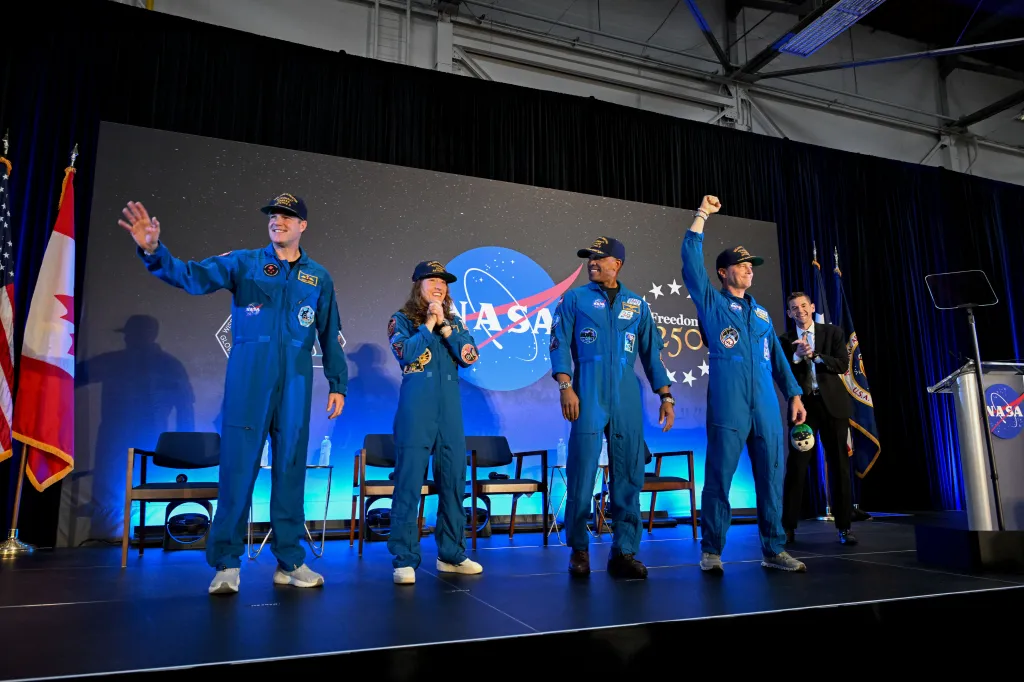
The four astronauts of Artemis II—each wearing blue flight suits and black baseball caps—stand on-stage, waving to the crowd at a welcome-home event.

REID: No one knows what the families went through, man. This was not easy. Being 200,000-plus miles away from home—like before you launch, it feels like it’s the greatest dream on Earth. And when you’re out there, you just want to get back to your families and your friends. It’s a special thing to be a human, and it’s a special thing to be on planet Earth. Thank you. 

JACOB: When Reid was done, Pilot Victor Glover took the mic. 

VICTOR: I’m going to keep it brief, because I don’t—I’m afraid to start talking. I have not processed what we just did, and I’m afraid to start even trying. When this started on April 3, I wanted to thank God in public, and I want to thank God again, because even. Bigger than my challenge trying to describe what we went through, the gratitude of seeing what we saw, doing what we did, and being with who I was with—it’s too big to just be in one body. 

JACOB: Next was Mission Specialist Christina Koch. She spent a little bit of time teasing out the word “crew” and what makes a crew different from a team. A crew, according to Christina, is a group of people with the same needs working together and willing to sacrifice when they need to and to give grace when they need to. 

CHRISTINA KOCH: When we saw tiny Earth, people asked our crew what impressions we had and honestly what struck me wasn’t necessarily just Earth. It was all the blackness around it. Earth was just this lifeboat hanging undisturbingly in the universe.  

JACOB: Christina started to get choked up at this part.  

CHRISTINA: Uh oh. [Laughter] I may have not learned—I know I haven’t learned everything that this journey has yet to teach me, but there’s one new thing I know, and that is: planet Earth, you are a crew. 

JACOB: Rounding out the Artemis II crew was Mission Specialist Jeremy Hansen with the Canadian Space Agency. He said he felt gratitude for his family and the people he works with. Then he asked his crewmates to stand up and join him. They stood linked, with their arms around each other’s shoulders, as Jeremy said the four astronauts were united by love. 

JEREMY HANSEN: What you saw was a group of people who loved contributing, having meaningful contribution, and extracting joy out of that, and what we’ve been hearing is that was something special for you to witness. And the reason I had them form up here with me is because I would suggest to you that when you look up here, you’re not looking at us. We are a mirror reflecting you. And if you like what you see, then just look a little deeper. This is you. 

JACOB: There were more toasts to the crew. There was—as one NASA official put it —a big Texas round of applause. And after a few more speeches celebrating the success of Artemis II, Reid Wiseman looked directly at other NASA astronauts in the audience. There was a crowd of them, wearing royal blue flight suits. He said it’s their turn to keep exploring. 

REID: We would be remiss if the four of us didn’t look right there and say it is time to go, and be ready, because it takes courage. It takes determination. And you all are freaking going, and we are going to be standing there supporting you every single step of the way in every possible way possible. Thank you. [Applause] 

JACOB: On that note, I want to leave you with one more parting thought, because as huge of an accomplishment as Artemis II is, it is not the end of an era. It’s the beginning. As the Artemis II astronauts put it, they are carrying a relay baton, and now they hand it off to the next crew to continue pushing humanity further.  

Shortly after splashdown, Amit Kshatriya, NASA’s associate administrator, put the focus on the teams of experts at NASA and its partners—the ones who fought all kinds of challenges to make this mission succeed.    

[Music: Hope Horizons by Cliff Haywood]

AMIT KSHATRIYA: We talk a lot about what gets in our way. The impediment to action is where we find the way to get to action. What stands in the way becomes the way. This program faced every obstacle an institution could face. The team met each one with work, and tonight is the proof that that work needs to continue. The path to the lunar surface is open, but the work ahead is greater than the work behind us. It always will be. Fifty-three years ago, humanity left the Moon. This time we return to stay. Let us finish what they started. Let us focus on what was left undone. Let us not go to plant flags and leave, but to stay with firmness in our purpose, with gratitude for the hands who built the machines, and with love for the ones that we carry with us. Welcome home, Integrity. 
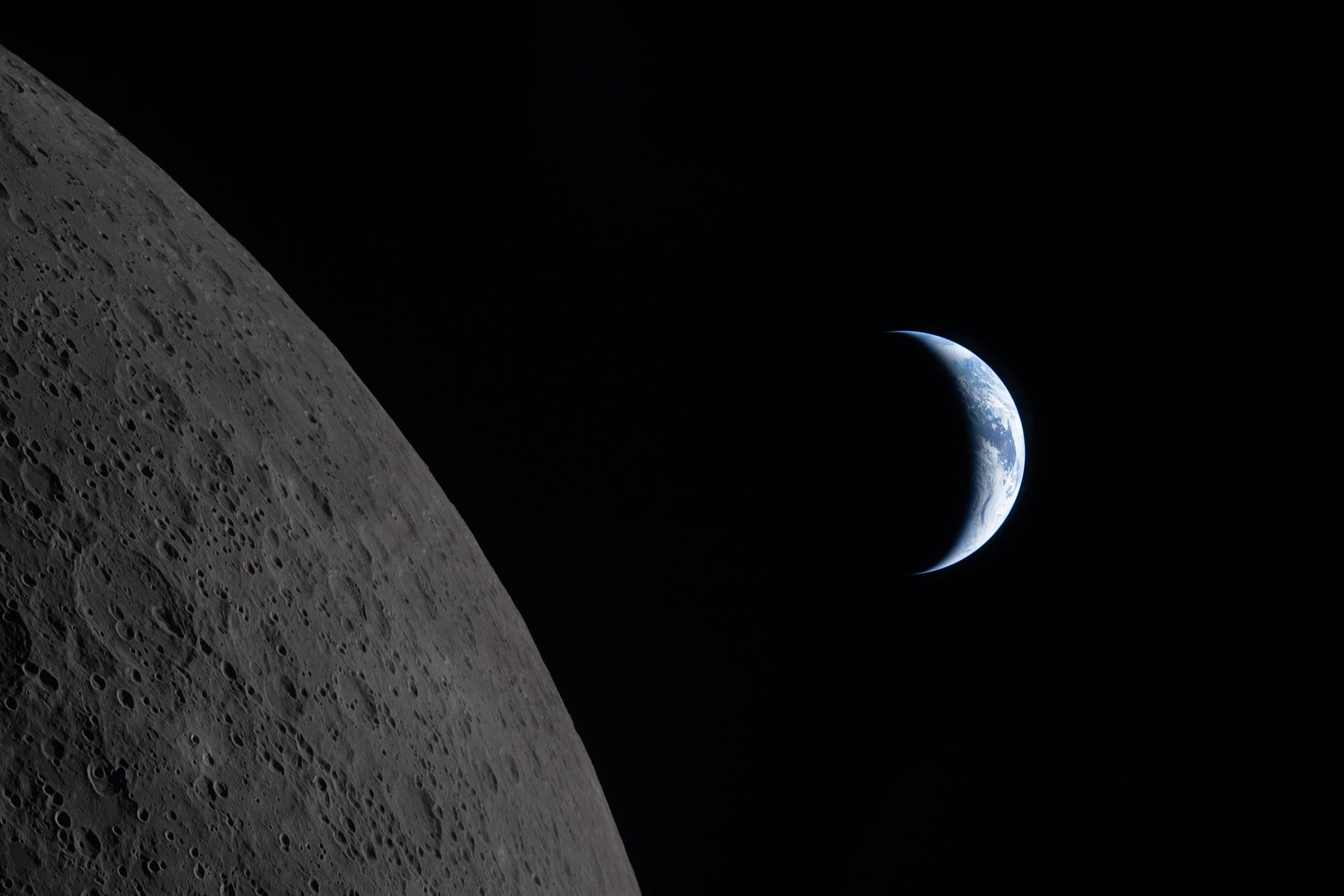
art002e009285 (April 6, 2026) – Our planet draws closer to passing behind the Moon in this image captured by the Artemis II crew during their lunar flyby, about six minutes before Earthset. Earth is in a crescent phase, with sunlight coming from the right. The dark portion of Earth is experiencing nighttime. On Earth’s day side, swirling clouds are visible over muted blue in the Australia and Oceania region. The lines of small indentations on the Moon’s rugged surface are secondary crater chains. These structures are formed by material ejected during a violent primary impact.
“The edge of two worlds”: Our planet draws closer to passing behind the Moon in this image captured by the Artemis II crew during their lunar flyby, about six minutes before Earthset. 

JACOB: This is NASA’s Curious Universe, an official NASA podcast. You can find our whole Artemis II series at nasa.gov/artemispodcast. Again: nasa.gov/artemispodcast. 

Our Artemis II series was written and produced by Christian Elliott and Jacob Pinter.  

Our executive producer is Katie Konans. Wes Buchanan designed the show art for this series. Music for the series comes from Universal Production Music.     

We had support throughout this series from Rachel Kraft, Lisa Allen, Lora Bleacher, Brandi Dean, Courtney Beasley, Amber Jacobson, and Thalia Patrinos. For this episode we had extra help from James Gannon. 

You can find transcripts for every episode of Curious Universe and explore NASA’s other podcasts at nasa.gov/podcasts.  

If you enjoyed this episode of NASA’s Curious Universe, let us know. Leave us a review wherever you’re listening right now. Maybe send a link to one of your friends. And you can follow NASA’s Curious Universe in your favorite podcast app to get a notification each time we post a new episode.