






As the tech industry goes green, how does your network stack up – and how can you make it greener?
From cost savings to improved Corporate Social Responsibility (CSR), there are several reasons you might be wondering how you can make your organization’s network more energy-efficient. But where do you start?
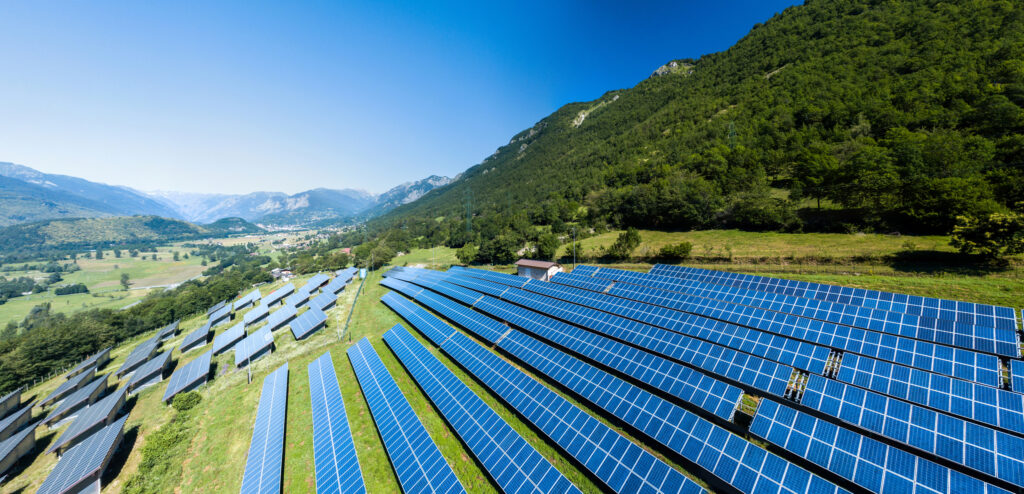
First, what is green networking? In short, it’s the practice of selecting energy-efficient networking technologies and products, and minimizing resource use whenever possible. It’s important to note that when we say energy-efficient, we don’t just mean using less energy; we also mean using more energy from renewable sources, such as wind, solar, and water power, as opposed to non-renewable sources, like natural gas.
Green networking can take many forms like server consolidation, upgrading older equipment for newer, more energy-efficient products, or choosing the greenest routes for your cloud on-ramps. The goal of these efforts is to minimize energy consumption and increase energy efficiency or optimize energy usage.
According to Energy Innovation.org, with a typical data center, the servers and cooling systems consume the most energy, followed by storage drives and network devices. When you consider that large data centers contain thousands—or even tens of thousands—of these servers, you can imagine that the energy needs really add up! Some estimates have put global data center energy consumption at 1% of the world’s total – a significant amount.
And it’s not just about energy consumption – water is often used in cooling processes, making water consumption another concern, especially as many regions globally experience severe drought conditions.
With more businesses moving to the cloud and data centers expanding, several groups have formed to mitigate climate impacts in the industry. For example, the Climate Neutral Datacenter Pact (CNDCP) was formed last year as part of the European Green Deal, with data center operators and trade bodies committing to the ambitious goal of making Europe climate neutral by the year 2050.
The main objective of this alliance is to develop a set of targets and metrics to pave the way toward achieving climate neutrality across five key areas: standards for energy efficiency, purchase of clean energy, water conservation, circular economy, and heat recycling.
Clean energy projects are also spinning up around the world, with companies such as Google signing agreements to purchase large amounts of wind power to support its data centers. Agreements like these are an important step towards building new clean energy infrastructure.
How cloud computing can help
Cloud computing suppliers will generally employ greener and more efficient network equipment while also having alternative network routes available if a connection failure occurs. By running applications in a dedicated environment and providing a more efficient data center infrastructure, cloud providers can help their customers reduce carbon consumption.
One way this can potentially be taken further is if the providers’ services offer a pay-per-use and on-demand option. Then, the consumer will only pay for the storage, compute, and application service capacity they actually use, and their carbon footprint will be reduced accordingly.
It’s important to note that not all cloud providers are created equal with regard to reducing carbon consumption. So, how to differentiate?
One way is to ask for their Power Usage Effectiveness (PUE) score. PUE is a metric created by The Green Grid, and is used to determine the energy efficiency of a data center. This metric is being increasingly used by firms looking to improve their own data centers or select an outsourced facility.
PUE is calculated by dividing the total amount of power used in a data center by the power used to run the computer infrastructure within it, after taking account of cooling, lighting, and other energy factors. PUE is therefore expressed as a ratio, with overall efficiency improving as it decreases towards 1. The current PUE industry average is around 1.8, according to some estimates.
Now that you have an overview on what green networking means, how the industry is rallying behind the cause, and some ideas of how to measure it, what’s next? Here are some steps you can begin taking right away to improve your network efficiency:
Taking these steps may require some investment, but once they’re put in place, they will typically save money. The combination of cost savings and reduced carbon footprint can help both the bottom line, and a company’s image – and that’s a compelling scenario.
Read Megaport’s Environmental, Social & Governance Report here.
此内容由惯性聚合(RSS阅读器)自动聚合整理,仅供阅读参考。 原文来自 — 版权归原作者所有。