Learn how you can use Megaport to successfully migrate from TPN.
Telstra has announced that its Telstra Programmable Network (TPN) service will be fully retired by January 2026, with key service milestones beginning as early as July 2025. But for teams that rely on TPN, this change doesn’t have to disrupt operations.
Thanks to Megaport’s ongoing partnership with Telstra, we’re well positioned to support customers needing to transition their connectivity strategies, helping preserve the benefits of TPN while enabling greater scalability and cloud reach.
Here’s how to migrate to Megaport for your connectivity layer.
What the end of TPN means for Telstra customers
With the TPN shutdown scheduled in phases, it’s important to understand what’s changing and when. Without a clear migration plan, you risk disruption to your core network services and cloud connectivity.
New sales cutoff: 30th November, 2023
Service expansion cutoff: 16th July, 2025 (no new services or recontracting)
Complete service termination: 16th January, 2026
If not properly prepared for, the end of TPN carries a few challenges and risks for Telstra customers:
Risk of service disruption without a replacement plan.
Lack of a defined Telstra-provided migration path.
Complex challenges for customers with integrated MPLS/TPN environments.
Downtime or rushed decisions as the termination date nears.
Uncertainty around how to replicate software-defined networking (SDN) capabilities provided by TPN.
Impact on cloud connectivity and virtual network functions if left unmanaged.
To stay ahead of these challenges, now is the time to modernize your network with a scalable, software-defined platform that works seamlessly with Telstra’s infrastructure. Through our collaboration with Telstra, Megaport can help you transition your existing services and build a flexible, future-ready network.
The benefits of Telstra and Megaport
By combining Telstra’s network infrastructure with Megaport’s software-defined networking capabilities, customers gain a powerful foundation for scalable, flexible connectivity. Here’s what it looks like in practice:
Enhanced connectivity: Telstra’s global network infrastructure combined with Megaport’s SDN gives customers fast, scalable, and secure connections, including direct access to major cloud providers like AWS, Microsoft Azure, Oracle, and Google Cloud.
Scalable connections: Megaport allows Telstra customers to adjust their bandwidth on demand as required. Telstra through Megaport offers flexible billing options, ideal for projects and migrations.
Simplified multicloud and hybrid cloud strategies: Customers can use Telstra’s network in conjunction with Megaport’s multicloud capabilities to easily connect to multiple cloud providers and enable hybrid cloud strategies in minutes.
Global footprint: Telstra’s extensive APAC network, combined with Megaport’s global presence in 1,100
+ data centers worldwide, is the perfect option for customers looking for growth and reliability on a massive scale.
Reliable security: Megaport’s SDN with Telstra’s network offers reliable connections, reduced latency, and improved application availability, while dedicated links avoid the public internet.
MPLS integration: Thanks to our partnership with Telstra, full Telstra MPLS integration is possible with Megaport’s SDN.
How Megaport helps you transition from TPN
If you’re looking to maintain the flexible, software-defined networking experience you had with TPN, Megaport helps you achieve similar outcomes while also unlocking new possibilities.
Our solutions are:
Scalable: Rightsize bandwidth on demand and pay only for what you provision, with no setup fees.
Flexible: Provision connections in 60 seconds, all from our portal. Choose from fixed terms, scalable terms, or just pay-as-you-go billing.
Globally available: Megaport’s vendor-neutral fabric spans 1,100
+ data centers and 410+ service providers worldwide to expand your global reach.
Automation-friendly: Provision services through our APIs, or use Megaport’s Terraform provider to automate your network and make it even more efficient.
And once you’re connected with Megaport, you’ll unlock use cases like:
Data center to data center: Provision interconnects between 1,100
+ global data centers across hundreds of unique operators spanning 30
countries.
Data center to cloud: Create hybrid clouds by connecting your on-premises data centers to all of your cloud service providers.
Cloud to cloud: Create on-demand, private connectivity between your public cloud instances and any other cloud service providers within the Megaport ecosystem.
Virtual edge: Spin up virtual routers and firewalls from your favorite vendors worldwide.
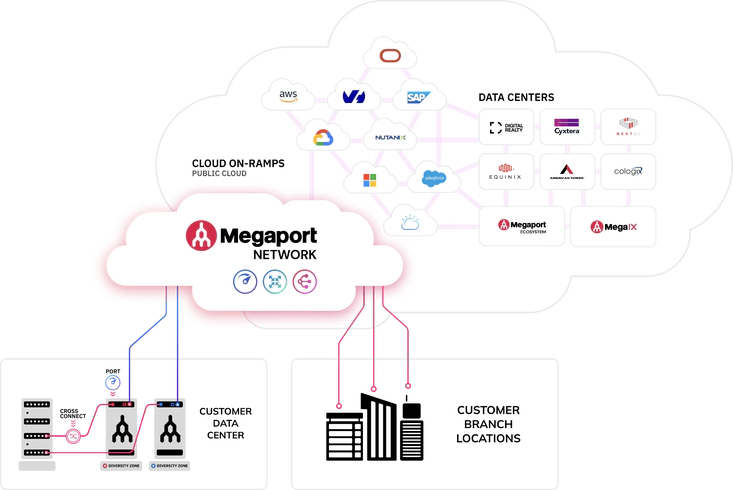
How Megaport works.
Use cases for integrating Megaport with Telstra
Example 1: cloud connectivity integration
Interconnect your Telstra MPLS network and extend to global cloud connectivity to replace or go beyond TPN’s original footprint.
Use case: A TPN customer with an integrated domestic MPLS setup looking to extend cloud connectivity globally.
Solution: Extend your Telstra MPLS to a Megaport-enabled data center, then use Megaport’s extensive global coverage to connect to global colocation sites or cloud regions worldwide.
Outcome: Preserve your MPLS investment and continue to route your core traffic via Telstra MPLS while gaining flexible virtual connectivity on a global scale.
Example 2: virtual network functions integration
Deploy Megaport Virtual Edge (MVE) as a virtual firewall, router, or edge for your SD-WAN.
Use case: A TPN customer using virtual network functions like SD-WAN, virtual firewalls, or virtual routers.
Solution: Deploy MVEs as virtual machines to get integrated access to global cloud regions.
Outcome: Easily maintain your virtual network architecture while benefiting from broader vendor support and edge presence.
Map your existing services running on TPN to take inventory of what needs to be migrated. Note any connections to Telstra MPLS (domestic or international) that also need to be integrated into your new setup.
Step 2: Find your closest Megaport-enabled location
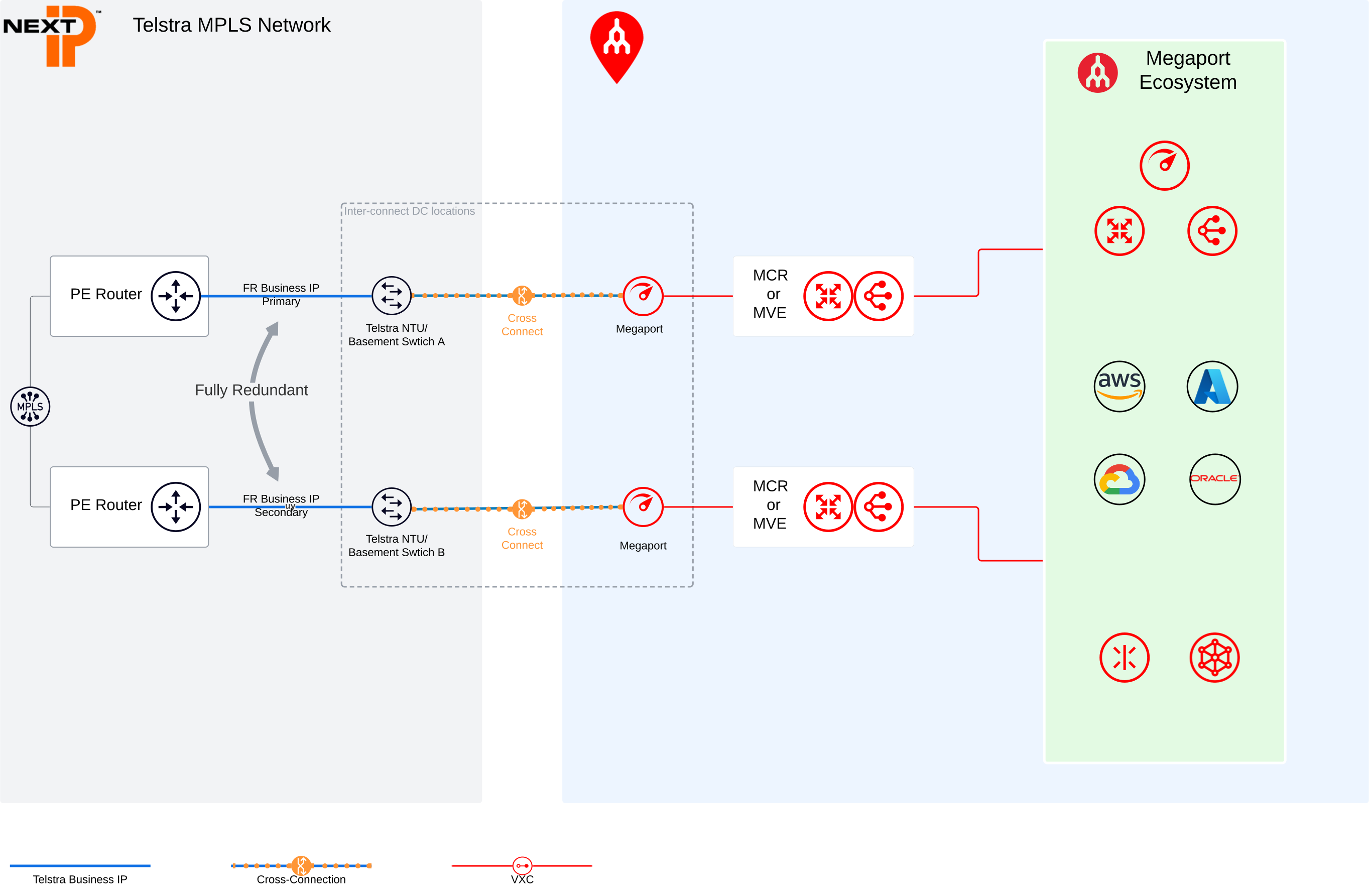
WAN connection: Order MPLS WAN connections to directly connect to the Megaport fabric, using MCR or MVE as your Layer 3 device to connect to MPLS provider edge (PE) routers.
Standard WAN.
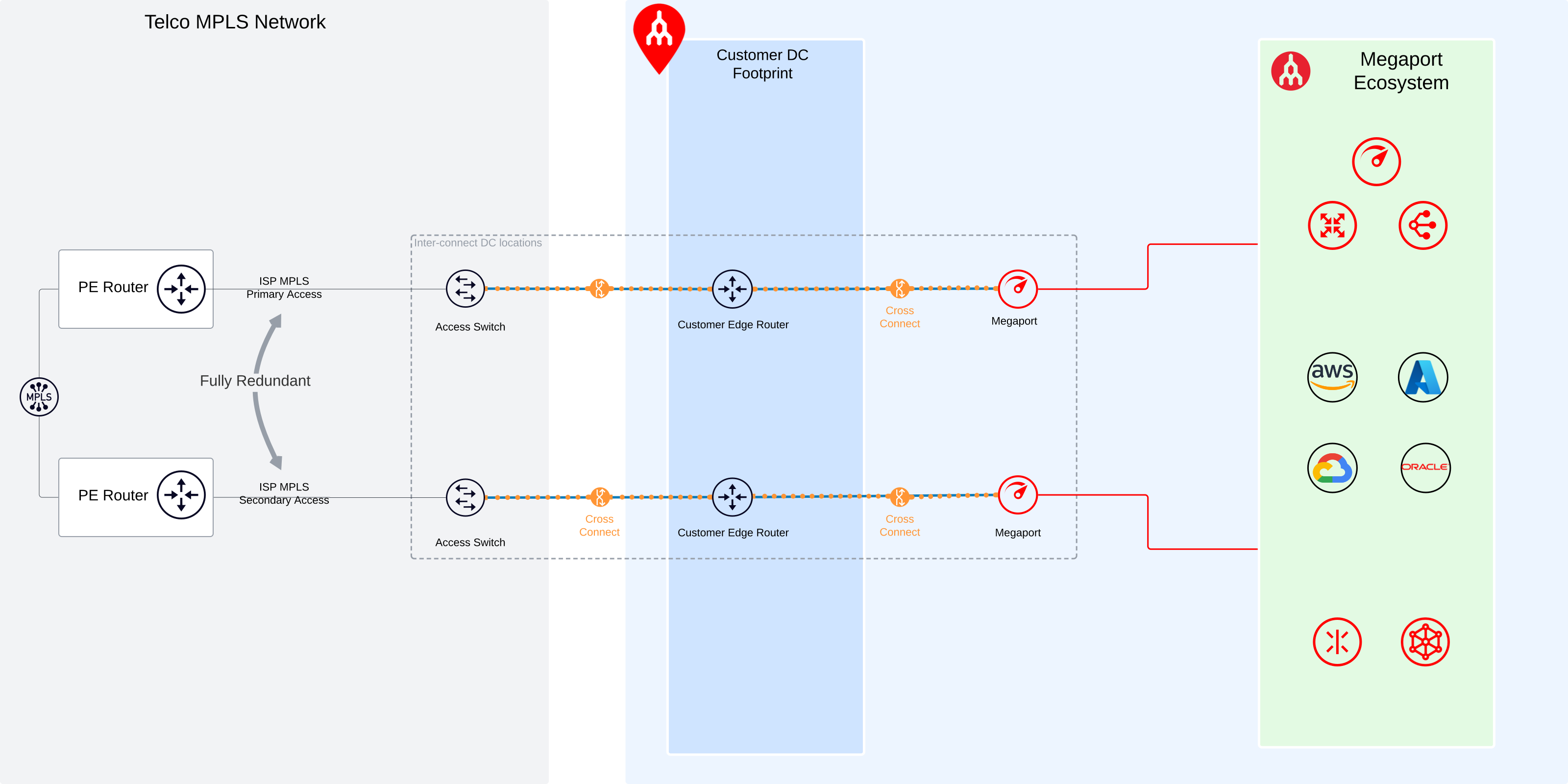
LAN connection: If you have an existing data center tenancy or are already in a Megaport-enabled location, you can order a Megaport Port to connect directly to your LAN. In this setup, you can leverage existing MPLS customer premises equipment (CPE) for Layer 3 routing.
Standard LAN.
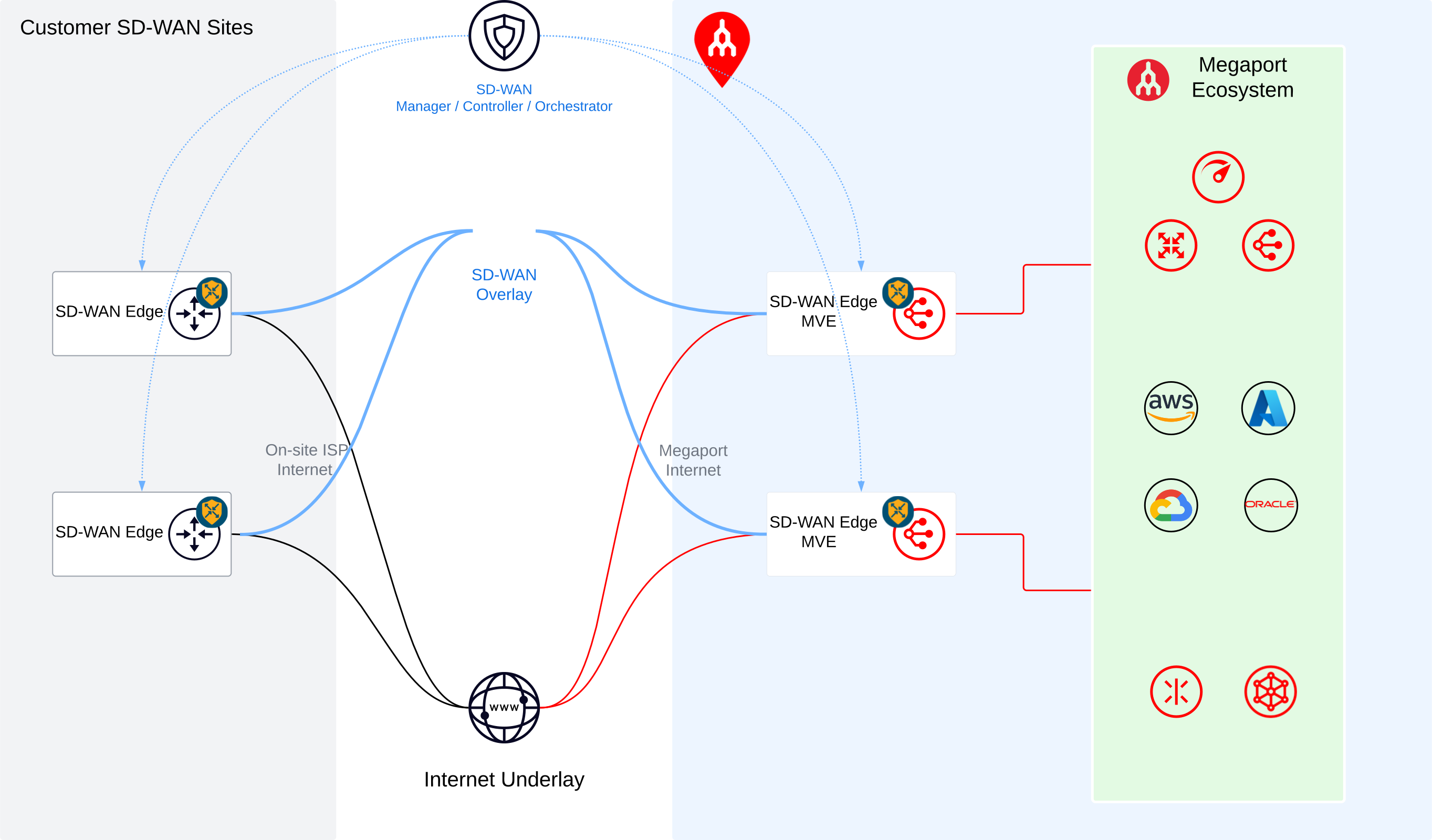
SD-WAN overlay: If you have an existing SD-WAN network or are planning to adopt an SD-WAN solution, you can integrate your network with the Megaport fabric by deploying MVEs as SD-WAN edge devices.
This allows you to connect the Megaport fabric to your SD-WAN overlay through MVE-based SD-WAN edge instances, seamlessly extending your existing network. You can also continue using your centralized SD-WAN management portal and business rules.
SD-WAN overlay.
Step 4: Deploy with Megaport
Create an account on the Megaport Portal to self-serve and deploy your connections in just 60 seconds. Want help designing, testing, or deploying? Contact your Telstra or Megaport account manager for support.
Conclusion
As TPN approaches its end-of-life, now is the time to plan what comes next.
Whether you’re looking to transition an entire TPN environment or just evolve a part of your network, Megaport—working in collaboration with Telstra—can help you migrate to a setup with the agility and global reach needed for whatever your business has planned next.