

惯性聚合 高效追踪和阅读你感兴趣的博客、新闻、科技资讯
阅读原文 在惯性聚合中打开

推荐订阅源

F
Full Disclosure
Recorded Future
Recorded Future
T
Tenable Blog
S
Securelist
C
CERT Recently Published Vulnerability Notes
T
Threatpost
S
Schneier on Security
A
Arctic Wolf
The Hacker News
The Hacker News
C
CXSECURITY Database RSS Feed - CXSecurity.com
Know Your Adversary
Know Your Adversary
P
Privacy International News Feed
Threat Intelligence Blog | Flashpoint
The Register - Security
Cisco Talos Blog
Cisco Talos Blog
AWS News Blog
AWS News Blog
K
Kaspersky official blog
T
True Tiger Recordings
T
Threat Research - Cisco Blogs
V
Vulnerabilities – Threatpost
P
Palo Alto Networks Blog
T
The Exploit Database - CXSecurity.com
小众软件
小众软件
B
Blog
Cyber Security Advisories - MS-ISAC
Microsoft Azure Blog
Cyberwarzone
Cyberwarzone
C
Cybersecurity and Infrastructure Security Agency CISA
T
Tor Project blog
Spread Privacy
Spread Privacy
Malwarebytes
Malwarebytes
P
Proofpoint News Feed
F
Fox-IT International blog
F
Fortinet All Blogs
P
Privacy & Cybersecurity Law Blog
G
GRAHAM CLULEY
量子位
Latest news
Latest news
OSCHINA 社区最新新闻
OSCHINA 社区最新新闻
博客园 - 叶小钗
Project Zero
Project Zero
T
Tailwind CSS Blog
N
Netflix TechBlog - Medium
Martin Fowler
Martin Fowler
IntelliJ IDEA : IntelliJ IDEA – the Leading IDE for Professional Development in Java and Kotlin | The JetBrains Blog
I
Intezer
博客园_首页
腾讯CDC
H
Hackread – Cybersecurity News, Data Breaches, AI and More
D
Darknet – Hacking Tools, Hacker News & Cyber Security

Megaport Blog

Early Warning Signs Your Network Needs a Refresh Introducing Megaport DDoS Protection A Guide to 400G Connectivity A Guide to NAT Gateway A Guide to Cloud Storage How the Data Center Is Evolving in 2026 What to Expect When Attending Your First Network Operator Group (NOG) Nine Ways to Connect to Cloud Using Private Connectivity Migrate Your On-premises to the Cloud: A Step-by-Step Guide How to Lower Your Egress Fees in 2026 How to Achieve Data Sovereignty in Europe Redefining the Edge with Cisco and Megaport How to Reduce Latency in Your Multicloud Environment Introducing Megaport High-Speed Cross-Cloud Encryption Are Businesses Leaving the Cloud? Using Meraki and Megaport Virtual Edge for Multicloud Networking Equinix Metal® is Going Away: Here’s What You Can Do Introducing Megaport On-ramp as a Service Megaport’s Full Solution Portfolio Is Coming to India New Bare-metal GPU Instance Now Available with NVIDIA RTX Pro 6000 A Look Back at 2025: Megaport's Biggest Updates Megaport Expands Into India With Extreme IX Your 2026 Predictions From AWS re:Invent 2025 Top NaaS Trends for 2026 What is IPsec? When to Move From Public Internet to Private Connectivity Megaport and Latitude.sh: Bringing Compute and Connectivity Together Improve Your Microsoft ExpressRoute Resilience with Megaport Comparing Ways to Connect to AWS What is API-First Networking? The Hidden Cost of Running Cloud-Hosted SD-WAN for IaaS Overcoming NaaS Integration Challenges Introducing SCION with Anapaya and Megaport How to Use Network as a Service to Future-Proof Your Network Introducing 400G Ports All the As-a-services, Compared Introducing Megaport IPsec Tunnels High Score: Megaport Hits 1,000 Locations A Guide to Colocation Data Centers Maximizing Peering Through Flow Analysis Build Resilient Networks for AI Production Workloads Introducing Packet Filtering on Megaport Cloud Router Building Resilient Government IT: Strategies for Secure, Compliant, and Scalable Connectivity Future-Proofing Government IT Telstra Programmable Network Is Being Discontinued. Here’s How to Migrate The Future of WAN Design Depends on Network as a Service (NaaS) Cisco Webex Edge Connect Launches on Megaport Voice and Video Exchange How to Prepare for APRA CPS 230 Comparing the SD-WAN Licensing Needs of Major Vendors A Guide to Improving Network Performance How Latitude.sh, Wasabi, and Megaport Unlock Cost-Effective Multicloud Four Ways to Connect Your Clouds SD-WAN and MPLS: Weighing the Similarities, Differences, and Benefits A Guide to Network as a Service (NaaS) How to Arrange Bilateral Peering Sessions Comparing Major SD-WAN Vendors Software Defined Networking in Healthcare Deploying A Global Network in Minutes With Megaport Bilateral and Multilateral Peering: What’s the Difference? Multi-Region SD-WAN: Why Megaport SDCI is the Right Choice Microsoft Azure is Going Secure by Default. Are You Ready? How Megaport and Vultr Are Solving the Enterprise AI Challenge Introducing Megaport NAT Gateway A Guide to AWS Security Tools How to Deploy Amazon Bedrock Using AWS Direct Connect and Megaport Azure Private Link, Explained Introducing 100G MCRs Simplifying Hybrid and Multicloud Network Connectivity How to Fix Poor AWS Latency A Look Back at 2024: Megaport’s Biggest Updates Your 2025 Predictions From AWS re:Invent 2024 Six Ways to Get a More Resilient Network in 2025 Multicloud Security: Challenges and Solutions The Real Cost of High Network Latency Why Brazil is Your Key to Unlocking Business Growth in Latin America Why You Need Integrated Network Security Six Key Differences Between Major Cloud Providers How to Automate Your Megaport Infrastructure With APIs Why Italy is Europe’s Next Cloud Expansion Hotspot How to Lower Your Cloud Costs Peering: How Local Is Local? Introducing Megaport AI Exchange Two Scenarios for Hybrid Multicloud Deployment With IBM Cloud and Microsoft Azure How to Connect Equinix and Digital Realty Megaport Enables Microsoft Azure ExpressRoute Metro for More Resilient Network Connectivity Executives, Here’s What Your Network Team Wants You to Know Easy Ways to Interconnect Your Network The Role of the Data Center in Your Network 100G VXC Expansion: Now Available From 597 Data Centers Worldwide Top 10 How-To Guides To Improve Your Network Comparing Encryption in Transit Options Comparing Generative AI Offerings From Major Cloud Providers A Sustainable Business Strategy Starts With Your Network Solutions to Common API Issues With Megaport Transforming Financial Connectivity: Introducing Megaport Financial Services Exchange (FSX) Megaport Enhancing Connectivity in Adelaide Megaport’s Latest Portal Features and Functionalities Automate Your Network Deployments With The New Megaport Terraform Provider A Recap of the Megaport World Tour 2024 Top 5 Cloud and Networking Announcements From Cisco Live 2024
AWS Direct Connect Gateway (DGW) Data Transfer Outbound Rules
2025-03-06 · via Megaport Blog

By Lionel David, Solutions Architect

Get more efficient and secure AWS DGW connectivity by understanding the provider's Data Transfer Outbound requirements.

As hybrid and cloud-native architectures have become commonplace, efficient and secure connectivity between on-premises data centers and the cloud is more crucial than ever.

For organizations using AWS, connecting through a Direct Connect link simplifies and centralizes network connections across multiple regions thanks to its Direct Connect Gateway (DGW) component.

But while the benefits of using this service—such as reduced latency, increased security, and high-speed connectivity—are clear, understanding the costs associated with data transfer is essential to optimizing your cloud architecture.

In this blog post, we’ll explain the intricacies of AWS Direct Connect Gateway and explore the often-overlooked area of Data Transfer Out (DTO) charges. From the impact of AWS Region locations to the different types of Virtual Interfaces (VIFs) available, we’ll help you navigate the complexities of AWS network pricing and ensure you’re making the most cost-effective decisions for your cloud infrastructure.

Table of Contents

AWS Direct Connect Gateway overview

The AWS Direct Connect Gateway is a networking service that simplifies and centralizes connectivity between an on-premises data center or remote network and multiple Virtual Private Clouds (VPCs) in AWS. It allows you to establish connections to VPCs in different AWS Regions using a single Direct Connect location, eliminating the need for multiple physical connections to each Region.

An AWS Direct Connect location is a physical data center or colocation facility where AWS has established a presence to provide access to its Direct Connect service. These locations serve as the on-ramp for setting up a private, high-bandwidth, low-latency connection between your on-premises network and AWS.

At a Direct Connect location, you can set up:

  • Dedicated connections: A physical port is assigned exclusively to your organization.
  • Partner connections: A third-party AWS Direct Connect Partner manages the connection on your behalf, often aggregating multiple customers.

A Direct Connect Gateway is not tied to a specific region; it’s designed to improve the flexibility and scalability of Direct Connect by serving as a central hub for managing network connections and extending connectivity to VPCs across multiple regions.
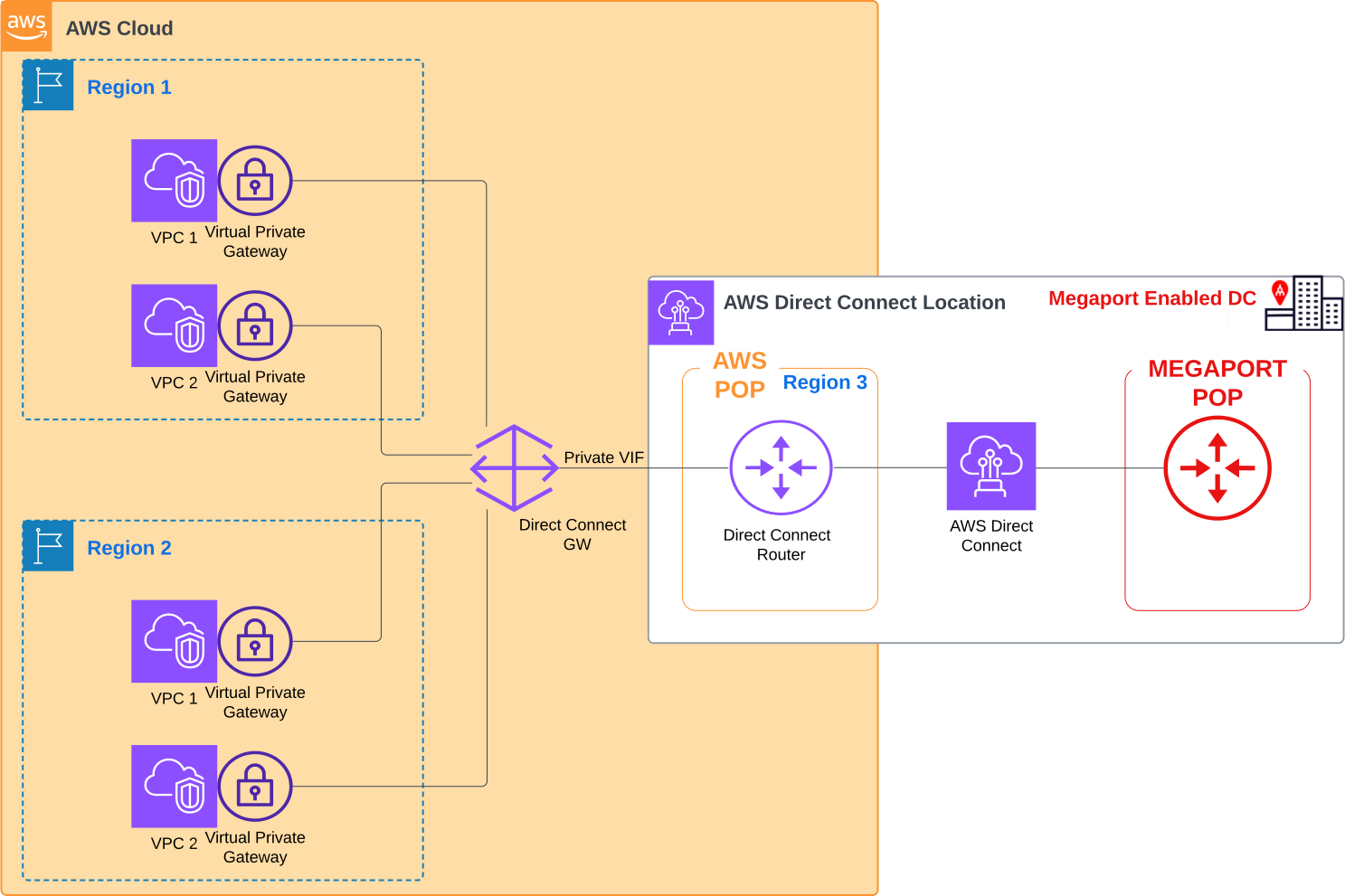
AWS Direct Connect Gateway

The Direct Connect Gateway acts as a centralized network aggregation point, enabling you to securely connect to multiple VPCs across different AWS Regions using private connectivity that bypasses the public internet. Functionally, it is a highly resilient, software-defined networking component, not a physical router or switch – but it serves a similar purpose in routing traffic between AWS and your on-premises network.

By leveraging dedicated, high-speed connections of up to 100 Gbps, the Direct Connect Gateway ensures consistent, low-latency performance suitable for bandwidth-intensive workloads such as data replication, real-time analytics, and hybrid cloud applications.

Designed with high availability and fault tolerance, the Direct Connect Gateway operates in multiple AWS Availability Zones, ensuring no single point of failure. Additionally, it supports features such as BGP routing, allowing for dynamic route exchanges between your network and AWS.

This gateway is particularly useful for hybrid cloud architectures, as it facilitates seamless integration between on-premises networks and the AWS cloud. It also supports multi-region deployments, allowing organizations to connect to VPCs located anywhere globally within their AWS accounts or through shared access via AWS Resource Access Manager.

By using a Direct Connect Gateway you can centralize network management, reduce the number of physical connections needed, and streamline access to resources hosted in multiple AWS Regions.

A VIF in AWS Direct Connect is a logical connection that enables communication between an on-premises network and AWS resources. Three types of VIFs can be used in AWS Direct Connect:

  • Private VIF is used for private communication between your on-premises network and VPCs, allowing access to private resources via private IPs. Natively, you can interconnect up to 10 VPCs (through Virtual Private Gateway/VGW) to a Direct Connect Gateway, but you can also choose to connect to a single VPC and not use a Direct Connect Gateway.
  • Public VIF enables access to AWS public services like S3 or DynamoDB using public IPs, bypassing the public internet but not connecting to private VPC subnets. In this case, a Direct Connect Gateway is only requested if you want to connect to these services in multiple regions.
  • Transit VIF connects to AWS Transit Gateways. If you need to connect above 10 VPCs to your environment or need to enable traffic between VPC, this is the VIF you need.

Regardless of the type of Virtual Interface (VIF) in use—private, public, or transit—data transfer out charges apply for any data sent from AWS to your on-premises network.

What are Data Transfer Outbound charges?

Data Transfer Outbound (DTO) charges in AWS refer to the cost of transferring data from AWS resources to destinations outside the AWS cloud, such as your on-premises network or external systems.

These charges apply when using services like AWS Direct Connect to facilitate private network connections. For Direct Connect, the charges are based on the amount of data that leaves AWS through the Direct Connect connection.

The cost is determined by factors such as the AWS Region, the Direct Connect location, and whether the connection is between Regions.

Typically, data ingress (data coming into AWS) is free, but DTO is billed per GB of data transferred out. Using Direct Connect for DTO is generally more cost-effective compared to transferring data over the public internet.

It’s worth mentioning here that DTO applies regardless of whether you connect via VPN to your VPCs through the internet or you connect through private connectivity with a Direct Connect (Direct or Partner). But the charges will be around 66% lower with Direct Connect compared to the internet.

The below diagram is an example of the cost difference for Europe (each AWS pricing zone may have different costs).
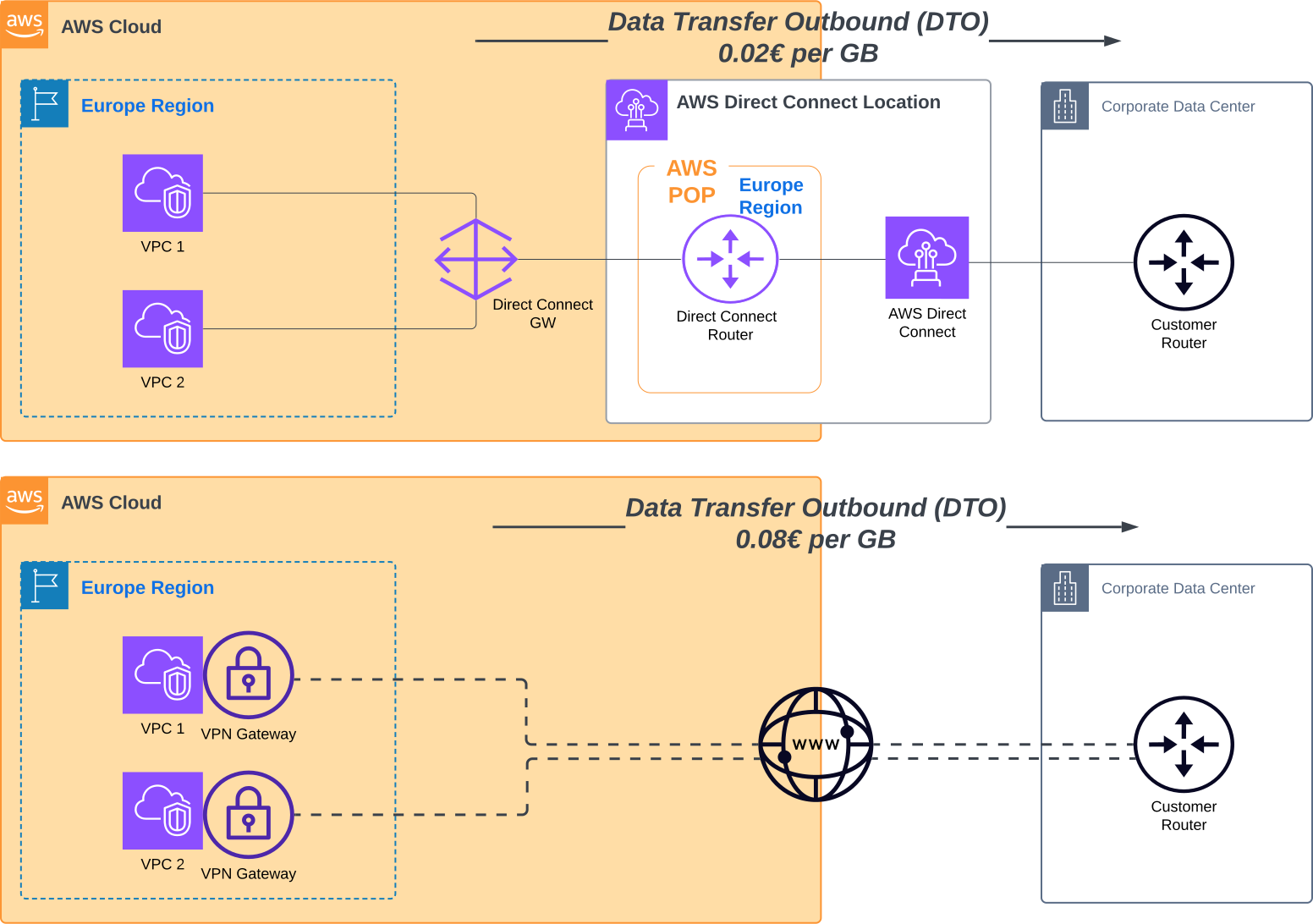
AWS Data Transfer Outbound costs - Europe

How does the Direct Connect location affect DTO charges?

When determining DTO costs, the location of the Direct Connect physical location and the AWS Region hosting the VPCs are key factors. The charges depend on whether the Direct Connect location and the AWS Region are in the same AWS pricing region or in different AWS pricing regions.

As explained in the AWS Direct Connect pricing page and shown in the table ‘Data transfer from AWS Region or Local Zone’, “If you are using an AWS Direct Connect gateway, you will pay applicable DTO data rates based on the AWS Region that is the source of the traffic and AWS Direct Connect location where it is connected.”
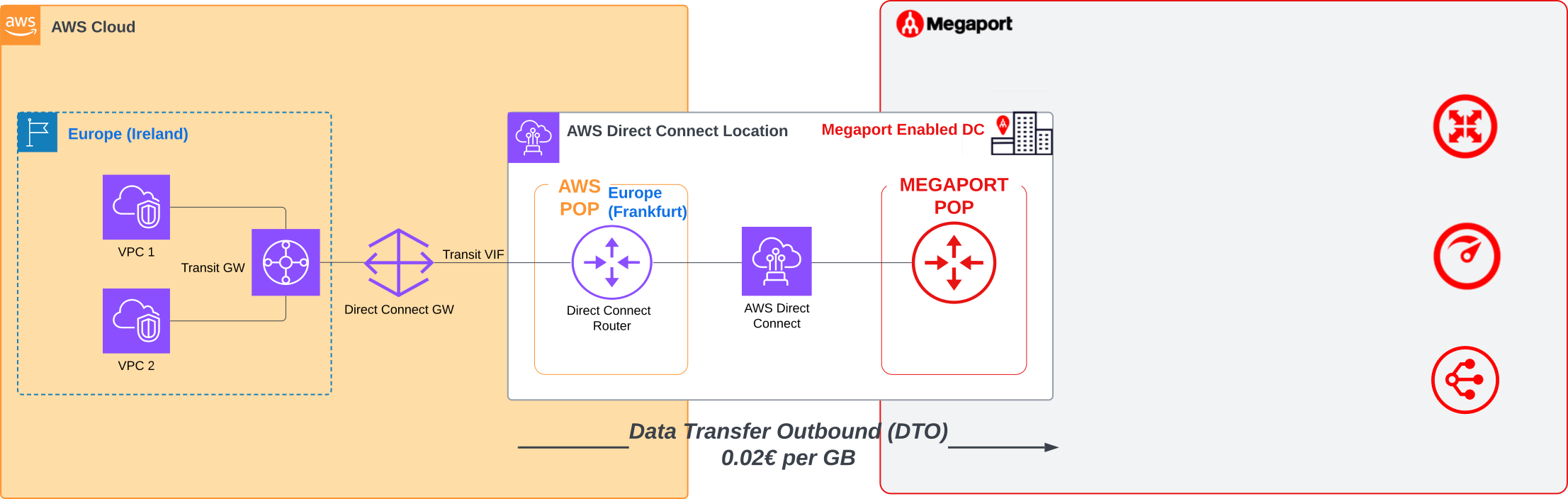
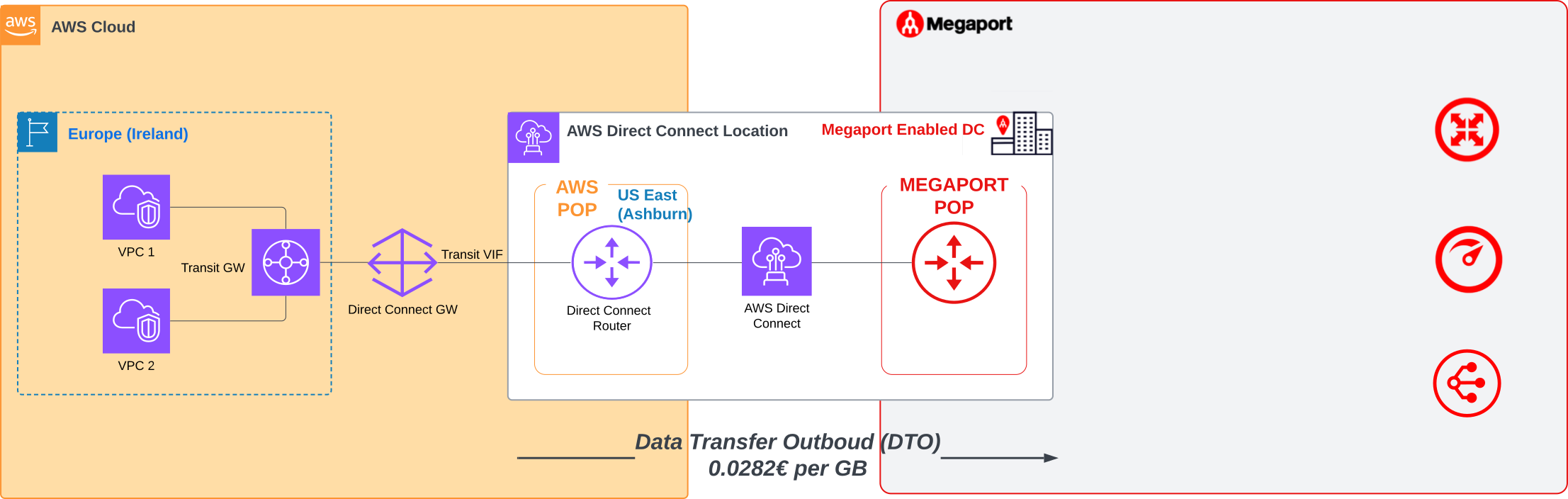
  1. Same AWS pricing region
    • If your Direct Connect location and VPC’s AWS Region are in the same AWS pricing region (e.g. both in Europe), the data transfer charges are typically the same, even if the Direct Connect location and VPC are in different cities within that region.
    • For example, transferring data from a VPC in “Europe (Ireland)” to a Direct Connect location in “Europe (Frankfurt)” costs $0.0200 per GB, the same as if the Direct Connect location and the VPC were in the same city or metro zone.
      AWS Data Transfer Outbound charges - same pricing region
      AWS Data Transfer Outbound charges - same pricing region
  2. Different AWS pricing regions
    • If your Direct Connect location and the AWS Region hosting your VPCs are in different AWS pricing regions (e.g. your Direct Connect location is in “North America” and your VPC is in “Europe”), a surcharge is added to the data transfer costs. This surcharge reflects the added complexity of routing traffic between pricing regions using AWS’s global infrastructure.
      AWS Data Transfer Outbound charges - different pricing region
      AWS Data Transfer Outbound charges - different pricing region

The difference between DTO and inter-region charges

DTO charges for Direct Connect are not the same as inter-region data transfer charges. Inter-region charges apply when data moves between VPCs in different AWS Regions (e.g. “US East (N. Virginia)” to “US West (Oregon)”) over the AWS backbone.

In contrast, Direct Connect DTO charges specifically cover the cost of transferring data from AWS to your on-premises location. They also depend on the Region-to-Direct Connect location relationship as explained above and available on the AWS Direct Connect pricing page, in the table “Data transfer out (DTO) pricing for AWS Direct Connect”.

Conclusion

In summary, DTO charges for Direct Connect depend on the proximity of the Direct Connect location to the AWS Region hosting your resources. When both are within the same pricing region, the costs are the same as if they were in the same metro zone. If they are in different pricing regions, a surcharge is added, but this is distinct from inter-Region egress charges typically seen in VPC-to-VPC communication.

Additionally, leveraging a Direct Connect Partner can provide substantial advantages including access from a broader range of data centers, and provides finer granularity in bandwidth selection leading to money savings, allowing organizations to optimize costs and performance more effectively.

Megaport, with its extensive network of on-ramps to AWS across numerous regions worldwide, simplifies the process of establishing robust and flexible cloud connectivity. This global reach and flexibility makes it easier than ever for businesses to achieve their hybrid cloud goals while maintaining cost efficiency and scalability.

For further details, you can refer to: