


惯性聚合 高效追踪和阅读你感兴趣的博客、新闻、科技资讯
阅读原文 在惯性聚合中打开

推荐订阅源

酷 壳 – CoolShell
酷 壳 – CoolShell
H
Hacker News: Front Page
P
Palo Alto Networks Blog
T
ThreatConnect
Apple Machine Learning Research
博客园_首页
T
True Tiger Recordings
P
Privacy & Cybersecurity Law Blog
B
Blog
IT之家
IT之家
Last Week in AI
Last Week in AI
F
Full Disclosure
Hacker News: Ask HN
Hacker News: Ask HN
C
Comments on: Blog
Microsoft Azure Blog
C
Cybersecurity and Infrastructure Security Agency CISA
Microsoft Security Blog
博客园 - 【当耐特】
N
News and Events Feed by Topic
NISL@THU
NISL@THU
腾讯CDC
雷峰网
雷峰网
Security Latest
Security Latest
李成银的技术随笔
M
Microsoft Research Blog - Microsoft Research
L
LangChain Blog
L
Lohrmann on Cybersecurity
cs.CL updates on arXiv.org
C
Check Point Blog
Y
Y Combinator Blog
Recent Announcements
博客园 - Franky
N
News | PayPal Newsroom
V
V2EX
A
About on SuperTechFans
The Register - Security
月光博客
月光博客
奇客Solidot–传递最新科技情报
奇客Solidot–传递最新科技情报
Google Online Security Blog
MyScale Blog
MyScale Blog
Cisco Talos Blog
Cisco Talos Blog
Vercel News
Vercel News
WordPress大学
WordPress大学
C
Cyber Attacks, Cyber Crime and Cyber Security
The Hacker News
The Hacker News
IntelliJ IDEA : IntelliJ IDEA – the Leading IDE for Professional Development in Java and Kotlin | The JetBrains Blog
爱范儿
爱范儿
A
Arctic Wolf
L
LINUX DO - 最新话题
freeCodeCamp Programming Tutorials: Python, JavaScript, Git & More

Megaport Blog

Early Warning Signs Your Network Needs a Refresh Introducing Megaport DDoS Protection A Guide to 400G Connectivity A Guide to NAT Gateway A Guide to Cloud Storage How the Data Center Is Evolving in 2026 What to Expect When Attending Your First Network Operator Group (NOG) Nine Ways to Connect to Cloud Using Private Connectivity Migrate Your On-premises to the Cloud: A Step-by-Step Guide How to Lower Your Egress Fees in 2026 How to Achieve Data Sovereignty in Europe Redefining the Edge with Cisco and Megaport How to Reduce Latency in Your Multicloud Environment Introducing Megaport High-Speed Cross-Cloud Encryption Are Businesses Leaving the Cloud? Using Meraki and Megaport Virtual Edge for Multicloud Networking Equinix Metal® is Going Away: Here’s What You Can Do Introducing Megaport On-ramp as a Service Megaport’s Full Solution Portfolio Is Coming to India New Bare-metal GPU Instance Now Available with NVIDIA RTX Pro 6000 A Look Back at 2025: Megaport's Biggest Updates Megaport Expands Into India With Extreme IX Your 2026 Predictions From AWS re:Invent 2025 Top NaaS Trends for 2026 What is IPsec? When to Move From Public Internet to Private Connectivity Megaport and Latitude.sh: Bringing Compute and Connectivity Together Improve Your Microsoft ExpressRoute Resilience with Megaport Comparing Ways to Connect to AWS What is API-First Networking? The Hidden Cost of Running Cloud-Hosted SD-WAN for IaaS Overcoming NaaS Integration Challenges Introducing SCION with Anapaya and Megaport How to Use Network as a Service to Future-Proof Your Network Introducing 400G Ports All the As-a-services, Compared Introducing Megaport IPsec Tunnels High Score: Megaport Hits 1,000 Locations A Guide to Colocation Data Centers Maximizing Peering Through Flow Analysis Build Resilient Networks for AI Production Workloads Introducing Packet Filtering on Megaport Cloud Router Building Resilient Government IT: Strategies for Secure, Compliant, and Scalable Connectivity Future-Proofing Government IT Telstra Programmable Network Is Being Discontinued. Here’s How to Migrate The Future of WAN Design Depends on Network as a Service (NaaS) Cisco Webex Edge Connect Launches on Megaport Voice and Video Exchange How to Prepare for APRA CPS 230 Comparing the SD-WAN Licensing Needs of Major Vendors A Guide to Improving Network Performance How Latitude.sh, Wasabi, and Megaport Unlock Cost-Effective Multicloud Four Ways to Connect Your Clouds SD-WAN and MPLS: Weighing the Similarities, Differences, and Benefits A Guide to Network as a Service (NaaS) How to Arrange Bilateral Peering Sessions Comparing Major SD-WAN Vendors Software Defined Networking in Healthcare Deploying A Global Network in Minutes With Megaport AWS Direct Connect Gateway (DGW) Data Transfer Outbound Rules Bilateral and Multilateral Peering: What’s the Difference? Multi-Region SD-WAN: Why Megaport SDCI is the Right Choice Microsoft Azure is Going Secure by Default. Are You Ready? How Megaport and Vultr Are Solving the Enterprise AI Challenge Introducing Megaport NAT Gateway A Guide to AWS Security Tools How to Deploy Amazon Bedrock Using AWS Direct Connect and Megaport Azure Private Link, Explained Introducing 100G MCRs Simplifying Hybrid and Multicloud Network Connectivity How to Fix Poor AWS Latency A Look Back at 2024: Megaport’s Biggest Updates Your 2025 Predictions From AWS re:Invent 2024 Six Ways to Get a More Resilient Network in 2025 Multicloud Security: Challenges and Solutions The Real Cost of High Network Latency Why Brazil is Your Key to Unlocking Business Growth in Latin America Why You Need Integrated Network Security Six Key Differences Between Major Cloud Providers How to Automate Your Megaport Infrastructure With APIs Why Italy is Europe’s Next Cloud Expansion Hotspot How to Lower Your Cloud Costs Peering: How Local Is Local? Introducing Megaport AI Exchange Two Scenarios for Hybrid Multicloud Deployment With IBM Cloud and Microsoft Azure How to Connect Equinix and Digital Realty Megaport Enables Microsoft Azure ExpressRoute Metro for More Resilient Network Connectivity Executives, Here’s What Your Network Team Wants You to Know Easy Ways to Interconnect Your Network The Role of the Data Center in Your Network 100G VXC Expansion: Now Available From 597 Data Centers Worldwide Top 10 How-To Guides To Improve Your Network Comparing Encryption in Transit Options Comparing Generative AI Offerings From Major Cloud Providers A Sustainable Business Strategy Starts With Your Network Solutions to Common API Issues With Megaport Transforming Financial Connectivity: Introducing Megaport Financial Services Exchange (FSX) Megaport Enhancing Connectivity in Adelaide Megaport’s Latest Portal Features and Functionalities Automate Your Network Deployments With The New Megaport Terraform Provider A Recap of the Megaport World Tour 2024
AWS re:Invent 2019 Recap – Product Announcements and Insights
2019-12-13 · via Megaport Blog

By Misha Cetrone, Vice President

From Outposts to Local Zones – we take a deep dive into the latest product and feature announcements from re:Invent.

With another AWS re:Invent on the books, it’s a great time to recap on how far this conference experience has come, and what it means to us, our customers, and our partners as we close out 2019.

AWS is famous for big announcements during re:Invent and clearly held nothing back from this year’s record-breaking number of attendees with 77 product features announced. Over the past seven years we have watched the AWS re:Invent conference grow from around 8,000 attendees to now over 65,000! With such a massive turnout, we experienced an equally massive increase in community interest across all levels, from breakout sessions, certification training, keynotes, and provider partner offerings that deliver services with AWS.

A big driver of the remarkable success of re:Invent has been AWS’s ability to deliver breaking news on the latest-and-greatest features and services during their hallmark event. With such an impressive splashing of announcements throughout the week, what resonated particularly well with us at Megaport was the continued focus on access and connectivity to AWS cloud services. Let’s jump right into a few of those key announcements.

General Availability for AWS Outposts

AWS released the general availability of their new fully managed service – AWS Outposts – extending AWS infrastructure, cloud services, APIs, and tools to essentially any customer physical data centre environment, including both co-located sites or on-premises facilities. This provides an official hybrid experience with the same scale and flexibility of AWS cloud, which businesses can leverage in tandem with their physical infrastructure. This solution is ideal for high-performing, low latency application workloads, processing data sets, and local storage demands. Outposts can also benefit customers who require data sovereignty in regulated environments. Connect your AWS Outposts using a Megaport-enabled AWS Direct Connect from any one of our hundreds of globally-distributed data centres’ points of presence to achieve dedicated performance, low latency, security, and high throughput.
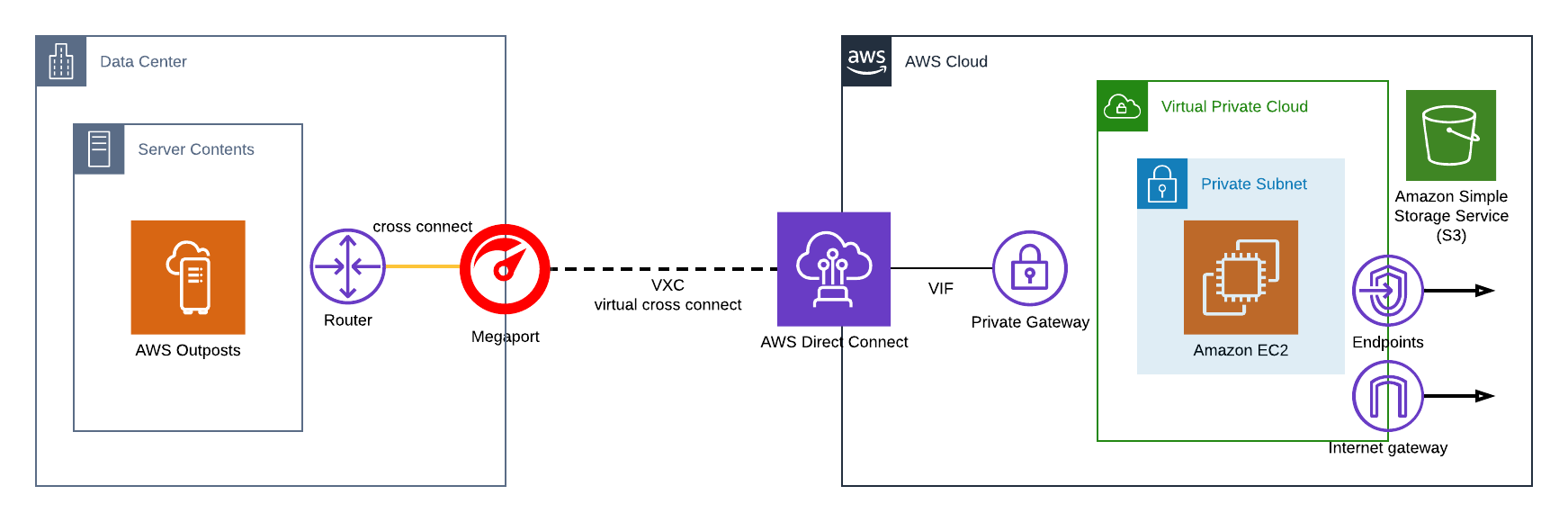
AWS Outpost scenario

Scenario: AWS Outpost to one physical 1 or 10 GigE Megaport with VXC (virtual cross connect) to AWS DX Location (e.g., AWS services).
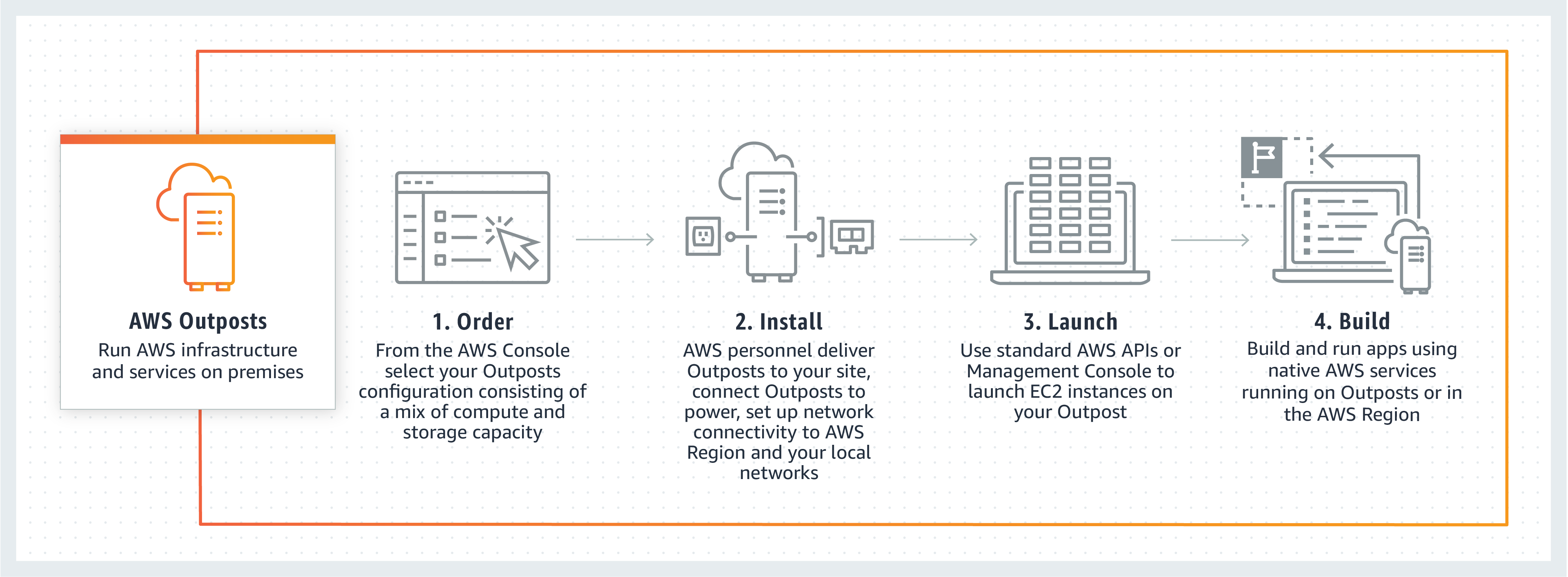
 Order AWS Outposts from AWS Console

Outpost Reference: Order AWS Outposts from AWS Console.

Introducing AWS Local Zones

AWS released an entirely new infrastructure deployment called Local Zones; this newly-developed local compute was kick started in Los Angeles, CA, and will continue to be deployed in future markets. This solution brings select AWS services to specific geographic areas and is optimal for customers with extremely latency-sensitive applications. For example, a visual effects shop in Southern California can now run AWS services for latency-sensitive applications without their data riding multiple network hops, adding to their round trip time. The LA Local Zone has a keen focus on serving the Media and Entertainment, Design Automation, Ad-Tech, and Machine Learning workload environments. This new Local Zone is an extension of the US West (Oregon) Region.

You can opt-in to use the Local Zone from the AWS API and Console to extend VPC environments. Connecting to the Local Zone over the public internet can also be achieved using an internet gateway. For even greater performance, you can route traffic over your private network, improving throughput and security by leveraging Megaport-enabled Direct Connect.
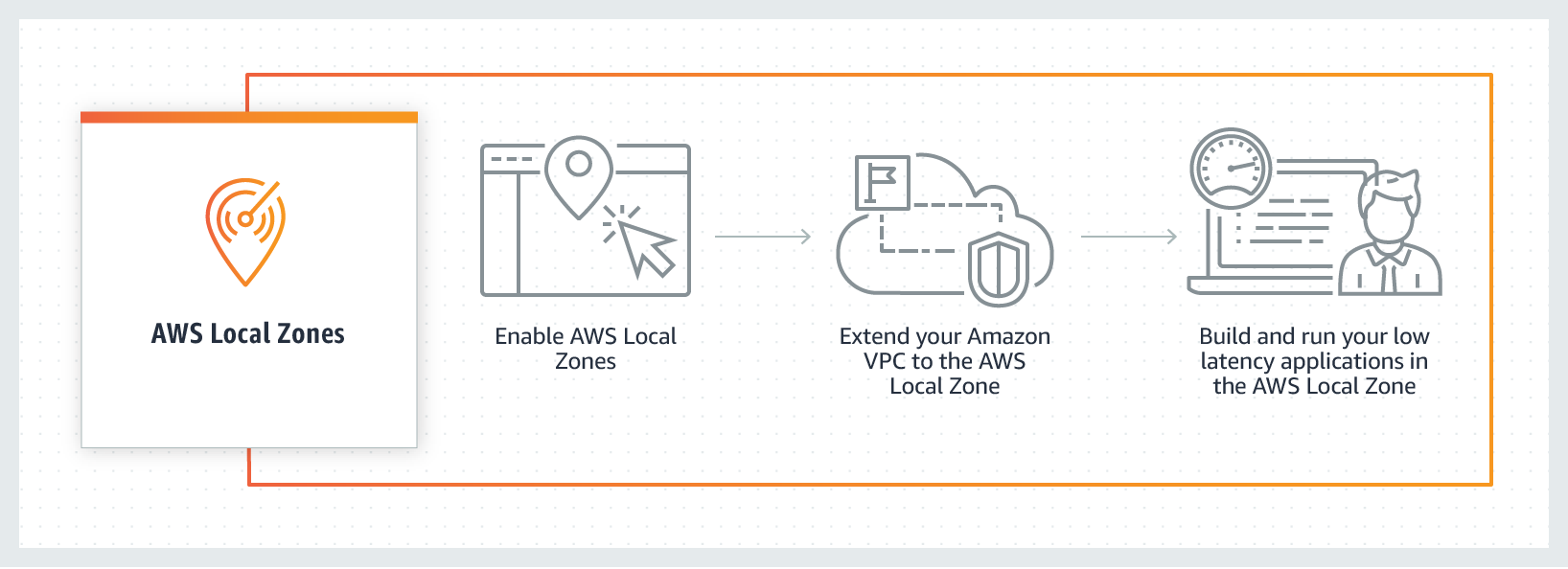
Local Zones

Local Zone Reference: Enable AWS Local Zone from AWS API and Console.

AWS Transit Gateway Inter-Region Peering and Network Manager

As businesses continue to integrate AWS public cloud into their IT strategy, how they handle the management and network connectivity with many VPCs for their virtual data centres becomes critical. During re:Invent 2018, AWS announced Transit Gateway as a solution for this complexity, and since then have greatly evolved the feature set from connecting VPCs and VPN within the same region, to connecting thousands of VPCs from a single gateway that can be attached to a business’s on-premises networks.

AWS has released several new features for Transit Gateway that include inter-region peering, Network Manager, and multicast support. Customers now have the ability to peer Transit Gateway between different AWS regions to extend their connectivity, building redundancy and truly global networks across the AWS network backbone. With Network Manager, AWS Transit Gateway now offers central management and monitoring for your distributed network across AWS and your on-premises infrastructure. Once you register Transit Gateways and define your on-premises resources, you will be able to view and monitor your network within an AWS dashboard that will build a topological view and global map of your environments. Additional services can be added, such as Cloudwatch for metrics and status updates for example. In addition, Transit Gateway now supports routing multicast traffic across attached VPC connections. This feature now allows customers to build multicast applications within the cloud and have access to monitor, manage, and scale environments to hundreds of receivers.

To achieve greater performance and security, and to increase bandwidth throughput, you can connect your Transit Gateways to a Megaport-enabled Direct Connect with the following options:
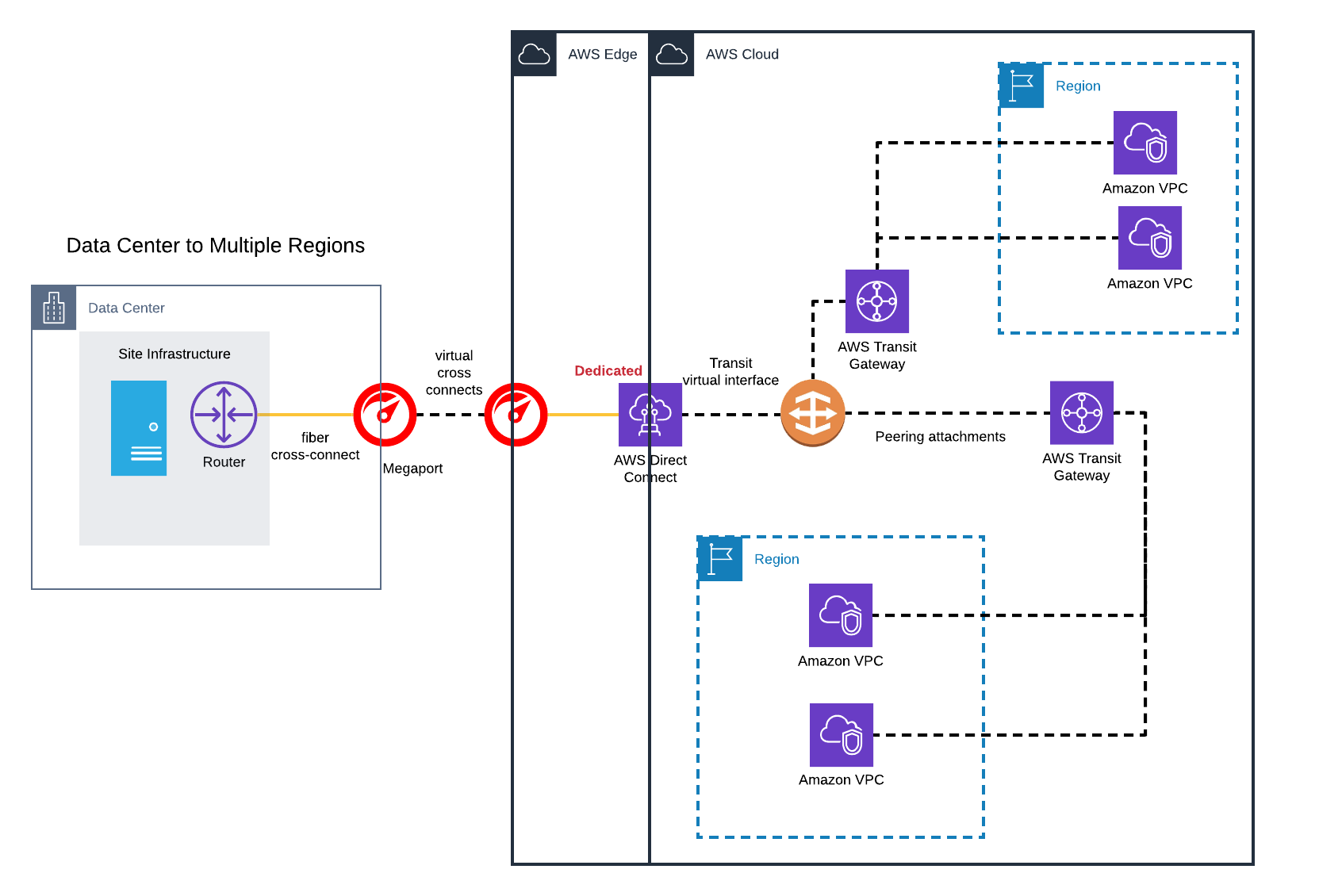
Option 1: Deploy a dedicated AWS Direct Connect using a Megaport-enabled data centre to deliver your connection to AWS with Transit Gateway inter-region peering.

option 1

Scenario: Two physical 1 or 10GigE Megaports with one VXC (virtual connection) to AWS DX Location for dedicated port. 1 Transit VIF using Direct Connect Gateway with Transit Gateway Inter-Region peering attachments.
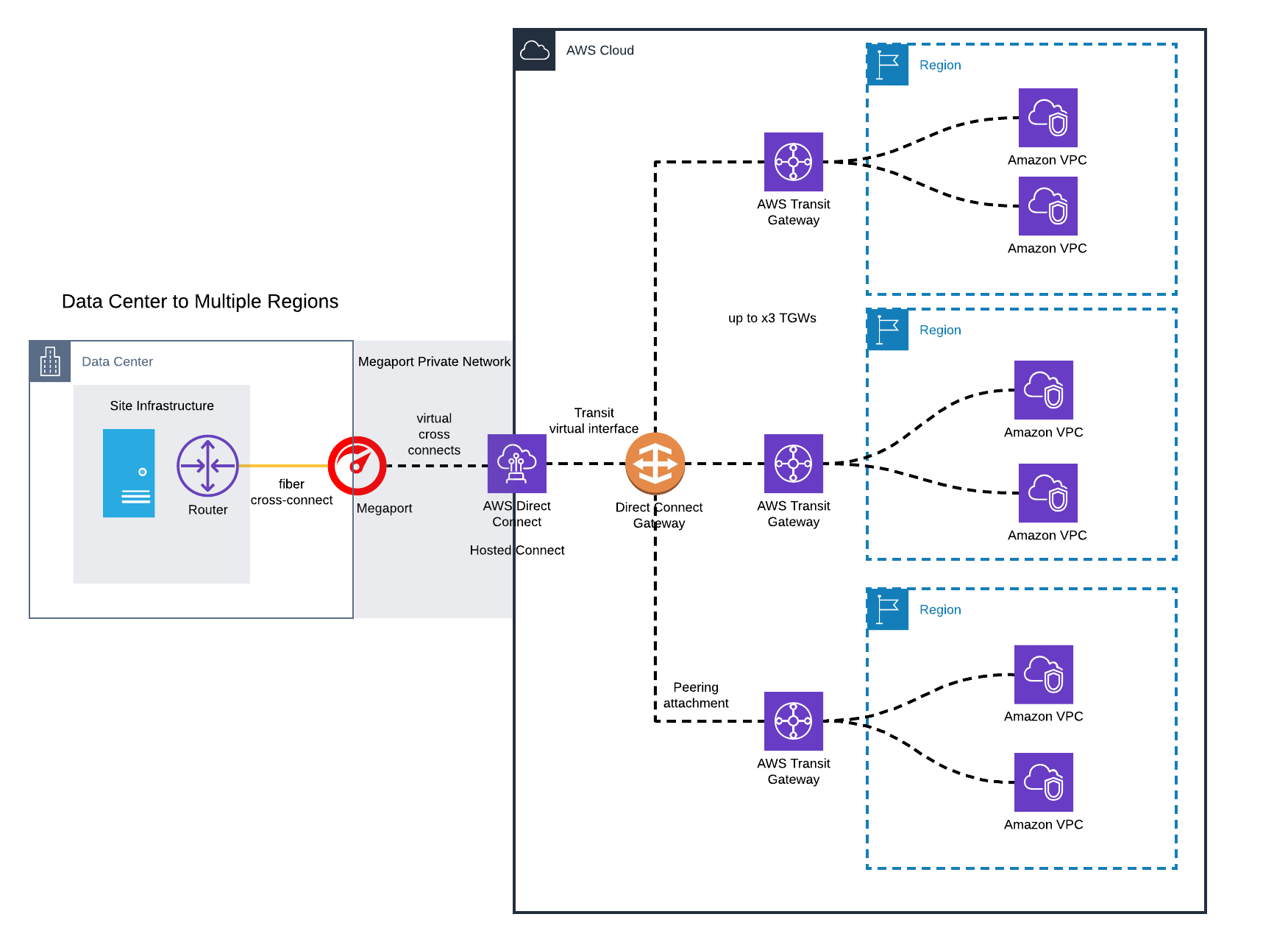
Option 2: Connect your physical data centre environment using AWS Direct Connect Transit VIFs over Hosted Connect using Megaport in Q1 2020.

option 2

Scenario: One physical 1 or 10 GigE Megaport with one VXC (virtual connection) to AWS DX hosted connect Location.
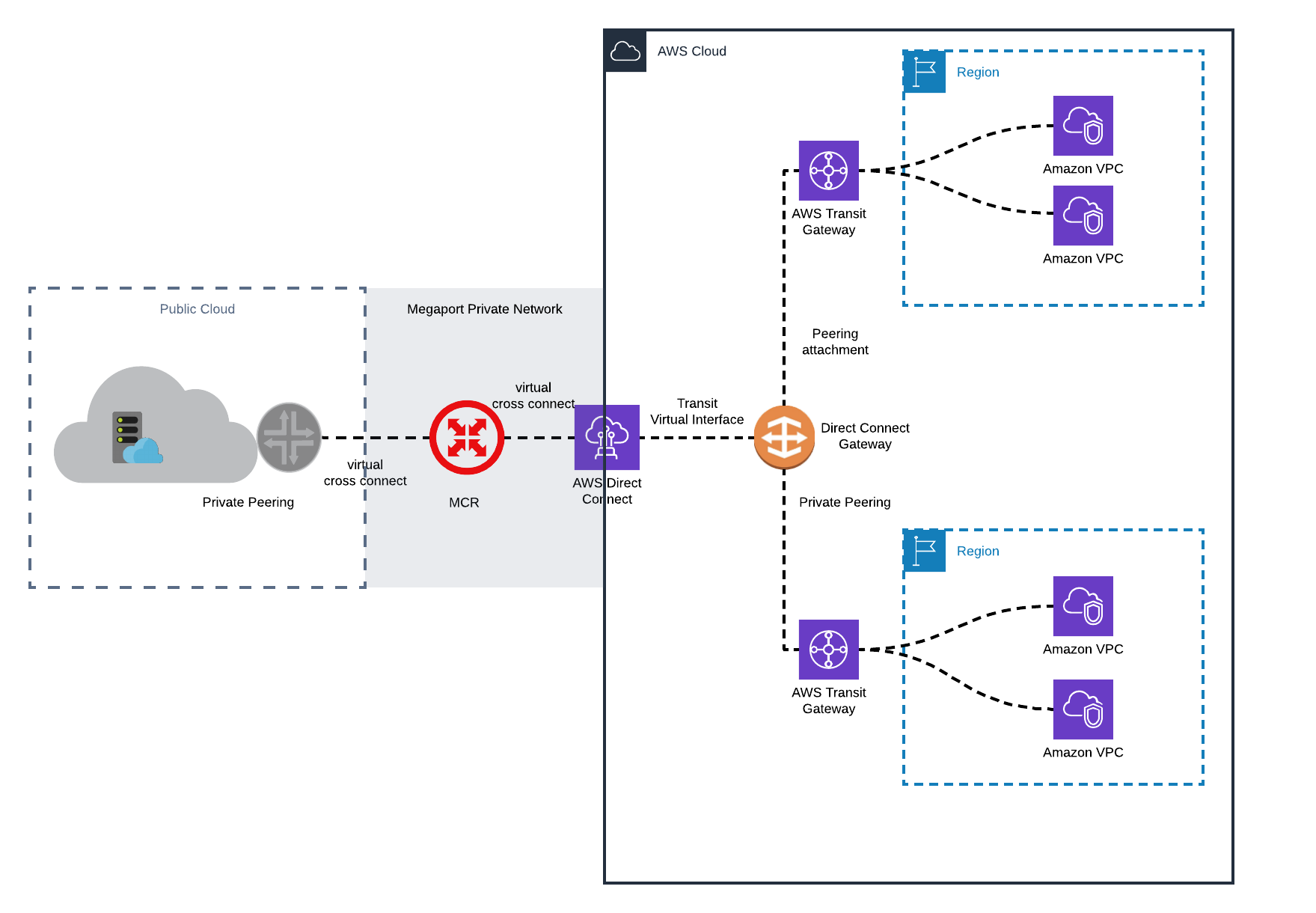
Option 3: Connect your public cloud virtual data centre, privately bypassing the public internet to AWS Direct Connect using Megaport Cloud Router (MCR). Deploy AWS Direct Connect Transit VIF over Hosted Connect using Megaport in Q1 2020.

option 3

Scenario: One virtual private MCR with two VXCs (virtual connections) between a Public Cloud Environment to AWS DX Location.

With so many new product and feature announcements from re:Invent 2019, we look forward to supporting our customers and partners as they enable better ways to use AWS Cloud services. Got any questions about AWS and Megaport? Feel free to tweet us and check out why Megaport is the easiest way to connect to AWS.