








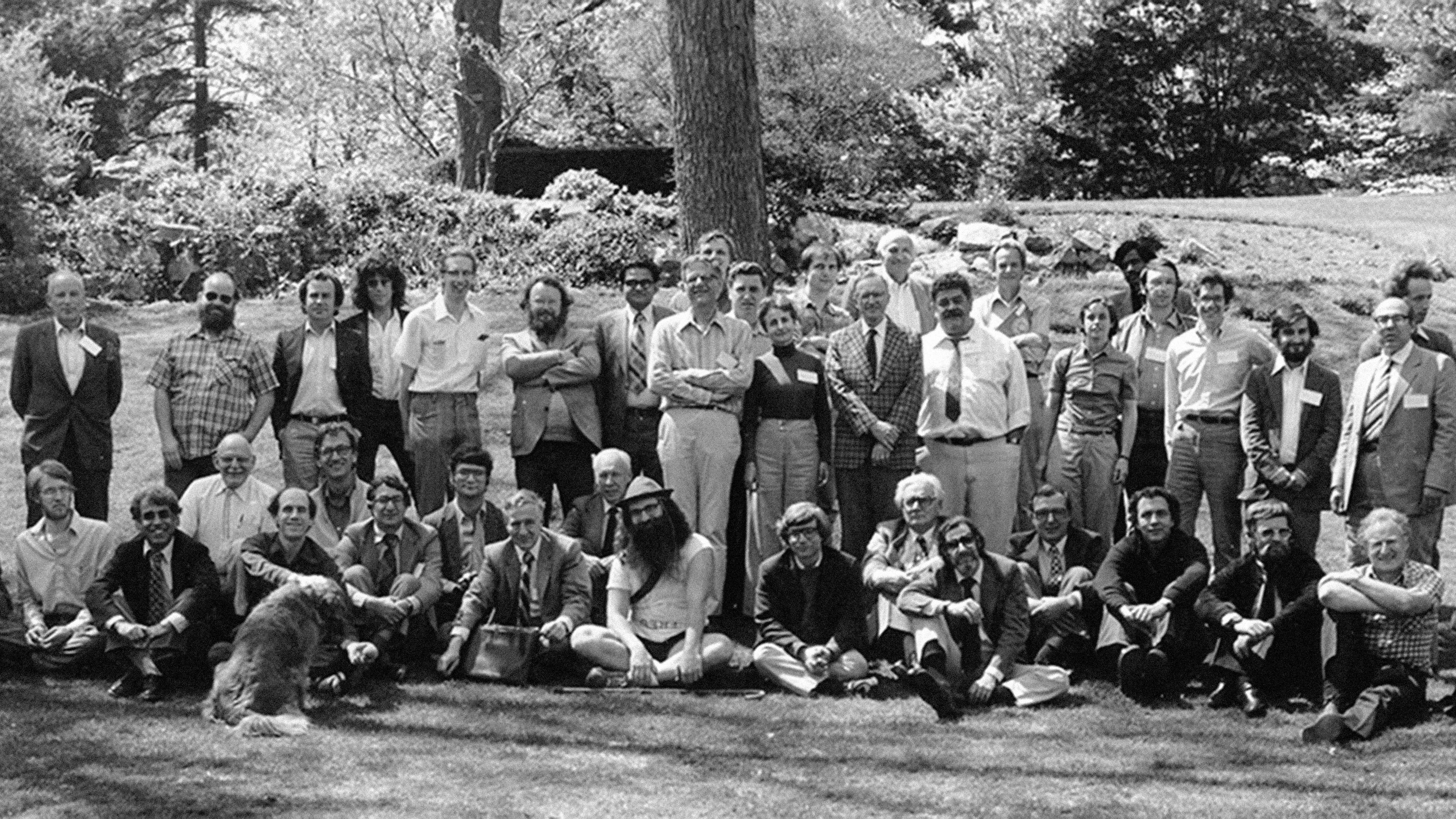
Many trace the origins of quantum computing to a cool spring day in 1981 at MIT’s Endicott House in Dedham, Massachusetts. It was there that nearly 50 physicists and computer scientists gathered for the first meeting of the Physics of Computation Conference, where the renowned physicist Richard Feynman shared his radical vision for the future of computation.
“He said that computers ought to be quantum because the world is quantum,” said Charles H. Bennett, an IBM Fellow and an attendee at the now-famous gathering. That provocation would reverberate far beyond the grounds of Endicott House, and Bennett—who had already begun thinking deeply about the physics of information—would go on to play a central role in shaping the field Feynman helped inspire. Now, he and his longtime collaborator, Université de Montréal professor Gilles Brassard, have been named recipients of the 2025 ACM A.M. Turing Award, computing’s highest honor.
The award recognizes their groundbreaking work, which helped establish the field of quantum information science, and which laid the conceptual foundations for quantum cryptography, entanglement‑based protocols, and quantum computing. However, in Bennett’s telling, the honor isn’t really about his individual accomplishments or his collaboration with Brassard. It’s about underlining the importance of ideas he’s spent nearly half a century advancing.
“This award establishes the importance both in theory and in practice of studying the physics of information processing,” he said. “The idea that computing and communication and storage of information are an important field of science, which you should understand for its own right and for its applications, most of which are probably yet to be discovered.”
Bennett’s path to quantum information science didn’t begin with computing. It began with a more fundamental question: what connection, if any, exists between computation and the physical laws that govern the world?
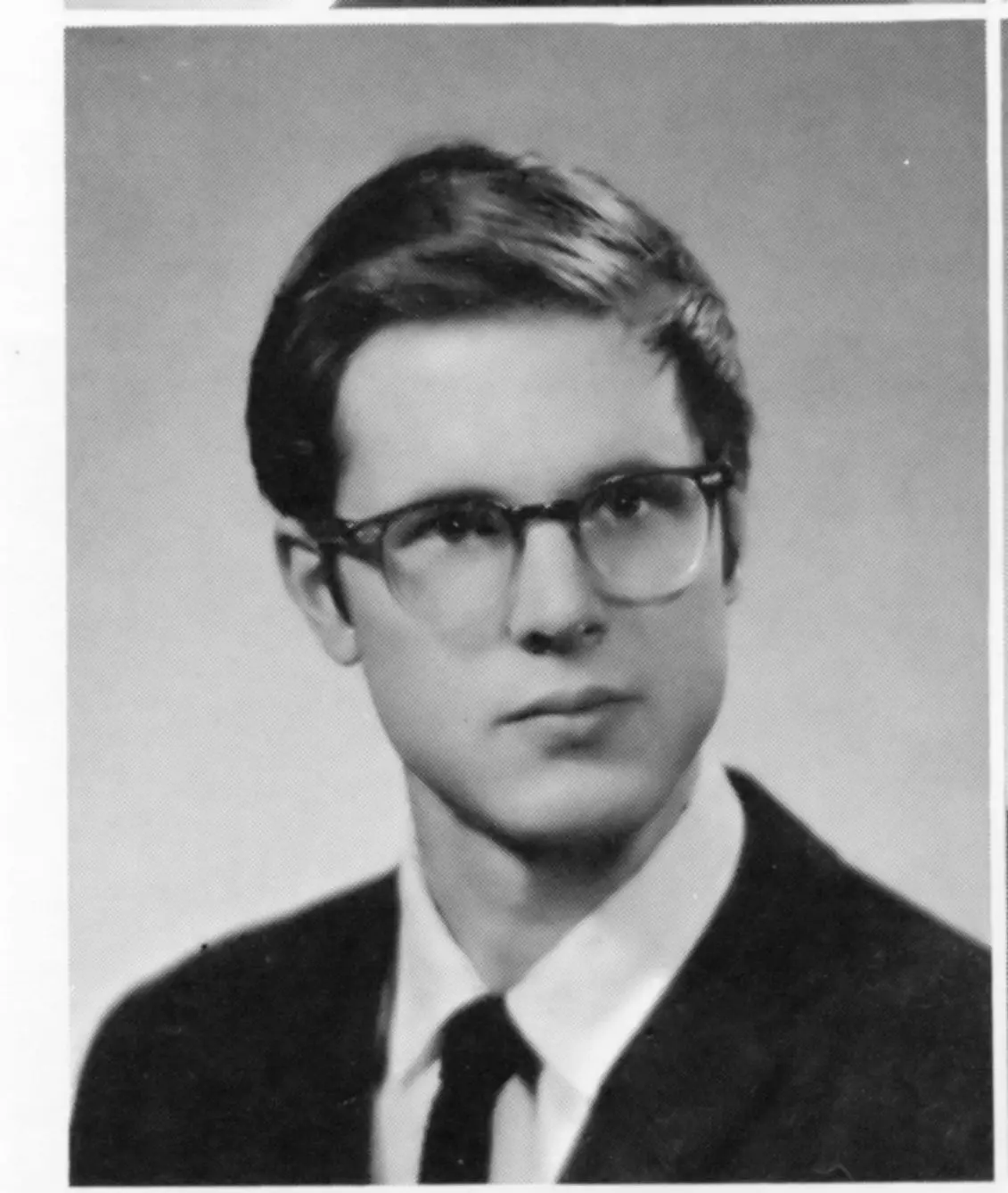
As a student, he was drawn to problems at the boundaries that separated different fields. “I wanted to major in biochemistry but it wasn’t an undergraduate major, so they said do chemistry.” His penchant for interdisciplinary thinking didn’t end there. As an undergraduate, his interests migrated to the mathematics of chemistry, then to the physics of chemistry. Later, as a graduate teaching assistant, he found himself helping students understand the genetic code while he himself was learning about Turing machines.
“I thought they were rather similar,” he said, comparing the Turing machine to the enzymes and proteins that edit and copy DNA, “because they moved around a long tape and made changes in it.”
By the early 1970s, during Bennett’s first postdoctoral position, he had begun to think seriously about computation as a physical process—one governed not just by logic or mathematics, but by the physical laws of thermodynamics and quantum mechanics. Over time, that line of inquiry would lead him to some groundbreaking ideas: that information is not merely an abstraction, that it has physical constraints, and that those constraints can be transformed into capabilities rather than obstacles.
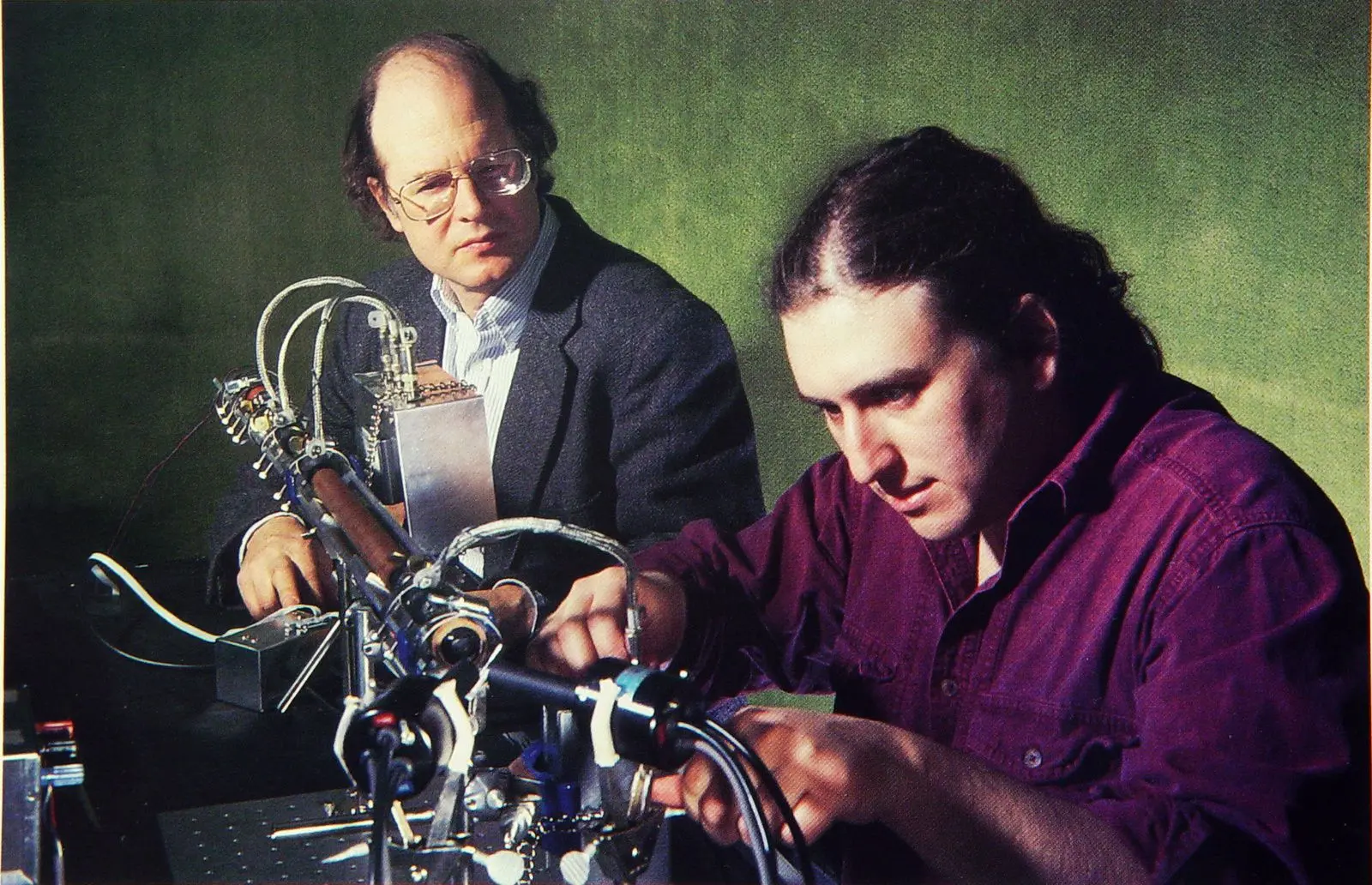
In collaboration with Brassard, whom he met while swimming in the ocean at a 1979 conference in San Juan, Puerto Rico, Bennett would help build a new framework for understanding information in a quantum world. Their work showed how uniquely quantum phenomena—such as the impossibility of copying an unknown quantum state without disturbing it—could be harnessed to transmit and protect information.
That insight would become the basis of what today we call quantum cryptography. It would also shape later work on entanglement and quantum teleportation, revealing how correlations once treated as philosophical curiosities could become practical resources in technologies for quantum sensing and quantum computation.
How does quantum information differ from classical information? “Quantum information is different because it can’t be copied,” Bennett said. “It's like the information in a dream... as soon as you start trying to tell somebody about your dream, you begin to forget the dream and you only remember what you said about it. So the public version of a dream is different from the original dream. The public version can be copied, but it's not the same as the dream."
When Bennett arrived at IBM in the early 1970s, the company offered something that is rare in industrial research: the time and space needed to explore fundamental questions, even those with no obvious business applications.
“IBM was an ideal place to do this kind of research because you had people working on the fundamental physics of computing and hardware, and in the same building people focused on the mathematics of computing,” Bennett said. “I could wander down the hall and talk to many people about fundamental ideas and in fields that, at that time, scarcely overlapped.”
Those conversations played a crucial role in shaping Bennett’s work, reinforcing his sense that understanding computation required insights from across disciplines. Over time, IBM’s culture of openness and exploration would help nurture ideas whose practical realizations lay decades in the future.
Quantum information is... like the information in a dream... as soon as you start trying to tell somebody about your dream, you begin to forget the dream and you only remember what you said about it.
In 2016, long after Bennett and his peers set the foundations of quantum information science, IBM put the first quantum computer on the cloud—making that inaugural 5-qubit device accessible to anyone with an internet connection. Bennett says that decision and the continued accessibility of IBM quantum computers have played a valuable role in bringing more people into the field he helped establish.
“From a pedagogical point of view—getting people to think about quantum mechanics, improving people’s quantum intuition, realizing how different quantum informatics is from classical…it helps to be doing it on a piece of real equipment,” he said.
For Bennett, who believes the widespread availability of increasingly functional quantum computers is all but inevitable, that educational role is essential. He argues that quantum information science shouldn’t be the exclusive domain of specialists. Instead, it should become a body of ideas everyone, even non-experts, can reason about at a basic level. Developing that intuition, he says, helps people think differently about information and the physical world, and prepares society for technologies that will eventually become part of everyday life.
“I think everybody should have an understanding of quantum information at the level that they do of relativity and of black holes,” he said.
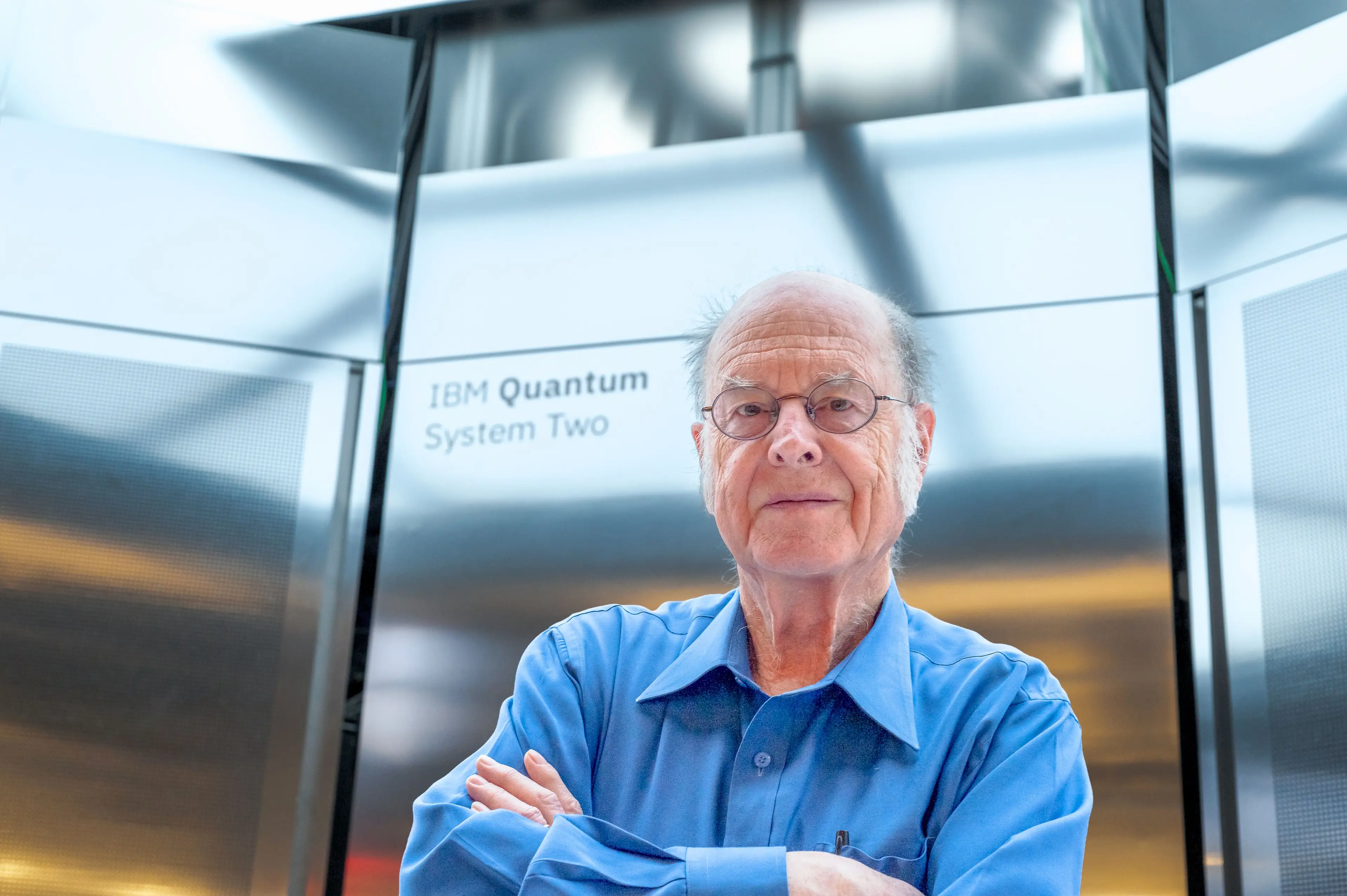
By the time quantum computing began to coalesce as a field, Bennett had already spent decades thinking about information as something physical—subject to constraints, governed by thermodynamics and quantum mechanics, and shaped by the systems that carry it. The questions he pursued were not driven by technological inevitability or a single moment of inspiration, but by a nearly lifelong fascination with the relationship between information and nature.
The 2025 ACM A.M. Turing Award recognizes the convergence of those questions with a broader scientific consensus. In honoring Bennett and Brassard, the award marks the emergence of quantum information science as a vital discipline—one that has reframed long‑standing puzzles in physics and computation, and laid the conceptual groundwork for technologies now beginning to take shape.
For Bennett, the honor underscores not just what has been built, but what has been understood: that information itself is a physical resource, and that probing its limits can open up entirely new ways of thinking about the world.
此内容由惯性聚合(RSS阅读器)自动聚合整理,仅供阅读参考。 原文来自 — 版权归原作者所有。