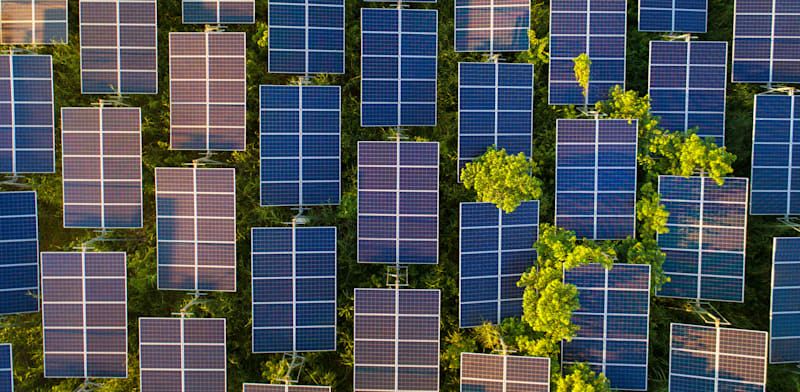
EDF has closed the financing for construction of Israel’s biggest solar energy field. The field will cover 3,000 dunams (750 acres) and produce electricity with a capacity of 265 megawatts at the lowest price ever in Israel: NIS 0.06.5 per kWh. The solar energy field will be built in the first phase without storage facilities, which will limit production to off-peak hours only.
The standard market price for a solar energy field that also includes storage reaches about NIS 0.20 per kWh. The low price was bid in a tender issued by the Ministry of Finance Accountant General, which EDF won in August 2024, and now almost two years later, the financing has been closed. The Ministry of Energy and Infrastructure has welcomed the move and hopes that it will lower electricity prices. However, the industry points to the lack of economic viability at such a low price, especially following a similar tender in 2023 in which the winner canceled their winning bid.
The Ministries of Energy and Finance and the Electricity Authority said in a joint statement, "Today the financial closing of the solar energy power plant project in Dimona was completed, which will be the largest in Israel to date. EDF Renewables, which won the tender after offering the lowest price per kWh of electricity in Israel ever, less than NIS 0.06.5 per kWh, is expected to immediately begin construction work on the plant, which is expected to last about two years."
The start of electricity production from the solar energy field to be built near Dimona will begin in late 2028 or early 2029. According to the Electricity Authority's demand forecasts, the field in Dimona is expected to produce 0.5% of the total electricity consumption of the State of Israel.
Is the price too cheap?
The Ministry of Energy stresses that this is a large-scale and particularly efficient solar production facility, which can be operated at a particularly low price per kWh. The solar energy field will produce electricity for 25 years until the infrastructure is returned to the state, and it can issue a new tender for the field. This will join other major solar energy field tenders, such as those in the Ashalim Industrial Zone in the Negev. There, too, these are "classic" solar energy fields, with a cumulative capacity of about 800 megawatts. They will be built next to the existing facility that produces electricity by concentrating sunlight into a tower, which is considered expensive and unprofitable by today's standards.
The tender is part of the plan to meet Israel’s target of electricity production from renewable energy of 30% by 2030 and 35% by 2035. However, production currently stands at only about 15%, and it is doubtful that Israel will be able to meet these goals, which are anyway not ambitious compared to most of the West.
NIS 0.06.5 agorot per kWh is an extremely cheap price compared with what is accepted on the market. So much so that market sources say that "There is no doubt that it is not profitable." According to those sources, the reason for such a price is only building on "upside" in the future, such as using the area for energy storage. In fact, the price is so cheap that it even raises concerns, since Shikun & Binui Energy canceled a similar tender in 2023 after winning it, and even paid the state a fine of about NIS 20 million shekels. The price offered then was NIS 0.08.6 agorot per kWh, while the price offered now is even lower. On the other hand, costs of solar panels also continues to fall.
RELATED ARTICLES
Solar energy fails to shine in Israel
How will the price for the consumer be affected?
The electricity market in Israel is a closed economy, and ultimately all costs will probably be passed on to consumers. Therefore, a reduction in the cost of electricity production should be reflected in electricity bills. However, recently the Electricity Authority changed the calculation method so that tariffs are mainly affected by the consumer price index, the dollar exchange rate and the cost of coal. Every time a deviation of over NIS 350 million accumulates for Nega, the government company that manages the electricity grid, is the electricity rate revised accordingly.
So while this will have an impact on electricity rates, it will probably not be felt in the short term. In addition, since the field will not be integrated with storage for the time being, it will produce electricity mainly during the cheapest off-peak hours, so a reduction is expected - but not a dramatic one.
According to Minister of Energy and Infrastructure Eli Cohen, "The construction of the solar power plant in Dimona, which will be the largest in the country and at the lowest rate in the country, is an important step that will help us meet targets for producing electricity from renewable energies, increase Israel's energy independence, and reduce air pollution for the benefit of the health of Israeli citizens. In addition, it will contribute to the flourishing of the Negev and the creation of jobs for residents of the region."
Minister of Finance Bezalel Smotrich added, "This is a significant achievement for the Israeli public and the entire economy. The project expresses the right combination of innovation, competition, and efficiency, and will allow us to increase the supply of electricity, reduce emissions, and move forward to meet the government's goals for 2030. We will continue to act with determination to promote advanced infrastructure and strengthen the Israeli economy."
Published by Globes, Israel business news - en.globes.co.il - on May 3, 2026.
© Copyright of Globes Publisher Itonut (1983) Ltd., 2026.