






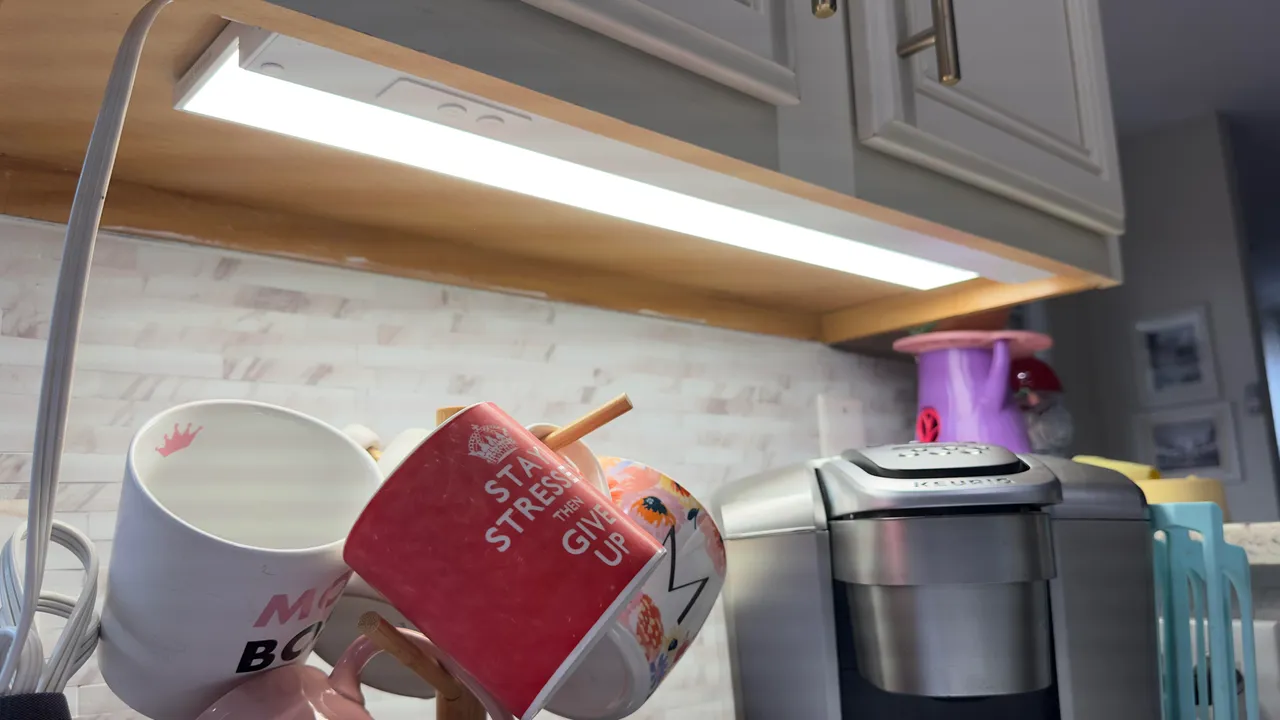
The 24-inch Cync Reveal HD+ undercabinet light bar above my coffeemaker.
Follow ZDNET: Add us as a preferred source on Google.
Updating your home with smart devices sounds enticing, especially given the convenience they offer. However, there are some devices that may not immediately come to mind when you think of automating your home, but that still deserve some hype.
Also: Your old iPad or Android tablet can be your new smart home panel - here's how
The best way to make the most of your smart setup is to have your devices handle tasks you forget to do or can't stay on top of, eliminate small, repetitive actions, and use real-world triggers to perform actions. Automating these devices makes your smart home work for you, not the other way around.
Automating pantry and closet lights to immediately turn on when you open the doors is one of the best conveniences you can get. It's the kind of convenience that you never really think about until you finally stop feeling around for switches in the dark.
You'll need a smart bulb and a motion or presence sensor for your closet or pantry. If the space doesn't have an outlet, you can add a smart LED light strip and run an extension cord from the nearest outlet. You can use cable clips to tuck the wire along the door frame for a more subtle look.
Also: 10 useful smart home gadgets that make life so much easier (and most are discounted)
Install the motion or presence sensor where you will be standing when you want the light to switch on. If it's a closet, you can put it inside the door or on a wall.
I created an Alexa routine using the presence sensor on my kitchen's Echo Show. Whenever someone is detected in the kitchen, the pantry light turns on. If no one has been detected in 10 minutes, it turns off. This ensures that the pantry is never dark when one of us is around.
People often forget to turn off exhaust fans, and if you're one of my kids, you also often forget to turn them on when you're taking a shower. While there are smart exhaust fans, a relatively inexpensive smart setup can automatically control your bathroom's humidity to prevent mold formation.
Also: I compared Thread, Zigbee, and Matter - here's the best smart home setup for you
A smart switch to replace your exhaust fan's wall switch lets you control it remotely and works with automations. Adding a smart humidity sensor to your bathroom lets you connect the two to create an automation or routine that triggers the fan to switch on when a specific humidity percentage is reached. You can also have the switch automatically turn off when the humidity sensor detects a lower value.
Coffee makers can be one of the biggest vampire devices in a home. Vampire devices consume power even when not in use, raising your utility costs. When on, some coffee makers keep a certain amount of water hot at all times, so you end up paying for energy consumption that you're not using.
A smart plug can run on a schedule to turn on your coffee maker for a set amount of time in the mornings, giving everyone at home a chance to grab a cup of joe. The schedule can then switch off the coffee maker, so you don't have to worry about it drawing power when not in use.
Also: Your smart plug is seriously underutilized: 7 ways I've programmed mine to automate my home
If you want to go further than a smart plug, you can also add a SwitchBot button pusher to turn it on and make your coffee for you. This little robot only serves one purpose: to push your buttons. But it works with the SwitchBot app, so you can control it remotely or schedule it.
All pet owners are too aware of how repetitive pet care routines can become. Waking up early to let the dog out, then refill water and serve food, then let the dog out again later. You've probably heard of robotic litter beds for cats, which take a lot of the dirty work out of cleaning cat waste. However, there are other things you can do to smarten up your home and take some of your pet's care off your plate.
Also: I tested every 'allergy-friendly' smart home gadget - these 6 actually keep the pollen out
I have a smart pet door that only unlocks for my dog when he's wearing a proprietary collar. It also lets you create schedules to keep your pets inside at certain times. I also love automating feeding schedules with a smart pet feeder and keeping track of my dog with a pan/tilt camera.
The most common bedtime automation or voice command is one that automatically turns off all your lights, but there are ways to get the most out of your other smart devices. A single command can automatically turn off the pertinent lights, sure, but it can also lock all your smart locks, close the garage if open, shut down idle devices, ensure that devices in common areas turn off, and close your smart blinds.
Also: How I cut my power bill with IFTTT automation - in 4 simple steps
The best bedtime automation is one that replaces your ritual of walking around the house, switching off lights, and locking the doors. I have a few devices that I forget to switch off, so I've added them to my bedtime routine. When I call the routine, my smart home doesn't just turn off my lights; it performs the following actions with a single command:
此内容由惯性聚合(RSS阅读器)自动聚合整理,仅供阅读参考。 原文来自 — 版权归原作者所有。