


Abstract
Qsys其中之一的賣點就是允許你建立hierarchical的subsystem。在SOC設計中,通常我們會將慢速的周邊使用較慢的clock而自成一個系統,在Qsys中允許我們將這些較慢的周邊包成一個peripheral subsystem,而不是像SOPC Builder一樣只能有一個system。當我們使用subsystem的架構時,該如何讓subsystem內IP使用interrupt的方式與Nios II溝通呢?
Introduction
使用環境:Windows XP SP3 + VirtualBox 4.1.2 + Quartus II 11.0
本文將討論以下主題:
1.如何使用IRQ Bridge連接subsystem的IRQ export到Nios II Processor?
2.如何避開Nios II SBT目前無法自動產生IRQ number常數在system.h的bug?
3.如何在App project使用Interrupt?
1.如何使用IRQ Bridge連接subsystem的IRQ export到Nios II Processor?
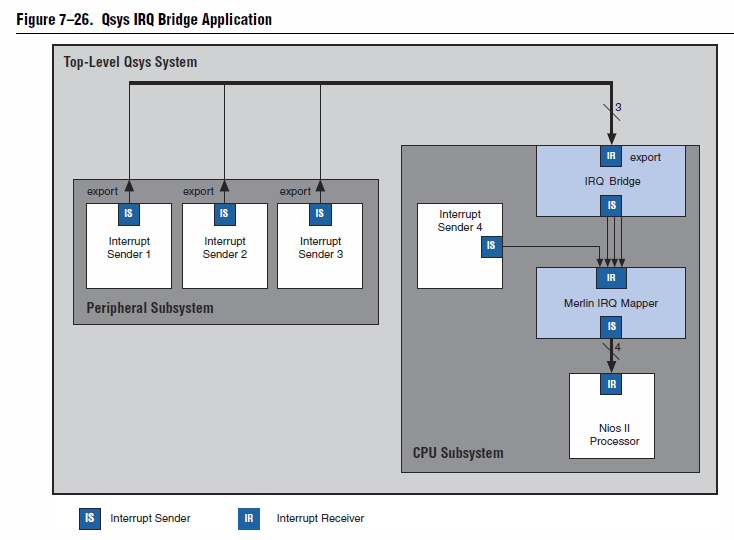
根據[1] Qsys Interconnect p.7-27 IRQ Bridge章節的建議,若要在subsystem使用interrupt,必須在包含Nios II的CPU subsystem使用IRQ Bridge接收Peripheral subsystem所export出來的IRQ,然後才連到Nios II Processor。至於下圖中的Merlin IRQ Mapper則並不是必需的,若你在CPU subsystem中也有IP要使用interrupt,這必須再包一層Merlin IRQ Mapper;若你在CPU subsystem沒有IP要使用interrupt,只有Peripheral subsystem使用interrupt,可以直接只使用IRQ Bridge連接到Nios II Processor。
常見的錯誤(也是我第一次的錯誤)是直接將Peripheral subsystem所export的IRQ直接連到Nios II Processor,這樣Qsys與Quartus II編譯都沒有任何錯誤,Nios II也沒有錯誤,不過Nios II的C code將收不到來自Peripheral subsystem的interrupt。
2.如何避開Nios II SBT目前無法自動產生IRQ number常數在system.h的bug?
除此之外,在[2] Quartus II 11.0 Release Notes的p.15已經承認在Quartus II 11.0有以下的bug。

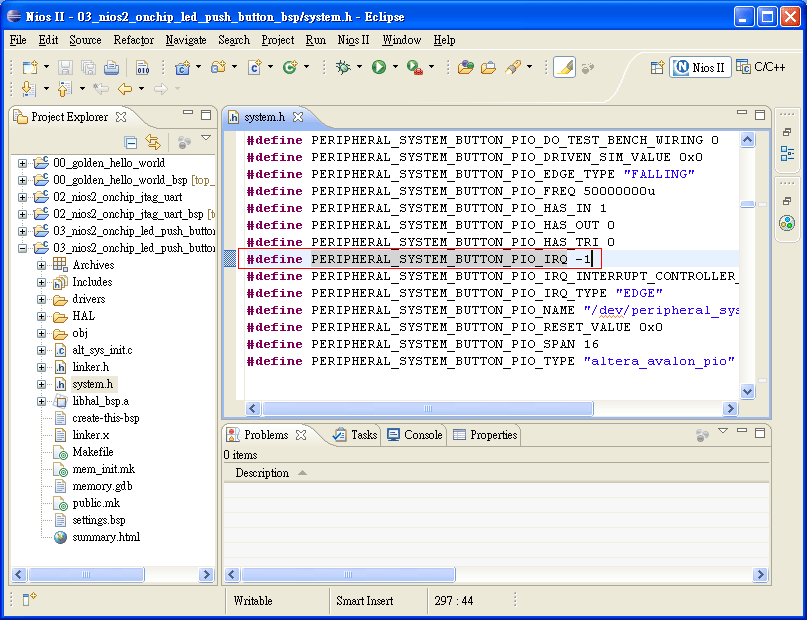
簡單的說,就是若你在subsystem中使用interrupt,當你使用Generate BSP時,Nios II SBT根據*.sopcinfo在system.h所產生相對應的IRQ number常數,永遠都是-1,並無法反應出目前硬體架構中真正的IRQ number。且經過實測,這個問題在Quartus II 11.1也依然存在。
如圖所示,我們對push button使用interrupt,但在system.h的PERIPHERAL_SYSTEM_BUTTON_PIO_IRQ常數卻是-1,與在Qsys上的IRQ number不同。
這會造成什麼影響呢?只要你的App project使用到有使用interrupt的IP,編譯就會產生錯誤,如下圖我們在system timer有使用interrupt,所以一編譯就產生錯誤無法繼續。
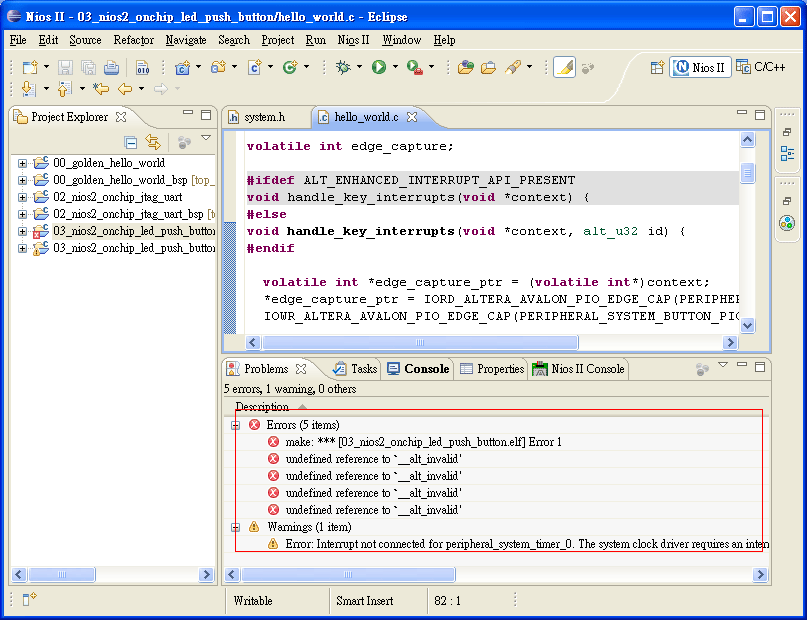
詳細錯誤訊息如下:
Error: Interrupt not connected for peripheral_system_timer_0. The system clock driver requires an interrupt to be connected. Please select an IRQ for this device in SOPC builder.
root cause就是system.h的IRQ number都是-1,所以App project找不到該IP的IRQ number而無法編譯。
Solution
既然在system.h的IRQ number都是-1,我們只好重新自己在system.h手動定義IRQ number。根據[3] Altera Wiki : New Qsys Issues for Interrupts的建議
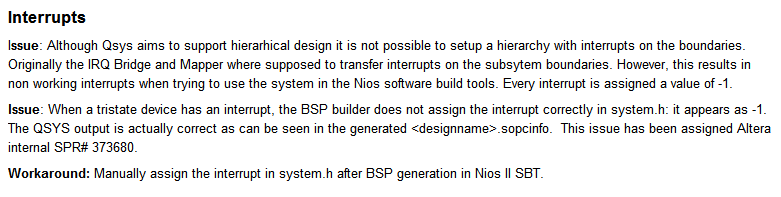
當然你可以直接去修改system.h,但別忘了BSP project的所有檔案最好不要手動修改,應該交由Nios II SBT或者command line script去修改才對,因為每當你執行Generate BSP或者BSP Editor時,Nios II SBT都會重新產生system.h,也就是你做的所有修改都會被覆蓋掉。所以[3] Altera Wiki : New Qsys Issues for Interrupts 的解法雖然可行,但並不完美。
根據 [2] Quartus II 11.0 Release Notes的建議
看起來是要我們自己另開一個my_system.h,然後將system.h所有內容複製到system.h,自己在my_system.h加上IRQ number常數,並且App project也使用my_system.h,這樣Generate BSP與BSP Editor就不會改到我的my_system.h了。
這樣看似理想,但卻衍生另外一個問題:BSP project有大量的檔案都include "system.h",你必須手動一一的改成include "my_system.h",這也是個大工程。所以[2] Quartus II 11.0 Release Notes 看似也不盡理想。
我在此提供一個小技巧對付Nios II SBT目前這個bug。
在system.h的尾部自己加上IP IRQ number的定義如下圖,先執行#undef取消這個常數的定義,再用#define重新這個常數,因為若同一個常數在system.h重複#define,會產生warning,若使用#undef就完全沒有warning。
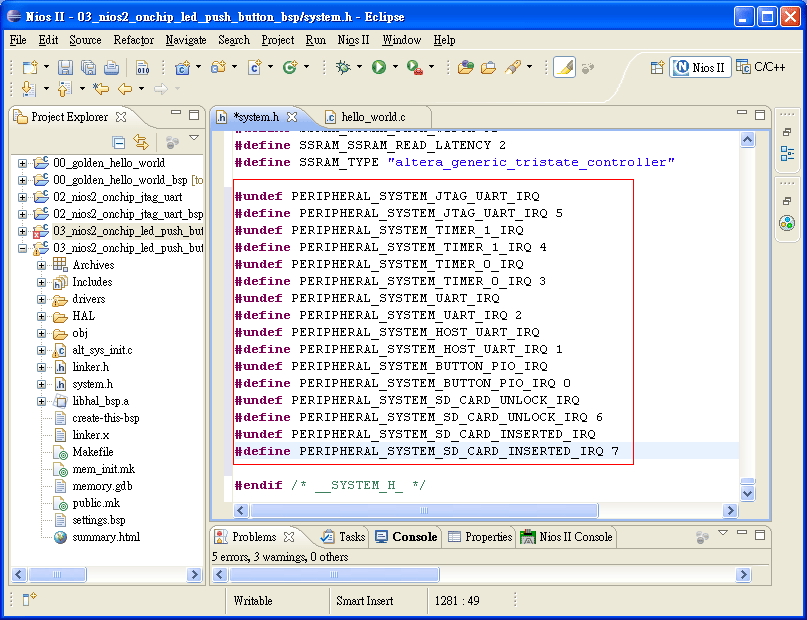
然後將這些#undef與#define另存一個文字檔,每當你執行Generate BSP或者BSP Editor時,system.h就會被Nios II SBT重新產生蓋掉你原先的設定,再將這些#undef與#define貼到system.h的最下方。如此就只需修改system.h,其他BSP檔案都不用做任何修改。
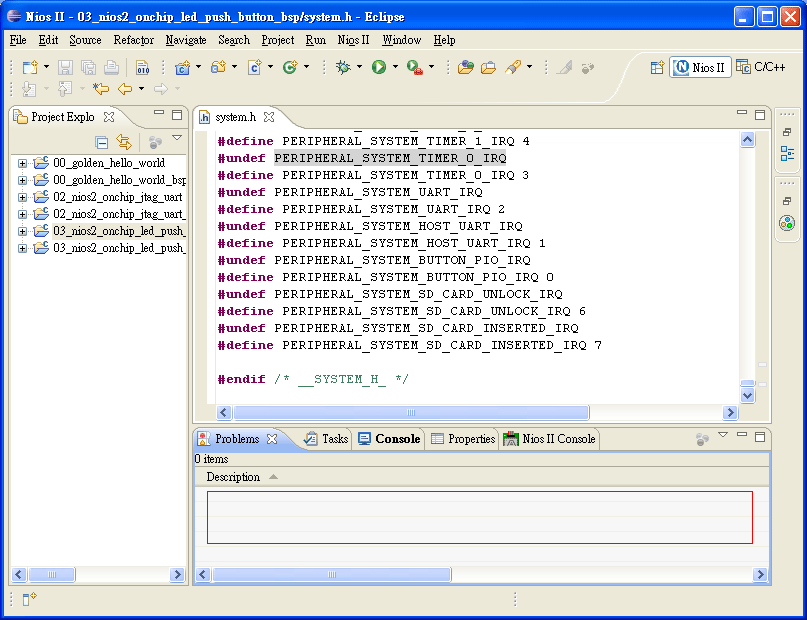
如此修改重新編譯後,就可順利Build Project,沒有任何錯誤。
3.如何在App project使用Interrupt?
根據[4] Exception Handling p.8-16與p.8-17的建議,我們將App project寫成如下的code使用interrupt。
nios2_onchip_leg_push_button.c / C
 1 /*
 2 (C) OOMusou 2011 http://oomusou.cnblogs.com
 3
 4 Filename    : nios2_onchip_led_push_button.c
 5 Compiler    : Nios II SBT 11.0
 6 Description : test led, push_button & interrupt in subsystem
 7 Release     : Jan.06,2012 1.0
 8 */
 9
10 #include <stdio.h>
11 #include "system.h"
12 #include "alt_types.h"
13 #include "sys/alt_irq.h"
14 #include "altera_avalon_pio_regs.h"
15
16 volatile int edge_capture;
17
18 #ifdef ALT_ENHANCED_INTERRUPT_API_PRESENT
19 void handle_key_interrupts(void *context) {
20 #else
21 void handle_key_interrupts(void *context, alt_u32 id) {
22 #endif
23
24   volatile int *edge_capture_ptr = (volatile int*)context;
25   *edge_capture_ptr = IORD_ALTERA_AVALON_PIO_EDGE_CAP(PERIPHERAL_SYSTEM_BUTTON_PIO_BASE);
26   IOWR_ALTERA_AVALON_PIO_EDGE_CAP(PERIPHERAL_SYSTEM_BUTTON_PIO_BASE, 0);
27
28   if (edge_capture == 0x01) {
29     printf("key 1 pressed!\n");
30     IOWR(PERIPHERAL_SYSTEM_LED_PIO_BASE, 0x00, 0xFE);
31     edge_capture = 0x00;
32   }
33   else if (edge_capture == 0x02) {
34     printf("key 2 pressed\n");
35     IOWR(PERIPHERAL_SYSTEM_LED_PIO_BASE, 0x00, 0xFD);
36     edge_capture = 0x00;
37   }
38   else if (edge_capture == 0x04) {
39     printf("key 3 pressed\n");
40     IOWR(PERIPHERAL_SYSTEM_LED_PIO_BASE, 0x00, 0xFB);
41     edge_capture = 0x00;
42   }
43   else if (edge_capture == 0x08) {
44     printf("key 4 pressed\n");
45     IOWR(PERIPHERAL_SYSTEM_LED_PIO_BASE, 0x00, 0xF7);
46     edge_capture = 0x00;
47   }
48   else if (edge_capture == 0x10) {
49     printf("key 5 pressed\n");
50     IOWR(PERIPHERAL_SYSTEM_LED_PIO_BASE, 0x00, 0xEF);
51     edge_capture = 0x00;
52   }
53   else if (edge_capture == 0x20) {
54     printf("key 6 pressed\n");
55     IOWR(PERIPHERAL_SYSTEM_LED_PIO_BASE, 0x00, 0xDF);
56     edge_capture = 0x00;
57   }
58   else if (edge_capture == 0x40) {
59     printf("key 7 pressed\n");
60     IOWR(PERIPHERAL_SYSTEM_LED_PIO_BASE, 0x00, 0xBF);
61     edge_capture = 0x00;
62   }
63   else if (edge_capture == 0x80) {
64     printf("key 8 pressed\n");
65     IOWR(PERIPHERAL_SYSTEM_LED_PIO_BASE, 0x00, 0x7F);
66     edge_capture = 0x00;
67   }
68 }
69
70
71 void init_key() {
72   void *edge_capture_ptr = (void *)&edge_capture;
73   IOWR_ALTERA_AVALON_PIO_IRQ_MASK(PERIPHERAL_SYSTEM_BUTTON_PIO_BASE, 0xFF);
74   IOWR_ALTERA_AVALON_PIO_EDGE_CAP(PERIPHERAL_SYSTEM_BUTTON_PIO_BASE, 0x0);
75
76 #ifdef ALT_ENHANCED_INTERRUPT_API_PRESENT
77   alt_ic_isr_register(PERIPHERAL_SYSTEM_BUTTON_PIO_IRQ_INTERRUPT_CONTROLLER_ID,
78                       PERIPHERAL_SYSTEM_BUTTON_PIO_IRQ,
79                       handle_key_interrupts,
80                       edge_capture_ptr,
81                       0x0);
82 #else
83
84   alt_irq_register(PERIPHERAL_SYSTEM_BUTTON_PIO_IRQ,
85                    edge_capture_ptr,
86                    handle_key_interrupts);
87 #endif
88 }
89
90
91 int main() {
92   printf("Nios II + Onchip + LED + Push Button Test!\n");
93
94   init_key();
95
96   while(1);
97
98   return 0;
99 }
以上的code我不打算一行一行講解,詳細請參考[4] Exception Handling p.8-16與p.8-17,我要強調的是,一般在使用interrupt時,Altera都會建議你使用新的alt_ic_isr_register(),而不要使用舊的alt_irq_register(),並且說未來Nios II SBT版本將只支援alt_ic_isr_register(),若在只有一層Qsys的system下,可以使用alt_ic_isr_register()沒有問題,但在具有Qsys subsystem下使用interrupt時,若使用alt_ic_isr_register()將會造成編譯錯誤,會說找不到alt_ic_isr_register(),為什麼會這樣呢?
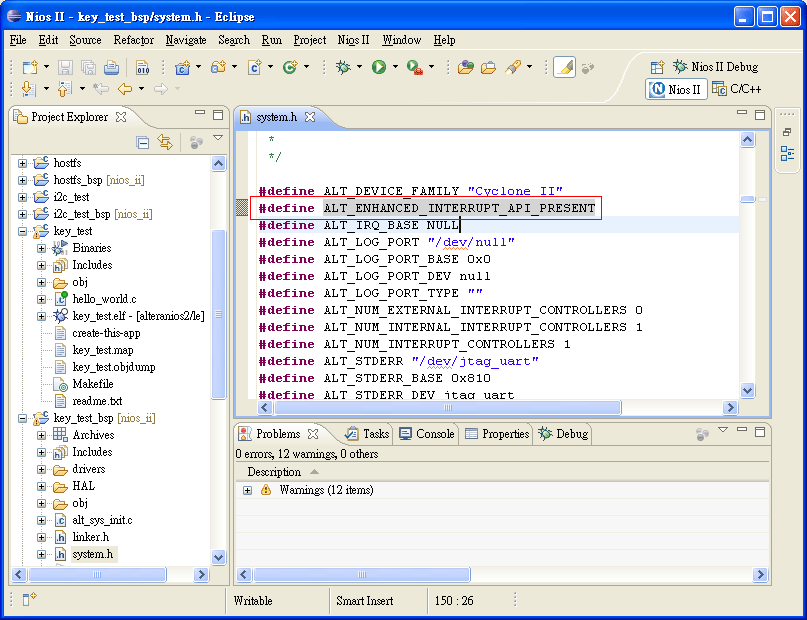
在一般只有一層Qsys system,在system.h可以看到#define ALT_ENHANCED_INTERRUPT_API_PRESENT,如下圖所示:
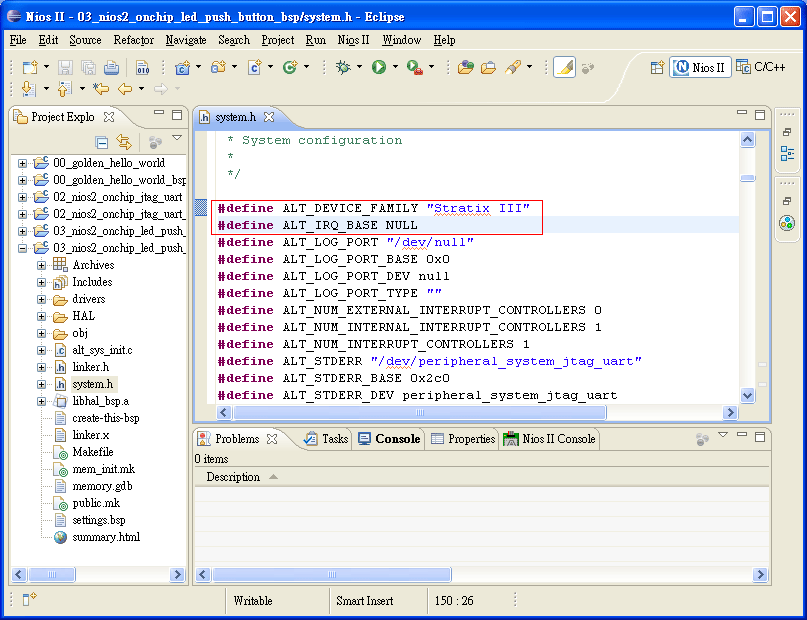
但在使用Qsys subsystem的system.h下,看不到#define ALT_ENHANCED_INTERRUPT_API_PRESENT
在BSP的
sys/alt_irq.h / C
  1 #ifndef __ALT_IRQ_H__
  2 #define __ALT_IRQ_H__
  3
  4 /******************************************************************************
  5 *                                                                             *
  6 * License Agreement                                                           *
  7 *                                                                             *
  8 * Copyright (c) 2009 Altera Corporation, San Jose, California, USA.           *
  9 * All rights reserved.                                                        *
 10 *                                                                             *
 11 * Permission is hereby granted, free of charge, to any person obtaining a     *
 12 * copy of this software and associated documentation files (the "Software"),  *
 13 * to deal in the Software without restriction, including without limitation   *
 14 * the rights to use, copy, modify, merge, publish, distribute, sublicense,    *
 15 * and/or sell copies of the Software, and to permit persons to whom the       *
 16 * Software is furnished to do so, subject to the following conditions:        *
 17 *                                                                             *
 18 * The above copyright notice and this permission notice shall be included in  *
 19 * all copies or substantial portions of the Software.                         *
 20 *                                                                             *
 21 * THE SOFTWARE IS PROVIDED "AS IS", WITHOUT WARRANTY OF ANY KIND, EXPRESS OR  *
 22 * IMPLIED, INCLUDING BUT NOT LIMITED TO THE WARRANTIES OF MERCHANTABILITY,    *
 23 * FITNESS FOR A PARTICULAR PURPOSE AND NONINFRINGEMENT. IN NO EVENT SHALL THE *
 24 * AUTHORS OR COPYRIGHT HOLDERS BE LIABLE FOR ANY CLAIM, DAMAGES OR OTHER      *
 25 * LIABILITY, WHETHER IN AN ACTION OF CONTRACT, TORT OR OTHERWISE, ARISING     *
 26 * FROM, OUT OF OR IN CONNECTION WITH THE SOFTWARE OR THE USE OR OTHER         *
 27 * DEALINGS IN THE SOFTWARE.                                                   *
 28 *                                                                             *
 29 * This agreement shall be governed in all respects by the laws of the State   *
 30 * of California and by the laws of the United States of America.              *
 31 *                                                                             *
 32 ******************************************************************************/
 33
 34 /*
 35  * alt_irq.h is the Nios II specific implementation of the interrupt controller
 36  * interface.
 37  *
 38  * Nios II includes optional support for an external interrupt controller.
 39  * When an external controller is present, the "Enhanced" interrupt API
 40  * must be used to manage individual interrupts. The enhanced API also
 41  * supports the processor's internal interrupt controller. Certain API
 42  * members are accessible from either the "legacy" or "enhanced" interrpt
 43  * API.
 44  *
 45  * Regardless of which API is in use, this file should be included by
 46  * application code and device drivers that register ISRs or manage interrpts.
 47  */
 48 #include <errno.h>
 49
 50 #include "nios2.h"
 51 #include "alt_types.h"
 52 #include "system.h"
 53
 54 #ifdef __cplusplus
 55 extern "C"
 56 {
 57 #endif /* __cplusplus */
 58
 59 /*
 60  * Macros used by alt_irq_enabled
 61  */
 62 #define ALT_IRQ_ENABLED  1
 63 #define ALT_IRQ_DISABLED 0
 64
 65 /*
 66  * Number of available interrupts in internal interrupt controller.
 67  */
 68 #define ALT_NIRQ NIOS2_NIRQ
 69
 70 /*
 71  * Used by alt_irq_disable_all() and alt_irq_enable_all().
 72  */
 73 typedef int alt_irq_context;
 74
 75 /* ISR Prototype */
 76 #ifdef ALT_ENHANCED_INTERRUPT_API_PRESENT
 77 typedef void (*alt_isr_func)(void* isr_context);
 78 #else
 79 typedef void (*alt_isr_func)(void* isr_context, alt_u32 id);
 80 #endif
 81
 82 /*
 83  * The following protypes and routines are supported by both
 84  * the enhanced and legacy interrupt APIs
 85  */
 86
 87 /*
 88  * alt_irq_enabled can be called to determine if the processor's global
 89  * interrupt enable is asserted. The return value is zero if interrupts
 90  * are disabled, and non-zero otherwise.
 91  *
 92  * Whether the internal or external interrupt controller is present,
 93  * individual interrupts may still be disabled. Use the other API to query
 94  * a specific interrupt.
 95  */
 96 static ALT_INLINE int ALT_ALWAYS_INLINE alt_irq_enabled (void)
 97 {
 98   int status;
 99
100   NIOS2_READ_STATUS (status);
101
102   return status & NIOS2_STATUS_PIE_MSK;
103 }
104
105 /*
106  * alt_irq_disable_all()
107  *
108  * This routine inhibits all interrupts by negating the status register PIE
109  * bit. It returns the previous contents of the CPU status register (IRQ
110  * context) which can be used to restore the status register PIE bit to its
111  * state before this routine was called.
112  */
113 static ALT_INLINE alt_irq_context ALT_ALWAYS_INLINE
114        alt_irq_disable_all (void)
115 {
116   alt_irq_context context;
117
118   NIOS2_READ_STATUS (context);
119
120   NIOS2_WRITE_STATUS (context & ~NIOS2_STATUS_PIE_MSK);
121
122   return context;
123 }
124
125 /*
126  * alt_irq_enable_all()
127  *
128  * Enable all interrupts that were previously disabled by alt_irq_disable_all()
129  *
130  * This routine accepts a context to restore the CPU status register PIE bit
131  * to the state prior to a call to alt_irq_disable_all().
132
133  * In the case of nested calls to alt_irq_disable_all()/alt_irq_enable_all(),
134  * this means that alt_irq_enable_all() does not necessarily re-enable
135  * interrupts.
136  *
137  * This routine will perform a read-modify-write sequence to restore only
138  * status.PIE if the processor is configured with options that add additional
139  * writeable status register bits. These include the MMU, MPU, the enhanced
140  * interrupt controller port, and shadow registers. Otherwise, as a performance
141  * enhancement, status is overwritten with the prior context.
142  */
143 static ALT_INLINE void ALT_ALWAYS_INLINE
144        alt_irq_enable_all (alt_irq_context context)
145 {
146 #if (NIOS2_NUM_OF_SHADOW_REG_SETS > 0) || (defined NIOS2_EIC_PRESENT) || \
147     (defined NIOS2_MMU_PRESENT) || (defined NIOS2_MPU_PRESENT)
148   alt_irq_context status;
149
150   NIOS2_READ_STATUS (status);
151
152   status &= ~NIOS2_STATUS_PIE_MSK;
153   status |= (context & NIOS2_STATUS_PIE_MSK);
154
155   NIOS2_WRITE_STATUS (status);
156 #else
157   NIOS2_WRITE_STATUS (context);
158 #endif
159 }
160
161 /*
162  * The function alt_irq_init() is defined within the auto-generated file
163  * alt_sys_init.c. This function calls the initilization macros for all
164  * interrupt controllers in the system at config time, before any other
165  * non-interrupt controller driver is initialized.
166  *
167  * The "base" parameter is ignored and only present for backwards-compatibility.
168  * It is recommended that NULL is passed in for the "base" parameter.
169  */
170 extern void alt_irq_init (const void* base);
171
172 /*
173  * alt_irq_cpu_enable_interrupts() enables the CPU to start taking interrupts.
174  */
175 static ALT_INLINE void ALT_ALWAYS_INLINE
176        alt_irq_cpu_enable_interrupts ()
177 {
178     NIOS2_WRITE_STATUS(NIOS2_STATUS_PIE_MSK
179 #if defined(NIOS2_EIC_PRESENT) && (NIOS2_NUM_OF_SHADOW_REG_SETS > 0)
180     | NIOS2_STATUS_RSIE_MSK
181 #endif
182       );
183 }
184
185
186 /*
187  * Prototypes for the enhanced interrupt API.
188  */
189 #ifdef ALT_ENHANCED_INTERRUPT_API_PRESENT
190 /*
191  * alt_ic_isr_register() can be used to register an interrupt handler. If the
192  * function is succesful, then the requested interrupt will be enabled upon
193  * return.
194  */
195 extern int alt_ic_isr_register(alt_u32 ic_id,
196                         alt_u32 irq,
197                         alt_isr_func isr,
198                         void *isr_context,
199                         void *flags);
200
201 /*
202  * alt_ic_irq_enable() and alt_ic_irq_disable() enable/disable a specific
203  * interrupt by using IRQ port and interrupt controller instance.
204  */
205 int alt_ic_irq_enable (alt_u32 ic_id, alt_u32 irq);
206 int alt_ic_irq_disable(alt_u32 ic_id, alt_u32 irq);
207
208  /*
209  * alt_ic_irq_enabled() indicates whether a specific interrupt, as
210  * specified by IRQ port and interrupt controller instance is enabled.
211  */
212 alt_u32 alt_ic_irq_enabled(alt_u32 ic_id, alt_u32 irq);
213
214 #else
215 /*
216  * Prototypes for the legacy interrupt API.
217  */
218 #include "priv/alt_legacy_irq.h"
219 #endif
220
221
222 /*
223  * alt_irq_pending() returns a bit list of the current pending interrupts.
224  * This is used by alt_irq_handler() to determine which registered interrupt
225  * handlers should be called.
226  *
227  * This routine is only available for the Nios II internal interrupt
228  * controller.
229  */
230 #ifndef NIOS2_EIC_PRESENT
231 static ALT_INLINE alt_u32 ALT_ALWAYS_INLINE alt_irq_pending (void)
232 {
233   alt_u32 active;
234
235   NIOS2_READ_IPENDING (active);
236
237   return active;
238 }
239 #endif
240
241 #ifdef __cplusplus
242 }
243 #endif /* __cplusplus */
244
245 #endif /* __ALT_IRQ_H__ */
186行
 1 /*
 2  * Prototypes for the enhanced interrupt API.
 3  */
 4 #ifdef ALT_ENHANCED_INTERRUPT_API_PRESENT
 5 /*
 6  * alt_ic_isr_register() can be used to register an interrupt handler. If the
 7  * function is succesful, then the requested interrupt will be enabled upon
 8  * return.
 9  */
10 extern int alt_ic_isr_register(alt_u32 ic_id,
11                         alt_u32 irq,
12                         alt_isr_func isr,
13                         void *isr_context,
14                         void *flags);
15
16 /*
17  * alt_ic_irq_enable() and alt_ic_irq_disable() enable/disable a specific
18  * interrupt by using IRQ port and interrupt controller instance.
19  */
20 int alt_ic_irq_enable (alt_u32 ic_id, alt_u32 irq);
21 int alt_ic_irq_disable(alt_u32 ic_id, alt_u32 irq);
22
23  /*
24  * alt_ic_irq_enabled() indicates whether a specific interrupt, as
25  * specified by IRQ port and interrupt controller instance is enabled.
26  */
27 alt_u32 alt_ic_irq_enabled(alt_u32 ic_id, alt_u32 irq);
28
29 #else
30 /*
31  * Prototypes for the legacy interrupt API.
32  */
33 #include "priv/alt_legacy_irq.h"
34 #endif
我們可以發現,當system.h有定義ALT_ENHANCED_INTERRUPT_API_PRESENT常數時,就有alt_ic_isr_register()可用,若沒定義,則#inlclude priv/alt_legacy_irq.h。
alt_legacy_irq.h / C
  1 #ifndef __ALT_LEGACY_IRQ_H__
  2 #define __ALT_LEGACY_IRQ_H__
  3
  4 /******************************************************************************
  5 *                                                                             *
  6 * License Agreement                                                           *
  7 *                                                                             *
  8 * Copyright (c) 2009 Altera Corporation, San Jose, California, USA.           *
  9 * All rights reserved.                                                        *
 10 *                                                                             *
 11 * Permission is hereby granted, free of charge, to any person obtaining a     *
 12 * copy of this software and associated documentation files (the "Software"),  *
 13 * to deal in the Software without restriction, including without limitation   *
 14 * the rights to use, copy, modify, merge, publish, distribute, sublicense,    *
 15 * and/or sell copies of the Software, and to permit persons to whom the       *
 16 * Software is furnished to do so, subject to the following conditions:        *
 17 *                                                                             *
 18 * The above copyright notice and this permission notice shall be included in  *
 19 * all copies or substantial portions of the Software.                         *
 20 *                                                                             *
 21 * THE SOFTWARE IS PROVIDED "AS IS", WITHOUT WARRANTY OF ANY KIND, EXPRESS OR  *
 22 * IMPLIED, INCLUDING BUT NOT LIMITED TO THE WARRANTIES OF MERCHANTABILITY,    *
 23 * FITNESS FOR A PARTICULAR PURPOSE AND NONINFRINGEMENT. IN NO EVENT SHALL THE *
 24 * AUTHORS OR COPYRIGHT HOLDERS BE LIABLE FOR ANY CLAIM, DAMAGES OR OTHER      *
 25 * LIABILITY, WHETHER IN AN ACTION OF CONTRACT, TORT OR OTHERWISE, ARISING     *
 26 * FROM, OUT OF OR IN CONNECTION WITH THE SOFTWARE OR THE USE OR OTHER         *
 27 * DEALINGS IN THE SOFTWARE.                                                   *
 28 *                                                                             *
 29 * This agreement shall be governed in all respects by the laws of the State   *
 30 * of California and by the laws of the United States of America.              *
 31 *                                                                             *
 32 ******************************************************************************/
 33
 34 /*
 35  * This file provides prototypes and inline implementations of certain routines
 36  * used by the legacy interrupt API. Do not include this in your driver or
 37  * application source files, use "sys/alt_irq.h" instead to access the proper
 38  * public API.
 39  */
 40
 41 #include <errno.h>
 42 #include "system.h"
 43
 44 #ifndef NIOS2_EIC_PRESENT
 45
 46 #include "nios2.h"
 47 #include "alt_types.h"
 48
 49 #include "sys/alt_irq.h"
 50
 51 #ifdef __cplusplus
 52 extern "C"
 53 {
 54 #endif /* __cplusplus */
 55
 56 /*
 57  * alt_irq_register() can be used to register an interrupt handler. If the
 58  * function is succesful, then the requested interrupt will be enabled upon
 59  * return.
 60  */
 61 extern int alt_irq_register (alt_u32 id,
 62                              void*   context,
 63                              alt_isr_func handler);
 64
 65 /*
 66  * alt_irq_disable() disables the individual interrupt indicated by "id".
 67  */
 68 static ALT_INLINE int ALT_ALWAYS_INLINE alt_irq_disable (alt_u32 id)
 69 {
 70   alt_irq_context  status;
 71   extern volatile alt_u32 alt_irq_active;
 72
 73   status = alt_irq_disable_all ();
 74
 75   alt_irq_active &= ~(1 << id);
 76   NIOS2_WRITE_IENABLE (alt_irq_active);
 77
 78   alt_irq_enable_all(status);
 79
 80   return 0;
 81 }
 82
 83 /*
 84  * alt_irq_enable() enables the individual interrupt indicated by "id".
 85  */
 86 static ALT_INLINE int ALT_ALWAYS_INLINE alt_irq_enable (alt_u32 id)
 87 {
 88   alt_irq_context  status;
 89   extern volatile alt_u32 alt_irq_active;
 90
 91   status = alt_irq_disable_all ();
 92
 93   alt_irq_active |= (1 << id);
 94   NIOS2_WRITE_IENABLE (alt_irq_active);
 95
 96   alt_irq_enable_all(status);
 97
 98   return 0;
 99 }
100
101 #ifndef ALT_EXCEPTION_STACK
102 /*
103  * alt_irq_initerruptable() should only be called from within an ISR. It is used
104  * to allow higer priority interrupts to interrupt the current ISR. The input
105  * argument, "priority", is the priority, i.e. interrupt number of the current
106  * interrupt.
107  *
108  * If this function is called, then the ISR is required to make a call to
109  * alt_irq_non_interruptible() before returning. The input argument to
110  * alt_irq_non_interruptible() is the return value from alt_irq_interruptible().
111  *
112  * Care should be taken when using this pair of functions, since they increasing
113  * the system overhead associated with interrupt handling.
114  *
115  * If you are using an exception stack then nested interrupts won't work, so
116  * these functions are not available in that case.
117  */
118 static ALT_INLINE alt_u32 ALT_ALWAYS_INLINE alt_irq_interruptible (alt_u32 priority)
119 {
120   extern volatile alt_u32 alt_priority_mask;
121   extern volatile alt_u32 alt_irq_active;
122
123   alt_u32 old_priority;
124
125   old_priority      = alt_priority_mask;
126   alt_priority_mask = (1 << priority) - 1;
127
128   NIOS2_WRITE_IENABLE (alt_irq_active & alt_priority_mask);
129
130   NIOS2_WRITE_STATUS (1);
131
132   return old_priority;
133 }
134
135 /*
136  * See Comments above for alt_irq_interruptible() for an explanation of the use of this
137  * function.
138  */
139 static ALT_INLINE void ALT_ALWAYS_INLINE alt_irq_non_interruptible (alt_u32 mask)
140 {
141   extern volatile alt_u32 alt_priority_mask;
142   extern volatile alt_u32 alt_irq_active;
143
144   NIOS2_WRITE_STATUS (0);
145
146   alt_priority_mask = mask;
147
148   NIOS2_WRITE_IENABLE (mask & alt_irq_active);
149 }
150 #endif /* ALT_EXCEPTION_STACK */
151
152 #ifdef __cplusplus
153 }
154 #endif /* __cplusplus */
155
156 #endif /* NIOS2_EIC_PRESENT */
157
158 #endif /* __ALT_LEGACY_IRQ_H__ */
61行
extern int alt_irq_register (alt_u32 id,
                             void*   context,
                             alt_isr_func handler);
則是我們所用舊的alt_irq_register()。
至於ISR的prototype新舊不一樣,trace的方式也一樣,就不再贅述。
至於為什麼目前在subsystem的interrupt只能使用舊的ISR register方式,我並不清楚,或許Quartus II未來版本會有所改變。
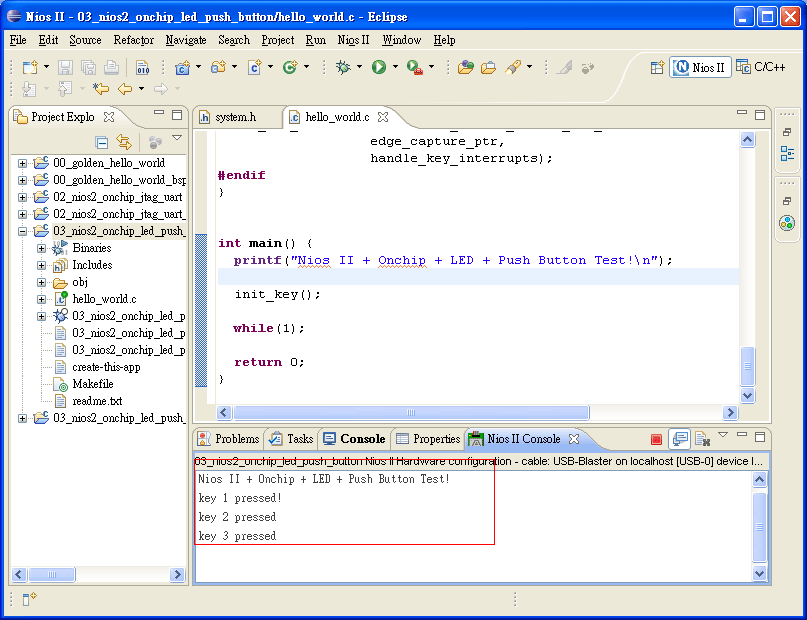
使用以上方法後,就可正確的在App project收到subsystem的interrupt了。
Conclusion
我們在本文看到了Qsys與SOPC Builder在subsystem與interrupt的處理有很大的差異,也看到了目前Qsys與Nios II SBT尚有些bug待修正。目前Quartus II 11.0與Quartus II 11.1都還有system.h的bug,相信未來的版本一定會修正這個問題。假如你現在要在subsystem使用interrupt,可暫時使用本文的方式當作short term solution。
Reference
[1] Qsys Interconnect
[2] Quartus II 11.0 Release Notes
[3] Altera Wiki : New Qsys Issues for Interrupts
[4] Exception Handling
全文完。
此内容由惯性聚合(RSS阅读器)自动聚合整理,仅供阅读参考。 原文来自 — 版权归原作者所有。