







Back in the days when I was a reporter covering CES or E3 (RIP), or simply working while in transit, a large, sturdy battery pack was essential. I’m mostly chained to my desk these days, but I still keep one of these “big boys” in my bag just in case. Old habits die hard, I guess.
I recently retired my Mophie in favor of a battery pack from BioLite, a brand that’s well-known for making outdoor gear, including portable power stations and solar generators. (BioLite owns Goal Zero, which is one of my colleagues’ favorite power stations.)
Compared with my old battery pack (and many others, including some we recommend), the BioLite Charge 100 Max feels fully decked out, without any silly bells and whistles like LED screens. It’s built for camping, so it’s capable of handling getting banged around in my backpack. It also kept me powered up through a two-week Spain trip.
Priced at about $180 at this writing, it’s pretty expensive. Realistically, it’s for mobile professionals with heavy power needs and outdoorsy folks who want a dedicated charging device for small tech. If that sounds like you, I’d say it’s an excellent choice.
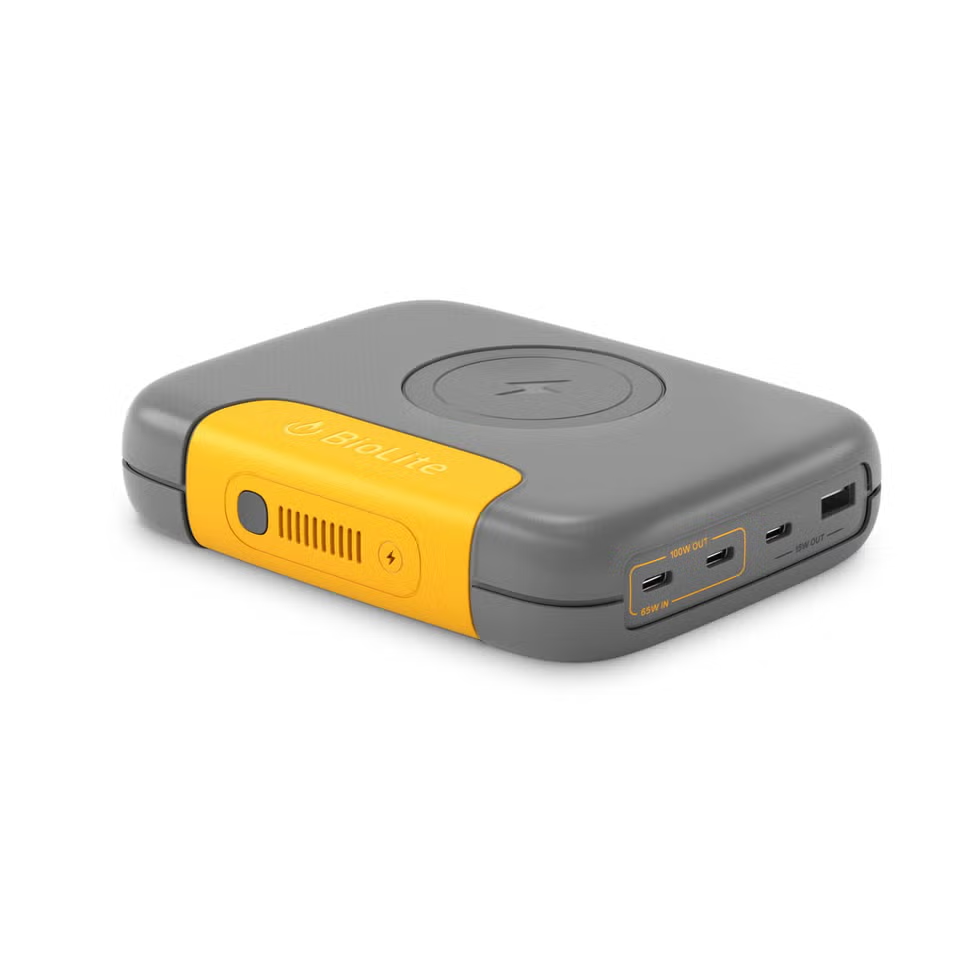
| Capacity | 25,000 mAh |
| Max Charging Output | 100W |
| Max Charging Input | 65W |
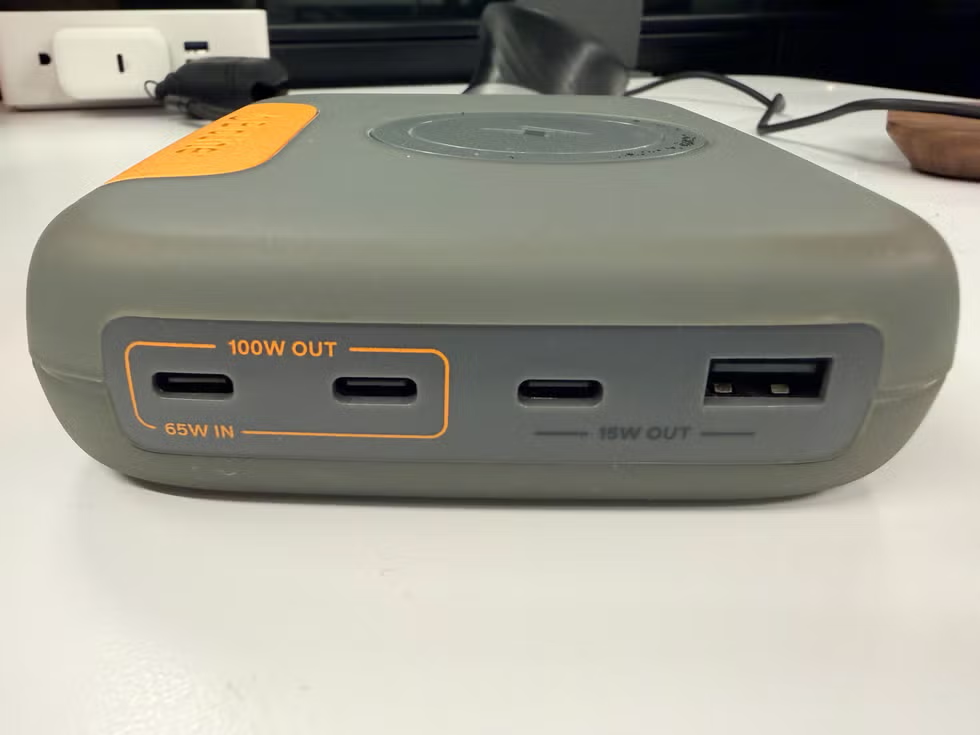
| Ports | 2 x USB-C (100W combined), 1 x USB-C (15W), 1 x USB-A (15W), 1 x wireless charging pad (15W) |
| Dimensions | 5.5 x 4.4 x 1.4 in. |
| Weight | 1.27 lb |
First and foremost, capacity: The Charge 100 Max stores up to 25,000 milliampere-hours (mAh). That’s about as much as you’re going to see from a battery pack that’s within FAA regulations for taking on flights.
Measuring power capacity is always a bit tricky, so let’s talk about this practically. I was able to charge an M1 MacBook Air about one and a half times, and an iPhone 14 about five, maybe six times. I haven’t done a full rundown test with my newer iPhone 17 Pro, but I’d guess that number will go to four, maybe four and a half charges.
The Charge 100 Max’s primary ports are a pair of USB-C ports that put out up to 100 watts of combined charging power. Most fast-charging devices top out at 40 to 65 watts, so you will likely be able to get the most out of your fast-charging devices when you need to recharge your core devices as quickly as possible.
It also has a third 15-watt USB-C port and a 15-watt USB-A port. That’s on the slow side for a battery pack, but not unheard of, and certainly isn’t bad when you factor in that you’ll only use these when your two primary charging ports are occupied.
The pack itself also needs to be charged, of course. The primary charging port also charges the pack when plugged into power, at a rate of up to 65 watts. With a 65-watt charger, it should charge in about 90 minutes. (That was BioLite’s finding, and my experience was similar.)
The one caveat I’ll give is that, unless you buy a better wall charger, you probably won’t be able to charge at that rate. When I found myself in that situation, it took a few hours. My best advice is to charge it overnight before you need it. (Pro tip: In a pinch, charge it with your laptop’s power cable. It may not go full speed, but it should charge faster.)
The coup de grâce, I think, is that there’s a 15-watt wireless charging pad on top, so you can slap a phone or a pair of earbuds on top for a quick top-off without taking that extra second to plug in. It seems like the most minor of inconveniences, plugging in a cord, but I find that when I have a million things to do in the next 5 to 10 minutes, the skipped step feels like a burden lifted.
Most wireless-charging battery packs we’ve tested have been smaller packs made to extend a phone’s battery life in a pinch. Having a larger pack with a pad on it feels like a more dynamic solution to me, especially as more and more portable devices add wireless charging as an option.
The largest, most expensive battery packs are often called laptop chargers, because they have both the capacity and charging speed to recharge a laptop. Big boys like the Charge 100 Max are a burden and are only really necessary for hobbyists and professionals who need to carry around a lot of backup power on a daily basis.
Now, for a big boy, I think the Charge 100 Max is pretty compact. It measures 5.5 by 4.4 by 1.4 inches, so it could fit the front pocket of my work jacket, or even the pocket of a pair of my jeans, but would not sit in there comfortably. It also weighs a comparatively heavy 1.27 pounds, according to BioLite.
As someone who’s already carrying around a large backpack with a fair amount of gear, this feels neither large nor heavy to me. But for the average person carrying a smaller bag or day pack, this isn’t something to carry day-to-day. I have other, smaller battery packs for that scenario, but I don’t expect everyone to buy multiple battery packs, so let’s just say this is great for the people who need it, but isn’t for everyone.
The extra bit of intrigue I found with the Charge 100 Max was in its durability. Since BioLite is an outdoor brand and makes gear for camping and outdoor living, it does feel a bit sturdier than packs I’ve used from other brands.
It features a hard but smooth rubberized plastic coating that generally feels like it can take a bit more of a hit than most packs. I’ve dropped this thing and had it bump around in a packed bag, and I’ve never had to worry about it. That said, rugged in this case is more of a vibe: It is not waterproof and doesn’t have port covers, so you should treat it like any other battery pack.
The BioLite Charge 100 Max felt like a huge upgrade for me, coming off a generations-old laptop charger. My new big boy can charge as many devices as I need to, and do it fast. It also recharges itself pretty quickly, provided you’re prepared.
Again, I don’t think this is for everybody. You need to carry around a fair amount of tech, and you need to be away from an outlet (or too mobile to stop and charge) for long stretches of time. For tech folks and power users like me, the BioLite could be easy to miss given the brand’s outdoorsy vibe. After putting in more than my fair share of testing time with this thing, I think everyone should pay closer attention.

Now 20% Off


Now 13% Off


Mike Epstein is a Senior Commerce Editor at Hearst Enthusiast Group, producing reviews for buying guides Popular Mechanics, Runner’s World, Bicycling, and Best Products. Prior to joining Hearst, he was a video game and technology critic for over 10 years, with bylines at IGN, Gamespot, Variety, Lifehacker, Kotaku, GamesRadar, Flavorwire and Digital Trends, among others. Now, he’s a jack of all trades, helping reviewers share everything they know about all kinds of technical gear, from snowblowers, to running shoes and bicycles, and every kind of gadget imaginable.

Rachel is the Deputy Editor of Reviews for Hearst's Enthusiast and Wellness Group where she supports Popular Mechanics, Runner's World, and Best Products. Her background is in service journalism and earlier in her career she worked as a daily newspaper reporter and book editor. She spent more than a decade as a staff editor and writer at TripAdvisor and Penguin Random House and her byline has appeared in Time Out New York, the New York Daily News, and New York Magazine. Outside of work, Rachel can be found planning her next trip, visiting museums and galleries, and walking her wirehaired dachshund in Central Park.
此内容由惯性聚合(RSS阅读器)自动聚合整理,仅供阅读参考。 原文来自 — 版权归原作者所有。