





The TCL QM8L is a follow-up to my favorite mainstream TV from last year, bringing new-generation screen tech from a much higher price tier. The TCL QM8K earned a lot of praise in 2025 from critics (including me) for a viewing experience that exceeded expectations for its mid-range price. This year’s model is similarly great, offering a leap forward in color tech along with improved local dimming and a higher max brightness.
Remarkably, the QM8L features some of the upgrades from TCL’s range-topping X11L. Normally, TV makers wait a year (or even a few) before letting their top technologies trickle down into their less expensive products, so this is an exciting leap for the QM8 (and anyone who wants to pay less than $3,000 for a 4K TV).
At the same time, the new features come at the expense of a price reset, and the TCL QM8L’s $2,500 starting price feels especially steep compared to the effective price of the QM8K for most of the year. That made me pause to wonder whether the upgrade offers the same value as its predecessor.
After weeks of evaluating the product and comparing it to the stellar TCL QM8K, here’s everything I like about it, along with a couple of things I wish were different.
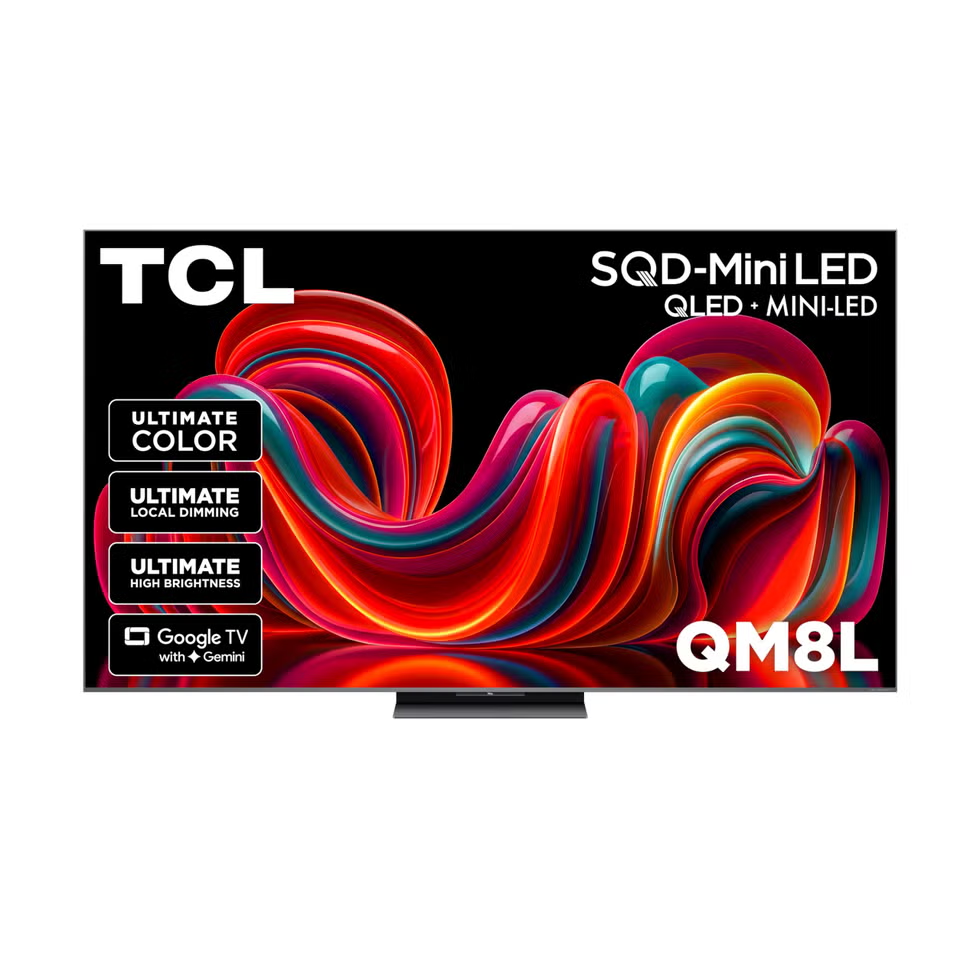
Now 28% Off
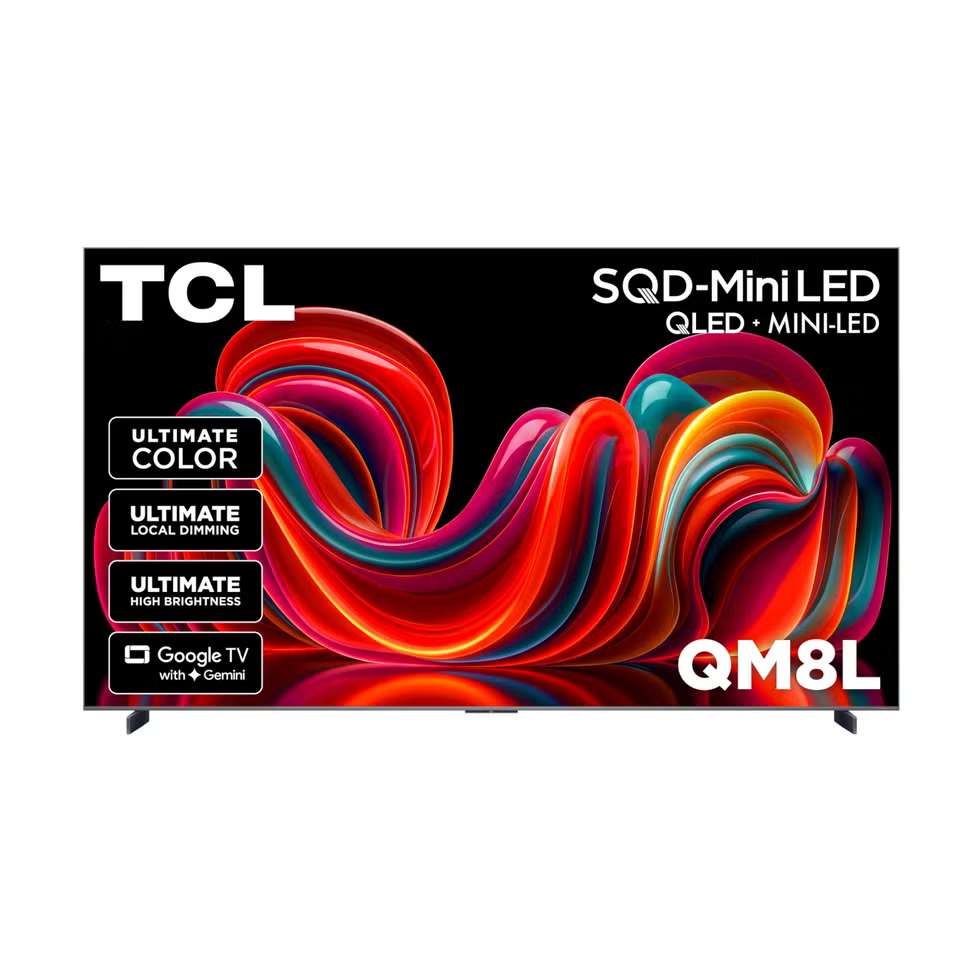
I was surprised and impressed when I saw that TCL switched from the quantum dot (QD) mini-LED display panel used in the QM8K, to its new Super Quantum Dot (SQD) mini-LED technology. This upgraded take on hybrid QLED Mini-LED tech enables the QM8L to produce more vibrant colors, without sacrificing accuracy or introducing pesky blown-up artifacts when displaying bright and colorful objects.
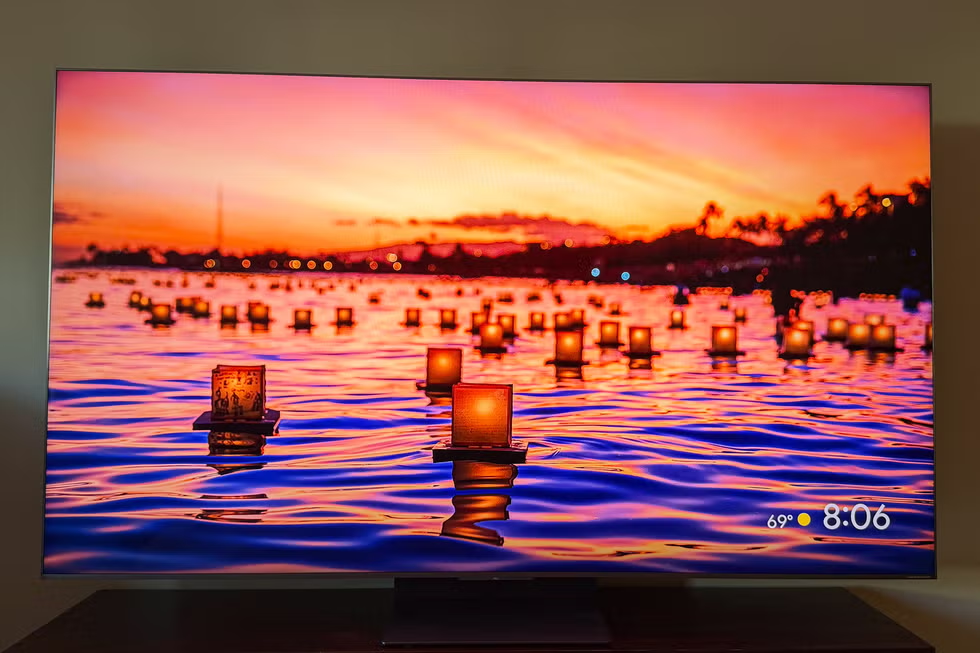
The screen also gets some more conventional boosts, with a higher peak brightness and more local dimming zones to deepen the contrast and HDR performance. Depending on the screen size, you’ll get up to 6,000 nits and up to 4,000 local dimming zones, compared to 5,000 nits and 3,800 local dimming zones in the largest QM8K. Likewise, it features improved viewing angles that almost completely eliminate haloing around bright on-screen objects.
The enhanced color reproduction of the SQD Mini-LED panel, combined with the improved brightness and dimming, deliver a beautiful picture. And while its sharpness can’t quite compare with an elite OLED TV, it is comparable. And the QM8L’s brighter screen may even make it the worthier choice for rooms with lots of windows.
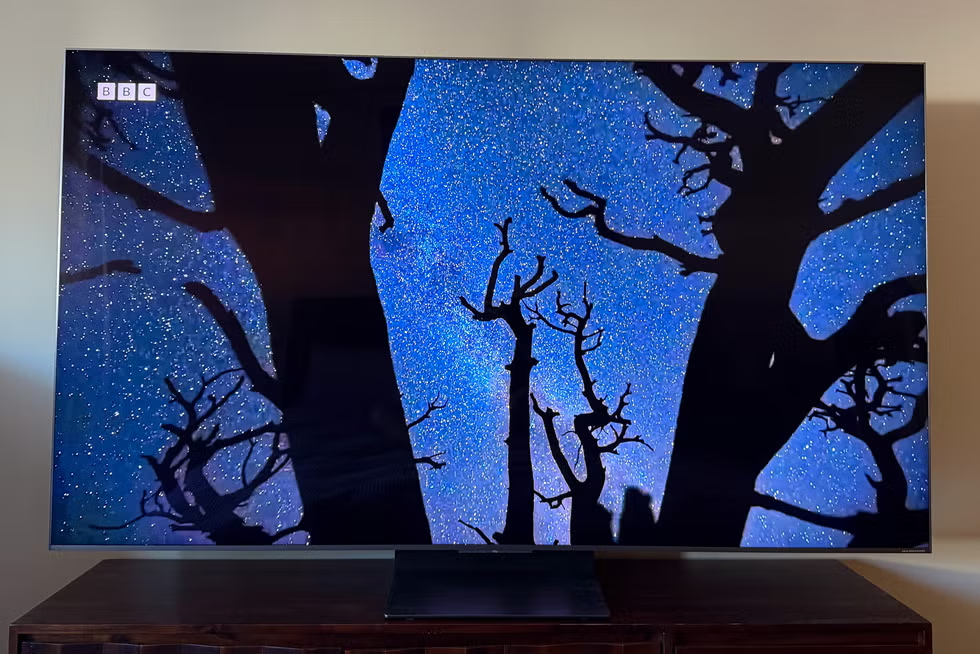
Last but not least, a beefed-up CPU under the hood enhances TCL’s AI-powered image processing tools, which improve its 4K upscaling capabilities and motion clarity in sports and quick action sequences, among other things.
All the content I watched on the QM8L—from HDR-enhanced blockbuster movies and live NBA games to longtime cinema classics—was beautifully presented and a treat to view, both mid-day and at night. Gameplay was just as enjoyable on the TV, courtesy of a dedicated game mode and a high refresh rate.
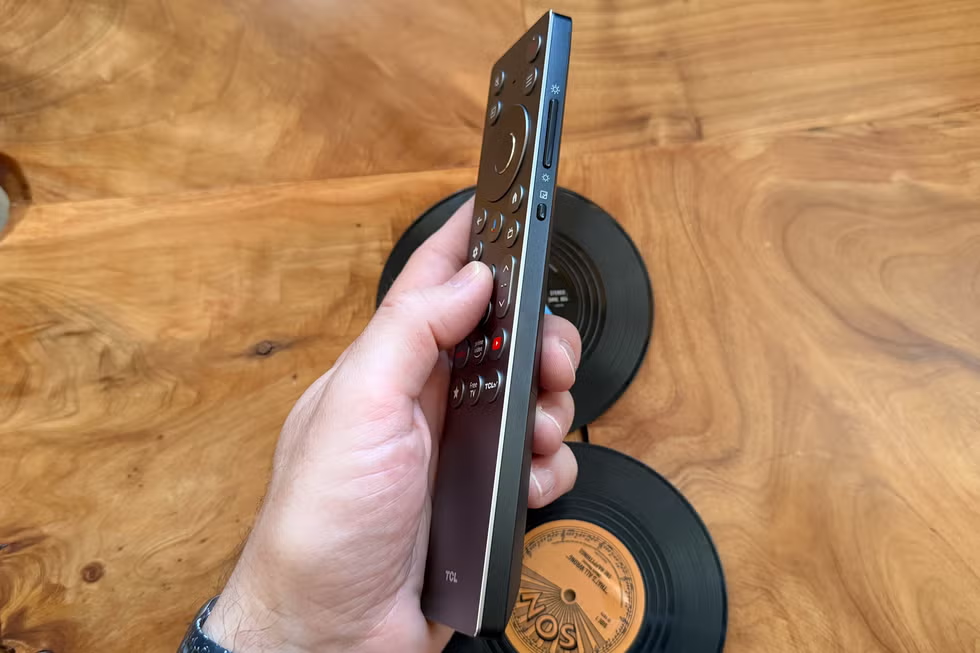
Sometimes the little changes make an outsized difference for me. In this case, the QM8L’s new remote added a pair of side buttons, allowing me to quickly switch picture modes and adjust screen brightness without slogging through menus. I found this time-saving addition to be a surprisingly nice touch.
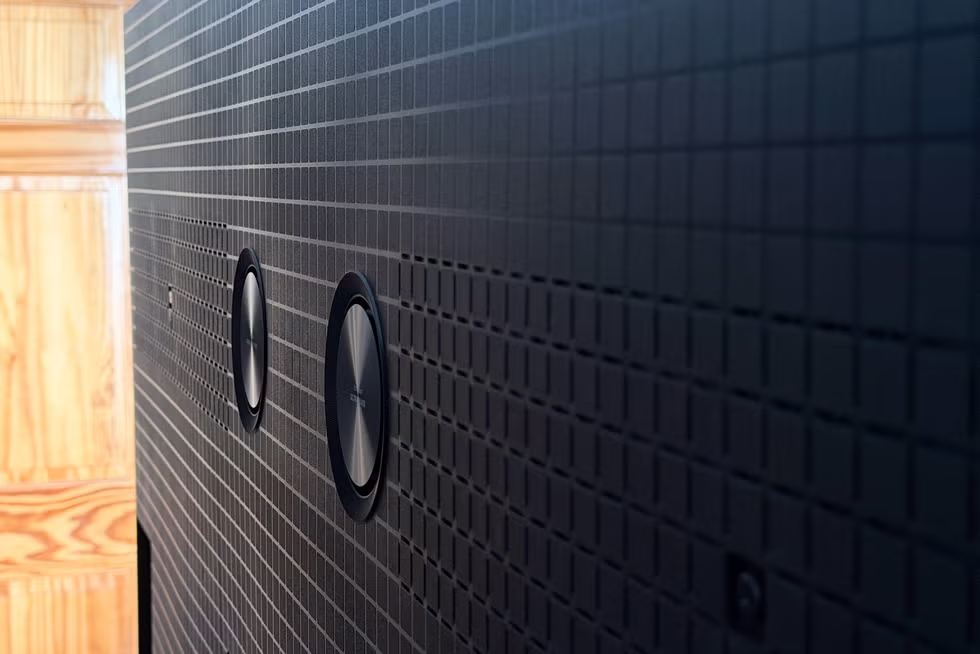
On the sound front, TCL once again partnered with the storied Danish audio brand Bang & Olufsen to tune its TV speakers. Equipped with a multi-speaker setup that includes rear-facing units for enhanced bass, the QM8L delivered a powerful and detail-rich sound for a stand-alone TV.
There are also a few small touches that I think could use a little work. Even with a brighter screen, the lack of an anti-reflective coating limits the QM8L’s capabilities in direct sunlight, especially during dark scenes. And, to be fair, the much pricier TCL X11L has the same issue, so this is definitely not a dealbreaker.
Also, while I think the audio system is surprisingly good, the QM8L takes a step back in the sound department, dropping its upward-firing speakers, which enabled Dolby Atmos support out of the box. While I almost always recommend a soundbar over TV speakers, having upfiring speakers is a big plus for budget-conscious buyers.
I like the TCL QM8L. The move to SQD Mini-LED undoubtedly improves its picture quality over last year’s QM8K and all but guarantees a spot on our best TV guides by the end of the year. When it makes those lists, however, is still up for debate. Even with the upgrades, it’s hard for me to argue that you should shell out at least $2,500 for the QM8L while the QM8K is still readily available for about half the price—it’s $1,298 for the 65-inch set.
TCL has always been a budget-friendly brand, and the prices of its TVs routinely drop quickly after launch. Given the brand’s track record, I expect the “standard” price to drop well below $2,000 within weeks and undercut the 2026 versions of legacy performers like the LG C6 OLED.
For less than $1,300, the QM8K is still an incredible TV, and if you are truly on a tight budget, the up-firing speakers take some of the sting out of skipping an external audio solution.
Better yet, you could go with last year’s premium model, the TCL QM9K, which offers an even brighter panel than the QM8K and the same fancy remote with side buttons as the QM8L for only $1,600.
In time, as retailers phase out 2025 TVs, the strong upgrades in the QM8L will position it as one of the best new TVs of the year. For now, there’s still a ton of value in last year’s models, assuming you’re not an early adopter eager to put an SQD mini-LED through its paces.
65-inch
Now 28% Off
75-inch
Now 33% Off
85-inch
98-inch
Now 17% Off

Stefan is an award-winning consumer technology editor with over a decade of experience in reviewing gadgets, particularly smartphones, tablets, smartwatches, desktop and laptop computers across multiple form factors and platforms, as well as accessories for them. He also covers televisions and audio equipment, including headphones, earbuds, wireless speakers, and soundbars. Since joining Hearst in 2015, Stefan has contributed to BestProducts, Popular Mechanics, and numerous other publications. Prior to his current role, he served as the US Editor for GSMArena.com.

Mike Epstein is a Senior Commerce Editor at Hearst Enthusiast Group, producing reviews for buying guides Popular Mechanics, Runner’s World, Bicycling, and Best Products. Prior to joining Hearst, he was a video game and technology critic for over 10 years, with bylines at IGN, Gamespot, Variety, Lifehacker, Kotaku, GamesRadar, Flavorwire and Digital Trends, among others. Now, he’s a jack of all trades, helping reviewers share everything they know about all kinds of technical gear, from snowblowers, to running shoes and bicycles, and every kind of gadget imaginable.
此内容由惯性聚合(RSS阅读器)自动聚合整理,仅供阅读参考。 原文来自 — 版权归原作者所有。