






DJI’s latest drone, the Avata 360, may also be one of the last hobby-grade flyers coming to the U.S. for a while. It is one of the last drone models to receive FCC approval prior to the agency adding foreign-made drones to its “covered list” of communications-related products banned from the U.S. over national security concerns. The sting is that much greater because it breaks new ground for DJI’s best-in-class aerial video toolkit, capturing 360-degree video.
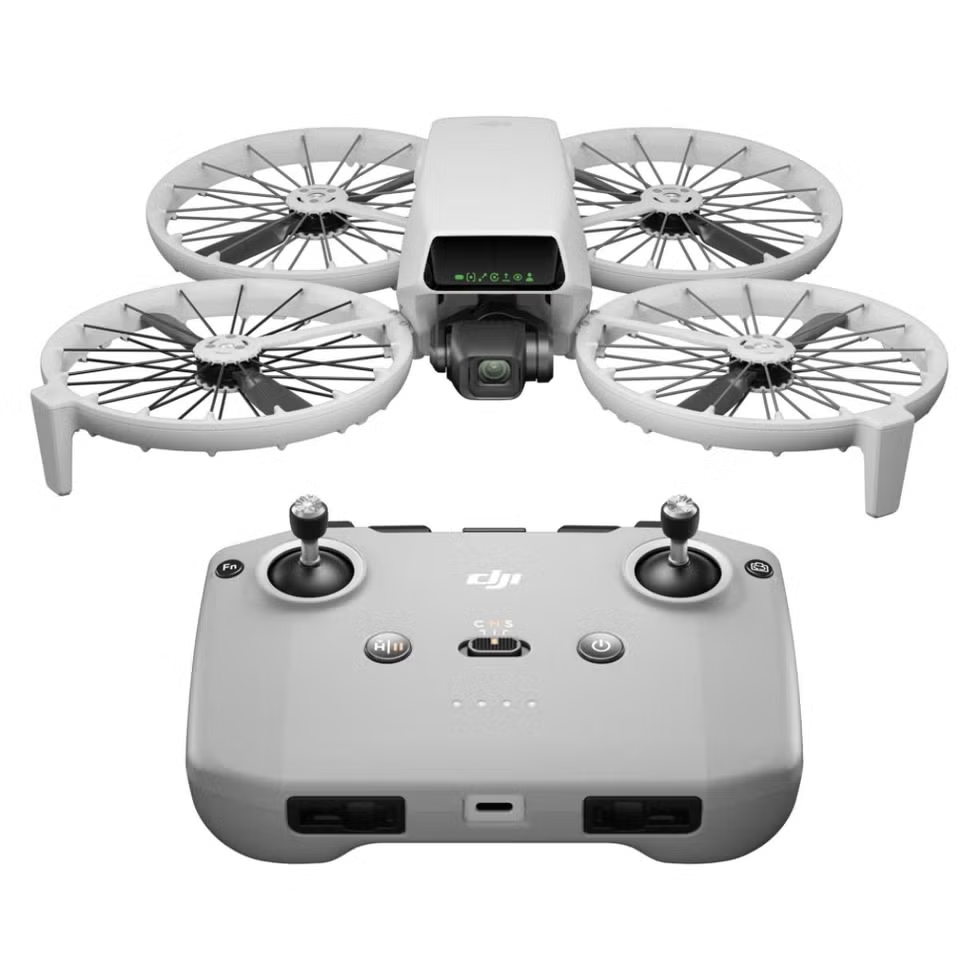
Since the vast majority of drones, including virtually all consumer-grade drones, are made overseas, the ban has effectively decimated the future of the product category. The drones that are out there now remain available and on sale, but there will be no new models coming to the U.S. for the foreseeable future, at least until a U.S.-based brand starts to produce them. Aside from the incoming (and much smaller, lower-end) DJI Lito 1 and Lito X1, which hit stores this week, we won’t be celebrating many new drone launches for a while.
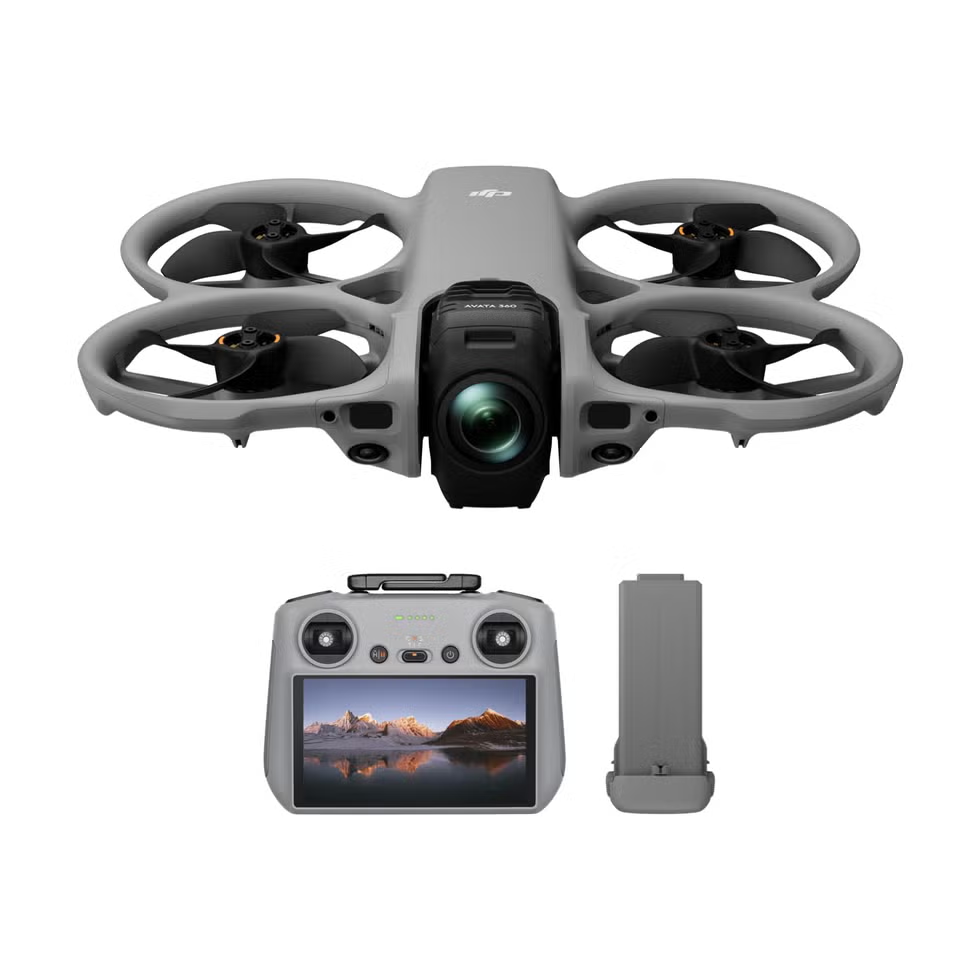
Unlike most drones, which feature a camera that needs to be pointed in a specific direction to catch the specific shot you’re looking for, 360-degree cameras have the ability to record all around them. 360 video, popularized by action cams like the DJI Osmo 360 and Insta360 X5, creates a panoramic video that you can view in VR, or cut down into smaller frames to use in conventional video. That allows you to batch-record aerial B-roll footage, allowing you to pick and choose the best shots from any direction.
The Avata 360 is well equipped for both tasks, recording 360 video at up to 8K resolution, at 60 frames per second (fps). It can also shoot conventional video in single-lens mode in 4K at up to 60 fps. It has a 42GB internal hard drive, and can transfer video via WiFi.
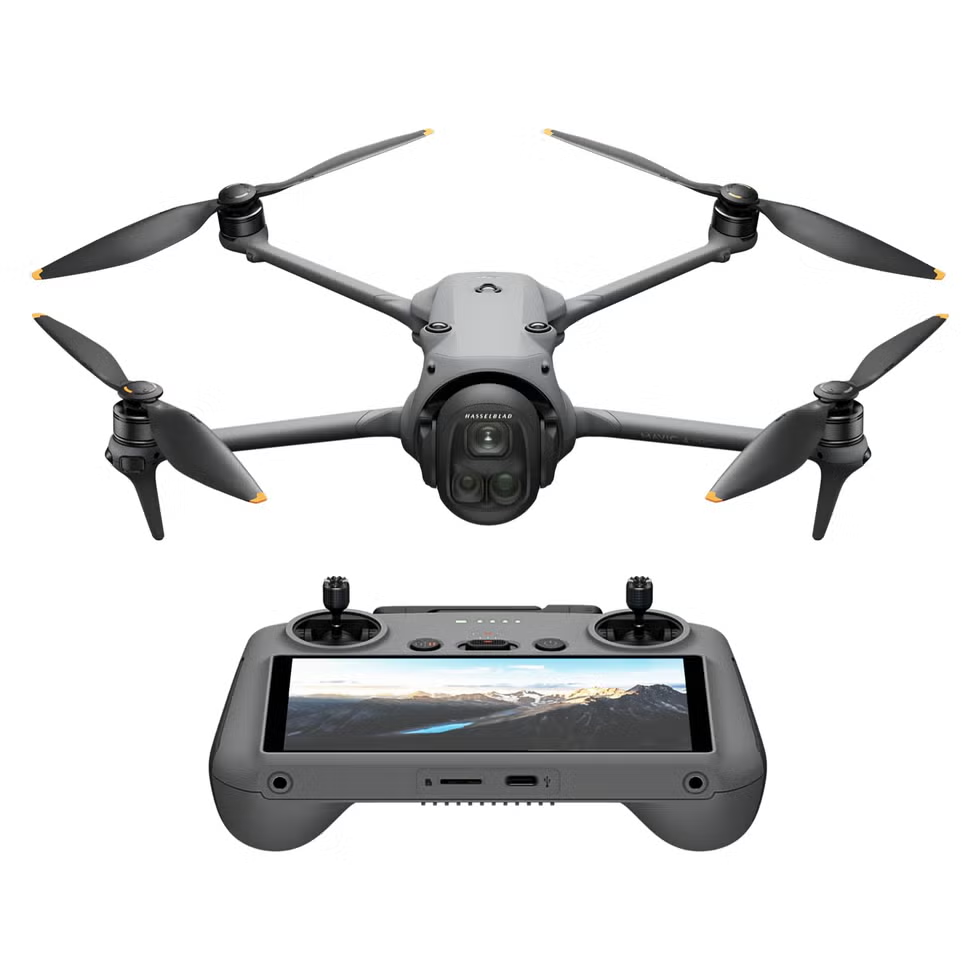
The drone’s battery life and performance flags compared to some of DJI’s top drones, though: It can only venture out up to 12.4 miles from its operator, and has a max flight time of 23 minutes. The Mavic 4 Pro, DJI’s latest flagship, can go up to 24.8 miles and run for up to 51 minutes. It’s also not quite as fast—the Avata 360 hits up to 40 miles per hour, versus the Mavic 4 Pro’s 56 mph.
Still, it is, at least on paper, poised to be the best 360 video drone for hobbyist drone lovers. There is another option, the Antigravity A1, a debut model from Insta360-backed drone brand Antigravity, which also managed to get approval just before the FCC ban went into effect. The A1 also shoots 360-degree video at up to 8K resolution, albeit at only 30 frames per second.
On paper, the Avata 360 has a couple advantages over the A1. It has a slightly larger image sensor, which should lead to better image quality. The Avata 360 can also shoot both standard and 360 video, whereas the A1 can only shoot in 360, making it a bit more niche.
Without a new generation of drones launching in the immediate future, Americans will have only an increasingly aged fleet of choices, at least until a new set of U.S.-based drone makers begin manufacturing them in the U.S. There’s no timeline for that happening, but it’s fair to assume that it will likely be a few years before the market returns to what it was.


Now 15% Off

Now 15% Off

Now 17% Off

Matt Jancer has been in the industry for 15 years and lives in his favorite urban death maze, New York City. He’s traded words for money on behalf of more than 15 magazines. Some of his longest-running bylines were spent covering cars, motorcycles, outdoors gear, health and fitness for Car and Driver, Outside, Esquire, Smithsonian, Playboy and Wired. When he’s not writing about motorcycles and our place in the wilderness for a living, he’s writing for enjoyment, riding his motorcycle, and mountain climbing out West. He believes everyone needs at least one hobby they have none of their ego invested into, and so guitar noises and cooking smells have been known to emanate from his apartment. Oh yeah, and he thinks pigeons are way underrated.

Mike Epstein is a Senior Commerce Editor at Hearst Enthusiast Group, producing reviews for buying guides Popular Mechanics, Runner’s World, Bicycling, and Best Products. Prior to joining Hearst, he was a video game and technology critic for over 10 years, with bylines at IGN, Gamespot, Variety, Lifehacker, Kotaku, GamesRadar, Flavorwire and Digital Trends, among others. Now, he’s a jack of all trades, helping reviewers share everything they know about all kinds of technical gear, from snowblowers, to running shoes and bicycles, and every kind of gadget imaginable.
此内容由惯性聚合(RSS阅读器)自动聚合整理,仅供阅读参考。 原文来自 — 版权归原作者所有。