





| Updated:
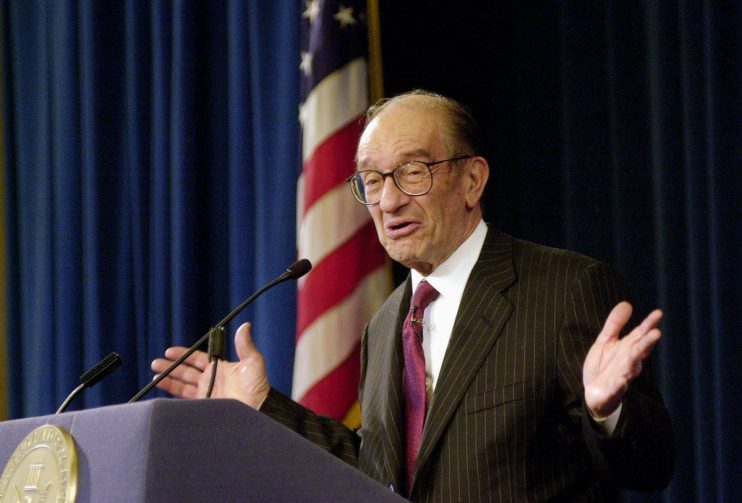
Former chair of the Fed Alan Greenspan has died today, leaving a great legacy and many lessons for policy makers today, says Ben Ramanauskas
Alan Greenspan, Chairman of the Federal Reserve for nearly two decades, died yesterday at the age of 100. While his passing will receive little media coverage due to the resignation of the Prime Minister, Greenspan will leave a legacy far greater than the man whose resignation has overshadowed his death and has many lessons for policy makers today.
The first lesson is for central bankers. Greenspan inherited an economy which was still recovering from the inflation shock of the 70s. The period had seen stagnant growth and high inflation, primarily caused by an oil crisis in the Middle East. Greenspan knew that inflation expectations, once unanchored, are incredibly costly to re-anchor. He knew that it mattered that the central bank took the threat caused by inflation seriously, not just for the credibility of the institution, but also to promote investment and economic growth.
Central bankers still like to talk of “Volcker-Greenspan credibility” as Greenspan, and his predecessor Paul Volcker, were committed to using the Fed’s tools where appropriate to tackle high inflation while also being willing to not act if it was inappropriate to do so in order to support growth.
Moreover, Greenspan was great in a crisis. For example, during Black Monday in 1987 when the Dow fell 22.6 per cent in a single day, Greenspan moved fast, signalling the Fed would supply ample liquidity to the banking system. Panic didn’t cascade into a full-blown banking crisis. He showed that taking decisive action matters.
Qualified technocrats
The Bank of England would do well to remember this. It ignored the surge in money supply growth in the aftermath of the Pandemic and allowed inflation to get out of hand. When it finally did act, it was too late. As a result, households suffered and interest rates stayed too high for too long. It is now at risk of repeating the mistakes of the past but in reverse. The Monetary Policy Committee was spooked by the Iran War and hinted that it would start hiking the Bank Rate. This troubled the market and households when the appropriate response would have been to look through a supply side shock and do nothing. It would seem that our central bankers are woeful at dealing with inflation shocks and do not have Greenspan’s crisis management skills.
He also has lessons for politicians. There is a growing disillusionment with Central Bank Independence among those on the Left as well as with Reform. While it is easy to see where they are coming from given the Bank’s failures in recent years, it should be noted that it has done a good job at meeting its inflation target. Moreover, Greenspan shows us the importance of having highly qualified technocrats overseeing monetary policy as opposed to a Rachel Reeves or Ed Miliband type figure. Whoever is in Number 11 Downing Street come September should remember this and treat Central Bank Independence as non-negotiable.
Finally, Greenspan was a supporter of the free market. As an acolyte of Ayn Rand, he held a suspicion for high taxes and onerous regulations. He was right. The number of regulations and taxes on households and firms keeps ratcheting up and it has been particularly bad for financial services firms since the Global Financial Crisis. The end result? Almost two lost decades of stagnant economic growth and a lost generation of young people who have had their futures stolen. The next Prime Minister needs to go for growth by slashing red-tape and reducing public spending so that taxes can be cut and households and firms allowed to flourish.
Alan Greenspan was far from perfect and he was the first to admit this. He probably did keep monetary policy too loose for too long which did contribute to the Global Financial Crisis. However, he leaves a great legacy which our central bankers and politicians would do well to remember.
Ben Ramanauskas is an economist and a former government adviser