



After its 900-home development in Peckham was blocked, housebuilder Berkeley said it can “no longer invest” in London. Felix Armstrong asks whether development in the capital really has hit a brick wall
At the Aylesham Centre in Peckham, south London, shoppers are met with graffitied walls, peeling paint and shuttered retail units. The site began life as a Jones and Higgins department store in the 1860s, before opening as a shopping centre in 1988, when it was unveiled by Princess Margaret.
But the site is now home mostly to empty retail units and welcomes little footfall, save for the huge Morrisons supermarket whose ring-fenced presence at the Aylesham Centre had been one of many battles fought in the war over its redevelopment.
Even Poundland, a stalwart of run-down shopping locations across the country, abandoned the site late last year. Not exactly what you’d expect from a “heritage” asset too valuable to make way for nearly 900 new homes during a housing crisis.
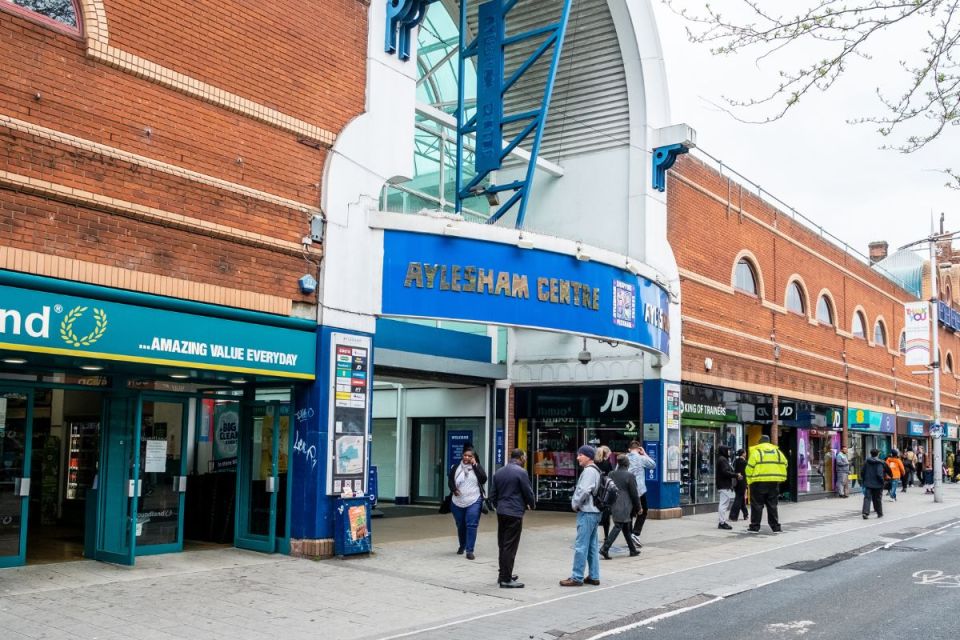
Nonetheless a planning inspector last week blocked a blockbuster 867-home development here, on the grounds that the project’s benefits “do not outweigh the harm to the relevant designated heritage assets important to the area”.
The plans, submitted by developer Berkeley, which would have also delivered dozens of affordable homes, would have made the single-biggest contribution to London housebuilding this year, after starts last year slumped to among the lowest of any capital city in the world.
The rejection came despite the inspector having accepted that the development would bring “social and economic benefits” to Peckham and help ease its “acute” shortage of housing. Bizarrely, local councillors appeared overjoyed at the decision, hailing the blocked appeal as a “great day” for Peckham.
Developers ‘can no longer invest in London’
FTSE 100 housebuilder Berkeley was left in a rage. “This is why developers, including Berkeley, can no longer invest in new London sites and the housing crisis continues to deepen,” executive chair Rob Perrins fumed.
Perrins has good reason to be aggrieved. Labour pledged to deliver 1.5m new homes across the country by the next general election, but progress in the capital has been slowed by building cost inflation, more and more red tape, and planning obstructions of the kind seen in Peckham.
The government expects 176,000 homes to be built in London in the next two years, but data from January suggests a whopping 92 per cent shortfall on this target, as housebuilding progress in the capital has slowed by 84 per cent in a decade. Is Berkeley right to declare an end to viable housebuilding in London?
Quite possibly, according to David Fell, lead analyst at estate agency Hamptons. Housebuilders in the capital have been hit by a “perfect storm,” he explains, of falling sales values and rising building costs.

London house prices have been falling consistently in recent months, as property experts blame poor interest rate conditions and the impact of stamp duty – which hits homeowners far more often in the capital than in the rest of the country. On top of this, housebuilders and construction firms warn material costs will continue to rise as the Iran war takes its toll.
In such an adverse environment, “it’s increasingly only higher density residential development that is most likely to remain profitable,” Fell says. But these are exactly the projects which often fall foul of local planning opposition, like the Aylesham Centre.
High rise blocks can “make opposition from neighbours more likely and prolong the planning process. Local councillors sitting on planning committees have also shown they’re willing to overrule planning officers’ recommendation for approval where developments are controversial locally,” Fell explains.
Planning overhaul ‘urgently needed’
City Hall has said it will use new planning powers to intervene to stop developments being blocked by local authorities more frequently. London’s Deputy Mayor has said Sadiq Khan’s upgraded planning authority means he will “make no apologies for his mission to build the homes that Londoners need”. In a major intervention last year, Khan also threw his weight behind building on London’s Green Belt, in an effort to reverse a slowdown in construction.
But City AM understands the Mayor was not able to call in the Aylesham Centre planning dispute because the appeal had gone directly to the planning inspector, whose decisions City Hall is powerless to overrule.
Steve Turner, executive director of trade body the Home Builders Federation, urged the government and City Hall to commit to an “urgent overhaul of housing policy is needed to support the needs of Londoners”.
“London Plan policies combined with additional government taxes on new homes, onerous processes to get higher-rise schemes approved and challenging market conditions have effectively made London a no-go zone for housing investment,” he told City AM.

Economists have also criticised local authorities for expecting housebuilders to ensure a level of affordable homes in their developments which they say puts them out of pocket. “On occasion profits must to some extent be hoped for rather than banked at the grant of permission,” Southwark Council had written in response to Berkeley’s downgrading of its affordable homes quota.
“If we keep denying that basic economics applies to the housing market – including the principle that the only way to make homes affordable is to build many more of them – it will be no surprise that we don’t solve the housing crisis,” Robert Colvile, head of the Centre for Policy Studies (CPS), told City AM.
Building cost inflation looms
Once a housebuilder is given the green light, they then have to buy the bricks. Each of the UK’s six major housebuilders have warned they are bracing for building costs to shoot up as a result of the rising energy costs caused by the Iran war.
FTSE 250-listed Taylor Wimpey warned last month that cost pressure and shipping surcharges are beginning to hit its supply chain, and Bellway – which also trades on the FTSE 250 – said in March it fears “heightened risks of supply chain disruption and rising cost inflation” due to the conflict.
Shanker Patel, chief executive of London-based building material supply firm Lords, told City AM the capital’s housing market is also suffering from a dearth of overseas investment.
“We’ve done a great job in driving the foreign capital that was here away, and we’ve ensured that any foreign capital that wants to come here, we’ve made it damn hard work for them to park their money,” he said.
New-build, high rise developments in London are “stuck in a really ominous position,” Patel said. But he believes homebuyers and developers are starting to “get comfortable” with a high interest rate environment, particularly in smaller, family home developments.
“It’s going to be a while before we’re going to build, build, build in London, […] but we’re starting to see some green shoots. Anybody who walks the streets of London will see there’s a lot of stuff happening,” he said.