




| Updated:
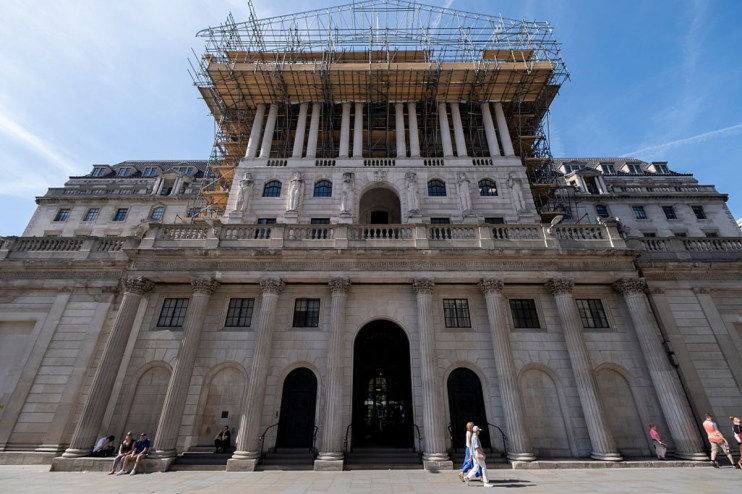
Firms taking part in the Bank of England’s inaugural private credit stress test have been allowed to draft in external City advisers to help them manage the substantial workload required to respond to the doomsday scenario, which participants have branded “extremely severe”.
In a departure from the convention for the banking sector’s tests, so-called shadow banks will be allowed to lean on consultants, two people involved in the private markets exercise said, after several smaller firms told officials they needed support to meet the data and administrative demands the test will place on them.
The UK’s private credit industry is undergoing its first ever system-wide stress test from Bank of England regulators, which will see officials put some of the sector’s largest players through a hypothetical financial downturn.
The exercise – called a system-wide exploratory scenario (Swes) – is similar to the central bank’s bi-annual temperature check of the traditional banking industry, and will probe how the 46 participants respond to, and interact with, the maelstrom simulation.
Watchdogs and lawmakers have become increasingly concerned about the risks that private credit and private equity firms could pose to the wider financial system during a sudden downturn in economic conditions.
The sectors – known collectively as alternative asset managers – have grown substantially since the 2008 financial crisis. Their operations are naturally more opaque than those of banks and traditional asset managers, sparking several warnings that regulators aren’t fully abreast of the way they affect the wider financial system.
The Bank’s decision to carry out what is the world’s first regulated stress test of the industry has been widely praised by lawmakers, including the House of Lords Financial Services Regulation Committee. Almost all the sector’s largest players – including shadow bank juggernauts Blackstone, Ares and Apollo – have signed up to the test, alongside other market participants like traditional lenders and institutional investors.
Bank of England launches private credit doomsday scenario
But people involved in the Swes have warned that even before the scenario has formally got under way, participants – who unlike the banking equivalent are not compelled to take part – are already questioning whether signing up it was the correct decision.
“Quite a few are thinking, ‘Good grief, this is really burdensome, what is the cost-benefit here?'” one private credit industry figure told City AM, speaking on the condition of anonymity.
“Not everybody has the luxury of being able to pick 10 people from 500 employees to work on this,” said another participant, who said resourcing issues “will be felt very acutely” by smaller firms.
Both confirmed that officials had granted firms permission to draft in advisers and consultants to help with the raft of paperwork, even though banks are prohibited from doing so in the test of their industry’s resilience.
Last week, the Bank of England unveiled the Armageddon-style scenario they planned to put participating private credit firms through for the exercise. The hypothetical meltdown will see stock prices plummet more than 35 per cent and both interest rates and inflation jump to seven per cent, over a series of events that Bank officials said was on a par with the financial crisis.
The scenario will mostly probe how firms will react to a simulated fracturing of global trade. But it is also set to explore how cratering software valuations might affect participants’ funds, as the ascent of artificial intelligence threatens to upend many firms’ business models.
The severity of the test – in which the UK economy is not expected to recover for more than half a decade and firms must assume ministers do not intervene to lessen its ill effects – has taken much of the industry off guard.
One source at a participating firm said the scenario was “extremely severe”. They added that the intensity and duration of the shock was an acknowledgement that most funds’ closed-end structures mean the industry can easily withstand acute but temporary crises.
Another said private credit firms had lobbied the Bank to make sure the Swes was not “wildly more severe than other tests”, with several elements being met with considerable pushback in initial discussions between firms and the regulator.
The Bank of England declined to comment.