


| Updated:
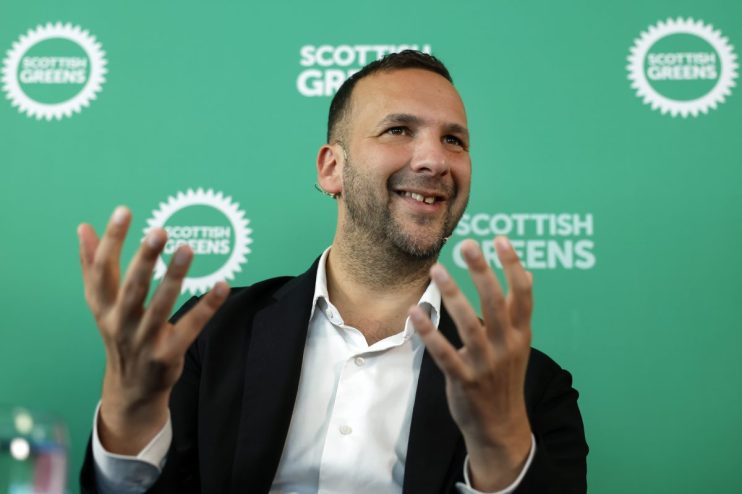
Gabriel Zucman has told Zack Polanski’s podcast that wealth taxes don’t work – so why are they both so keen to bring them back? Asks Kristian Niemietz
“The historical experience with wealth taxation, by and large, is a failure. Pretty big failure.”
Who said that? Was it an economist from a Tufton Street think tank? Was it Jim Ratcliffe? Elon Musk?
None of the above: it was the economist Prof Gabriel Zucman, the guru of wealth taxation, on Zack Polanski’s “Bold Politics” podcast in response to Polanski’s question “How do we deal with the fact that there have been wealth taxes that haven’t worked?”
I agree, of course, with Prof Zucman’s assessment of the track record of wealth taxes. If anything, his verdict is more scathing than my own. In my report Fool’s Gold. The case against the wealth tax, and suggestions for alternatives, I said that the economic impact of wealth taxes was negative, but not catastrophic. They raise nowhere near the amount of revenue their supporters think they will raise; they do not really reduce wealth inequality, except maybe by flattening the very top of the wealth distribution; they suppress and distort investment; and they require a massive bureaucratic apparatus to deal with the issues of wealth valuation. For me, those are good enough reasons not to try wealth taxes again, especially when wealth inequality is not even particularly high in Britain, and when tax revenue is already at record highs. Nonetheless: I did not go as far as calling them a “big failure”. I described them as one bad idea among many, and as a pointless distraction from what we should really be concentrating on, which is the creation of new wealth.
If wealth taxes have been such a failure thus far, why is Prof Zucman – and, for that matter, Polanski – so keen to bring them back?
Because, Prof Zucman says, wealth taxes have failed for one simple reason: they allowed too many exemptions, making them too easy to avoid. He mentions the French example, which had exemptions for business wealth, noting that if you want to tax the wealth of billionaires – who are usually business owners – this is clearly not the way you would do it.
Exemptions and distortions
Is Prof Zucman right? Have ‘real’ wealth taxes never been tried?
Yes and no. It is true that most actually existing wealth taxes had exemptions of various kinds, particularly for business wealth. Those exemptions reduced their revenue-raising potential, and they created distortions, because if you tax some assets while exempting others, you encourage people to shift their wealth from taxed to untaxed assets. Empirical evidence from Spain, which has a wealth tax with particularly generous exemptions, shows that that is exactly what happens.
Nonetheless: exemptions for business wealth exist for a reason, and while one can, of course, abolish them, that would create other problems elsewhere.
Firstly, business wealth is particularly hard to value. If you own shares in, say, Microsoft, valuation is easy, because millions of people trade millions of Microsoft shares every day. We can look up how much a Microsoft share is worth on any given day. But what if you are a co-owner of a company that does not have publicly traded shares? A company that has never been sold? Faced with such issues, governments that levy wealth taxes have – not unreasonably – decided that it is not worth the hassle, and simply sidestepped the problem by exempting those assets altogether. That can be done differently, of course, but it means that you would need an even larger wealth valuation bureaucracy than previous wealth taxes have needed.
Wealth tax proponents like to claim that the wealthy don’t actually contribute anything productively to the economy, they just sit there and own things, getting rich in their sleep. That case is hardest to make in the case of owner-managers
Secondly, business wealth is also a type of wealth that is quite responsive to taxation. Wealth tax proponents like to claim that the wealthy don’t actually contribute anything productively to the economy, they just sit there and own things, getting rich in their sleep. That case is hardest to make in the case of owner-managers, that is, business owners who run their own businesses. These are, of course, the only business assets that are exempt from wealth taxes: if you own shares in a company without being involved in it, that counts as financial wealth, not business wealth.
In the case of owner-managers, we cannot meaningfully separate their role as business owners from their day-to-day work. The slogan ‘Tax Wealth, Not Work’, so popular among wealth proponents that you can even buy T-shirts with it, clearly does not work in this case.
Prof Zucman is completely right in his criticism of past wealth taxes. But I am not convinced that he and Zack Polanski have found the way to make them work.
Kristian Niemietz is head of political economy at the Institute of Economic Affairs