


| Updated:
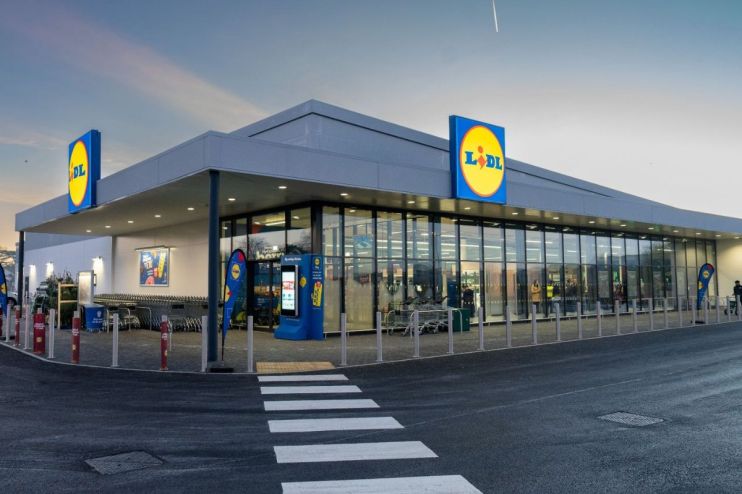
Lidl has soared past struggling Morrisons to become the UK’s fifth-biggest supermarket, as its heavy discounting gave the grocer an edge in the fiercely competitive market.
The German grocer snatched an 8.6 per cent market share, powered by an 8.8 per cent uplift in sales across the last 12 weeks, according to data by Worldpanel.
The record market position is a coup for Lidl, which, along with fellow German cut-price grocer Asda, has shaken up the supermarket sector since its arrival in the UK in 1994.
Lidl mustered a measly 1.4 per cent market share this time 25 years ago but has outlasted discount rivals like Safeway, Somerfield and Kwik Save and now runs more than 1,000 stores and 13 distribution centres across the country.
The German supermarket is well-known for its low prices, and these have shocked incumbents like Tesco and Sainsbury’s into launching aggressive price-matching schemes.
Lidl’s low prices will be proving even more of a draw as the Iran war flattens consumer confidence and spikes cost-of-living fears.
Lidl eyes up posh postcodes
But the grocer is eyeing up the pockets of the middle class with its recently published “wish list” of hundreds of new store locations which includes up-market London postcodes like Kensington, Hampstead and Mayfair.
Chief executive Ryan McDonnell said: “Becoming Great Britain’s fifth‑largest supermarket is a significant milestone and a clear indication of the momentum we have built.
“As customer expectations shift, households are looking for value they can rely on without compromising on quality, and we remain laser-focused on delivering exactly that.”
Lidl toasted a more-than tripled pre-tax profit of £157m in the year to February last year, as revenue jumped eight per cent to £11.7bn and store visits grew by 38m customers.
The supermarket said it pinched £400m in sales as shoppers switched from its competitors and claims that its shoppers account for more than three in five UK households.
But Richard Hunter, head of markets at Interactive Investor, warned that “further progress will be more challenging” because Ocado and Marks & Spencer are “formidable opponents”.
“This is quite apart from the inexorable position of Tesco, whose market share is equivalent to that of its nearest two rivals, Sainsbury and Asda, combined,” he told City AM.
Ocado was the fastest-growing supermarket in the last 12 weeks, with sales up by 10 per cent and its market share growing to 2.1 per cent.
Tesco commands a whopping 28.2 per cent market share, followed by Sainsbury’s (15.2 per cent), Asda (11.5 per cent) and Aldi (10.8 per cent).
Morrisons weighed by £3.1bn debt pile
Lidl’s victory will deal a painful blow to Morrisons, which has struggled to match the gains it made earlier in its history in the face of growing competition.
The green-liveried supermarket “has struggled to maintain its earlier success, while the likes of Lidl and Aldi continue to tug on the purse strings of a pressed UK consumer,” Hunter said.
Morrisons had been listed on the FTSE 100 but was taken over by private equity firm Clayton Dubilier & Rice (CD&R) in 2021, and has since been weighed down by its £3.1bn debt pile.
The supermarket says it has cut its debt by 46 per cent since a turnaround plan was kicked off by the arrival of new chief executive Rami Baitiéh in 2023.
But the grocer said last week it will shut 100 of its Morrisons Daily convenience stores, blaming “significant cost increases” at the hands of the Labour government, despite these locations being unprofitable.
Earlier this week, it emerged that Morrisons is considering selling food to rival supermarkets from its Myton manufacturing arm in a bid to further eat away at its debt pile.
Worldpanel’s data found that like-for-like grocery prices rose by 3.1 per cent in the 12 weeks to the end of May, marking the slowest rate of food price inflation since December 2024.
This marked a welcome surprise for shoppers, according to Fraser McKevitt, Worldpanel’s head of consumer insights.
He said: “The easing in the rate of inflation is welcome news for shoppers who have been grappling with warnings of a hike in food prices due to the impact of the war in the Middle East.”