


惯性聚合 高效追踪和阅读你感兴趣的博客、新闻、科技资讯
阅读原文 在惯性聚合中打开

推荐订阅源

Microsoft Azure Blog
博客园_首页
Forbes - Security
Forbes - Security
WordPress大学
WordPress大学
P
Proofpoint News Feed
T
Threat Research - Cisco Blogs
L
LINUX DO - 热门话题
L
Lohrmann on Cybersecurity
Spread Privacy
Spread Privacy
D
Darknet – Hacking Tools, Hacker News & Cyber Security
大猫的无限游戏
大猫的无限游戏
博客园 - 三生石上(FineUI控件)
P
Privacy International News Feed
A
About on SuperTechFans
T
Tailwind CSS Blog
I
InfoQ
S
Securelist
云风的 BLOG
云风的 BLOG
罗磊的独立博客
Recent Announcements
T
The Exploit Database - CXSecurity.com
B
Blog RSS Feed
V
Visual Studio Blog
Know Your Adversary
Know Your Adversary
The GitHub Blog
The GitHub Blog
Jina AI
Jina AI
腾讯CDC
Cyberwarzone
Cyberwarzone
有赞技术团队
有赞技术团队
AWS News Blog
AWS News Blog
博客园 - 【当耐特】
cs.AI updates on arXiv.org
F
Full Disclosure
S
Secure Thoughts
博客园 - 司徒正美
J
Java Code Geeks
Y
Y Combinator Blog
Google Online Security Blog
GbyAI
GbyAI
N
News and Events Feed by Topic
Help Net Security
Help Net Security
freeCodeCamp Programming Tutorials: Python, JavaScript, Git & More
Project Zero
Project Zero
T
Tenable Blog
cs.CV updates on arXiv.org
T
Tor Project blog
MyScale Blog
MyScale Blog
Scott Helme
Scott Helme
小众软件
小众软件
K
Kaspersky official blog

ProPublica

What You Need to Know About How Tear Gas Harms Kids What ProPublica Found in the Genetic Code of America’s Measles Outbreaks A School Bus Killed a 5-Year-Old. The Crash Is Among Dozens Missing From the Bus Company’s Federal Safety Record. Founder of Kentucky Drug Rehab Center Indicted on Fraud and Money Laundering Charges North Carolina Democrats Propose Changes to Block GOP Power Transfers and Secrecy These Republican Lawmakers Challenged Abortion Bans. Then They Faced Backlash. In This Church, Child Sexual Abuse Has Gone Unchecked for So Long That It Spans Generations I Got Access to Hundreds of Teacher Misconduct Complaints in California — and You Can Too Texas State Takeover of Local School Districts Expands, Raising Concerns Lawmakers Demand Answers After the White House Initiated a $620M Loan to a Firm Tied to Donald Trump Jr. A Low-Income Housing Program Is Pouring Billions Into Housing Many People Can’t Afford Toxic Ground: How Oil Field Pollution Is Threatening Oklahoma After the Trump DOJ Halted Police Reform, This City Stepped In. Then Officers Shot and Killed Katelyn Hall. “No One Is Watching”: How Trump Reversed Biden’s Crackdown on Gun Trafficking More Than $100 Million Was Billed for Medically Questionable Vascular Procedures, Government Watchdog Finds Alaska’s Deteriorating Schools Could Receive More Than $148 Million for Repairs. It’s a Fraction of What They Need. The White House Intervened to Get a $620 Million Deal for a Company Tied to Donald Trump Jr. U.S. Lawmakers Demand Reforms to Immigration Officers’ Use of Tear Gas and Pepper Spray She Faced a Life-Threatening Miscarriage. Under Arkansas’ Abortion Ban, Even Calls to the Governor’s Office Didn’t Help. Albuquerque Officials Take Steps to Curb Surge in Citations, Jail Stays Related to Homelessness Lawmakers Ask DOJ Watchdog to Investigate Alleged Drugs-for-Votes Scheme After ProPublica Report California Teacher Previously Fired for Sexual Harassment Is No Longer in the Classroom After New Complaints Louisiana’s Tough-on-Crime Policies Stand to Cost Taxpayers Millions More for Years to Come The Trump Administration Is Facing Scrutiny for How It’s Handing Out Billion-Dollar Border Wall Contracts This Sheriff’s Office Says Racial Profiling Reforms Are Too Costly. Auditors Found It Misused $163 Million. Tell Us About Your Experience With Kentucky’s Addiction Recovery Care Ken Paxton Wanted to Crack Down on Forum Shopping. Now Lawyers Say He’s Improperly Seeking Out Favorable Courts. This Gun Shop Stayed Open Despite Repeated Violations. Then a Cop Was Killed With One of Its Guns. This Convicted Felon Gets $1 Million a Year to Sell Obsolete Internet Service. You Pay for It. We’re Investigating Alaska Internet Companies. We Need Your Help. With a Chance at Freedom, They Faced an Unexpected Obstacle: Their Own Lawyers More Than 100,000 American Kids Have Had a Parent Detained in Immigration Sweeps, Report Estimates ProPublica Selects 11 Journalists for Investigative Editor Training Oily Sludge Is Flooding Their Dream Home. Oklahoma Regulators Say They Can’t Help. Tiny Footprints, a Blue Blanket: What I Can’t Forget About the Babies Who Died of Vitamin K Deficiency Why Have Immigration Agents Detained This American Citizen Three Times? In a Private Meeting, Colorado Marijuana Regulators Acknowledge the Extent of Illegal Hemp Sales At 17, He Was Tear-Gassed at Selma. At 78, He’s Watching Kids Tear-Gassed During Trump’s Deportation Campaign. Counterterrorism Czar’s Blueprint Targets Leftists, Ignores Far-Right Violence and Heaps Praise on Trump A Unique Oregon Law Allows It to Block Healthcare Deals. In Five Years, the State Hasn’t Done So Once. Immigrants Detained in Chicago Military-Style Raid Seek Millions in Damages A Noncitizen Says She Was Told She Could Vote. Then Customs Detained Her at the Airport and Threatened to Deport Her. He Was Fired for Sexually Harassing Students. California Allowed Him to Keep Teaching Anyway. Help Us Report on Teacher Misconduct in California A U.S. Senate Candidate Says Foreign Truckers Are Making America’s Roads Unsafe. His Own Truckers Have Caused Harm. Despite Court Order, NYPD Failed to Properly Monitor Stop-and-Frisks by Aggressive Unit Puerto Rico Lawmakers Call for Investigation Into Alleged Drugs-for-Votes Scheme After ProPublica Report Trump Exempted Some of the Nation’s Biggest Polluters From Air Quality Rules. All It Took Was an Email. Trump’s Deportation Campaign Has Harmed Scores of Kids With Tear Gas, Pepper Spray Babies Are Bleeding to Death as Parents Reject a Vitamin Shot Given at Birth Texas Lawmakers Repeatedly Failed to Pass Legislation That Could Have Protected Residents From Deadly Floods A New Look for ProPublica Prosecutors Had a Drugs-for-Votes Scheme “Locked Up.” Under Trump, They Were Told Not to Pursue Charges. ProPublica and The Connecticut Mirror Win Pulitzer Prize for Local Reporting Lawmakers Demand Answers About Growing Number of Unfixed Mistakes on Credit Reports I Reached Out to the White House Counterterrorism Czar for Comment. He Lashed Out on X. Event With Links to Oil Industry Teaches Judges "Healthy Skepticism" of Climate Science “A Huge Setback”: New EPA Directive Could Weaken Hundreds of Chemical Regulations 8 Things You Should Know About Trump’s Effort to “Take Over” the Midterm Elections Connecticut Senate Approves More Towing Reforms, Expanding on Landmark 2025 Legislation Why We Are Suing the Department of Education FIFA Could Make Billions From the World Cup. Host Cities Will Get Little in Return. Fear and Opportunity: Immigration Scams Surged as Trump’s Sweeps Lured Desperate People to Eager Defrauders The Trump Administration Aims to Penalize Disabled Adults Who Live With Their Families He Died in a Florida Jail. The Company in Charge Should Have Sent Him to the Hospital, Experts Say. Meet the Mayor of a Tiny Texas Town Who Wants to Limit How Cities Can Govern Unfounded Health Concerns Are Powering a Solar Backlash “A Punch in the Gut”: After Years of Waiting, Many Opioid Victims Will Be Shut Out of Purdue Settlement Are You Waiting for Opioid Settlement Money From Purdue, Mallinckrodt or Endo? Get in Touch. They Said a 3D Printer Would Bring Housing to This Town. It Was Yet Another Broken Promise. The Counterterrorism Czar Without a Counterterrorism Plan Trump Pardoned a Nursing Home Owner Who Owed Almost $19 Million to a Grieving Family Texas Medical Board Sanctions Three Doctors for Delayed Care That Led to the Deaths of Two Pregnant Women A Protester Threw a Snowball. Federal Agents Responded With Tear Gas and Pepper Balls. 3D-Printed Homes, an Abandoned $590,000 Deposit, the FBI: What Really Happened in This Small Town? What You Should Know About Lead Contamination in Omaha, Nebraska Trump’s Memphis Crime Task Force Arrested Over 800 Immigrants, Records Show. Only 2% of the Arrests Were for Violent Crimes. Omaha Is Home to a Massive Superfund Site. Most Kids Living There Aren’t Tested for Lead. Colorado Marijuana Regulators Pledge Crackdown on Intoxicating Hemp Caught in the Crackdown: As Arrests at Anti-ICE Protests Piled Up, Prosecutions Crumbled Inside Trump’s Effort to “Take Over” the Midterm Elections Who’s Been Impersonating This ProPublica Reporter? A Judge Worried a Proposed Settlement Doesn’t Do Enough to Help Victims. The DOJ Is Still Moving Forward. Tennessee Lawmakers Pass Fix to School Threats Law After Kids Were Arrested for Jokes and Misunderstandings “A Slap in the Face”: Trump’s DOJ Plans to Settle Predatory Lending Case Without Compensating Victims For-Profit Hospital Chain Never Put Aside Money for Malpractice Insurance to Compensate Injured Patients They Needed Treatment for Drug Addiction. The Company They Turned to May Have Used Them to Commit Fraud. “The Alarm Bell”: Arizona’s Drop in SNAP Participation Signals Potential Nationwide Impact of Trump Legislation “Economic Civil War”: States Push Laws to Shield Oil and Gas Companies From Accountability The Federal Government Is Rushing Toward AI. Our Reporting Offers Three Cautionary Tales. RFK Jr. May Reverse a Peptide Ban He Calls “Illegal.” Former FDA Officials Say He Mischaracterized Their Work. Why We Went Looking for National Defense Areas Along the U.S. Southern Border The Trump EPA Official in Charge of Methane Regulations Helped Write an Oil Industry Argument Against Those Rules Trump’s Justice Department Dropped 23,000 Criminal Investigations in Shift to Immigration A Nursing Home Owner Got a Trump Pardon. The Families of His Patients Got Nothing. Utah Bans Polygraph Tests for Those Reporting Sexual Assault An OB-GYN Was Repeatedly Accused of Sexual Misconduct. The State Medical Board Let Him Keep Practicing. This Sheriff Says His Department Eliminated Racial Bias. Data Shows Otherwise. Minnesota Kicks Off Legal Battle With Trump Administration to Hold ICE Shooters Accountable Walkway Over Dangerous Train Crossing Is Dead After Norfolk Southern Backtracks on Funds, Mayor Says
Some Connecticut Towing Companies Are Ignoring New Law Aimed at Helping Low-Income Residents
Ginny Monk · 2026-04-27 · via ProPublica

Connecticut legislators overhauled the state’s towing law last year to make it more fair for low-income residents who couldn’t afford the fees to get their cars back. Those residents sometimes saw their cars sold after being towed for breaking one of their landlord’s parking rules.

The new law, which took effect in October, requires tow truck companies to give owners notice before hauling away a car for minor issues like failing to display an apartment complex’s parking permit or parking in the wrong space. They also now have to be available after hours to allow people to retrieve their vehicles. They have to accept credit cards and provide change when people pay in cash.

But when Elias Natal went to work one evening in December, he discovered his Buick had been towed from his home at Sunset Ridge Apartments in New Haven. And the towing company seemed to ignore the new rules.

The law requires apartment complexes to post signs warning of towing, but interviews with tenants and visits to Sunset Ridge show there were none at the complex, where many people receive state or federal rental aid. The towing company, Lombard Motors, told Natal he was towed for not having a parking permit, even though Natal has photos showing the sticker was displayed on the windshield, as he said the apartment manager instructed him.

When Natal and his partner, Jasmin Flores, discovered where the car was and went to pick it up, Lombard was already closed, and no one was available to return their car, triggering additional storage fees.

By the time they got the money together to pay the fees, it had only been four days, and the tow didn’t require excessive mileage charges since Lombard’s lot was a few blocks away. But Lombard’s fees stacked up to nearly $500. The company demanded cash, which the couple paid. They got their car back but had to argue to get any change.

“Especially after the copious amounts of money that they asked of us, to then not give us back like our minuscule change is just, it’s dehumanizing,” Natal said.

Over the past year and a half, the Connecticut Mirror and ProPublica have investigated towing practices in Connecticut, revealing how state laws favored towing companies, particularly at the expense of people with low incomes. The stories led to a new law, but reporting shows that some towing companies aren’t following it. While the legislature required most involuntary tows from apartments to be triggered by specific complaints, residents said towing companies are continuing to patrol public housing and low-income apartment complexes and tow cars for minor violations.
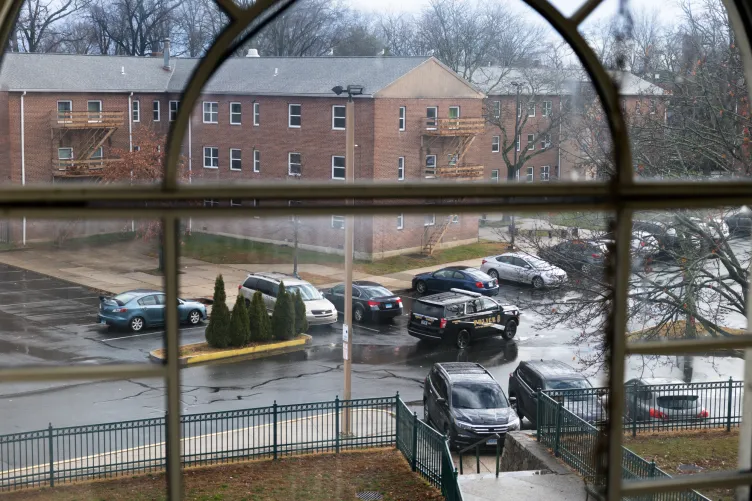
Brick buildings and trees stand next to a lot with parked cars and a black police car. The scene is framed by window panes.
A police car patrols the parking lot at Samuel Roodner Court in Norwalk, Connecticut. In Norwalk, the top seven property parcels for tows belong to the public housing authority. Shahrzad Rasekh/CT Mirror

Few landlords had more tows in New Haven from 2022 to 2024 than the company that owns Sunset Ridge. And residents say the frequency of towing has picked up even more in recent months after the owner, Capital Realty Group, became more aggressive in response to the formation of a tenants union. In the five months since the new law took effect, Sunset Ridge has had 64 tows, compared with 146 from 2022 to 2024, according to police data. Capital Realty did not respond to calls and emails seeking comment.

Whether landlords and towers are following the law matters because towing in Connecticut has disproportionately occurred in low-income areas. In many cities, public housing complexes and low-income apartments were some of the biggest hot spots for towing before the reforms passed, according to a new CT Mirror and ProPublica analysis of police department tow logs.

The analysis of data from nine of the largest Connecticut cities showed that census tracts where the most tows occurred from 2022 to 2024 tended to have larger populations of renters, larger Black and Hispanic populations and much higher rates of poverty than the state as a whole. The census tract where Natal and Flores live had the second-most tows in the city and a high population of Hispanic and Black residents. In Norwalk, the top seven property parcels for tows belong to the public housing authority.

“It’s such a fish-in-a-barrel situation where people have to put their car somewhere,” said Luke Melonakos, vice president of the Connecticut Tenants Union, about the difficulty finding parking in some of these housing complexes. “They have no choice but to try to abide by these often very arduous, confusing, often-changing-frequently parking rules.”

Connecticut Department of Motor Vehicles spokesperson Shaun Formica said that the agency hasn’t received any complaints of towing companies not following the law, but that complaints about towing overall have gone down. Since the law went into effect in October, there have been seven complaints, compared with 32 from October 2024 to March 2025, records show. Natal did not file a complaint.

Lombard Motors and another company owned by the same group, Anthony’s Hightech Auto Center, were the subject of nine complaints that resulted in fines between 2023 and 2025 before the law took effect, records show. In two cases, the DMV fined them a total of $5,000 for overcharging people to get their vehicles after a tow and ordered Lombard to return more than $1,000 to the vehicle owners. Lombard did not attend the hearings to offer a defense in either case, records show.

The owners of Lombard and Anthony’s did not respond to multiple calls for comment.
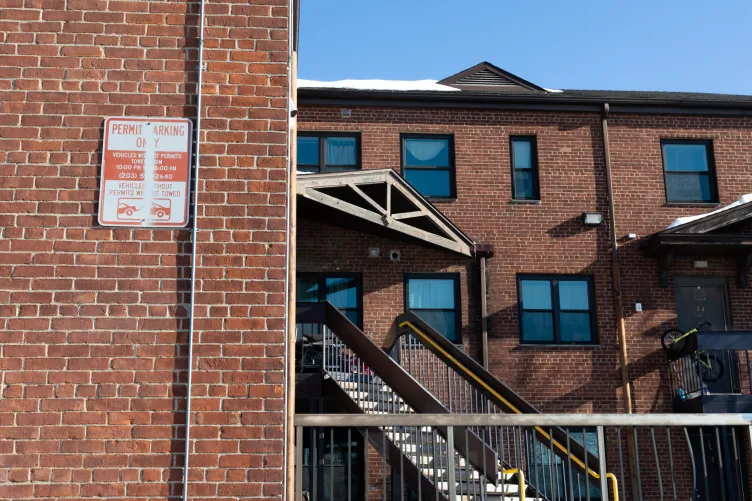
The Biggest Towing Hot Spots

A brick building with stairs and windows reflecting a blue sky. A permit parking sign hangs on a wall with a notice saying vehicles without permits will be towed.
One of the most common towing spots in Waterbury, Connecticut, from 2022 to 2024 was the Berkeley Heights public housing complex with 318 tows — more than one tow for each of the 254 apartments there. Shahrzad Rasekh/CT Mirror

Like at Sunset Ridge, the effects of towing have been felt most by people of color and poor families in Connecticut, in part because they are more likely to rent than own their home.

Statewide, about a third of people are renters. In census tracts where the most tows occurred, more than three-quarters are renters. The 50 census tracts where tows occurred most were about 27% Black and 38% Hispanic, compared with 10% and 18% statewide. Connecticut’s overall poverty rate is 10%, but it’s 26% in these census tracts.

Residents of these areas say they face higher levels of towing because public housing authorities and landlords of low-income apartment complexes often have towing companies on contract to patrol their areas. Though the intent might be to deal with abandoned cars or a lack of parking for residents, they say it’s led to overly aggressive towing for minor mistakes that people in wealthier neighborhoods don’t have to worry about.

One of the most common towing spots in Waterbury from 2022 to 2024 was the Berkeley Heights public housing complex with 318 tows — more than one tow for each of the 254 apartments there.

Dyshawn Key was visiting his mother there in April 2024 when shortly after 11 p.m. he noticed a tow truck lifting his car, which was parked outside his mother’s apartment.

He had forgotten to move his car from his mother’s spot, which required a parking permit, and rushed out and begged the driver to stop, but it was too late. Key’s car has been towed at least eight times from Berkeley Heights since 2022, mostly for parking without a sticker.

“They make sure that people are sleeping and there’s nobody around, and they just tiptoe through here and take your vehicle,” Key said. Data shows that almost 90% of tows there happened between 10 p.m. and 7 a.m., when apartment offices are typically closed and it’s unlikely that property managers would complain about parking.
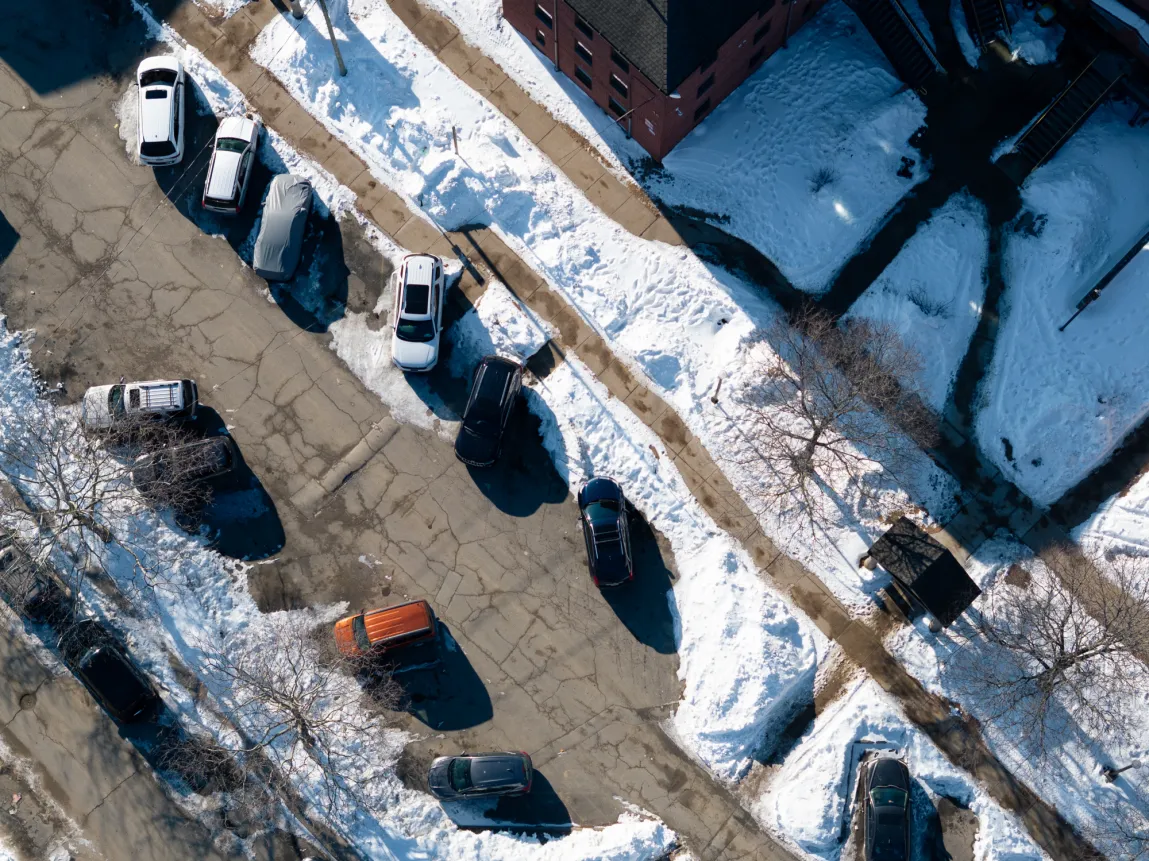
An aerial view of a snow-covered parking lot with some cars parked on snow.
A parking lot at the Berkeley Heights housing complex. Residents of public housing say they face overly aggressive towing for minor mistakes that people in wealthier neighborhoods don’t have to worry about. Shahrzad Rasekh/CT Mirror

Fewer tows have happened at Berkeley Heights since the law passed, according to Waterbury tow logs.

Waterbury Housing Authority executive director Chris D’Orso said there is a public road that runs between two of the buildings at Berkeley Heights, and the city monitors it carefully to ensure that people don’t block emergency vehicle or bus access. He said there have also been problems with people leaving stolen cars in the parking lot.

“We were turned into a dumping ground for stolen cars for a while,” D’Orso said.

Still, there isn’t enough parking, he conceded. Though he said most of the tows are driven by complaints, the agency contracts with a towing company.

Like Capital Realty in New Haven, several other landlords showed up multiple times in the data. Zvi Horowitz, a New Jersey-based landlord, through several companies, owns three of the biggest towing locations in Waterbury — Diamond Court Apartments, Wyndham Court Apartments and Bunker Hill Apartments. The three locations, which have 256 apartments combined, had 522 tows over two years.

Horowitz also owns Seramonte Estates in Hamden, a large town north of New Haven, where a tenants union held protests after residents said they were frequently towed for small infractions. The complex accounted for more than half the city’s tows from January 2022 to June 2024.

Paul Boudreau, one of the tenants union’s founders, said it had negotiated for towing to stop at all of Horowitz’s apartments. But since then, he’s gotten calls from tenants who say the towing hasn’t stopped despite the new law.

Horowitz didn’t respond to requests for comment.

Boudreau said that in his work as an organizer around the state, he often hears of people getting towed soon after asking for repairs or reporting problems with housing conditions at their properties.

“They’re still using these tow trucks like hired hitmen to go after tenants, to take their stuff when they complain,” Boudreau said.
“It’s So Retaliatory”

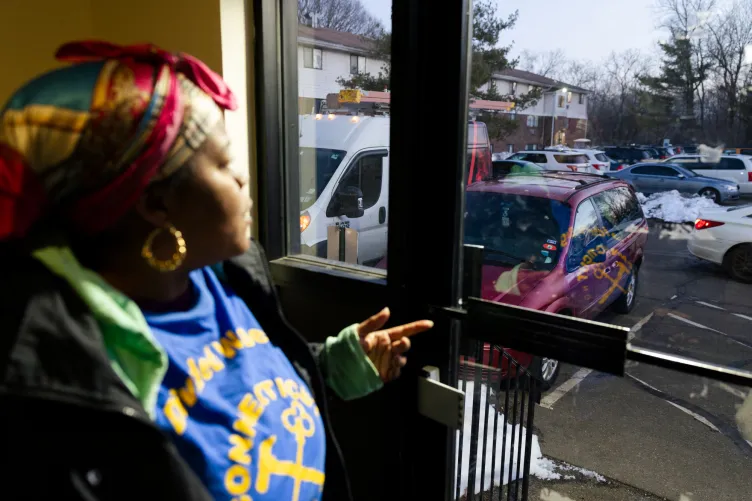
A woman wearing a headscarf and gold hoop earrings stands inside pointing toward a glass door. A parking lot with cars and piles of snow is outside the door.
Galberth, Elias Natal and Jasmin Flores’ neighbor at Sunset Ridge, says a tow truck driver often patrols the complex at night to look for vehicles. Shahrzad Rasekh/CT Mirror

Natal and Flores said they believe they were targeted by their landlord in retaliation for joining a tenants union that is trying to improve conditions at Sunset Ridge.

The day before their car was towed they had canvassed the complex with neighbors and outside organizers as part of the Sunset Ridge Tenants Union, a group of renters calling on Capital Realty to make changes at the apartment complex. In addition to requesting repairs at the complex, tenants said they have been towed unfairly.

“Everyone has had an issue with management or with parking or with the towing company, because it’s so retaliatory,” Flores said.

Tawana Galberth, a union leader, said one of the top complaints about the apartment complex when the union polled residents was towing. Many people reported being towed for small reasons, like being parked over the line. A tow truck driver often patrols the complex at night to look for vehicles, she said.

“When I moved in, I never received clarification. How do we park? Where do we park? Where do we have visitors?” Galberth asked.

Kristy Kaik said the use of parking stickers at the Rockview public housing complex in New Haven hadn’t been enforced for more than a decade. But when her son came home from college for Christmas after the new law took effect, he discovered his car had been towed for not having a sticker.

“I live there for a reason,” she said, describing the assistance including the public health insurance she receives. “I have food stamp benefits, Husky medical, my son is in school. I’m struggling.”

Kaik said there were no signs about parking rules at the complex, which a visit to the site confirmed. So Kaik asked the housing authority to reimburse her for what she says was a wrongful tow. It refused.

The New Haven housing authority, Elm City Communities, did not respond to requests for comment.

Like Flores and Natal, Kaik found that the company, York Service & Towing, would only take cash, telling her that sometimes, people would pay with a credit card then cancel the card before payment went through. She said she also had to argue to get them to hand over her change.
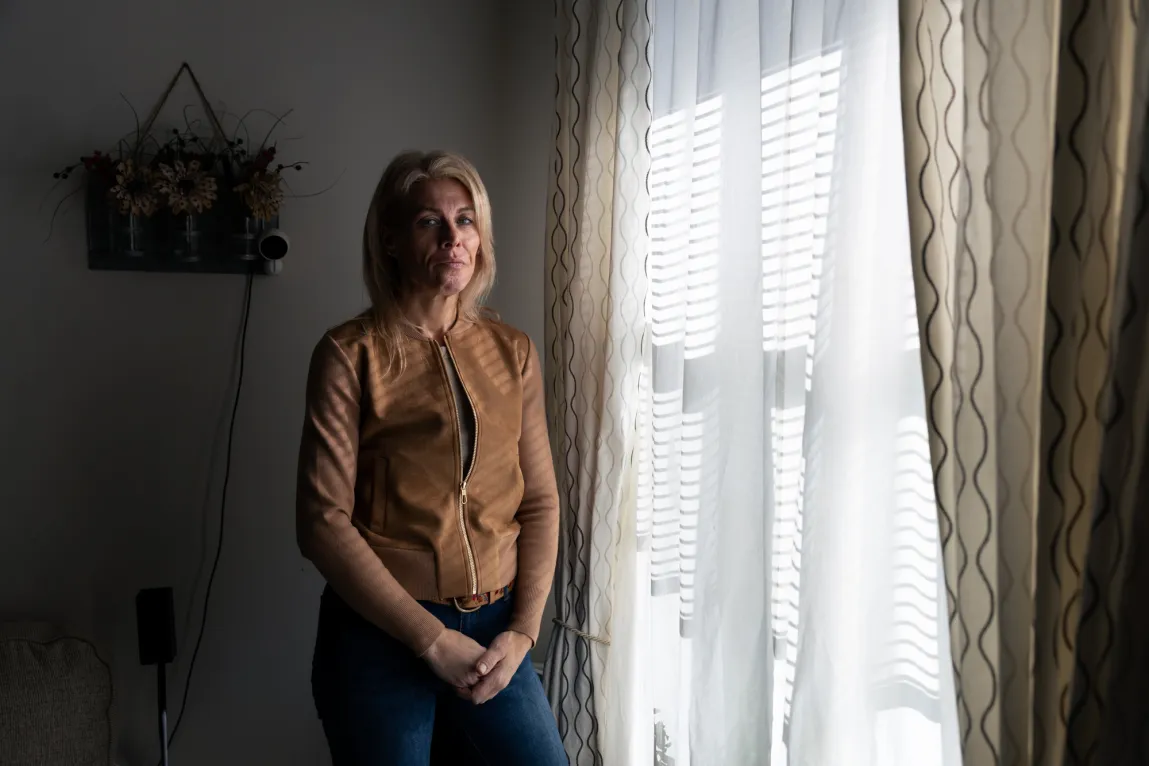
A blond woman wearing a brown jacket and jeans stands next to a window that has light streaming through the sheer white curtains. Hanging on the wall behind her is a basket of flowers.
Kristy Kaik at her home in New Haven. After her son’s car was towed, she said, the towing company would only take cash, even though a new law requires companies to accept credit cards. Shahrzad Rasekh/CT Mirror

Cheryl Maselli, owner of York, said her company follows all the new laws, although something like what happened to Kaik could occur if the person working doesn’t know how to use the credit card machine. She said some of the drivers “are not capable of learning new things.” They also don’t keep much cash on hand in case of robbery, she said, which could have led to the issue with change.

Maselli said her company is “one of the nicest towing companies out there.”

But she said she has to respond to her clients. “My client is a property manager. They want their property neat, clean,” Maselli said. “They don’t want people hanging out. They don’t want cars with faulty equipment, and these are some of the rules that we enforce. So when we do tow a car, the people are obviously angry.”