





These highlights were written by the reporters and editors who worked on this story.
For 30 minutes, Brian Tracey lay naked and unable to breathe on the floor of the medical ward at the St. Johns County Detention Center, a low-roofed building south of Jacksonville, Florida. It was Dec. 15, 2023, the day Tracey was supposed to be released from jail.
By the time deputies noticed him, it was too late. His girlfriend, who’d posted bond for Tracey after nine days, waited outside for him but was instead greeted by a deputy and chaplain, who told her Tracey was dead.
Medical staff working for the jail’s health provider, Armor Health of St. Johns County LLC, an affiliate of Miami-based Armor Health, said Tracey, 62, was showing flu-like symptoms and suffered from chronic obstructive pulmonary disease, a lung condition that makes it difficult to breathe. In the days and hours before his death, Tracey had passed out and appeared confused, according to a police report from the county sheriff’s office, which investigated the death. Much of what is known about how he died comes from this report, which includes Tracey’s autopsy, interviews with deputies and medical staff, and a description of a video of Tracey in the medical ward.
Four experts reviewed available detention and autopsy records for The Florida Trib and ProPublica. All four — two retired jail commanders and two medical doctors with extensive knowledge of jail treatment — determined that Tracey should have been hospitalized based on the symptoms he showed at the jail, which were later determined by an autopsy to be caused by pneumonia with COVID-19.
He never was.
For people like Tracey, who arrive in poor health, jails can be particularly dangerous, according to a growing body of medical research. Jailhouse deaths have been rising in the United States for the past decade, with about half due to illness, according to the Bureau of Justice Statistics.
Yet even as the death rate climbs, improving healthcare in jails has proven difficult. Many jails have turned to private contractors to care for inmates. But when those contractors perform poorly, there’s little pressure on the sheriffs or local governments to make a change. That’s even more true in Florida, where the vast majority of jails are run by elected sheriffs with little oversight from local and state officials.
“Healthcare overall in Florida prisons and jails is a difficult and frankly ignored issue that’s put on the back burner,” said former Republican state Sen. Jeff Brandes, who was vice chair of the state’s Criminal Justice Committee. “And it’s one that has no independent accountability or oversight. It’s kind of a black box that operates in the state.”
In the decade leading up to Tracey’s death, Armor Health Management LLC, known as Armor Health, and its predecessor, Armor Correctional Health Services Inc., faced allegations that they failed to hospitalize patients who needed more intensive care, according to court records obtained by The Florida Trib and ProPublica. (Armor Health had previously been operating as Armor Correctional Health Services Inc. until legally converting to an LLC in 2021.)
From 2014 to early 2021, Armor Correctional Health Services was sued over 450 times, the company reported in documents submitted to St. Johns County as part of a contract-bidding process in 2021. Lawsuits over subpar jailhouse healthcare are frequently filed and often dismissed, as was the case in two-thirds of the suits filed against Armor. The bid documents show the company has settled at least 56 suits that alleged medical negligence or inappropriate medical care. Court records show that at least 13 of those cases alleged a delay in hospital care. More than 100 cases are still pending, according to the documents. In a 2020 wrongful death suit against Armor Correctional Health Services, lawyers hired a medical expert to review internal company reports of inmate deaths at Armor facilities obtained through discovery. The expert claimed the company failed to hospitalize patients in more than 70 instances, according to court documents.
Armor denied claims that it has provided poor care or that its staff failed to hospitalize people, saying of the expert review that “each case involves unique medical circumstances, and deaths referenced were related to drug overdoses, natural causes, or other clinical conditions that were not associated with decisions regarding hospital transfer.”
Other states have taken action against Armor. After 14 inmates died at two county jails in New York where Armor Correctional Health Services of New York Inc. provided healthcare, the state sued the company in 2016 for breach of contract and fraud. The New York State Commission of Correction’s Medical Review Board found what it called “egregious lapses in medical care” in seven of the deaths, and a separate investigation by the state attorney general found that the company failed to keep accurate records. Armor settled the suit and denied responsibility, but the agreement barred the company from doing business in New York for three years. Armor is now allowed to operate in the state.
In Wisconsin, prosecutors said Armor Correctional Health Services failed one jail inmate to such a degree that they charged it with a felony. In December 2018, Milwaukee prosecutors levied eight criminal counts against the company for its role in the death of a Wisconsin inmate who died from dehydration while under its care. The charges included seven counts of falsifying a record and one felony count of abuse of a resident of a penal facility. A jury in 2022 found the company guilty of all charges.
Prosecutors had hoped the conviction would push jails to cancel contracts with Armor, they said in an interview. And at least in Florida, they had reason to believe that might happen. Under Florida law, companies convicted of crimes directly related to transactions with government agencies must report the conviction to the state within 30 days and are barred from working with Florida public entities. Barred companies are also placed on a public list of convicted vendors. But the Florida Department of Management Services told reporters in 2023 that the company did not report its conviction to the state — a claim the company rejects. The company also continued to do work in Florida under a range of names linked to entities that had similar leadership and structure.
After it was charged but prior to its conviction, the company filed paperwork with Florida converting itself to a new corporation under the name Armor Health Management LLC, according to corporate records. When the verdict came down in December 2022, it was against the defunct company. A series of new LLCs, which were formed under the holding company Armor Health and have Armor Health in their names, then signed new contracts with seven Florida jails. Florida business records show those limited liability companies have the same chief executive officer and street address in Miami as Armor Health. Manuel Fernandez, chief operating officer of Armor Health, also testified in court that the new entities assumed the liabilities of Armor Correctional Health Services Inc. after that company dissolved. Fernandez said the LLCs were created for tax purposes.
In at least one document, the company seemed to acknowledge a connection between the defunct company and one of its newly formed companies. When Armor Health of St. Johns County LLC was asked in bid documents to provide a list of all litigation for the past seven years, the company listed hundreds of suits filed against the defunct Armor Correctional Health Services.
Within three years of the company’s conviction, six of the seven Florida jails using an Armor entity stopped contracting with those companies, with at least two ending their contracts early: one citing poor performance and contract violations, and the other saying the termination was in the county’s best interest.
St. Johns County, where Tracey died, holds the only known remaining contract with an Armor entity in Florida. Sheriff Robert A. Hardwick, who is responsible for signing contracts with vendors, declined to comment.
An attorney for Armor defended the ongoing contract, telling the news organizations last month that it disclosed the conviction to the state and that the convicted company no longer exists. “Each Armor entity is in full compliance with all applicable State of Florida requirements and each remains eligible to operate in the state,” J. Alfredo Armas, the attorney for Armor Health of St. Johns County LLC, wrote in an email to The Florida Trib.
The state of Florida does have safeguards to ensure its contractors are providing good services. However, in multiple ways, the state did not employ those tools when it came to Armor. In 2023, the state’s Department of Management Services, which is responsible for maintaining the list of convicted state vendors, said that it was investigating the company after a man died in the Duval County jail under Armor’s care. The inmate’s family alleged in a lawsuit filed in 2024 against the sheriff that the man was denied life-sustaining medication for a heart transplant. Armor said at the time that it had located and ordered the medication, but it arrived after the man had been released. That suit was later settled. The Department of Management Services has declined repeated inquiries over two years to say whether it has investigated Armor Correctional Health Services or Armor Health Management, or if it ever took action against any of the company’s entities. Armor does not appear on a public list of banned companies on the department’s webpage.
The fact that there is a known vendor that has basically allowed people to die while under their care and they can continue to work in our prisons and jails is something that I have a problem with.
Angie Nixon, former state representative for Jacksonville, Florida
The state has also failed to reply to public records requests that might shed light on how it handled its investigation, if one was conducted. When a reporter went to the Department of Management Services headquarters in Tallahassee in February, the department would not make any agency representative available and told the reporter to contact the same spokesperson who has repeatedly declined to answer questions.
In addition, at the time of the transplant patient’s death, former Jacksonville state Rep. Angie Nixon and a state senator wrote to the U.S. Department of Justice and stated that Armor had failed to report its conviction and should be barred from operating in the state. They asked the DOJ to conduct an investigation into “potential violations of federal law” by Armor. The DOJ acknowledged receipt of the letter to Nixon, but she said they never heard from the department again. The DOJ did not respond to a request for comment.
The office of Gov. Ron DeSantis, who appointed the interim Department of Management Services secretary, Tom Berger, declined through a spokesperson to comment about the agency’s investigation, or to say if the governor has a stance on convicted companies working in Florida. The Florida attorney general, who represents state agencies and issues formal legal opinions, also declined to comment.
Nixon, who is now running for a seat in the U.S. Senate, said she would be raising the issue of Armor again with the DOJ, the Department of Management Services and the governor’s office.
“The fact that there is a known vendor that has basically allowed people to die while under their care and they can continue to work in our prisons and jails is something that I have a problem with,” said Nixon.
When Jose “Pepe” Armas, a Miami physician and business owner, started Armor Correctional Health Services in 2004, he had very different ambitions. He had learned about jail deaths and substandard care that plagued the Broward County jail in South Florida for decades. So he consulted with other physicians and told a medical professor whom he attempted to recruit that he wanted to raise the standard of correctional care across the country.
Armor’s first contract was a $127 million deal in Broward County to handle medical care for all of its roughly 5,000 inmates. The company grew rapidly, winning additional contracts in Brevard, Hillsborough, Martin, Palm Beach and Sarasota counties and, in 2007, St. Johns County. By 2011, Armor had also signed contracts in at least 12 other states.
In a 2021 wrongful death lawsuit, Pensacola attorney Joe Zarzaur argued that those contracts incentivize Armor entities to keep sick inmates in the jails because Armor is paid a flat fee to provide healthcare; that means, he argued, there’s no billable benefit for adding additional services, such as hospitalization.
“This is why Armor’s contractual partners, inmates, and families see this repetitive conduct of delaying or outright denying inmates medical care, which leads to their deaths,” Zarzaur argued in court filings. In that case, 44-year-old Misty Williamson died of pneumonia with sepsis after she was sick for five days at the Santa Rosa County jail.
Armor said no Armor entity assumes financial responsibility for offsite medical costs, therefore there is no financial incentive to delay or avoid sending a patient to the hospital, adding that delaying hospital care is counterproductive.
“Allowing a serious condition to deteriorate only increases the likelihood that the patient will ultimately require more intensive, expensive and specialized treatment,” Armor’s attorney, J. Alfredo Armas, said. The suit alleged in court records that since 2011, at least 72 people died under the care of Armor Correctional Health Services after they were not hospitalized or their hospitalization was delayed, including 11 other people who died from pneumonia or sepsis. The analysis was conducted by an expert in jailhouse medical care who reviewed hundreds of pages of Armor’s internal death reports gained through discovery. Armor attempted to block the analysis from being used in the trial by arguing the allegations had no bearing on whether the medical treatment its employees provided to Williamson met its standard of care. A judge allowed the death reports and a written affidavit by the expert to be entered as exhibits in the trial.
A jury sided with the family of Williamson, whose estate was awarded $6 million in compensatory damages. Jurors found both Armor and its employees were negligent in delaying her transfer to a hospital and awarded her family an additional $10 million in punitive damages.
But there was a larger issue at play: Was it individual employees or a larger company policy that was at fault? During the Williamson trial, Amy Dixon, a former Santa Rosa County jail nurse, testified that Armor had an ambiguous standard for sending patients to the hospital without preapproval, and that she could transfer someone if they were having a heart attack, but that something like a seizure should wait. Jurors ruled against Armor, saying the company’s policies and its employees were at fault for Williamson’s death. But the judge overruled that, striking down the $10 million award and finding that attorneys did not prove Armor’s policies led to Williamson’s death. Armor said the deaths in the analysis involved unique medical conditions and were related to drug overdoses, natural causes or other clinical conditions that were not associated with decisions regarding hospital transfer.
Despite that outcome, in other cases nurses have similarly testified that Armor delayed transfers to hospitals. Carolyn Rubin testified in a Sarasota case that “there was a strong corporate push for the doctor not to send patients out.” She added, “It was our duty to keep them there as long as possible, to prevent costs of the hospital.” Armor denied the allegations that it failed to hospitalize a detainee who died of a brain hemorrhage after she complained for days about health problems including trouble walking. The lawsuit was later settled and Armor made no admission of wrongdoing.
In 2018, Katherine McCormack Grange, an Armor nurse working at a New York jail where an inmate died of a heart attack, testified in a civil trial that she was personally told by an Armor manager that the company did not want patients to be sent to the hospital because of the expense. The lawsuit accused Armor Correctional Health Services of a “long and pervasive history of deficient health and medical care” at the Nassau County jail, which the company denied. The case was eventually settled and Armor made no admission of wrongdoing. The New York State Commission of Correction later determined the man’s death may have been prevented if he received proper care, according to the commission’s report, and that Armor Correctional Health Services staff did not properly fill out documentation after his collapse, which the company also denied.
In the years leading up to Tracey’s death but before the conviction in Milwaukee, a handful of Florida sheriffs dumped Armor, blaming the company for inmate deaths and failed accreditations, and claiming it provided lax medical care.
Flagler County Sheriff Rick Staly publicly fired Armor Correctional Health Services in 2019 after a 23-year-old was found seizing and unresponsive in his cell earlier that year; he had been complaining of a high fever. He was taken to a hospital and died there. Staly said the medical provider failed to recognize the man “was having a reaction to medicine they had prescribed to him and the seriousness of his illness.”
“In response to this tragedy, Armor has shown little interest in anything other than denying responsibility and trying to bill us for even more money,” Staly said then. The next year, an annual audit by the Florida Model Jail Standards at the Flagler County jail “found expired medications, lapses in medical care by Armor and other deficiencies in Armor’s services.”
In 2020, Sarasota County Sheriff Thomas Knight wrote in a declaration during a civil employment case that Armor filed against an employee that he fired Armor because he was “not satisfied with their performance,” including lack of proper medical staffing. Wakulla County Sheriff Jared Miller also wrote a declaration, explaining that he was “not satisfied with the service levels the WCSO had been receiving from Armor” when he ended the contract.
In response to this tragedy, Armor has shown little interest in anything other than denying responsibility and trying to bill us for even more money.
Rick Staly, Flagler County sheriff, after an inmate died
Then, in 2022, Armor Correctional Health Services was criminally convicted in Milwaukee for abuse and falsifying records after a man died of dehydration in a Wisconsin jail.
“We understood that this would likely have some broader impact if we were successful,” Milwaukee prosecutor Nicolas Heitman told The Trib, adding that the district attorney’s office wanted to make sure the company could not operate in other jails. “If you look at the history and their performance as a corporate partner with these institutions, you see they have a history of problems and an inability to reform themselves.”
One sheriff cited the conviction as a reason for ending a contract. Duval County first hired Armor in 2017, but Sheriff T.K. Waters ended a renewed contract early, saying that Armor failed to disclose its felony conviction, failed to maintain accreditation with the National Commission on Correctional Health Care, and failed to comply with Florida’s open record laws. The decision came after the heart transplant recipient died after not getting antirejection medications while in the Duval County jail. Waters did not cite the death as a reason to cancel the contract.
Mariloly Muller, a spokesperson for Armor Health, said the canceled contracts “relate to a prior leadership team and legacy operations that are not reflective of the current organization, its leadership, or its ongoing business practices.”
The only public record of Tracey’s nine days in jail comes from a 26-page police report from the St. Johns County sheriff’s major crimes unit, which investigates in-custody deaths.
Tracey had been taken to jail on Dec. 6, 2023, for pushing an elderly woman he had been dating. The report shows that upon his arrival, jailers placed him in the infirmary to monitor a dog bite wound that doctors at University of Florida Health Flagler Hospital had treated shortly after he was arrested.
Soon after he arrived at the infirmary, medical staff noticed Tracey was having trouble breathing and prescribed him an oxygen mask, according to the report. A nurse said that on Dec. 14, Tracey was sweaty and complained of shortness of breath. The report noted that Tracey repeatedly removed his mask, something nurses interpreted in the report as noncompliance, and reprimanded him. The nurse who treated Tracey noted that his blood oxygen level dropped to 89%. The Cleveland Clinic, an academic medical center, recommends on its website that people seek immediate medical treatment when their blood oxygen level falls below that.
The next day, a different nurse told medical staff that Tracey needed to be watched because of his “decline in health,” that his blood oxygen levels were still “very low,” and that Tracey had passed out in his cell, according to the sheriff’s incident report.
According to the report, the nurse practitioner on staff later told investigators he was never told Tracey passed out. Another staffer quoted in the report said no one had discussed whether to send Tracey to the hospital. One person told investigators that Tracey was asked if he’d want to be hospitalized, but he declined. There is no standard “refusal” form that detainees have to sign if they say no to medical care, the report noted.
About an hour after he passed out, at 7:09 p.m. on Dec. 15, Tracey’s girlfriend had paid his bond and the deputy went to his cell to give him street clothes. He was found naked and lying in his bed. Investigators noted that it took “a lot of effort” for Tracey to get dressed. At 7:56 p.m., Tracey, who was still in the cell, appeared to yell something, waved his hands and then used an inhaler and put his hand on his chest, investigators saw in the videotape.
By 8:16 p.m., Tracey had removed his pants and was visibly struggling to breathe, the report says.
However three minutes later, in the inmate log report, a separate document maintained by sheriff’s deputies who conduct routine checks of medical patients, deputies noted they checked on Tracey and he was “OK.”
Over the next 26 minutes, as Tracey lay alone in his cell, nobody came to his aid.
At 8:35, Tracey appeared to stop breathing, according to investigators who watched the surveillance video. Investigators noted two deputies went into his cell two minutes later, then left. They came and went three more times over the course of a few minutes, without giving Tracy medical care, the report says.

In the jail log, deputies wrote that they checked on all medical inmates at 8:45 — 10 minutes after investigators noted Tracey stopped breathing — and wrote that “all appears secure.”
No one gave Tracey CPR until 9 p.m., when he had already lost his pulse, according to the investigative report.
An ambulance was called, but Tracey was declared dead at the jail.
Dr. Marc Stern, a correctional healthcare expert and University of Washington Public Health professor, said based on the information known about Tracey’s symptoms from the investigative report, Tracey should have been hospitalized.
Rich Forbus, a former jail commander who currently serves as vice president at the National Commission on Correctional Health Care, reviewed the sheriff’s report at the request of The Trib and agreed with Stern. The private nonprofit company offers accreditation services to jails upon request. While some Florida county jails, such as Duval, have received accreditation from the company, St. Johns confirmed it doesn’t use the firm now, though its 2022 contract with Armor Health of St. Johns County LLC required the company to maintain accreditation with the commission.
“You know the person’s a COPD patient and you know he’s sick, I’ll be honest, I question why he didn’t go out” to a hospital, Forbus said. “If I’m the jail commander, I’m questioning why he’s not at the hospital.”
That’s a question that Tracey’s sister, Lillian Scharf, is also asking. About five hours after he died, at 1:30 a.m. on Dec. 16, 2023, Maryland police went to her house.
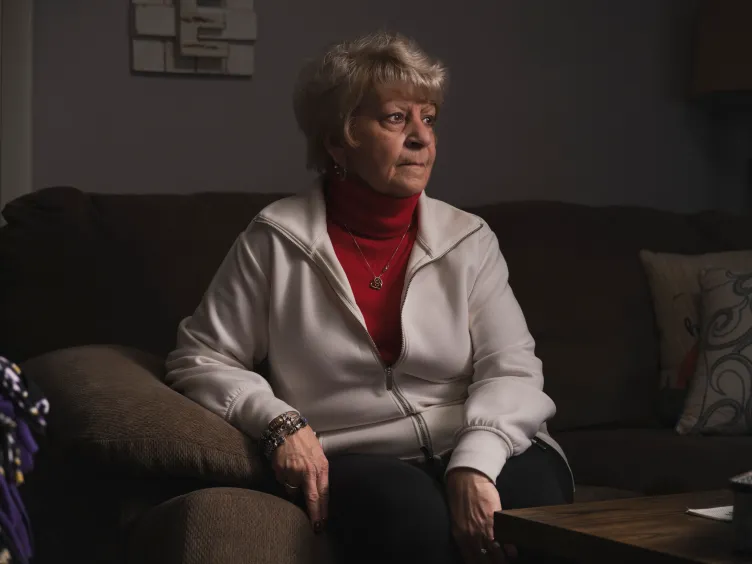
Scharf, Tracey’s closest remaining relative, said police told her to call the Florida sheriff for more information.
“They told us he died of a heart issue, that it was sudden, he just fell over and died,” her daughter, Tracey Letourneau, recalled being told.
But when Scharf asked for her brother’s full medical documents, the sheriff declined to give them because she’s not his legal next of kin. Tracey’s wife, Brenda, died a year before he did.
When asked about Tracey’s death, J. Alfredo Armas, the attorney for Armor Health of St. Johns County LLC, cautioned against drawing conclusions regarding Tracey’s death because his medical records have not been released. The company has withheld those medical records from The Florida Trib, ProPublica and Tracey’s sister, citing medical privacy laws.
Scharf also contacted a handful of attorneys in Florida and Maryland, but because the jail told her he died of a heart issue, each attorney turned her away.
Scharf didn’t learn the true details of her brother’s death until this year, when The Trib and ProPublica sent her the autopsy and police report, obtained through a record request. By then, the two-year statute of limitations to sue for a wrongful death or neglect had passed. Florida also doesn’t allow monetary lawsuits in cases where the deceased doesn’t have a spouse or children.
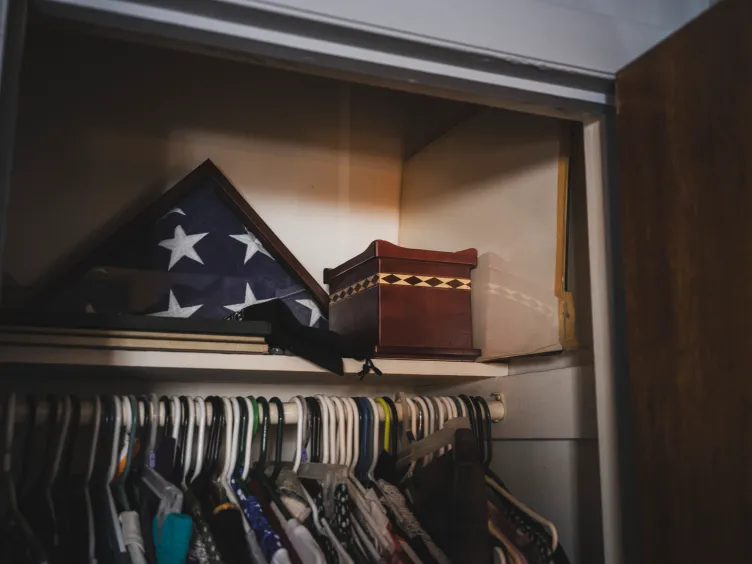
Her younger brother’s ashes are now in Glen Burnie, Maryland, in a box in Scharf’s closet. His pug, Thor, lives with Brenda’s sister.
“You know, only the Lord knows the truth as far as if he would have survived or if he would have died, but I just feel like they didn’t give him the opportunity to try to save his life,” Scharf said.
此内容由惯性聚合(RSS阅读器)自动聚合整理,仅供阅读参考。 原文来自 — 版权归原作者所有。