







These highlights were written by the reporters and editors who worked on this story.
March unfolded like a stress test for U.S. counterterrorism authorities.
The month opened with a gunman in an Iranian-flag shirt killing three people at a bar in Texas. Then, an attack with homemade explosives outside the mayor’s mansion in New York City. Next came a deadly shooting March 12 on a Virginia college campus and, the same afternoon, a car-ramming at a Michigan synagogue. Days later, agents arrested a man charged with threatening a mass shooting at an Ohio mosque.
To current and former national security officials, these were omens, signs of the dangers they predicted last year when President Donald Trump began redirecting counterterrorism resources toward his mass deportation campaign.
They had warned of a diminished ability to respond should major global events inflame threats at home and abroad. Now, they say, the war in Iran has locked the Trump administration into a showdown with a sophisticated state sponsor of terrorism at a time when U.S. security agencies have hemorrhaged expertise and leadership is in flux.
The urgency of the moment has trained a spotlight on Sebastian Gorka, the White House counterterrorism adviser tasked with drafting a blueprint for fighting homegrown and international threats. Nearly a year ago, Gorka declared a national counterterrorism strategy “imminent.” By July, he was “on the cusp” of unveiling the plan — a phrase he repeated three months later in October. And again in January.
To date, no strategy has appeared, and no explanation for the delay. When it is finally released, current and former counterterrorism personnel say, they expect a document rooted in politics rather than intelligence, with little detail on how to combat threats after a year of deep cuts across national security agencies.
“Strategies are only worth the amount of resources you put into them,” said a former senior official who served in the first Trump administration. “We’re entering very dangerous territory.”
The shifting promises are unsurprising to colleagues familiar with the brash, quick-tempered Gorka, a gate crasher in Washington’s buttoned-up defense establishment. His threats and boasts are laced with grandiose language and delivered in a booming, British-accented voice.
ProPublica interviewed more than two dozen national security specialists across party lines to trace Gorka’s path to one of the most sensitive jobs in government. Nearly all spoke on condition of anonymity because of the Trump administration’s record of retaliation.
His ascent, they said, tells the story of a startling transformation of the U.S. counterterrorism agenda in Trump’s second term. Eye-rolling over Gorka’s bombast has given way to anxiety about the administration’s preparedness to identify and stop major plots.
In the first Trump administration, Gorka lasted just seven months before being forced out by the “adults in the room,” as some staffers referred to the more moderate gatekeepers then around the president. In that brief stint, he reportedly struggled to obtain security clearance and faced an outcry over ties — which he denies — to a far-right group in Hungary.
After the exit, he hosted a right-wing podcast and popped up in ads selling fish-oil pills for pain relief. Then his fortunes changed again with the 2024 election that swept Trump back to power, this time with a more conspiratorially minded wing of the Make America Great Again movement. Gorka’s loyalty paid off with a phoenixlike return to the White House in a role sometimes called “counterterrorism czar.”
“I’ve been waiting 25 years for this job,” he confided on his podcast before taking office.
The first year of Trump’s second term was so frenzied that even the colorful Gorka faded into the background as the administration dismantled federal agencies and created a secretive, sometimes deadly immigration force. Now, however, the counterterrorism director’s role is coming back to light as hostilities roil the Middle East and heighten the risk of attacks in the United States or against American interests or allies overseas.
Days before U.S. military operations began in Iran, FBI Director Kash Patel fired a dozen personnel from a counterintelligence unit that monitored threats from Iran, CNN reported — part of a wider purge of some 300 agents specializing in counterterrorism.
Former officials said the sudden loss of that many colleagues is devastating to the sensitive, granular work of preventing attacks.
“I don’t think about it in raw numbers. I think about it in the wealth of expertise and knowledge that has been cut across all levels,” a former senior Justice Department official said. “What you lose is that nuance — with a smaller team, you can only go so deep.”
An FBI spokesperson said the bureau does not comment on personnel numbers but that agents are “working around the clock” and had disrupted four alleged U.S.-based terrorist plots in December alone. “The FBI continuously assesses and realigns our resources to ensure the safety of the American people,” the statement said.
ProPublica sought an interview with Gorka directly and via the White House. He did not respond to a detailed list of questions but assailed the requests in two posts on X, where he has 1.8 million followers. The first was a “no,” along with insults, addressed to several journalists who had asked him to comment on the strategy. In the second post, directed at ProPublica, Gorka accused the reporter of writing a “putrid piece of hackery.”
“If the criticism is we’re killing too many Jihadis (759) since 20th January 2024, or rescuing more US hostages in 12 months (106) than Biden did in 4 years, I stand by our historic wins for AMERICA First,” Gorka wrote, with an apparent typo. Trump took office in January 2025.
White House spokesperson Anna Kelly said in an email that the restructuring of agencies “has made the entire foreign policy apparatus even more responsive to potential threats” and praised Gorka for “an incredible job” leading interagency talks.
“Anyone attempting to smear him and the President’s national security team is only revealing that they haven’t been paying attention for the past year,” Kelly wrote, “as anyone with eyes can see that our homeland is more secure than ever.”
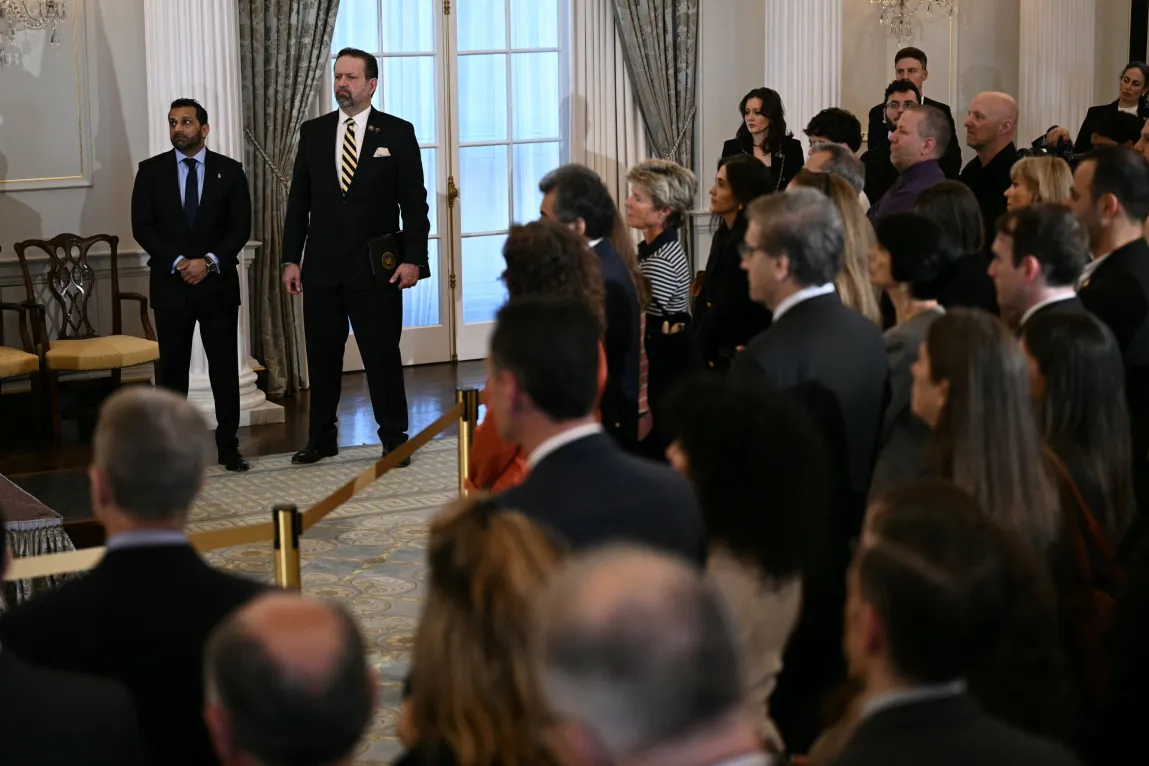
Gorka has emerged as one of the last men standing after a tumultuous stretch for U.S. counterterrorism leadership.
His original boss, national security adviser Mike Waltz, was booted to the United Nations after the Signalgate scandal, leaving the role to Secretary of State Marco Rubio, who was already juggling portfolios and is busier now with Iran.
Another blow came when Joe Kent, director of the National Counterterrorism Center, resigned last month in protest of the war in Iran, which he said was pushing the United States “further toward decline and chaos.”
Gorka was livid. He told an audience at the Council on Foreign Relations that he called Kent the day of his resignation and left a message calling him an “utter disgrace” for criticizing the president in wartime.
“At the end of my voicemail,” Gorka recounted, “I said, ‘Good riddance to you, Joe.’”
Within days, Gorka was angling for Kent’s old job at the counterterrorism center, the government’s hub for analyzing terrorist threats, The Washington Post reported. Colleagues said they weren’t surprised — the role brings more power — but added that Gorka would likely face a tough Senate confirmation process if nominated.
The leadership disarray compounds the risks of hollowed-out counterterrorism operations, say national security analysts.
At a time when hundreds of personnel typically would’ve been assigned to thwarting attacks amid international conflict, the administration “has gutted this capacity through firings, forced resignations, and slashed budgets,” a panel of national security analysts wrote in the journal Lawfare.
The Justice Department acknowledged in budget proposal documents that its National Security Division is facing “unprecedented personnel constraints,” struggling to keep up with increasing caseloads and a 40% drop in the number of prosecutors.
At the State Department, former officials said, Iran specialists at the counterterrorism bureau were dispersed to regional offices where counterterrorism is one of many priorities. The entire team focused on threat prevention was eliminated. As a senior official who recently left put it, “They keep saying we can do it all even though they have half an arm now, and no legs.”
Since the Iran war started, officials say, some counterterrorism specialists who had been reassigned to immigration have returned to their old roles, creating a whiplash that can disrupt investigations and analysis.
“If you’ve dropped all the cases and have taken people off the target set for an extended period of time, you can’t just drop back in and pick up where you left off,” said Ben Connable, a former Marine Corps intelligence officer who leads the nonprofit Battle Research Group. “The men and women who are back on that portfolio are going to have to play catch-up, and that conveys risk.”
The Department of Homeland Security hasn’t published any national terrorism advisory bulletins, periodic updates to alert the public to the current threat level, since September. It has not released the annual Homeland Threat Assessment since Trump returned to office, according to Colin Clarke, executive director of the security-focused Soufan Center, and fellow terrorism scholar Jacob Ware. A DHS spokesperson said updates on the documents “will be provided following the end of the Democrat DHS shutdown.”
Gorka’s long-awaited strategy, Clarke and Ware said in an op-ed, could help clarify White House thinking on how to handle threats when “defenses are divided, disorganized and under-resourced.”
“This is the moment for the Trump administration to demonstrate that it recognizes the stakes,” the researchers wrote. “In counterterrorism, inattention can be deadly.”
Gorka’s path to the White House began in the cottage industry of self-styled terrorism experts that sprang up after the 9/11 terrorist attacks.
He became a regular on a training circuit where speakers received lucrative contracts from international governments and law enforcement agencies to teach about the threat of militant Islamist movements. Many trainers of that era maligned Islam and backed policies that violated the rights of ordinary American Muslims in the name of counterterrorism, according to civil liberties watchdogs.
“For him, counterterrorism is kinetic and it’s against one type of enemy: the jihadist enemy,” said an associate who has known Gorka for two decades.
Born in the United Kingdom to Hungarian parents, he attended college in London and served as a reserve intelligence soldier in the British military. He later spent time in Hungary, dabbling in nationalist politics and earning a doctorate degree.
In 2008, Gorka moved to the United States with his American wife, also a counterterrorism specialist, and eventually became a naturalized citizen — “a legal immigrant,” as he is introduced at events.
As an instructor at think tanks and military institutes, he pushed an image of Muslims as inherently violent, according to current and former colleagues. They say his fixation on Islamist militancy crosses into a more generalized bigotry, a claim Gorka has dismissed as “absurd.” He insists that his focus is “the war inside Islam” between radicals and Western-aligned Muslim leaders. “We want to see our friends win that war,” he has said.
A former senior Justice Department official recalled an FBI agent lobbying hard to get Gorka hired as a counterterrorism trainer several years ago. The official “didn’t feel comfortable clearing him in on my credentials” for an office visit so instead drove over an hour to watch a lecture.
Gorka’s talk was “reductionist” in its portrayals of Islam as locked in a civilizational war with the West, the former official recalled. Immediately after the event, the official advised against hiring Gorka because his teachings potentially violated department principles against bias in training.
“I came back and said to the U.S. attorneys, ‘Let’s be careful here,’” the former official said. “They put a flag.”
Concerns about Gorka’s approach flared again when he joined the first Trump administration through the MAGA strategist Steve Bannon. Gorka, who had worked at Bannon’s right-wing Breitbart outlet, was appointed to the Strategic Initiatives Group, an in-house think tank at the White House.
The appointment prompted 55 House Democrats to demand his firing in a letter calling his association with far-right groups “deeply troubling.” They focused on the Hungarian nationalist group Vitézi Rend, whose medal Gorka wore on a military tunic to Trump’s inaugural events. Gorka has denied belonging to the organization, which had Nazi ties during World War II, and said the medal honors his father’s escape from communism.
Gorka’s qualifications for the job also came under scrutiny. Critics dug out and posted his dissertation, which was pilloried by other academics for a simplistic chart that placed terrorism on a spectrum somewhere between “peacekeeping” and “thermonuclear war.”
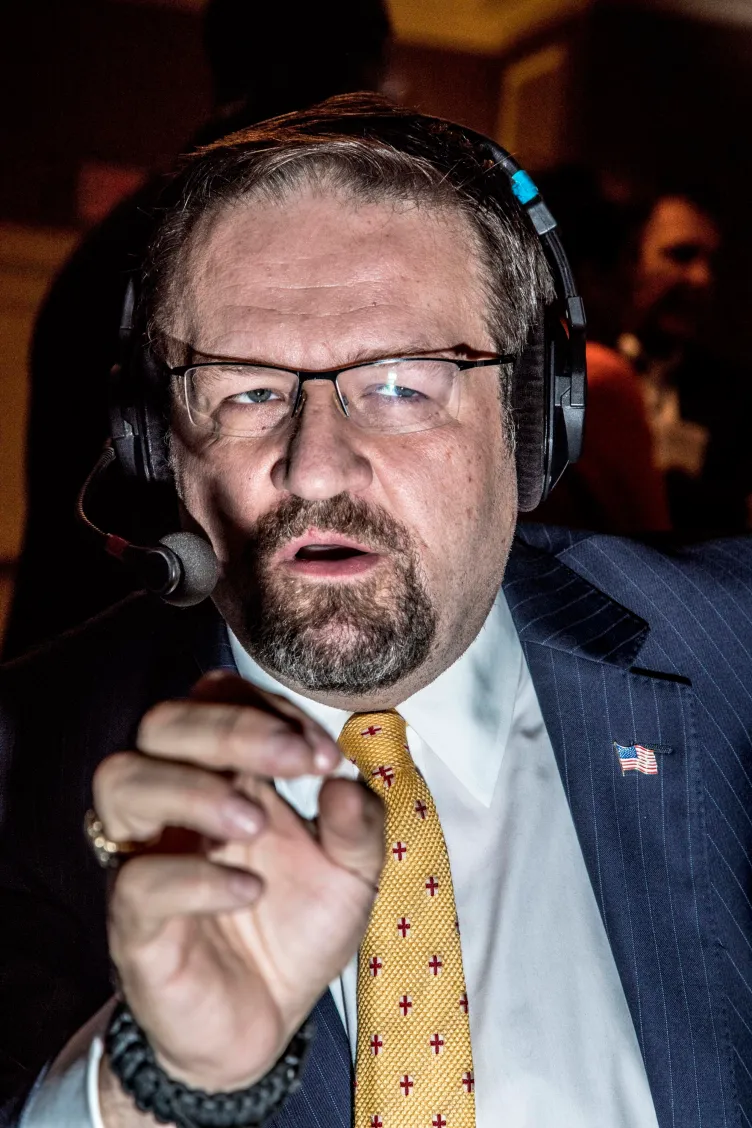
He eventually was ousted in August 2017, days after Bannon, in an internal power struggle. In his resignation letter, Gorka blamed his departure on the idea that “forces that do not support the MAGA promise are — for now — ascendant within the White House.”
Reporters spotted him outside loading his belongings into the back of a Mustang convertible with vanity plates “ART WAR.”
Gorka’s comeback symbolizes the hard-right swing of Trump’s second term.
Even some prominent conservatives were shocked by Gorka’s return. Michael Anton, who also served in the last Trump administration, reportedly withdrew from consideration for a senior national security role rather than work alongside him.
The jabs don’t seem to faze Gorka, who tells a story of standing outside the White House in January 2025, ready to swipe his badge the moment it was activated after Trump’s swearing-in. He has referred to his role as a dream job.
“I pinch myself every single day,” Gorka told the “Triggernometry” podcast.
The counterterrorism director’s responsibilities include coordinating policy for external threats as well as leading efforts to free wrongfully detained Americans around the globe. Gorka can be remarkably candid and mercurial for a senior official with such a sensitive remit, according to hours of his public remarks reviewed by ProPublica.
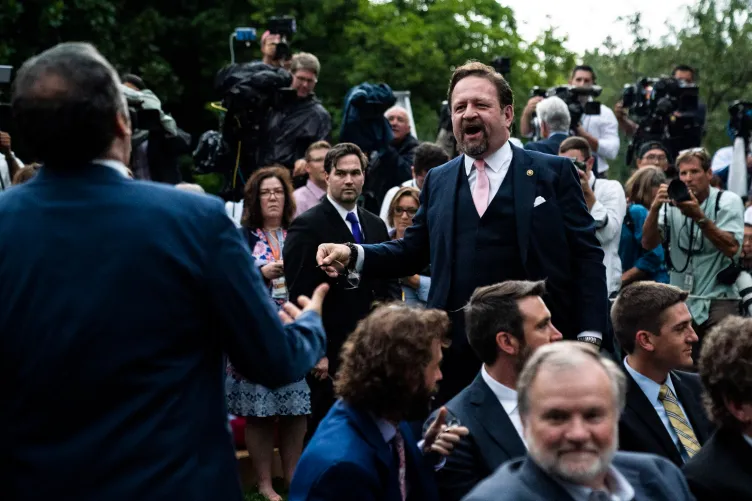
He has exploded at journalists (“Go to hell!”) and cut off interviews when he didn’t like the questioning (“We’re done!”). He repeats anti-immigrant tropes and boasts that “Judeo-Christian civilization is the ultimate form of human existence.” He has urged Christians and Jews to buy guns to defend themselves “on the front line of the war between civilization and barbarity.”
Gorka’s public remarks also offer behind-the-scenes glimpses of working for a boss he calls “the most consequential American president” of modern times. At one event, he pulled out his phone to let the audience hear his ringtone: Trump delivering his classic “tired of winning” line.
Gorka has said his workday begins with a drive to the White House while listening to his favorite podcast, hosted by pro-Trump military historian Victor Davis Hanson. Upon arrival, he has to turn in his cellphone before spending up to 12 hours a day in “my SCIF,” the acronym for the secure chambers where senior officials discuss classified matters.
On Thursdays, he convenes an interagency discussion of the latest threats. He name drops “Marco,” “Kash” and other friends in senior roles: “They ask me as I bump into them in the West Wing: ‘Have you killed more jihadis today?’”
In his office, Gorka keeps a globe on his desk and a large poster of the Twin Towers on the wall, an ever-present reminder of 9/11. His team’s custom lanyards are printed with “WWFY & WWKY” in honor of a Trump line: “We will find you and we will kill you.”
On Gorka’s watch, targeted militants don’t simply die.
They are “human filth” who are “obliterated,” he tells audiences, describing bodies stacked “like cordwood” after receiving “eternal justice” from the Trump administration’s “hammers of hell.”
Before the Iran conflict, Gorka was focused on a revival of the “war on terror” in parts of Africa and the Middle East. He claims U.S. strikes have killed more than 750 militants he has described as “leading jihadis” with “American blood on their hands or who were plotting attacks against Americans.”
“If we know where you are, anywhere in the world, we can kill you within 72 hours if the president says so,” he boasted last spring.
In the example Gorka shares most often, he briefed the president on a militant recruiter in Somalia who had been under surveillance for over a year during President Joe Biden’s administration. On the spot, he said, Trump ordered the fighter killed. Around 30 hours later, on Feb. 1, 2025, Gorka says, he watched live from the White House Situation Room as a U.S. strike vaporized the fighter into “a cloud of red mist,” a description he has repeated at least half a dozen times.
He sometimes screens declassified video of the militant being blown to pieces, as several State Department staffers found out when they watched him speak last year. Unsettled, they tried to rush out after the event but were corralled to flank Gorka in a photo op. “I look like a hostage,” one person in the picture said.
The staffers — since pushed out of government by cuts — said they had expected Gorka’s bravado but were horrified by his glee over what they described as a “snuff film.” Many other personnel expressed similar concerns that issues requiring level-headed professionalism were entrusted to someone they regarded as a volatile ideologue openly preaching bloodlust.
“He’s trying to show off” to the president, one longtime counterterrorism official said. “‘I nuked another 100 jihadis — pay attention to me.’”
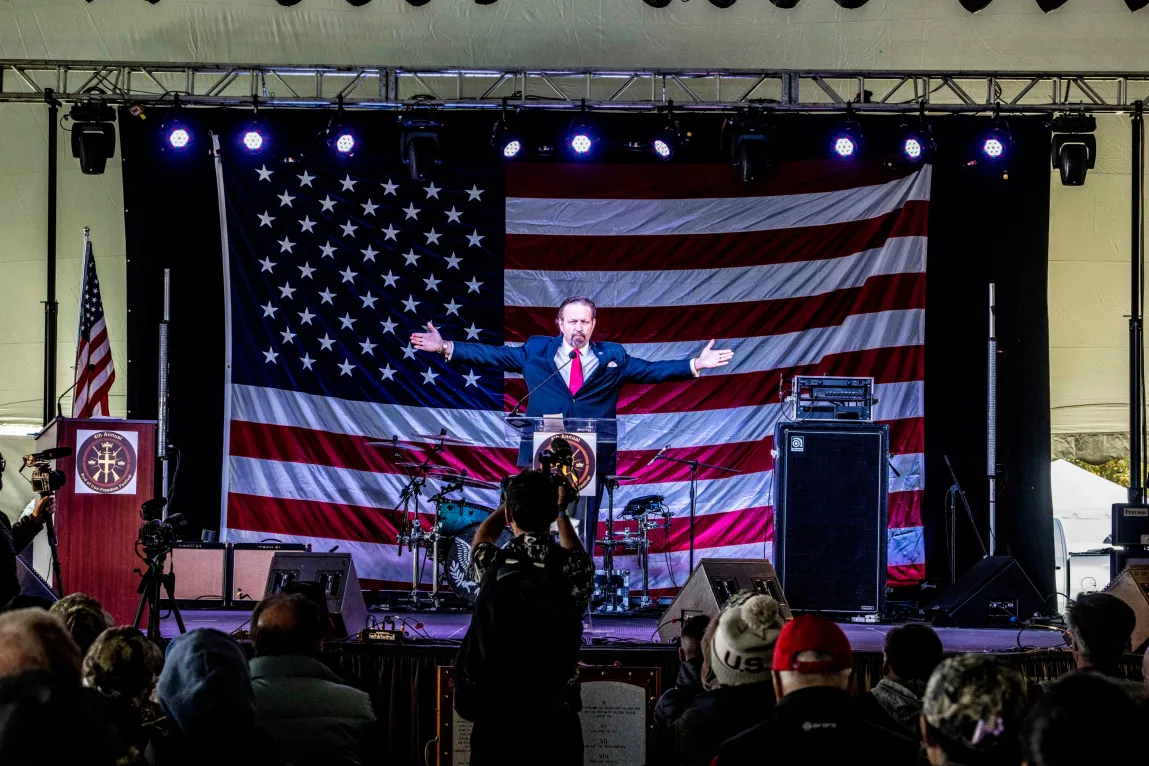
Gorka’s claims of battlefield victories are often exaggerated or misleading about who was targeted and why, according to security officials and counterterrorism analysts. They say there are fewer than 10 “leading” Islamist militants in the world, and the idea of killing hundreds is absurd. The White House did not address a question about whether the numbers are inflated.
“It’s the word ‘leading’ that gets me,” said Clarke, of the Soufan Center. “I have no doubt they’re killing people, but they’re probably foot soldiers.”
Reports of civilian casualties from U.S. operations also muddy the death tolls, especially in Somalia and Yemen. But the Trump administration has shown little interest in investigating; it gutted a Pentagon office tasked with addressing civilian harm.
Take the “red mist” strike, for example. It targeted Ahmed Maeleninine, an Islamic State group recruiter who was hiding out in a cave complex in Somalia. Gorka said the Biden administration had surveilled Maeleninine for more than a year without striking. That’s true, said one former counterterrorism official with direct knowledge of the intelligence involved, but there was more to the story.
“He left out the part about the women and children,” said the official, who recently left government. “I knew the reason we hadn’t gone after him before was because he had his wife and children around him 24/7. Now, maybe they got lucky and found one time where they got a clear strike.”
U.S. Africa Command, which oversees the military’s Somalia operations, said in announcing the February 2025 strike that “approximately 14 ISIS-Somalia operatives were killed and no civilians were harmed.”
Gorka’s formal title is deputy assistant to the president and senior director for counterterrorism at the National Security Council.
The role was upgraded from “special assistant” in recent years, though officials say the powers of the office have weakened since the days of early counterterrorism czars like Richard Clarke, who served under three presidents and revealed that senior leaders had ignored repeated warnings about al-Qaida before the 9/11 attacks.
Christopher Costa, a retired Army intelligence officer who spent a year in the same job under the first Trump administration, described the role as “the convening authority for all things counterterrorism for the president of the United States.”
“It was rolling up your sleeves,” Costa recalled. “It was more than just policy work — it was mitigating current threats.”
Iranian threats against U.S. targets have brought renewed attention to the lack of a Trump counterterrorism doctrine.
Gorka has been tight-lipped about the contents of his strategy. Officials who typically would’ve been involved in interagency discussions say they haven’t been consulted. One person briefed on a working draft summed it up as “Sunnis. Shiites. Cartels.” Others said they expected the addition of far-left antifascist militants, a tiny subset of the extremist threat that receives disproportionate attention from the Trump administration.
Gorka told another colleague he was writing the document himself, without traditional input from partner federal agencies. “There was no ‘U.S. government strategy’ involved,” the colleague said. “It might as well have been a new book he was writing.”
At his recent Council on Foreign Relations appearance, Gorka was asked — again — when the strategy would be released. He glanced at his staff and shifted in his seat.
He confided that he had “put my life’s work into this massive document” but had received feedback in recent days to “Cut it down, Gorka!” He said he would make trims and send the draft back to senior aides in hopes of getting a presidential signoff.
“Keep your fingers crossed,” Gorka told the audience.
此内容由惯性聚合(RSS阅读器)自动聚合整理,仅供阅读参考。 原文来自 — 版权归原作者所有。