


Even a glance at Shy’tyra Burton’s life reveals her need for the sort of federal government assistance that helps disabled Americans stay in their homes. Born two months prematurely into a poor family in Philadelphia, unable to breathe or swallow without tubes and largely confined to medical facilities until age 4, Burton was diagnosed with a litany of developmental and intellectual disabilities that left her with an IQ below 70.
She persevered and graduated from a high school special education program, then attempted community college. But she struggled to grasp basic tasks and information. She couldn’t get hired, including at McDonald’s. After multiple medical and psychological evaluations and a hearing before a judge, the federal government approved her for the Supplemental Security Income program, which provides a basic income to those with severe disabilities and to indigent older people.
For Burton, now 22, the $994 monthly benefit is lifesaving but not enough to completely support herself on her own. So, like many SSI recipients, she has continued to live with her father, who makes around $2,000 a month as a Philadelphia sanitation worker.
Now, President Donald Trump’s administration is poised to penalize people like Burton simply for living in the same home as their families, according to four federal officials, internal emails and a federal regulatory listing. The administration is working on a rule change that would deduct the value of a disabled adult’s bedroom from their SSI allotment, even if the family members they live with are poor enough to qualify for food stamps. This would mean slashing the benefits of some of the most low-income SSI recipients by up to a third — about $330 a month in Burton’s case — or ending their support altogether.
The effort to cut SSI for families who also rely on food stamps, also known as the Supplemental Nutrition Assistance Program, or SNAP, was initiated by top White House and Department of Government Efficiency officials last year, multiple Social Security officials said. It marks a second attempt by the Trump administration to quietly but dramatically downsize disability benefit programs overseen by the Social Security Administration, despite those programs’ strict eligibility standards and minimal instances of fraud. White House Budget Director Russell Vought and Social Security Commissioner Frank Bisignano abandoned a different proposed regulation involving disability payments last year after ProPublica and other news outlets reported on the harm that the plan would cause to hundreds of thousands of largely blue-collar workers in red states. (The disability programs are administered by the Social Security Administration but separate from the retirement program for which the agency is named. The Trump administration has promised not to cut Social Security retirement payments.)
The likely SSI cut will affect not just younger adults with disabilities such as Down syndrome and severe autism who are still living at home with their low-income parents, but also older people with health or financial problems who have had to move in with their adult children on tight budgets. All told, as many as 400,000 poor and disabled people and indigent older people across the United States could have their support cut or eliminated, according to a ProPublica analysis of actuarial figures from the Social Security Administration.
Protecting the SSI program from such a fate is “about how the faithful will be judged, and our care for the most vulnerable,” said Galen Carey, vice president of government relations for the National Association of Evangelicals and himself the father of a 35-year-old son with Down syndrome who lives at home and receives SSI. Carey said it’s wrong to reduce a disabled person’s SSI benefits for choosing or needing to live with loved ones. “Knowing that they are contributing and not a burden to the family can be a source of great pride,” he said. (Some 40 Down syndrome organizations recently sent a letter to Bisignano expressing their opposition to the planned change.)
The reason this will especially affect SNAP families is complicated. Essentially, under a long-standing federal policy that was updated during the Biden administration, if a household has already demonstrated its poverty via SNAP or other public assistance programs’ own extensive income-reporting requirements, then the family is officially deemed unable to financially support a disabled loved one living at home. (The typical SNAP household that is also supporting a person who receives SSI has an annual total income of just $17,000, according to the nonpartisan Center on Budget and Policy Priorities.)
The Trump rule will undo this approach. It won’t matter if the SNAP program has already determined a family is poor enough to receive aid; anyone living at home beyond age 18 without paying full rent will be treated as if they have a benefactor. The value of their bedroom as well as any income and assets their family may have will be calculated and recalculated as often as every month and deducted from their SSI check.
The SSI rule change is being reviewed by the White House Office of Management and Budget, a process that involves editing the draft regulation and considering where it falls on the list of the president’s priorities. Once it’s returned to the Social Security Administration for initial publication, there will be an opportunity for public comment; it could take until next year to be finalized, depending on the amount of opposition it faces.
Presented with a detailed list of this article’s findings, Rachel Cauley, the OMB’s communications director, asserted that “this story is false because it speculates about policies that have not yet been decided.” Asked to specify what was false, Cauley did not identify anything, instead reiterating that the story is “trash.” A Social Security Administration spokesperson said “Commissioner Bisignano remains committed to protecting and strengthening Social Security and serving America’s most vulnerable populations.”
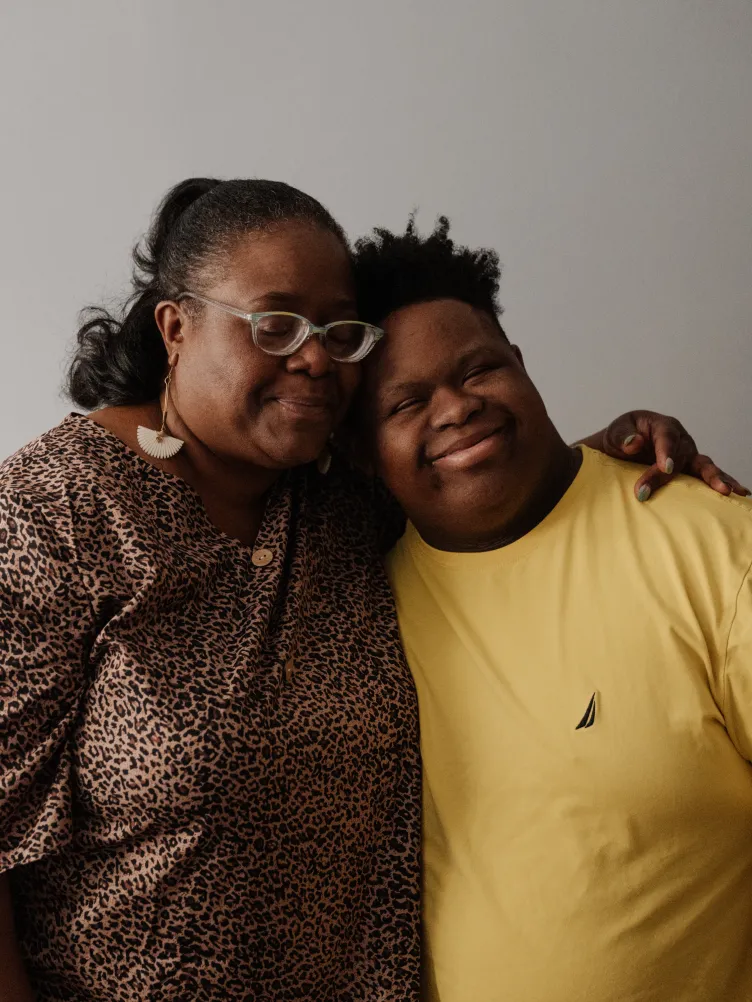
ProPublica interviewed families who rely on the SSI program in Philadelphia and across the country. We talked to a young couple struggling to support not just their kids but also a parent with Alzheimer’s. We heard from a mother, Opal Foster, whose 18-year-old son has Down syndrome and lives at home as he strives to become a chef. And we spoke with a middle-aged woman with schizophrenia and panic disorder who lives with her brother’s family because she can’t hold down a job and fears being left alone in a nursing home.
All of these people could have their SSI benefits cut because they live with family, even though disability advocates, evangelicals and budget experts agree that it’s more humane and less expensive for adults with disabilities to live at home rather than in institutional facilities. The potential cut to Burton’s SSI benefit, for example, would save taxpayers about $11 a day. But if her dad as a result of the reduced support can’t afford to provide for her anymore, then it could cost taxpayers many hundreds of dollars a day or more to house her at a residential facility, according to the state of Pennsylvania’s fee schedules.
Supplemental Security Income, which serves 7.5 million Americans who are unable to make a living because of severe disabilities or destitution in old age, has never been easy to qualify for. Fewer than a third of applicants are approved, and the process often takes years. Recipients of these benefits in turn regularly have their finances reevaluated, and are also intermittently examined by medical and vocational experts, to determine whether their payments will continue.
This paperwork-and-review-heavy process generates hefty overhead. The SSI program distributes just 5% of all Social Security Administration benefits yet accounts for nearly 35% of the agency’s administrative budget. Month after month, staffers have to pore over microscopic changes to SSI beneficiaries’ living arrangements and family members’ incomes and assets.
Current and former Social Security officials have told ProPublica over the past year that the SSI program’s complexities and absurdities remain perhaps the agency’s biggest bureaucratic headache. As ProPublica reported last summer, DOGE did nothing to address this, mostly ignoring SSI despite its obvious inefficiencies. In fact, DOGE and the White House pushed out roughly 7,000 Social Security employees, many of whom had been working on SSI reforms and backlogs.
The Biden administration had tried to do something about SSI’s excessive red tape. Under existing law, disabled people whose families have already established themselves to be poor by qualifying for certain other public assistance programs, such as veterans’ benefits or Temporary Assistance for Needy Families, don’t have to do all of the same check-ins, over and over again, to receive SSI. In 2024, Biden added SNAP — which is more widely used now than when these SSI rules were created — to the list of such programs.
This was ultimately an act of government efficiency, said Marianna LaCanfora, who was for years the deputy commissioner for retirement and disability policy at the Social Security Administration, including during Trump’s first term. Safety net programs like SSI don’t have to be so complicated and thus expensive, LaCanfora and others at the agency said. But they often are that way because of all the effort spent triple-checking that the poor are actually poor.
Nevertheless, conservative think tanks opposed the Biden SNAP policy, with some claiming that paying these low-income SSI beneficiaries less could save the federal government $20 billion over the next decade. And the White House included the rule change as one of its agenda items for the SSA heading into 2025. It was part of a broader push by the administration and DOGE to undo anything that the Biden administration had touched.
If enacted, the change will require intellectually disabled young people like Burton as well as very elderly people to file extensive monthly reports if they want to continue their benefits even at the reduced level. They’ll have to provide details about the property where they live: whether it’s leased or owned, as well as the names of anyone in the home, and whether any of these people has any new income or assets. They’ll also have to include documentation of all household bills and expenses, showing how much they do or don’t contribute personally, as well as financial documents such as bank statements and any pay stubs.
Burton will likely have to make an appointment and report in person at a Social Security field office any time her father’s hours or wages change even slightly; any time she and he switch up how they split utility bills; and any time an adult sibling spends even a few nights at the house and helps her with living expenses. If she doesn’t, she could later receive bills accusing her of having been overpaid by Social Security.
For his part, Bisignano, the Social Security commissioner, wants to be seen as a leader who’s making the agency more businesslike and efficient, according to interviews with agency staff and recordings of him speaking in private executive meetings. But the SSI rule change, by all accounts, will increase the administrative burden not just on families like Burton’s but also on the staff who’ll have to constantly assess the living arrangements and family incomes of her and millions of other people.
Given the tension between what the rule will do and the sense of efficiency that Bisignano says he wants to instill at Social Security, some agency insiders told ProPublica that he could still push the White House to drop the plan.
Shy’tyra Burton’s monthly SSI support check is what allows her to contribute to her household, by paying her own phone and internet bills and buying many of her own meals, according to her father, Rondell. “I’m still barely managing, though,” he said. He has largely been a single parent to Shy’tyra and her siblings, who need some support too, although they’re more self-sufficient. Groceries and gas have only gotten more expensive.
Burton is calmer and better at managing her disabilities when she can sense that her family’s economic circumstances are relatively stable, her father said. When he blew out his shoulder last year trying to hurl a heavy recycling bin onto a garbage truck, and had to have surgery and take time off work, the loss of income soon manifested in her behavior, he said. “It’s a trickle-down effect,” he explained. “My daughter absorbs money stress in her body.”
One recent 75-degree afternoon, sitting on the front stoop of the rowhouse where she lives with her dad, Burton was rubbing her hands together vigorously, as if it were cold out. When asked why, she claimed it reminded her of being a baby in the neonatal intensive care unit and touching her parents’ hands through the small opening in her incubator.
Burton still has some childlike ways. She grips her stuffed animals when she’s nervous, which is often. She talks to imaginary friends out loud, the same ones she talked to when she was a girl. What she likes about living at home is in part that she can be herself, and her family will still be there to care for her. She doesn’t like the lack of freedom and that she can’t truly be “out there” like her adult siblings.
Burton wanted to go into the child development field, to help kids growing up with disabilities like hers, but some of the concepts were a bit too difficult. Now, she’s excited by cosmetology and intends to support herself one day as a hair stylist. She spends much of her time practicing on mannequin heads in her childhood room.
此内容由惯性聚合(RSS阅读器)自动聚合整理,仅供阅读参考。 原文来自 — 版权归原作者所有。