
惯性聚合 高效追踪和阅读你感兴趣的博客、新闻、科技资讯
阅读原文 在惯性聚合中打开

推荐订阅源

Last Week in AI
Last Week in AI
freeCodeCamp Programming Tutorials: Python, JavaScript, Git & More
博客园_首页
雷峰网
雷峰网
IT之家
IT之家
I
InfoQ
酷 壳 – CoolShell
酷 壳 – CoolShell
钛媒体:引领未来商业与生活新知
钛媒体:引领未来商业与生活新知
B
Blog
OSCHINA 社区最新新闻
OSCHINA 社区最新新闻
博客园 - 【当耐特】
大猫的无限游戏
大猫的无限游戏
博客园 - 聂微东
Hugging Face - Blog
Hugging Face - Blog
A
About on SuperTechFans
月光博客
月光博客
P
Proofpoint News Feed
博客园 - 三生石上(FineUI控件)
J
Java Code Geeks
G
Google Developers Blog
小众软件
小众软件
宝玉的分享
宝玉的分享
Jina AI
Jina AI
V
Visual Studio Blog

Knowledge Transfer - Accelerating Innovation @ CERN

CERN tech for Quantum Systems CERN tech for Quantum Systems CERN tech for Quantum Systems Radiotherapy | Knowledge Transfer Radiotherapy | Knowledge Transfer Nuclear Medicine | Knowledge Transfer Nuclear Medicine | Knowledge Transfer Medical Imaging | Knowledge Transfer Medical Imaging | Knowledge Transfer General Medical Applications | Knowledge Transfer General Medical Applications | Knowledge Transfer Dosimetry | Knowledge Transfer Dosimetry | Knowledge Transfer Dosimetry | Knowledge Transfer Computing for Medical Applications | Knowledge Transfer Computing for Medical Applications | Knowledge Transfer Computing for Medical Applications | Knowledge Transfer Radiotherapy | Knowledge Transfer Nuclear Medicine | Knowledge Transfer Medical Imaging | Knowledge Transfer General Medical Applications | Knowledge Transfer Health, Safety and Environment Management Superconducting Magnets | Knowledge Transfer Health, Safety and Environment Management Superconducting Magnets | Knowledge Transfer Sensors | Knowledge Transfer Superconducting Magnets | Knowledge Transfer Health, Safety and Environment Management Sensors | Knowledge Transfer
Sensors | Knowledge Transfer
Anonymous · 2020-07-14 · via Knowledge Transfer - Accelerating Innovation @ CERN

CERN’s unique know-how derived from years of developing, using, characterizing a large amount of sensors.

CERN´s Know-How

  • Design of high performance and extreme radiation tolerant detectors
  • Long history of integrating complex and heterogeneous detector systems
  • Broad range of testing and qualifying capability

Facts & Figures

  • 4000: Number of muons chamber in ATLAS
  • 40 MHz: Operational frequency
  • 200 m² : Area covered by Silicon trackers in CMS
  • 150 M : Number of sensors in the LHC

Value Proposition

Read more about Sensors here.

Key Competences

Silicon sensors

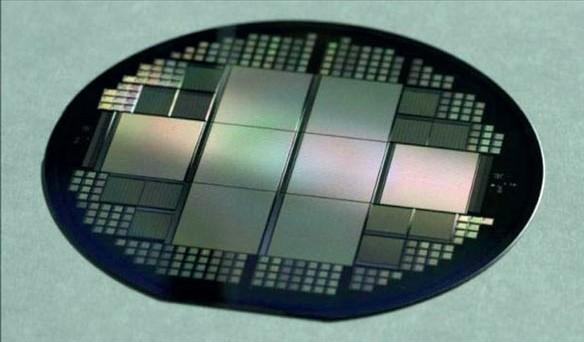
CERN developed unique expertise in simulation and characterisation of silicon sensors to sustain extreme levels of radiations. CERN designs Si sensors in close collaboration with industrial partners.

Specifications

  • Simulation of silicon sensors to match specific detections needs (fast timing, extreme level of radiations) and ASICs specifications
  • Deliver input for device simulations (e.g. TCAD) to predict detector performance under various conditions
  • Detection and microscopic characterization of defects in standard and material engineered silicon via dedicated techniques (DLTS, TSC, TDRC, SIMS, ICP-MS, PITS, FTIR, TCT, EPR, HRTEM)
  • Identification of electrically active defects induced by irradiation responsible for trapping, leakage current, change of effective doping, change of E-Field

Key Applications

3D characterisation

Characterization facilities at the forefront of the technology are needed to understand the effects of radiations on our sensors. Therefore we develop a method and platform to extract doping and electric field profiles within semiconductor devices by non-destructive femtosecond laser induced Two-Photon Absorption.

Scintillators

Highly specialized expertise and infrastructure for research and development of inorganic scintillation technologies for novel ionizing radiation detectors for high-energy physics, medical imaging and industrial applications. 

Gaseous detectors

CERN has unique know-how and facilities for R&D and production of gaseous radiation detectors, with several research and development groups operating in different readout approaches (e.g. Optical readout, pixelated readouts).

Robust, long distance sensors

Radiation, temperature, humidity and strain sensors are important to monitor challenging environments, such as those in the LHC. Conventional fibre optic systems are discretely distributed and not radiation hard. CERN’s distributed optical fibre know how can help create cost-effective, long distance, robust monitoring systems.

Thermometric Measurement

Design, manufacture and assembly of a new type of thermometric block and support for a cryogenic thermometer measurement chain. The thermometer has been tested, produced in series and validated to function accurately under adverse environmental conditions.