






I've had this conversation many times: A technology leader pulls me aside and says some version of: "We keep faltering. Handoffs fall apart. Nobody owns the outcome. How can we fix it?"
My answer? It's probably not your process or your tech stack. It's your organizational model.
Project-based structures have been a reliable management approach in tech-first organizations, and for good reason. It's what scaled complex systems, delivered massive infrastructure and brought highly coordinated engineering efforts to life. It makes sense: define the deliverable, set the timeline, staff a team, ship it, exit. Repeat. But the pace of technology has outrun it.
Today's products are not static deliverables -- they are systems that evolve continuously. They require constant iteration, ongoing investment and tight alignment with customer behavior.
A model built around defined endpoints creates friction in that kind of environment.
Related:InformationWeek Podcast: Catching hidden errors in AI-powered code
Work gets handed off across teams. The team that builds something is often not the one responsible for running or improving it. End-to-end ownership gets diluted. Context fades at each transition. Accountability starts to break down.
I've seen organizations with exceptional technology slow to a crawl because the model surrounding it created friction at every handoff.
Planview’s 2023 Project to Product State of the Industry Report found that even with Agile teams, only 8% of planned work ultimately delivered its intended value for the 326 IT leaders surveyed at 253 unique companies. The exact number is less important than what it reflects. Shipping something and making it work are not the same thing.
Because in this model, when something breaks or a customer experience degrades, the response is often to spin up another project. A new workstream and new charter. Meanwhile, months pass and competitors move ahead.
The result is a gap between delivery and outcome. And the structure is to blame.
Moving to a product-led organization doesn't require a new methodology or new tools -- just a different philosophy.
In a project model, teams are accountable for delivering a defined scope within a set time frame. Once that work is complete, ownership moves on.
In a product model, a cross-functional team owns a product or customer outcome. They don't hand it off when the project closes. They build it, operate it, and improve it. They are accountable for not just whether something shipped, but also for how it performs, how it evolves and what it delivers to the business and the customer.
Related:Ask the Experts: The red flags that signal an AI project isn't worth pursuing
Microsoft, Adobe and Spotify are the examples everyone cites because the results are hard to argue with. When Satya Nadella reshaped Microsoft around products and platforms rather than project deliverables, it changed how fast the company could move and how cleanly it could coordinate across a very large organization.
That shift sounds simple. In practice, it's hard but worth it.
When ownership is continuous, the way teams operate changes with it.
Decisions are made with a longer view. Tradeoffs are clearer because the same team lives with the consequences. Work is prioritized based on impact, not just timelines.
The feedback loop between building and learning tightens. Issues are addressed faster because context stays with the team. Improvements build on each other instead of starting over.
Speed looks different in this model: It is not about moving faster from project to project. It is about reducing the friction between steps so progress carries forward.
This transition does not require a full reset, but it does require clarity. Before you embark on a migration, focus on three areas. Getting these right is often the difference between a transition that stalls and one that gains momentum.
Related:Shutterstock CTO's playbook for scaling AI without vendor sprawl
Be honest about where ownership really lives and where it breaks down. Where does the buck stop on a roadmap decision? Who gets the 2 a.m. call when something breaks? Not sure? That's your baseline for change.
Second, resist the urge to change everything at once. Start with one or two areas where a persistent product team would have a clear, measurable impact. Early progress should build momentum, not create chaos.
Third, look at how teams are evaluated. If success is defined by delivery milestones, teams will optimize for delivery. If success is defined by outcomes, behavior changes. Ask: Did customer satisfaction go up? Did our retention rates improve? What is the bottom-line impact? Did products or systems get more reliable? When you can ask those kinds of questions instead of "Did it ship?" the culture will follow.
This kind of transition requires wholesale rethinking around career paths, reporting lines, planning and budgeting. However, the payoff is there.
Organizations that make this move experience faster iteration, clearer accountability and stronger alignment between teams and business outcomes.
Even though the work often doesn't feel finished in the same way because there is no clean endpoint, the progress becomes continuous. In addition, teams can see the correlation between their work and the result.
The project model was right for a different era. It rewarded precision, sequencing and control. But today demands speed, adaptability and ownership. Those live in product teams, not project charters.
AI is accelerating how products are built and how quickly they can evolve. Customer expectations are rising at the same time. In this environment, organizations that can learn and adapt quickly get the advantage. Success today still requires the right tools and talent, but it's now critical to have teams structured with a product focus that emphasizes continuity and ownership.
If execution feels slower than it should, it is worth looking beyond your stack. The constraint is often not technical. It is structural.
Priceline
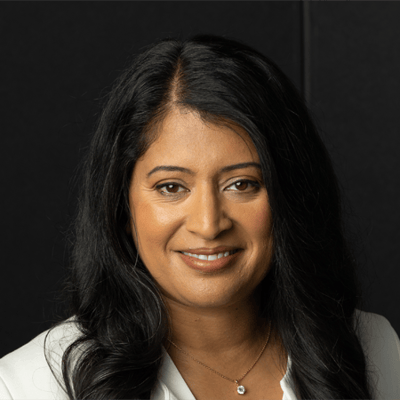
Sejal Amin is CTO at Priceline, where she leads technology strategy, engineering and product infrastructure for one of the world's largest online travel platforms. With more than two decades of experience leading technology organizations through transformation, she is passionate about building cultures of ownership, speed and continuous learning.
此内容由惯性聚合(RSS阅读器)自动聚合整理,仅供阅读参考。 原文来自 — 版权归原作者所有。