
惯性聚合 高效追踪和阅读你感兴趣的博客、新闻、科技资讯
阅读原文 在惯性聚合中打开

推荐订阅源

P
Palo Alto Networks Blog
大猫的无限游戏
大猫的无限游戏
Martin Fowler
Martin Fowler
GbyAI
GbyAI
CTFtime.org: upcoming CTF events
量子位
T
The Blog of Author Tim Ferriss
Y
Y Combinator Blog
Microsoft Azure Blog
C
CERT Recently Published Vulnerability Notes
Recent Announcements
A
About on SuperTechFans
aimingoo的专栏
aimingoo的专栏
P
Privacy International News Feed
cs.CL updates on arXiv.org
博客园 - 叶小钗
L
Lohrmann on Cybersecurity
G
GRAHAM CLULEY
T
The Exploit Database - CXSecurity.com
Hugging Face - Blog
Hugging Face - Blog
P
Proofpoint News Feed
NISL@THU
NISL@THU
博客园 - Franky
C
Cybersecurity and Infrastructure Security Agency CISA
The Register - Security
M
MIT News - Artificial intelligence
Know Your Adversary
Know Your Adversary
A
Arctic Wolf
F
Full Disclosure
T
Threat Research - Cisco Blogs
P
Privacy & Cybersecurity Law Blog
The Hacker News
The Hacker News
博客园 - 【当耐特】
D
Docker
T
Tailwind CSS Blog
S
SegmentFault 最新的问题
Cyber Security Advisories - MS-ISAC
Jina AI
Jina AI
Help Net Security
Help Net Security
V
Visual Studio Blog
小众软件
小众软件
B
Blog
Vercel News
Vercel News
云风的 BLOG
云风的 BLOG
N
News and Events Feed by Topic
Forbes - Security
Forbes - Security
N
Netflix TechBlog - Medium
让小产品的独立变现更简单 - ezindie.com
C
Cisco Blogs
Security Archives - TechRepublic

informationweek

2026 tech company layoffs How Sedgwick scaled AI in legacy claims workflows InformationWeek Podcast: CTOs on using AI in regulated spaces How top CIOs are measuring the real ROI of IT automation What AI must learn from Roosevelt, conservation and 1929 Experian's chief innovation officer gleans AI gains with startup collab ETS CIO on competing with AI startups 'running with scissors' Before the next VMware: How CIOs prepare for vendor shocks The strategic alignment powering cyber-resilient organizations The AI infrastructure bottleneck is becoming a CIO problem InformationWeek Podcast: CTOs on reining in rogue AI agents Workplace equity in the age of AI Why and how to implement an AI asset rationalization strategy Why companies are shifting toward private AI models AI agents in automation: When to build, when to buy Navan CTO AI on trial: The Workday case that CIOs can The AI infrastructure boom is coming for enterprise budgets How CIOs can manage LLM costs: A practical guide What CIOs miss when buying vertical SaaS software InformationWeek Podcast: How CTOs balance AI and their teams Whirlpool, Duke Energy, Cleveland Clinic CIOs on scaling AI Where CIOs get stuck rebuilding the enterprise: What 'Rewired' reveals As AI makes projects harder to track, will CIOs need new controls? Why disaster recovery plans fail in geopolitical crises A silent erosion of enterprise AI by data poisoning Priceline CTO prioritizes engineers able to 'hold a room and a roadmap' InformationWeek Podcast: When CTOs need to restart IT projects Wayfair CTO maps agentic path across digital and brick-and-mortar commerce The AI contract gaps the Google-Pentagon deal just made visible Non-human identity sprawl is agentic AI's real risk Anthropic's Mythos forces a rethink of vulnerability management Outsourcing contracts weren't built for AI. CIOs are renegotiating now The AI spend hangover companies didn't plan for The power of CIO networking in the competitive AI world Why CIOs see AI projects stall: Speed without structure kills scale IT leaders should never let a good crisis go to waste SFO's digital twin maps airport operations from the curb to takeoff Submit an IT Leadership column to InformationWeek Podcast: Rightsizing AI frameworks to avoid failure modes The invisible labor crisis inside IT: AI work the org chart can't see Why AI teams treat training data like capital Ask the Experts: How CIOs can identify and overcome cultural barriers to innovation Nobody told legal about your RAG pipeline -- why that's a problem Meta's new 'AI Zuckerberg' is a mirror for every C-suite Will the music stop for AI's funding dance? Rethink tech talent: Local is the smartest play for IT InformationWeek Podcast: Catching errors in AI-powered code CIOs can combat talent scarcity with AI-augmented leadership -- Gartner How Bellevue, Wash., is applying AI to streamline a broken permitting process Ignore the hype: Smarter tech bets at speed of change Who controls the fix? Colorado's repair fight tests CIO power Ask the Experts: The red flags that signal an AI project isn't worth pursuing The hidden high cost of training AI on AI Red Hat's Marco Bill: Resource control is key for AI sovereignty InformationWeek Podcast: New IT architecture, cloud, edge and AI Enterprises need Tier 1 provider relationships to deliver on AI How CIOs run and rebuild the business at the same time in the AI era It's not your tech stack, it's your structure -- fix it Confidential computing resurfaces as security priority for CIOs FinOps: Helpful tool, or a cloud control placebo for CIOs? Cleveland's open data overhaul: From sticky notes to public dashboards As Microsoft expands Copilot, CIOs face a new AI security gap Why build vs. buy doesn't fit modern IT systems InformationWeek Podcast: Is quantum computing slumbering? Your AI vendor is now a single point of failure Vibe coding: Speed without security is a liability A practical guide to controlling AI agent costs before they spiral AI fuels a new wave of technical debt The sunsetting of Sora: A hard lesson in AI portfolio resilience HP pushes broad internal AI use after early productivity gains Why value-based pricing is inevitable InformationWeek Podcast: Safeguarding ecosystems from outsiders Why AI scaling is so hard -- and what CIOs say works Humans are the North Star for AI-native workplaces -- Gartner How IT leaders build a culture for what comes next Compliance costs risk widening the AI gap AI-driven layoffs add new demands on CIOs to prove value AI transformation: Early wins are not enough for CIOs Why CIOs can't let users wait on IT Memory shortage doesn't have to spell disaster for IT budgets Accelerate AI adoption: 3 reasons for adopting MCP How techno-nationalism is complicating IT resilience and supply chains for CIOs InformationWeek Podcast: Compliance crackdown on AI and BYOD Workday’s AI reset: Agents and the race to remake SaaS Why enterprise AI initiatives keep dying before production Metrics of meaning: What do we really measure in AI? Techno-nationalism is reshaping CIO infrastructure strategy Using AI to pick team leaders -- without crossing legal or ethical lines What Oracle's layoffs reveal about running IT with fewer people Chief AI Officer on course-correcting when AI moves too fast Large enterprises need high-performing networks to scale AI InformationWeek Podcast: When do smaller AI models make sense? The future belongs to AI-driven IT Ways AI supercharges risk awareness and data insights for CIOs How automation prepares you for agentic NetOps Should the CIO, CFO or CEO hold the kill switch on AI? The CIO's new mandate: Redesign work itself Ask the Experts: CIOs say they wouldn’t pull workloads back from the cloud How AI is Reshaping the Enterprise
CIOs caught in the middle as AI startups disrupt vertical Saas
John Edwards · 2026-04-23 · via informationweek

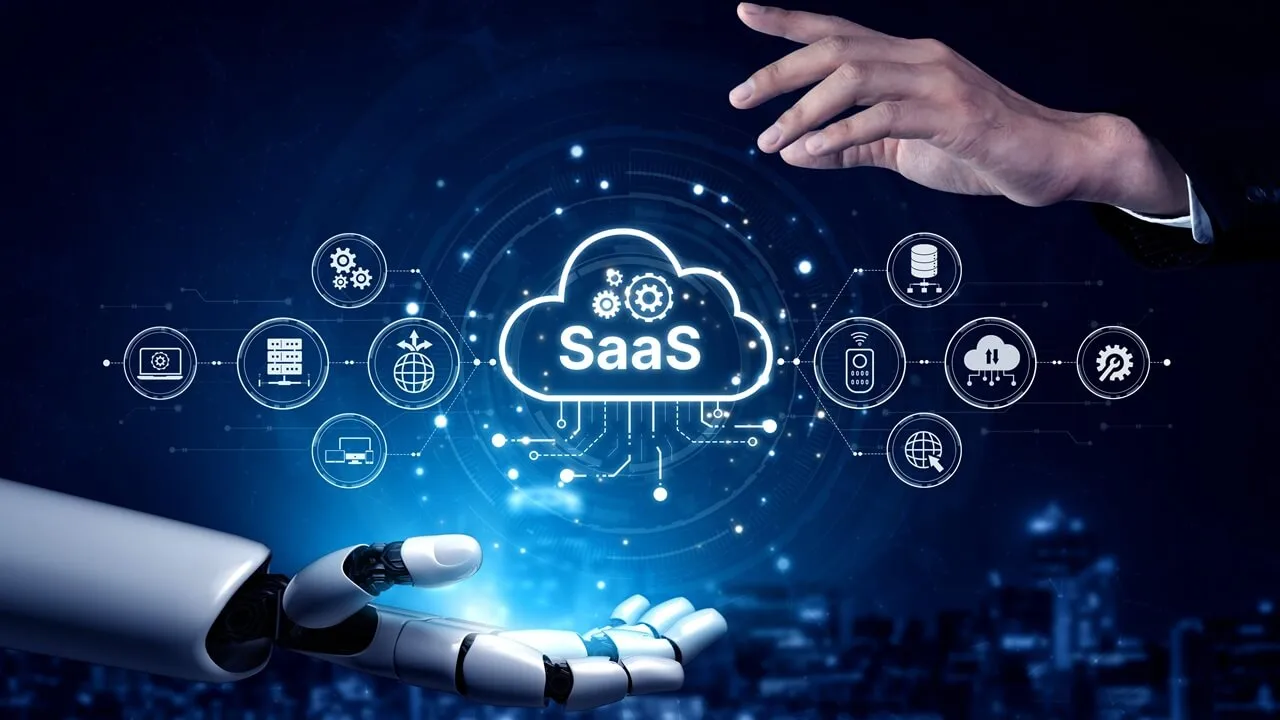
AI powers SaaS platforms with smart infrastructure, automated deployment, and intelligent integration tools in cloud-based digital environments.

World Images via Alamy Stock Photo

A new generation of fast-moving AI startups threaten to take a corner of the market dominated by vertical SaaS tools. Now, CIOs must decide whether to adopt these upstart software offerings or hold onto familiar, yet potentially lagging, platforms. 

SaaS tools are under pressure as customers grow tired of subscriptions and question if the cost of these tools is justified, said Justice Erolin, CTO at software development firm BairesDev. "Add in how easy it's becoming to stand up functional software with AI coding tools, and SaaS vendors have a real problem."

An emerging threat?

As AI-native startups step into this scene, it raises questions about the continued dominance of vertical SaaS tools. "These startups aren't disrupting vertical SaaS at the system of record level, at least not yet," said Ayush Raj Jha, senior software engineer at Oracle. Instead of presenting a direct, one-for-one challenge to the incumbent technology, he said AI startups make the workflow layer above those systems irrelevant. "That's actually the more dangerous threat to SaaS."

Related:How Anthropic is reordering SaaS — and where CIOs go next

Nobody's shutting down Salesforce tomorrow, said Ryan Scott, CTO at Nomic Ventures, a firm that builds domain-specific AI systems. What's actually happening is that the workflow layer is detaching from the UI, he said. "AI agents can operate above the interface now, and they'll talk to your CRM, your data warehouse, your compliance system, your email -- all simultaneously without clicking anything."

With AI, the system of record is sticky due to data gravity, compliance requirements, and switching costs that have nothing to do with product quality, Jha said. "But the AI layer sitting on top of clinical workflows, legal document reviews, or financial reporting is now being eaten by startups who can ship in weeks while a large platform takes quarters to deliver." The disruption is happening one workflow at a time, not one platform replacement at a time, he added.

A vertical evolution

Vertical SaaS must evolve into an intelligence layer or risk becoming a dead repository, warned Vikas Nehru, CTO at software developer Kantata. "However, the winners won't be 'walled gardens' that force customers to use proprietary AI," he predicted. Nehru believes that vertical SaaS' future lies in an intelligence and orchestration platform -- a system that integrates specialized AI agents, Generative BI, and automated workflows across a firm's entire tech stack, including Jira, Slack, CRM, and ERPs. "The market no longer needs software-as-a-service; it needs expertise-as-a-service," he stated.

Related:SFO's digital twin maps airport operations from the curb to takeoff

Vertical SaaS will continue to grow, since these tools act as superpowers for developers rather than replacing them, Erolin said. "As the quality of AI assistants improves, we'll see even more powerful collaboration between AI and developers, which is where the real value of this technology will be unlocked."

AI startups are now attempting to "layer on top," yet this approach creates a fragmentation tax, Nehru said, leading to additional costs, security risks, and data silos. "Replacing a system of record, for instance, is a massive undertaking that most AI startups aren't equipped for," he warned. The real disruption isn't coming from startups replacing their system of record, but from vertical SaaS platforms making the system of record active. "By embedding agentic orchestration directly into the workflow, vertical SaaS solutions eliminate the need for third-party layers and provide a single source of truth that actually thinks and acts."

Hedging their bets

Jha, drawing inspiration from his time working inside a Fortune 100 technology company, said that many CIOs are now taking simultaneous AI and SaaS approaches and calling it a strategy. "They're running AI startup pilots in non-critical workflows while waiting for their existing vertical platforms to catch up on the core systems," he stated. "The risk is that the pilots become dependencies before anyone has evaluated them with the same scrutiny applied to enterprise vendors."

Related:Workday’s AI reset: Agents and the race to remake SaaS

The startup dependency failure scenario is perhaps the most underrated operational risk in enterprise AI right now, Jha said. "I have built infrastructure where a single third-party integration going down meant the recovery looked successful on paper but was actually clinically broken in practice." 

The same failure mode also applies to AI workflow dependencies. He noted, for example, that if a startup processing your contract reviews' clinical documentation goes dark, the workflow doesn't gracefully degrade -- it stops. Jha also cautioned that most enterprises haven't stress tested what happens to their operations when an AI dependency disappears. "They won't think about it seriously until it happens to someone visible enough to make the news."

A final challenge

Nomic's Scott warned that virtually no one is talking about compliance layer issues. "That's the real gap," he said. HIPAA, FDCPA, PCI DSS, GDPR -- all were written for humans interacting with humans. "An AI agent that contacts a debtor at 10 p.m. isn't being intentionally malicious, but it's still an FDCPA violation, and the organization running the agent will be held liable."

About the Author

John Edwards

Technology Journalist & Author

John Edwards is a veteran business technology journalist. His work has appeared in The New York Times, The Washington Post, and numerous business and technology publications, including Computerworld, CFO Magazine, IBM Data Management Magazine, RFID Journal, and Electronic Design. He has also written columns for The Economist's Business Intelligence Unit and PricewaterhouseCoopers' Communications Direct. John has authored several books on business technology topics. His work began appearing online as early as 1983. Throughout the 1980s and 90s, he wrote daily news and feature articles for both the CompuServe and Prodigy online services. His "Behind the Screens" commentaries made him the world's first known professional blogger.